
Introduction
The bleeding heart plant first reached Western gardens in 1846. A Royal Horticultural Society team brought it back from northeastern Asia. An earlier 1810 trip to England had failed. That second attempt gave gardeners one of the most dramatic shade garden perennials we grow today.
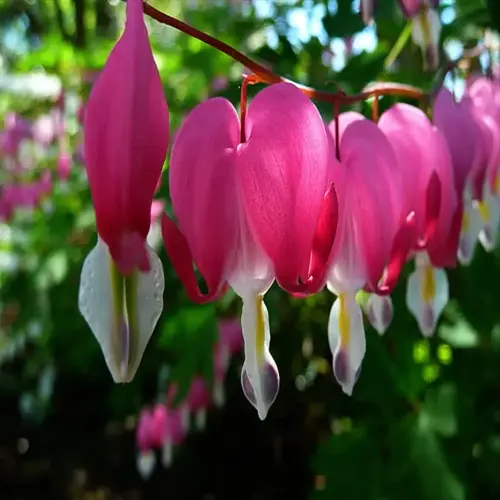
I've grown bleeding hearts for over 15 years and they still surprise me each spring. The arching stems carry 7 to 15 heart shaped blooms per raceme. Each flower measures 1 to 2 inches across and draws butterflies and hummingbirds from April through June. DNA tests in 1997 led to a big name change. The old name Dicentra spectabilis was dropped. It's now called Lamprocapnos spectabilis since it has no link to native fringed types.
Think of the bleeding heart as the phoenix of your shade garden. It vanishes in summer as the foliage yellows and dies back. Then each spring it rises again with bold heart shaped blooms that stop you in your tracks. This spring blooming perennial thrives in USDA Zones 2 through 9 and asks for very little care.
This guide covers what you need to grow a healthy bleeding heart plant in your own yard. You'll find 8 top varieties worth planting and the best care tips. We also share smart companion choices and fixes for the most common problems.
8 Bleeding Heart Varieties
You have more bleeding heart varieties to pick from than most gardeners know about. I've tested over a dozen in my own shade beds and can tell you the differences are huge. The old-fashioned bleeding heart stands 2 to 3 feet tall and blooms for 4 to 6 weeks each spring. Newer hybrids like King of Hearts and Luxuriant keep blooming all summer without going dormant.
I've sorted these 8 picks into two groups for you. The first 4 are old-fashioned types, including the Alba bleeding heart and the bold Valentine bleeding heart with its deep red stems. The last 4 are fringed bleeding heart hybrids from the Dicentra family. If you want foliage that lasts all season, the Gold Heart bleeding heart and fringed types won't vanish on you in July.
Old-Fashioned Bleeding Heart
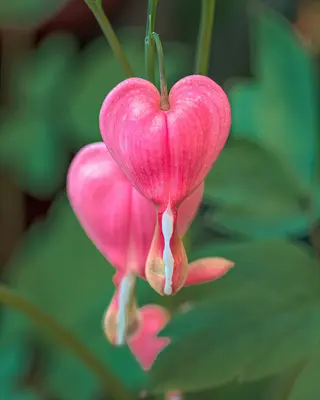
- Botanical Name: Lamprocapnos spectabilis, the classic species that grows 2-3 feet (60-90 cm) tall with an arching, mound-shaped habit and bright green, deeply divided foliage.
- Flower Details: Produces dangling rows of pink and white heart-shaped blooms along graceful, arching stems from April through June in most climates.
- Growing Conditions: Thrives in partial to full shade in USDA Zones 2-9, preferring moist, humus-rich soil with good drainage and a pH between 6.0 and 7.0.
- Bloom Duration: Flowers appear for 4-6 weeks each spring before the plant enters summer dormancy, with foliage yellowing and dying back by midsummer.
- Landscape Use: Ideal as a specimen plant in cottage gardens, woodland borders, and shade gardens where its dramatic spring display creates a focal point.
- Special Traits: Deer and rabbit resistant, tolerant of black walnut trees, and cut flowers last up to 2 weeks in a vase according to UW-Madison Extension.
Alba White Bleeding Heart
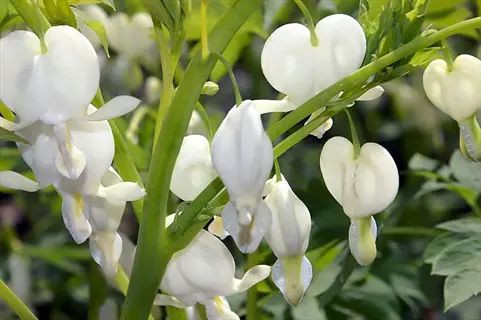
- Botanical Name: Lamprocapnos spectabilis 'Alba', a pure white cultivar that reaches 2-3 feet (60-90 cm) in height and provides a luminous glow in shaded garden areas.
- Flower Details: Bears elegant, pure white heart-shaped flowers that dangle from arching stems, creating a softer, more ethereal look than the pink species.
- Growing Conditions: Grows best in partial shade to full shade with moist soil kept even, performing well in the same USDA Zones 2-9 as the pink species.
- Design Appeal: The white blooms pair beautifully with dark green hostas and blue-flowered plants, making it a favorite for moonlight gardens and elegant mixed borders.
- Growth Habit: A bit less vigorous than the pink species but still forms a reliable clump that returns year after year with minimal maintenance required.
- Special Traits: An excellent choice for wedding or memorial gardens where white flowers carry symbolic meaning of purity, and useful for brightening deeply shaded corners.
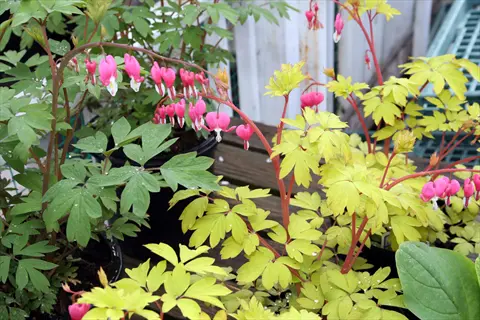
Gold Heart Bleeding Heart
- Botanical Name: Lamprocapnos spectabilis 'Gold Heart', a striking cultivar prized for its brilliant golden-yellow foliage that stands in sharp contrast to its pink heart-shaped flowers.
- Flower Details: Produces the same classic pink and white heart blooms as the species but set against chartreuse to gold leaves that maintain their color throughout the growing season.
- Growing Conditions: Needs more shade protection than the species because the golden foliage can scorch in direct afternoon sun, performing best with morning light only.
- Height and Spread: Reaches about 2 feet (60 cm) tall and wide, a touch more compact than the species, making it a good fit for smaller garden spaces and containers.
- Design Appeal: Creates a stunning focal point when planted among dark-leaved heucheras or deep green ferns, providing season-long foliage interest even before and after flowering.
- Special Traits: One of the most popular cultivars sold at garden centers due to its unique dual-color effect of gold leaves and pink flowers that is hard to find in other shade perennials.
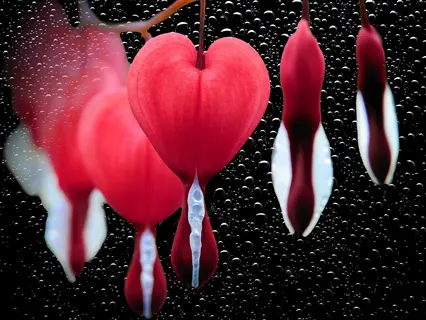
Valentine Bleeding Heart
- Botanical Name: Lamprocapnos spectabilis 'Valentine', a deep red cultivar with dark burgundy stems that create a richer, more dramatic color presentation than the classic pink.
- Flower Details: Features deep cherry-red to crimson heart-shaped flowers with white tips, hanging from dark red stems that add an extra layer of visual interest to the plant.
- Growing Conditions: Hardy in USDA Zones 3-9 with the same shade and moisture requirements as the species, though the red coloring intensifies in cooler growing conditions.
- Height and Spread: Grows to about 2-3 feet (60-90 cm) tall and wide, matching the species in size while offering a bolder color that stands out in shaded garden beds.
- Seasonal Interest: The dark stems remain attractive even as flowers fade, providing structural interest longer than green-stemmed varieties before the plant goes dormant.
- Special Traits: NC State Extension notes bleeding hearts can be forced to bloom for Valentine's Day by bringing dormant rhizomes into a cool greenhouse in late winter.
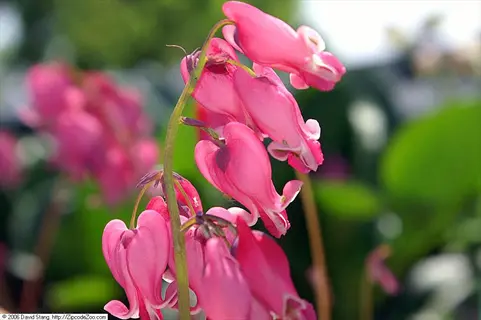
King of Hearts Bleeding Heart
- Botanical Name: Dicentra 'King of Hearts', a hybrid between fringed and Pacific bleeding hearts that stays compact at 8-12 inches (20-30 cm) tall with fern-like blue-green foliage.
- Flower Details: Produces rosy pink flowers from spring through fall, offering a much longer bloom period than old-fashioned varieties that stop flowering by early summer.
- Growing Conditions: Hardy in USDA Zones 3-9 and more heat tolerant than the old-fashioned species, making it a better choice for gardens in warmer southern climates.
- Reblooming Ability: Unlike Lamprocapnos spectabilis, this hybrid continues blooming throughout summer and does not go fully dormant, keeping its attractive foliage all season long.
- Landscape Use: Perfect for rock gardens, border edges, and containers due to its compact size, and it works well as a ground cover in shaded areas between larger perennials.
- Special Traits: Deer and rabbit resistant like its parent species, with the added benefit of continuous flowering that provides reliable color in the shade garden from spring through frost.
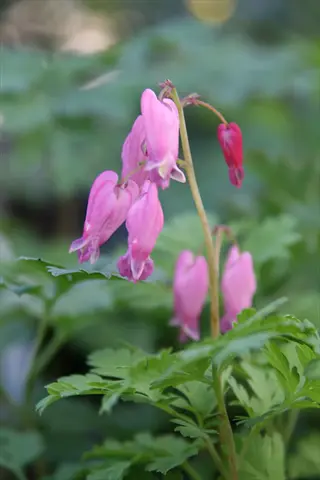
Luxuriant Bleeding Heart
- Botanical Name: Dicentra 'Luxuriant', a hybrid cultivar that grows 12-18 inches (30-46 cm) tall and wide with lush, fern-like foliage that remains attractive all summer.
- Flower Details: Bears cherry-pink to red heart-shaped flowers that appear from late spring through early fall, with heaviest blooming in spring and sporadic flowers through summer.
- Growing Conditions: Tolerates more sun than old-fashioned bleeding hearts and handles heat better, thriving in USDA Zones 3-9 with average moisture and good soil drainage.
- Foliage Persistence: Unlike the old-fashioned species, Luxuriant holds its blue-green foliage throughout the growing season without going dormant, even in warmer climates.
- Landscape Use: Works well as an edging plant, ground cover, or in mixed containers where its compact size and persistent foliage provide continuous garden interest all season.
- Special Traits: One of the most reliable reblooming bleeding hearts available, combining the charm of heart-shaped flowers with the practical benefit of season-long foliage and color.
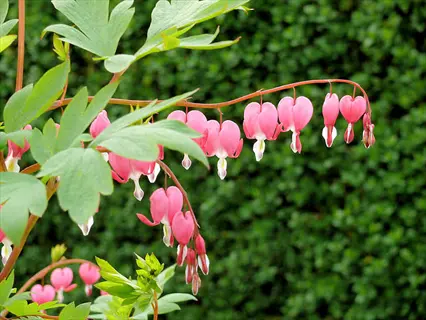
Burning Hearts Bleeding Heart
- Botanical Name: Dicentra 'Burning Hearts', a compact hybrid growing 10-12 inches (25-30 cm) tall with striking silver-blue, fern-like foliage that contrasts with vivid red flowers.
- Flower Details: Produces bright magenta-red hearts with white tips from late spring through summer, with the most intense color appearing in cool weather conditions.
- Growing Conditions: Hardy in USDA Zones 3-9 with good performance in partial shade, though it handles more sun than old-fashioned varieties when given consistent moisture.
- Foliage Appeal: The silvery blue-green leaves are among the most ornamental of any bleeding heart cultivar, providing visual interest even when the plant is not actively flowering.
- Design Use: Creates a dramatic contrast when planted alongside gold-leaved hostas or bright green ferns, and the compact habit makes it ideal for rock gardens and border fronts.
- Special Traits: A relatively newer hybrid that combines the best traits of multiple Dicentra species, offering extended bloom time, persistent foliage, and exceptional cold hardiness.
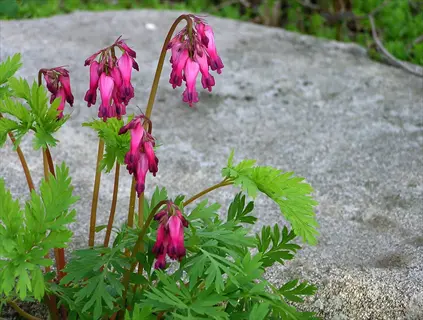
Fringed Bleeding Heart
- Botanical Name: Dicentra eximia, a species native to the eastern United States that reaches approximately 18 inches (46 cm) in height according to UVM Extension research.
- Flower Details: Produces clusters of pink to purplish-pink flowers that are more narrow and elongated than the classic heart shape, blooming from spring through early fall.
- Growing Conditions: Hardy in USDA Zones 3-9 and naturally found in rocky, wooded slopes, making it well-adapted to similar conditions in home garden settings with shade.
- Foliage Persistence: Retains its fine, dissected, fern-like foliage throughout the entire growing season, unlike the old-fashioned species that disappears by midsummer.
- Native Plant Value: As a native species, it supports local pollinators and fits right into native plant gardens and restoration projects across the eastern United States.
- Special Traits: More drought tolerant and heat resistant than the Asian species, making it a practical alternative for gardeners in warmer climates or those seeking lower-maintenance options.
Your best pick depends on what you need most from the plant. Want a classic spring show that goes dormant in summer? Stick with the old-fashioned types or Alba bleeding heart. Need color that lasts all season? The fringed bleeding heart hybrids like King of Hearts won't let you down.
How to Plant Bleeding Hearts
Knowing how to plant bleeding heart the right way saves you a full year of waiting for blooms. I use a simple 3 step method I call prepare, place, and protect. It works for both potted plants and bare root bleeding heart stock from your local garden center.
Your timing matters more than most guides tell you. If you garden in USDA Zones 3 through 5, plant in early spring as soon as you can work the soil. In Zones 6 and 7, spring planting perennials like bleeding hearts do best when the ground has warmed a bit. Gardeners in Zones 8 and 9 should wait until fall when cooler temps help roots settle in before winter.
Start your soil preparation by mixing in 2 to 3 inches of compost or aged leaf mold. You want moist soil that drains well with a pH between 6.0 and 7.0 as Penn State Extension suggests. Dig your hole wide enough to spread the roots out flat. Set the crown about 2 inches (5 cm) below the soil surface for the right planting depth.
Space your plants 18 to 24 inches apart so each one has room to fill out. Water deep right after you put them in the ground. Then add 2 to 3 inches of shredded leaves or compost as mulch to keep the soil cool and moist. That's the protect step, and it makes a real difference in how fast your new plants take off.
Bleeding Heart Care Essentials
Good bleeding heart care comes down to finding what I call the Goldilocks zone of moisture. Your plant wants soil that stays damp but never sits in water. I lost my first bleeding heart to root rot because I watered it like a tomato plant. Once I backed off and aimed for 1 inch of water per week, the next one thrived for years.
Watering bleeding heart plants means giving them a deep soak once or twice a week instead of quick daily sprinkles. Fertilizing bleeding heart is simple too. Add a balanced slow release feed like 10-10-10 in early spring when new shoots pop up. Skip the extra doses during summer dormancy because the plant isn't using nutrients while it rests.
Pruning bleeding heart at the right time can extend your bloom season. Susan Mahr from UW Madison Extension says hard pruning after the first flush of flowers may promote a second round of blooms. Once the foliage yellows in summer, cut stems down to the ground. Mark where your plant sits so you don't dig it up by mistake during fall cleanup.
Mulching perennials like bleeding hearts keeps the soil cool and moist through hot months. Spread 2 to 3 inches of shredded leaves or compost around the base but pull it back from the crown. This layer also protects roots from winter freeze and thaw cycles in colder zones. These 4 care basics are all your bleeding heart needs to come back strong each spring.
Watering and Moisture Management
- Weekly Target: Provide about 1 inch (2.5 cm) of water per week through rain or supplemental watering, keeping soil moist at all times without leaving it waterlogged or soggy.
- Deep Watering Method: Water at a slow pace at the base of the plant rather than overhead to reduce the risk of fungal diseases and ensure moisture reaches the root zone where it counts.
- Dormancy Adjustment: Reduce watering once foliage begins to yellow and the plant enters summer dormancy, as excess moisture on dormant roots can lead to root rot.
Fertilizing for Healthy Growth
- Spring Feeding: Apply a balanced slow-release fertilizer such as 10-10-10 in early spring as new growth emerges, working it into the top layer of soil around the plant.
- Organic Alternative: Top-dress with a 1-inch (2.5 cm) layer of compost in spring as a natural slow-release nutrient source that also improves soil structure and moisture retention.
- Avoid Over-Feeding: Too much nitrogen encourages leafy growth at the expense of flowers, so stick to one spring application and avoid feeding during the dormancy period.
Pruning and Deadheading
- After First Bloom: UW-Madison Extension advises hard pruning after the first flush of flowers to delay senescence and help promote a second round of blooming.
- Yellowing Foliage: Cut stems back to ground level once the foliage has fully yellowed and dried, as this is a natural part of the dormancy cycle and not a sign of disease.
- Mark the Location: Place plant markers before foliage dies back completely so you do not accidentally dig into the dormant root system during fall or winter garden cleanup.
Mulching and Soil Protection
- Material Choice: Penn State Extension recommends a 2-3 inch (5-7.5 cm) layer of shredded leaves or compost, which insulates roots and maintains the cool, moist conditions bleeding hearts prefer.
- Crown Protection: Keep mulch pulled back a bit from the plant crown to prevent moisture buildup that can cause rot where stems meet the root system at the soil surface.
- Winter Insulation: Apply a fresh layer of mulch in late fall after the plant has gone dormant to protect roots from freeze-thaw cycles, above all in USDA Zones 2-4.
Propagation Methods
Propagating bleeding heart gives you free plants from the one you already grow. I've used all 3 methods over the years and each one works best in a different situation. Dividing bleeding heart clumps is the fastest route for beginners. Stem cuttings take more skill but still root well. Growing from seed tests your patience since you'll wait 2 to 3 years for the first blooms.
Root division perennials like bleeding hearts respond best to splitting in early spring or fall. Stem cuttings give you a fun project in late spring when the plant is growing strong. Cold stratification is the key step for seeds. Each pod holds 2 to 8 small black seeds inside a capsule that measures 25 to 35 mm long. No matter which method you choose, wear gloves because the sap can irritate your skin.
Root Division (Easiest Method)
- Best Timing: Divide established clumps in early spring just as new growth emerges or in early fall when the plant is dormant, using a sharp garden spade to separate sections.
- Technique: Dig around the full root mass, lift the clump, and split it into sections with at least 2 healthy growth points each, keeping roots intact as much as you can.
- Replanting: Place divided sections at the same depth they were growing before, water them deep, and mulch with 2-3 inches (5-7.5 cm) of shredded leaves or compost.
Stem Cuttings (Intermediate Method)
- Cutting Selection: Take 3-5 inch (7.5-12.5 cm) stem cuttings from healthy, growing shoots in late spring or early summer before the plant begins its dormancy cycle.
- Rooting Process: Dip the cut end in rooting hormone, place it in a moist mix of perlite and peat moss, and cover with a clear plastic bag to hold humidity around the cutting.
- Transplanting: Roots tend to develop in 3-6 weeks, at which point you can move the new plant to a shaded garden bed or container with rich, well draining soil.
Seed Propagation (Most Patient Method)
- Seed Collection: Collect seed pods when they turn from green to brown and feel dry, opening them to reveal 2-8 black, rounded seeds per pod that measure about 25-35 mm (1-1.4 inches) per capsule.
- Cold Stratification: Seeds require a period of cold moist stratification to sprout, achieved by sowing outdoors in fall or storing seeds in damp sand in the fridge for 6-8 weeks before spring sowing.
- Growth Timeline: According to UW-Madison Extension, self-seeded plants take 2-3 years to bloom if left undisturbed, and moving seedlings may add another year or more to the wait.
Tips for Propagation Success
- Handle Roots With Care: Bleeding heart roots are brittle and fleshy, so work with caution during division to avoid snapping rhizomes that could slow the transplant's recovery.
- Maintain Moisture: All propagation methods require moist conditions during the settling in period, so water new divisions, cuttings, and seedlings on a regular basis for the first growing season.
- Wear Protective Gloves: The sap from cut stems and roots contains isoquinoline alkaloids that cause skin irritation, so always wear gloves when handling any part of the plant.
Companion Plants and Design
Smart shade garden design means planning for the gap your bleeding heart leaves behind in summer. Penn State Extension puts it well: your best bleeding heart companion plants to fill that void include hostas and ferns, astilbes, and heucheras. I learned this the hard way when my first shade bed looked bare from July through September.
Think about your companion planting shade beds in 3 layers. Gap fillers like hostas spread their big leaves right where your bleeding heart foliage fades. Texture plants like painted ferns add fine detail next to those bold heart shaped blooms in spring. Color relay plants like astilbe pick up the show with feathery plumes just as your bleeding hearts check out for the season.
Bleeding hearts fit right into a woodland garden or cottage garden perennials border. For a true cottage look, mix them with Virginia bluebells and brunnera in a loose, natural style. You can also place a bird bath or garden statue in the bed. These fill the dormancy gap with visual interest that doesn't depend on leaves. This trick from Gardener's Path is one of the best shade garden design tips I've seen work in real beds.
Troubleshooting Common Issues
Bleeding heart yellowing leaves in the middle of summer scares most new gardeners. I get asked about this more than any other plant question in my shade beds. The good news is that yellow foliage after June is almost always normal summer dormancy and not a sign of disease. Your plant is just taking a rest before coming back next spring.
Real trouble shows up in different ways. If you wonder why bleeding heart not blooming after a year, the plant may need more morning light or it's still settling in from a recent move. Fusarium wilt and Verticillium wilt cause stems to darken and wilt from the base up. Root rot kills the whole plant when soil stays too wet for too long.
The most common bleeding heart pests are aphids on bleeding heart stems and slugs on leaves. A strong blast of water knocks aphids off without hurting the foliage. Avoid soap based sprays because they can burn the soft leaves. For slugs, a ring of diatomaceous earth around the base works well in my garden. Every part of this plant is mildly toxic. NC State Extension rates the poison level as low severity but the sap still irritates your skin. Always wear gloves when you handle cut or broken stems.
5 Common Myths
Bleeding hearts need full sun to produce the most flowers and grow to their largest size.
Bleeding hearts actually perform best in partial to full shade and will go dormant prematurely if exposed to too much direct sunlight or heat.
When a bleeding heart turns yellow and dies back in summer, the plant is diseased and should be removed from the garden.
Summer dormancy with yellowing foliage is completely normal for bleeding hearts and the plant will return healthy the following spring.
Bleeding hearts are completely safe to handle without gloves because they are only dangerous if eaten in large amounts.
All parts of the bleeding heart contain isoquinoline alkaloids that can cause contact dermatitis and skin irritation even from casual handling.
You can only propagate bleeding hearts by dividing the root clump since seeds and cuttings do not work reliably.
Bleeding hearts can be propagated through three methods: root division, stem cuttings, and cold-stratified seeds, all of which produce viable new plants.
Bleeding hearts are aggressive spreaders that will take over a garden bed if not contained with barriers or frequent trimming.
Bleeding hearts spread slowly through underground rhizomes and occasional self-seeding, but they are not considered aggressive or invasive in garden settings.
Conclusion
The bleeding heart plant gives you one of the best shows in any shade garden when spring rolls around. You now know the basics of perennial care for this classic flower. Pick a spot with partial to full shade, keep the soil moist but not soggy, and your plant will reward you with heart shaped blooms for years to come.
From the old-fashioned pink species to newer hybrids like King of Hearts and Luxuriant, you have real options. The old-fashioned types give you a bold spring display before going dormant in summer. The fringed hybrids keep blooming and hold their leaves all season long. Pair either type with hostas, ferns, and astilbe for a woodland garden design that looks full all year.
This plant made the long trip from northeastern Asia to Western gardens in 1846. Almost 180 years later, it still earns its spot in shade beds around the world. I've grown my own bleeding hearts and seen them come back each spring for over a decade. That kind of steady return is hard to beat in spring blooming flowers.
Try a new variety next season or add a companion plant you haven't used before in your shade garden. Mix the classic pink with a Gold Heart for leaf contrast. Tuck a Valentine next to white hellebores. The more you experiment, the more your garden becomes something that's all your own.
External Sources
Frequently Asked Questions
Do bleeding heart plants like sun or shade?
Bleeding hearts prefer partial to full shade with some dappled morning light, especially in warmer climates where afternoon sun causes premature dormancy.
What happens if I touch a bleeding heart plant?
Touching a bleeding heart plant can cause contact dermatitis, which is a skin rash with redness, itching, and irritation from the isoquinoline alkaloids in the sap.
How poisonous are bleeding hearts?
Bleeding hearts have a low poison severity rating according to NC State Extension, but all plant parts contain isoquinoline alkaloids that affect humans, cats, and dogs.
Do bleeding heart plants come back every year?
Yes, bleeding hearts are herbaceous perennials that die back to the ground in summer and return each spring, thriving in USDA Zones 2 through 9.
Do bleeding hearts grow well in pots?
Bleeding hearts can grow in containers with at least a 12-inch (30 cm) pot, good drainage, and consistent moisture, though they need winter protection.
How often should you water a bleeding heart?
Water bleeding hearts deeply once or twice per week to provide about 1 inch (2.5 cm) of water, keeping soil consistently moist but never waterlogged.
Why is being a bleeding heart bad?
The phrase 'bleeding heart' in common language refers to someone perceived as overly sympathetic or emotional, though the plant itself carries positive symbolism of love and compassion.
Do Bleeding Hearts have a lifespan?
Individual bleeding heart plants can live for many years, often thriving for a decade or more in ideal conditions while also spreading through self-seeding and rhizomes.
What plants should not be kept at home?
Several common houseplants are toxic to pets and children, including bleeding hearts, oleander, dieffenbachia, philodendron, and sago palm.
How to keep Bleeding Hearts blooming?
Keep bleeding hearts blooming longer by providing consistent moisture, afternoon shade, cool soil temperatures with mulch, and hard pruning after the first flush of flowers.