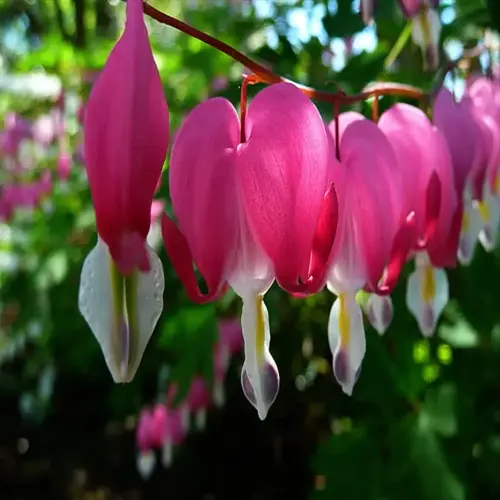

When you touch bleeding heart plant sap with bare skin, you risk getting a rash called contact dermatitis. The sap inside the stems and leaves contains chemicals that irritate skin on contact. A quick brush against whole leaves won't cause trouble. But handling broken stems or crushed foliage exposes you to strong sap that turns your hands red and itchy.
Bleeding heart skin irritation doesn't always show up the first time you handle the plant. I divided a large clump of bleeding hearts bare-handed for three straight years without a single issue. Then one spring afternoon, I split another root ball and woke up the next morning with an itchy, bumpy rash across both palms. A gardening friend told me this is common since the reaction builds up with repeated exposure. Now I never touch these plants without thick gloves on.
The irritants behind the rash are isoquinoline alkaloids found in every part of the plant. NC State Extension identifies these compounds in the flowers, leaves, stems, roots, and seeds. When sap contacts your skin, these alkaloids trigger an immune response that causes redness, itching, and swelling. In more serious cases, you might see small blisters form at the contact site within 24-48 hours. The severity depends on how much sap gets on your skin and how sensitive you are to the compounds.
Penn State Extension confirms that bleeding hearts cause contact dermatitis in humans. Cats and dogs face risks too when they rub against or chew the plant. NC State Extension rates the poison severity as low. The rash is uncomfortable but not dangerous for most adults. Children and people with sensitive skin react more, so keep young kids away from the flowers and stems.
Mild Reaction Most Common
- Symptoms: Redness, mild itching, and slight swelling at the contact area that appears within a few hours of touching the sap.
- Treatment: Wash the area with cool water and soap right away, then apply an over-the-counter hydrocortisone cream to calm the itch.
- Duration: Mild cases clear up on their own within 2-3 days without any lasting effects on your skin.
Moderate Reaction Less Common
- Symptoms: Intense itching, visible rash with raised bumps, and possible small blisters forming within 24-48 hours after exposure.
- Treatment: Apply cool compresses and use antihistamine cream or oral antihistamines to reduce swelling and discomfort through the day.
- Duration: Moderate reactions fade within 5-7 days but may leave temporary dry patches on the affected skin area.
Severe Reaction Rare Cases
- Symptoms: Large blisters, spreading rash beyond the contact area, or swelling that affects hand movement or joint flexibility.
- Treatment: See a doctor if the rash spreads or blisters pop and ooze, as you may need a prescription steroid cream or oral medication.
- Duration: Severe reactions can take 1-2 weeks to heal and may need medical follow-up to prevent secondary infection.
Prevent bleeding heart contact dermatitis by wearing gloves every time you prune or divide. Thick rubber or nitrile gloves block sap from reaching your skin. Long sleeves protect your forearms when reaching into a large clump. Wash your hands and arms with soap and warm water after you finish, even if you wore gloves. Sap can transfer to skin when you pull them off.
Keep a tube of hydrocortisone cream in your garden shed so you can treat any contact right away. The faster you wash off the sap and apply treatment, the milder your reaction will be. I've made glove-wearing a habit for all my bleeding heart work. I haven't had a rash since that one bad experience years ago. In my experience, nitrile gloves and a quick hand wash after the job keep skin trouble away. These are beautiful plants that deserve a spot in your garden. Just treat them with a little respect.
Read the full article: Bleeding Heart Plant Care and Growing Guide