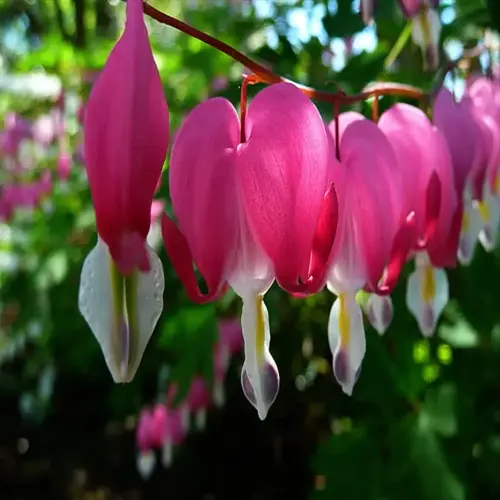

Bleeding heart sun or shade? These plants strongly prefer partial to full shade over direct sunlight. Put them under a tree canopy or on the north side of your house and watch what happens. They'll reward you with weeks of dangling, heart-shaped flowers every single spring.
I grow bleeding hearts on two sides of my yard, and the difference in performance is striking. The ones facing east catch soft morning light for about four hours and then sit in shade the rest of the day. They bloom for a solid six weeks. The plants on my west-facing border get blasted by hot afternoon rays, and their bleeding heart light requirements clearly aren't met there. Those plants yellow out and go dormant a full three weeks earlier than the shaded ones.
The science behind this makes sense once you understand how the plant works. Direct afternoon sunlight speeds up water loss through the leaves faster than the roots can replace it. This heat stress pushes the plant into early dormancy as a survival response. In warm climates, your bloom window shrinks from six weeks down to three or four. Bleeding heart light needs center on cool, filtered spots. These match the woodland floors where the plants grow wild.
UW-Madison Extension data shows bleeding hearts perform best in USDA Zones 2 through 8. Northern gardeners in Zones 2-5 can handle more sun since their summers stay cool. Southern growers in Zones 7-9 need much more shade because the heat triggers early shutdown. If you garden in a warmer zone, tuck your bleeding hearts under the deepest shade you can find. Even a few degrees of extra heat can shave weeks off your bloom time in those southern areas.
Northern Gardens Zones 2 to 5
- Morning sun exposure: Up to 4-5 hours of gentle morning light works well since cooler air temperatures offset the direct rays.
- Afternoon tolerance: Plants can handle dappled afternoon light through a tree canopy without showing stress or wilting badly.
- Bloom duration: Expect 5-7 weeks of flowers when you place plants in partial shade with good air flow around them.
Southern Gardens Zones 6 to 9
- Morning sun exposure: Limit direct sun to 2-3 hours of early morning light before the heat builds up through the day.
- Afternoon shade required: Full shade from noon onward is critical to prevent leaf scorch and premature dormancy in summer heat.
- Bloom duration: With proper shade, southern growers can still get 4-6 weeks of blooms instead of the usual three weeks.
Container Growing All Zones
- Placement flexibility: Pots let you move the plant to follow the shade as the sun angle shifts through the spring season.
- Best position: Place containers on a north or east-facing porch where they get bright indirect light without direct afternoon exposure.
- Watering note: Container plants dry out faster in partial sun, so check soil moisture every day during the blooming period.
Pair your bleeding hearts with shade loving perennials like hostas, ferns, and astilbe. These partners create a layered bed that looks full all season long. Taller plants filter harsh midday light and fill the gap when bleeding hearts go dormant. I planted tall ferns behind mine three years ago. The extra shade extended blooming by almost a full week.
The best setup is morning sun with afternoon shade. You can create this even in an open yard without much effort. Put up a shade cloth on the west side or plant a small tree nearby. Position your bleeding hearts behind taller shrubs for natural cover. These small moves make a big difference in bloom length and foliage health all season long.
Read the full article: Bleeding Heart Plant Care and Growing Guide