
Introduction
The orchid flower shared this planet with dinosaurs for millions of years. These plants have been here for over 100 million years and are still going strong. That kind of track record tells you a lot about how tough they are.
I got my first orchid about 8 years ago from a grocery store. It was a basic Phalaenopsis that cost me $12. That one plant grew into a collection of 40 across 6 genera. The orchid family Orchidaceae holds over 28,000 species in 750 genera. That makes up about 8% of all flowering plant life on Earth.
Orchids are the chameleons of the plant world. Some orchid species grow in steamy tropical jungles. Others cling to rocks on misty peaks or survive near the Arctic. They make up more than 10% of the global pot plant trade too. But most growers miss a key fact. While we enjoy orchids at home, many wild species face real threats in nature.
This guide walks you through popular orchid types and smart care tips. You will also learn about pollination science and color meanings. We cover orchid conservation as well. Pick up your first orchid or push your skills further with advice built on real research.
8 Popular Orchid Flower Types
Not all orchid types grow the same way or need the same care from you. I group them by light needs because that is the first thing you should match to your home. Low light genera like Phalaenopsis and the slipper orchid do great on your shaded sill. Cattleya and Dendrobium want a south facing window with bright light.
I have grown most of these 8 orchid genera over the past few years. The moth orchid Phalaenopsis is where you will most likely start your collection. But genera like Oncidium and Cymbidium can surprise you with blooms that outshine the rest. Here is what you need to know about each one.
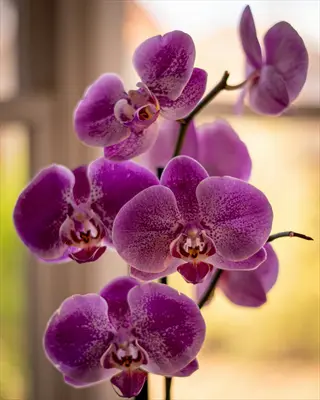
Phalaenopsis (Moth Orchid)
- Light Needs: Thrives in low to medium indirect light around 1,000 to 1,500 footcandles, making it perfect for north or east-facing windows in any home.
- Bloom Duration: Produces arching flower spikes that last 6 to 10 weeks, with blooms in white, pink, purple, yellow, and spotted patterns.
- Growth Style: Monopodial growth habit means it grows upward from a single stem, producing new leaves from the crown and aerial roots from the sides.
- Beginner Rating: Considered the easiest orchid for first-time growers because it tolerates typical indoor temperatures of 65 to 80 degrees Fahrenheit (18 to 27 degrees Celsius).
- Reblooming Tip: Cut the spent flower spike above the second node from the base, and a 10-degree nighttime temperature drop will trigger a new branch spike.
- Fun Fact: Phalaenopsis gets its name from the Greek word for moth because the flowers resemble moths in flight when viewed from the side.
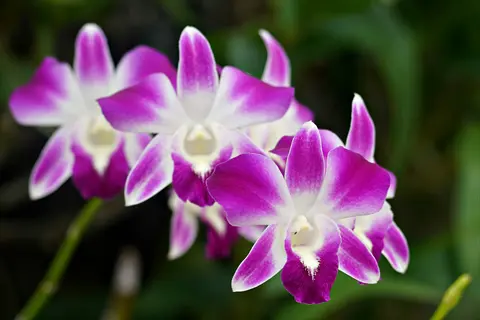
Dendrobium
- Light Needs: Requires bright indirect to direct light around 2,000 to 3,000 footcandles, best in a south or west-facing window with some afternoon shading.
- Bloom Duration: Flowers appear in clusters along cane-like pseudobulbs and last 4 to 6 weeks, often in shades of white, purple, pink, and green.
- Growth Style: Sympodial growth produces tall canes from a rhizome base, with some species reaching 3 feet (90 centimeters) or more in height.
- Care Highlight: Many Dendrobium species need a cool dry winter rest period with reduced watering and temperatures around 50 to 55 degrees Fahrenheit (10 to 13 degrees Celsius) to trigger blooming.
- Species Count: With over 1,400 species, Dendrobium is the third largest orchid genus and includes both evergreen and deciduous types suited to different climates.
- Watch For: If your Dendrobium produces small plantlets called keikis along the cane instead of flowers, it may be getting too much warmth or nitrogen during its rest period.
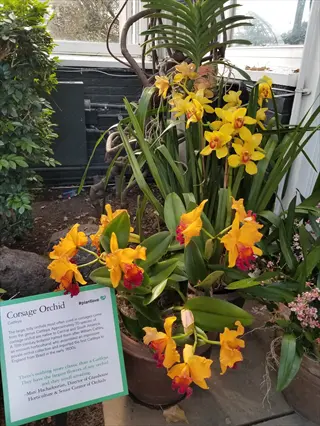
Cattleya (Corsage Orchid)
- Light Needs: Demands high light around 2,000 to 4,000 footcandles, thriving near south-facing windows where leaves turn a healthy light green color.
- Bloom Duration: Produces large, showy, often fragrant blooms lasting 3 to 5 weeks, a classic choice for wedding corsages and formal floral arrangements.
- Growth Style: Sympodial growth with thick pseudobulbs that store water and nutrients, topped by one or two leathery leaves per growth.
- Fragrance: Many Cattleya hybrids produce a rich sweet fragrance that fills an entire room, making them prized by growers who value scent as much as appearance.
- Size Range: Available from standard varieties with 6-inch (15-centimeter) blooms to miniature Cattleyas that fit on a small windowsill and need less light.
- Historical Note: Cattleya was the first tropical orchid grown with success in Europe in the 1800s, helping to spark the Victorian orchid collecting craze known as Orchidelirium.
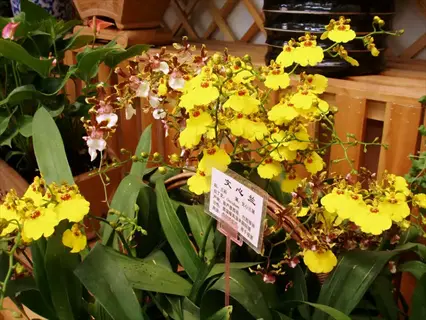
Oncidium (Dancing Lady Orchid)
- Light Needs: Prefers medium to bright indirect light around 1,500 to 3,000 footcandles, performing well on east or soft shaded south-facing windowsills.
- Bloom Duration: Sends out branching sprays of dozens of small flowers lasting 4 to 8 weeks, often in vivid yellows, reds, and tiger-stripe patterns.
- Growth Style: Sympodial growth with rounded pseudobulbs and long grassy or strap-shaped leaves that can cascade over the pot edge.
- Fragrance: The popular hybrid Oncidium Sharry Baby produces a distinct chocolate fragrance that intensifies in warm conditions, making it a conversation starter.
- Watering Tip: Give a full soak when the potting medium is almost dry and the pseudobulbs start to look a bit wrinkled, about every 5 to 7 days in summer.
- Name Origin: Called dancing lady orchid because the ruffled lip of each flower resembles a woman in a flowing skirt swaying in the wind.
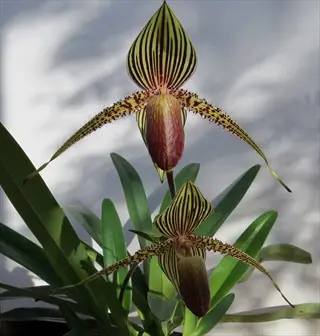
Paphiopedilum (Slipper Orchid)
- Light Needs: Grows best in low light around 800 to 1,200 footcandles, making it one of the few orchids suited to shaded north-facing windows.
- Bloom Duration: Produces a single long-lasting bloom per growth that can stay open for 8 to 12 weeks, among the longest of any orchid genus.
- Growth Style: Sympodial without pseudobulbs, growing as a rosette of leaves with each new growth producing its own distinctive pouch-shaped flower.
- Unique Feature: The slipper-shaped pouch traps visiting insects for a short time, forcing them past the pollen structures in a clever pollination strategy.
- Two Leaf Types: Mottled-leaf varieties prefer warmer conditions around 70 to 80 degrees Fahrenheit (21 to 27 degrees Celsius), while plain green-leaf types grow best in cooler temperatures.
- Conservation Alert: About 90% of assessed slipper orchid species are classified as threatened, making them among the most endangered orchids in the wild.
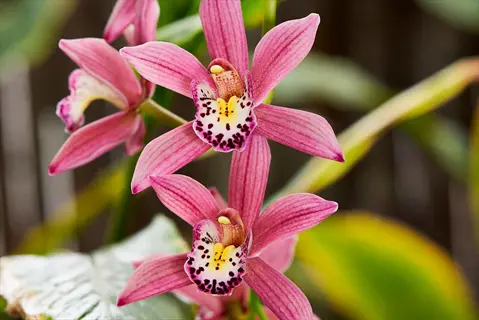
Cymbidium (Boat Orchid)
- Light Needs: Appreciates bright filtered light around 2,500 to 4,000 footcandles and benefits from spending summers outdoors in dappled shade.
- Bloom Duration: Produces tall sprays of 10 to 30 waxy flowers that last 8 to 10 weeks, often in green, yellow, pink, burgundy, and white.
- Growth Style: Sympodial with large oval pseudobulbs and long arching grassy leaves that form dense clumps over time.
- Cool Requirement: Needs cool night temperatures of 45 to 55 degrees Fahrenheit (7 to 13 degrees Celsius) in autumn to initiate flower spikes, making it ideal for cooler climates.
- Outdoor Tolerance: One of the few orchid genera that can tolerate light frost, making it suitable for year-round outdoor growing in mild coastal or Mediterranean climates.
- Cut Flower Use: Cymbidium blooms are popular in floral design and bridal bouquets because their thick waxy petals hold up for weeks after cutting.

Vanda
- Light Needs: Requires very bright light around 3,000 to 5,000 footcandles, often grown in open-air baskets with no potting medium to maximize air circulation.
- Bloom Duration: Blooms 2 to 3 times per year with flat round flowers lasting 4 to 6 weeks, prized for vivid blues, purples, and spotted patterns.
- Growth Style: Monopodial with thick aerial roots that absorb moisture straight from the air through a spongy tissue layer called velamen.
- Watering Approach: Requires daily misting or soaking of exposed roots, above all when grown in hanging baskets without any potting medium around the roots.
- Humidity Needs: Thrives in 60 to 80% humidity, making it better suited to greenhouses, bathrooms, or tropical climates than dry indoor environments.
- Color Rarity: Vanda coerulea is one of the few orchids that produces true blue flowers, making blue Vandas among the most sought-after and valuable orchid specimens.
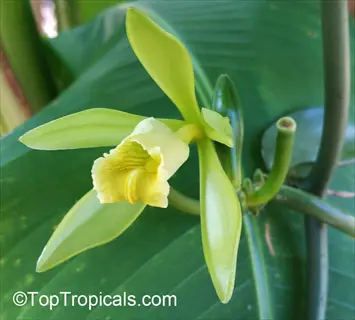
Vanilla (Vanilla Planifolia)
- Light Needs: Prefers bright filtered light around 1,500 to 3,000 footcandles, growing as a climbing vine that can reach 30 feet (9 meters) or more.
- Bloom Duration: Produces clusters of pale yellow-green flowers that each open for only one day and must be hand-pollinated to produce the familiar vanilla bean pod.
- Growth Style: The sole commercial orchid of note that grows as a vine, using aerial roots to climb trees and structures in tropical forests.
- Commercial Value: Vanilla planifolia produces the world's most popular flavor and second most expensive spice, connecting the orchid family to everyday food and beverages.
- Growing Challenge: Requires consistent warmth above 60 degrees Fahrenheit (15 degrees Celsius), high humidity, and a support structure for climbing, making it an advanced grower's project.
- Production Timeline: A vanilla vine takes 3 to 5 years to reach flowering maturity, and seed pods need 8 to 9 months of curing after harvest to develop their characteristic aroma.
Your best bet as a new grower is to start with Phalaenopsis or Paphiopedilum. Both handle low light and forgive your small mistakes. I killed my first Cattleya by giving it too little sun. Once you get your first orchid blooming well, try a Cattleya or Oncidium for more color and fragrance.
Orchid Flower Care Essentials
Good orchid care comes down to getting 4 things right: light, water, temperature, and orchid potting mix. I lost my first 3 orchids before I figured out how these factors work together. The biggest mistake you can make is overwatering. Far more orchids die from too much water than too little.
Most orchids fail to bloom because of bad light or temperatures that stay too flat all day. Your orchid light requirements depend on the genus you grow. Phalaenopsis does fine at 1,000 to 1,500 footcandles while Cattleya needs 2,000 to 4,000. Get a cheap light meter and check your window spots before you place any plant.
Watering orchids is not hard once you learn the rhythm. Soak the bark mix and then let it dry out before you water again. I check mine every 5 to 7 days by sticking a finger into the top inch of the pot. If it still feels damp, I wait. An orchid fertilizer mixed at half strength once a month gives your plants the food they need to push out new spikes.
Here is the orchid care secret that changed everything for me. A 10 degree drop in temperature at night is what triggers most orchids to send up new flower spikes. If your orchid temperature stays the same all day and night, you will get leaves but no blooms. Move your plant near a cool window at night in autumn and watch what happens.
Orchid Biology and Pollination
Orchid evolution goes back 100 to 125 million years to the Late Cretaceous period. That means the orchid on your shelf belongs to a lineage that shared the earth with T. rex. If you think about it, your plant's ancestors survived a mass extinction event. Over that time, orchids built some of the most clever tricks in nature to spread their seeds.
Look at your orchid flower structure and you will notice something unique called pollinia. Instead of loose pollen grains, your orchid packs its pollen into sticky masses. These clumps attach to a visiting insect in one go. When that bug visits the next bloom, the whole package moves over. This orchid anatomy boosts the odds of making seeds far beyond what you would expect from loose pollen.
If you ever grow orchids from seed, you will face a big challenge. Orchid seeds are some of the tiniest in the plant world and each one has no stored energy at all. A single pod can hold tens of thousands of them. To sprout, every seed must form a partnership with mycorrhizal fungi in the ground. Fungi in the genus Ceratobasidium feed your tiny seed until it can make its own food. Without this fungal partner, the seed dies. Scientists have mapped 16 orchid genomes to date. They have also studied mycorrhizal fungi in at least 200 orchid genera.
You will find that orchid pollination tricks vary a lot. Some orchids offer real nectar to bugs as a fair trade for their help. Others fake the look and smell of food to fool their visitors. A few even mimic female insects so well that males try to mate with the bloom. Here are the 4 main ways orchids get the job done.
Food Reward Pollination
- How It Works: Some orchids produce genuine nectar rewards in their spur or lip, attracting bees, butterflies, and hummingbirds that carry pollen between flowers during feeding visits.
- Which Orchids Use It: Genera like Epidendrum and some Dendrobium species use bright colors and sweet nectar to attract specific pollinators to their blooms.
- Why It Matters: Food reward pollination is the most straightforward strategy, creating a mutual exchange where the pollinator gets energy and the orchid achieves cross-pollination.
Food Deception Pollination
- How It Works: These orchids mimic the look and scent of nectar-producing flowers without offering any reward, tricking pollinators into visiting and transferring pollen.
- Which Orchids Use It: Many Orchis species and some Paphiopedilum use this strategy, producing colorful blooms that look rewarding but contain no nectar for visiting insects.
- Why It Matters: About one-third of all orchid species use food deception, making it one of the most common pollination strategies in the entire family Orchidaceae.
Sexual Deception Pollination
- How It Works: The orchid flower mimics the shape, color, texture, and pheromones of a female insect so well that male insects attempt to mate with the bloom and transfer pollen.
- Which Orchids Use It: Australian Chiloglottis and European Ophrys are famous examples, each species targeting a single specific pollinator with remarkable precision.
- Why It Matters: Sexual deception represents one of the most striking examples of orchid evolution in the plant kingdom, requiring orchids to replicate insect signals with great accuracy.
Trap Pollination
- How It Works: The orchid traps an insect inside its flower structure for a short time, forcing it to crawl past the pollen before finding the exit and carrying pollinia to the next bloom.
- Which Orchids Use It: Paphiopedilum slipper orchids use their pouch-shaped lip as a trap, and Coryanthes bucket orchids dunk insects in liquid to guide them past the pollen.
- Why It Matters: Trap pollination ensures that visiting insects make full contact with the pollinia, boosting the success rate of each visit compared to open flower designs.
When you look at these strategies, you see just how far orchids will go to keep their species alive. I find the sexual deception method the most wild of them all. A flower that fools a bug into thinking it found a mate deserves your respect. That is one of nature's greatest con jobs and your orchid family pulls it off every day.
Orchid Flower Color Meanings
Orchid symbolism runs deep across many cultures. The word orchid comes from the Greek word orchis, which refers to the shape of the root tubers. Ancient Greeks tied orchids to strength and power. You can trace orchid cultural significance all the way back to Europe in the 1800s. Rich British collectors spent big money chasing rare blooms in a craze called Orchidelirium.
Today your choice of orchid colour meanings still matters when you pick an orchid gift for someone special. Each color sends a different message. I once gave a yellow orchid to a friend for a new job and she told me it was the most thoughtful gift she got. Knowing the orchid meaning behind each color helps you choose the right one for any occasion.
White Orchid Flowers
- Symbolism: The white orchid meaning centers on purity, innocence, elegance, and reverence, making it one of the most meaningful flower colors across cultures.
- Best Gifting Occasions: Ideal for weddings, sympathy arrangements, new baby celebrations, and religious ceremonies where grace and sincerity are the intended message.
- Cultural Note: In many Asian traditions, white orchids signify respect for elders and are often displayed during memorial ceremonies and spiritual observances.
Purple Orchid Flowers
- Symbolism: The purple orchid meaning conveys royalty, admiration, dignity, and respect, drawing from the long link between purple dye and noble status across many cultures.
- Best Gifting Occasions: Perfect for honoring achievements, showing deep admiration for a mentor, or celebrating milestone birthdays and anniversaries with someone you respect.
- Cultural Note: In Victorian Britain, gifting a purple orchid signaled that you held the person in the highest esteem, making it a flower of social distinction.
Pink Orchid Flowers
- Symbolism: Pink orchids express grace, joy, and gentle affection, carrying a softer romantic message than the deep passion linked to red flowers.
- Best Gifting Occasions: Wonderful for expressing gratitude, celebrating friendships, marking a recovery from illness, or showing love on occasions like Mother's Day.
- Cultural Note: Light pink orchids are linked to happiness and fun, while deeper pink shades lean toward admiration and heartfelt thanks in Western flower language.
Yellow Orchid Flowers
- Symbolism: Yellow orchids represent friendship, new starts, optimism, and joy, making them a cheerful and welcoming orchid gift without heavy romantic overtones.
- Best Gifting Occasions: Excellent for housewarming gifts, cheering on a friend with a new job, welcoming a new neighbor, or brightening someone's day during a hard time.
- Cultural Note: In many East Asian cultures, yellow orchids are linked to good fortune, often displayed during Lunar New Year celebrations to bring positive energy.
You don't need to overthink your orchid gift choice. White works for formal events and purple shows deep respect. Pink says thank you and yellow brings cheer. Match the color to your message and the person will feel the thought you put into it.
Conservation of Wild Orchids
You might not think your windowsill orchid has anything to do with orchid conservation. But here is the truth: while millions of us enjoy orchids at home, wild populations are in real trouble. A 2018 study found that 56.5% of assessed orchid species are threatened. That includes those labeled as endangered orchids at the highest risk of being wiped out for good.
Every orchid species on Earth falls under CITES protection. CITES orchids make up more than 70% of all species on that treaty list. Slipper orchids face the worst odds. About 90% of assessed slipper species count as threatened orchid species. Orchid habitat loss from farming, logging, and urban growth destroys the places these plants need to survive. Climate change adds another blow by pushing bloom times out of sync with their pollinators.
Here is what shocks most growers: scientists had assessed only 948 of the 28,000 known orchid species for the IUCN Red List as of 2017. That is barely 3.4%. The real number of threatened species is almost certain to be much higher. The true loss of orchid species is worse than we know. We haven't checked on most of them yet.
You can support wild orchid protection with your buying choices. I make sure every orchid I buy comes from a nursery that grows from seed or splits, not wild collection. Ask your seller where the plant came from. Choose growers who lab propagate their stock. Your hobby doesn't have to hurt wild orchid populations. Saving these species starts with the choices you make at the store.
Choosing the Right Orchid
Figuring out how to choose an orchid starts with 3 simple questions about your home. How much light does your room get? Do you keep your house warm or cool? Do you want blooms with a strong scent? Your answers point you to the right genus fast. A low light orchid like Phalaenopsis fits most homes while bright rooms open the door to Cattleya, Dendrobium, and Brassia.
The best orchid for beginners is a Phalaenopsis, hands down. When I started growing orchids, I picked a Phalaenopsis because it is the easy orchid to grow in a normal home. It blooms for weeks and forgives you if you forget to water once. Medium light growers like Oncidium and Miltoniopsis make a great next step. A beginner orchid should build your confidence, not test your patience.
If you want a fragrant orchid, you need to pick your genus with care. Cattleya gives you a rich floral scent while Oncidium Sharry Baby smells like chocolate. These work well for orchid for indoor growing if you have enough light. All orchids are safe around pets too. When you buy, ask the seller if plants come from ethical seed propagation rather than wild collection.
Low Light Spaces
- Best Choices: Phalaenopsis and Paphiopedilum both thrive in 800 to 1,500 footcandles, making them ideal for north-facing windows or rooms with limited natural light.
- What to Expect: Phalaenopsis gives you long-lasting blooms in many colors, while Paphiopedilum offers exotic slipper-shaped flowers that last up to 12 weeks per bloom.
- Avoid: Do not attempt Vanda, Cattleya, or Dendrobium in low light because they will produce leaves but refuse to flower without enough brightness.
Bright Sunny Rooms
- Best Choices: Cattleya, Dendrobium, and Vanda flourish in 2,000 to 5,000 footcandles, rewarding bright south or west-facing windows with frequent and dramatic blooms.
- What to Expect: Cattleya delivers large fragrant flowers, Dendrobium produces clusters along tall canes, and Vanda offers vivid colors including rare true blue blooms.
- Avoid: Keep Phalaenopsis and Paphiopedilum away from direct afternoon sun because their thin leaves will develop sunburn patches within hours of direct exposure.
Cool Climate Homes
- Best Choices: Cymbidium is the top pick for cool growers because it needs autumn nights around 45 to 55 degrees Fahrenheit (7 to 13 degrees Celsius) to trigger flowering.
- What to Expect: Cymbidium produces tall sprays of 10 to 30 waxy flowers lasting up to 10 weeks, and it tolerates light frost for short periods during its rest phase.
- Avoid: Tropical genera like Vanda and Vanilla need consistent warm conditions and will suffer root damage if temperatures drop below 60 degrees Fahrenheit (15 degrees Celsius).
Fragrance Seekers
- Best Choices: Cattleya offers rich sweet floral scent, Oncidium Sharry Baby smells like chocolate, and Brassavola releases a citrus fragrance in the evening hours.
- What to Expect: Fragrant orchids tend to scent an entire room during peak bloom, with strength varying by time of day, temperature, and the age of each flower.
- Avoid: Phalaenopsis has almost no scent in most varieties, so skip it if fragrance is your main reason for growing orchids at home.
Match your home conditions to the right genus and you will have blooms year after year. Start simple and learn from your first plant. Then grow your collection from there.
5 Common Myths
Orchids are extremely difficult houseplants that only expert gardeners can keep alive and blooming.
Many orchid species like Phalaenopsis are beginner-friendly and thrive on a windowsill with basic care and weekly watering.
You should water orchids with ice cubes to avoid overwatering and keep the roots cool.
Ice cubes can shock tropical orchid roots because orchids naturally grow in warm environments and prefer room temperature water.
Orchids only bloom once and should be discarded after the flowers fall off the spike.
Healthy orchids rebloom year after year for decades when given a 10-degree nighttime temperature drop and proper post-bloom spike care.
Orchids need regular potting soil like other houseplants to grow healthy roots.
Orchid roots need air circulation and fast drainage, so they require a specialized bark-based or sphagnum moss mix, never standard potting soil.
All orchids need bright direct sunlight to produce flowers and stay healthy.
Many popular orchids like Phalaenopsis and Paphiopedilum prefer low to medium indirect light, and direct sun can burn their leaves.
Conclusion
The orchid flower family holds over 28,000 species that span every corner of the globe. You now know the key orchid types, what each one needs to thrive, and how to match a genus to your home. The care basics are simple: give your plant the right light, don't overwater, and use a 10 degree night drop to push new blooms.
When I first learned about pollination science and color meanings, it changed how I looked at my plants. Each orchid flower on your shelf carries millions of years of evolution behind it. Your orchid care routine connects you to the same forces that shaped these blooms long before us. That is a pretty cool thing to think about when you water your Phalaenopsis on a Sunday morning.
Orchid conservation matters more now than ever. When you buy from honest growers who propagate from seed, you help protect wild populations. Your orchid growing at home doesn't have to harm wild orchid populations. You can enjoy this hobby and support the plants in their natural habitats at the same time.
New hybrid orchid types hit the market every year. Orchid growing is more open to everyone now than at any point before. Start with one plant, learn its rhythms, and let your collection grow from there. These plants have survived for 100 million years. With your care, they will keep going strong.
External Sources
Frequently Asked Questions
How do you take care of a potted orchid?
Place potted orchids in bright indirect light, water when the top inch of bark feels dry, ensure good drainage, and fertilize monthly during the growing season.
What is special about orchid flowers?
Orchid flowers are special because they belong to one of the largest plant families with over 28,000 species, use unique pollination tricks, and have evolved for over 100 million years.
How do you keep an orchid blooming?
Keep orchids blooming by providing bright indirect light, a 10-degree nighttime temperature drop, consistent fertilizing, and proper spike management after blooms fade.
What do orchid flowers symbolize?
Orchid flowers symbolize love, beauty, luxury, and refinement, with specific meanings varying by color and culture.
How often should I water my orchid?
Water most orchids once every 7 to 10 days, allowing the potting medium to dry slightly between waterings, and adjust frequency based on humidity and season.
Can orchids grow in water?
Yes, orchids can grow in water using a semi-hydroponic method where roots sit in water with regular flushing to prevent rot and provide oxygen.
What not to do with orchids?
Do not overwater, use regular potting soil, place in direct sunlight, ignore root health, or throw away orchids after blooms drop.
What is the lifespan of an orchid?
With proper care, orchid plants can live for 15 to 20 years or longer, producing new blooms each year.
Do orchids like to be wet or dry?
Most orchids prefer a wet-dry cycle where roots get thoroughly watered and then allowed to nearly dry out before the next watering.
Which color orchid is lucky?
Purple and yellow orchids are considered the luckiest, with purple symbolizing wealth and admiration and yellow representing friendship and new beginnings.