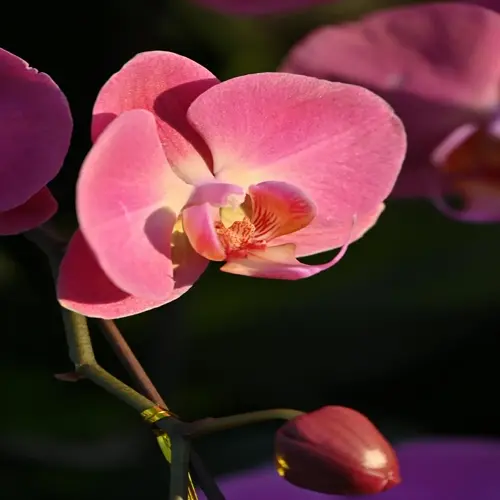

You care for a potted orchid by copying the warm and humid tropical setting these plants come from. Give them bright filtered light, water only when roots dry out, and use a chunky bark mix instead of regular dirt. Get these three basics right and your orchid becomes one of the easiest houseplants you can own.
The biggest lesson I learned with potted orchid care came from my first Phalaenopsis. I stuck it in a pretty ceramic pot with no drainage holes and watered it on a fixed schedule. Within a month the roots turned brown and mushy. That one mistake taught me that orchids sit in standing water about as well as a cat sits in a bathtub. Now I only use pots with drainage holes, and I let the water run straight through every time.
Potted orchids differ from regular garden plants in some important ways. Their roots need air flow, which is why you pot them in bark chips or sphagnum moss rather than soil. Many growers use clear plastic pots so the roots can absorb light and carry out photosynthesis on their own. The roots also serve as your best care indicator. Green roots mean the plant has enough water. Silver or gray roots mean it's time to give it a good soak.
The United States Botanic Garden says most orchid deaths trace back to just two causes: too little light and too much water. Place your orchid near an east or south-facing window where it gets bright light without harsh direct sun. Your Phalaenopsis also needs a 10-degree nighttime temperature drop for about four weeks to push out a new flower spike. Set it near a cool window in autumn and you'll give it that signal.
Check Root Color
- When to water: Peek at the roots through the clear pot and look for silver or light gray color, which signals the plant needs a drink.
- How to water: Run room temperature water through the bark for 30 seconds and let it drain out the bottom holes before placing it back.
- Avoid ice cubes: Cold water shocks tropical roots and can damage tissue over time, so stick with water at room temperature.
Monthly Fertilizer Feed
- Formula choice: Use a balanced 20-20-20 orchid fertilizer diluted to quarter strength once per month during the growing season.
- Timing matters: Feed only when the plant shows active growth like new leaves or roots, and skip fertilizer during dormant winter months.
- Flush the pot: Water once without fertilizer between feedings to wash away mineral salt buildup that can burn roots.
Quarterly Pot Rotation
- Even light exposure: Turn the pot a quarter turn every 3 months so the plant grows straight and leaves develop on all sides.
- Check for repotting: Look for roots pushing out the drainage holes or bark breaking down into mush, both signs you need a fresh pot.
- Best time to repot: Swap to new bark mix right after blooms drop, giving the orchid a full growth cycle to settle into its new home.
Your home sits around 30-40% humidity in winter, but orchids prefer 50-70%. A small pebble tray filled with water under the pot raises moisture around your plant without soaking the roots. You can also group a few houseplants together to bump up the humidity in that area.
For anyone starting out with orchid plant care indoors, keep things simple. Pick a bright spot away from heating vents, water when roots go silver, feed once a month, and leave the plant alone the rest of the time. Orchids reward patience more than fussing. My oldest Phalaenopsis has bloomed twice a year for six straight years now, and I spend less than five minutes a week on it.
Read the full article: Orchid Flower: Complete Growing Guide