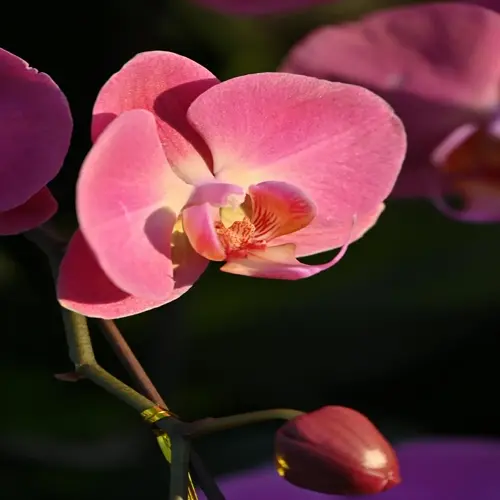

You keep an orchid blooming by giving it two things most homes don't provide: bright light and cool nights. These two factors matter more than any fancy fertilizer or watering trick. Get them right and your orchid will push out new flower spikes on its own schedule.
I proved this with a Phalaenopsis that sat flowerless for over a year. In early October I moved it to a spot 6 inches from an east-facing window where cool autumn air came through the glass at night. Six weeks later a bright green spike pushed up between the leaves. That one change turned a stubborn plant into a reliable bloomer. I've used the same trick every fall since then and it works every single time.
The science is simple. In the wild, orchids feel seasonal temperature shifts that tell them when to flower. Your Phalaenopsis needs a 10-degree Fahrenheit drop (about 6°C) between day and night to start building a spike. Most homes stay at a steady 68-72°F all day and all night. That gives your orchid no signal to bloom. A window that cools to the mid-50s at night in fall provides the trigger your plant has been waiting for.
The USBG backs this up. They say most orchids fail to bloom because they get too little light or their temperature stays too flat. Once your orchid does bloom, what you do with the old spike matters a lot. Here are the best orchid reblooming tips for you. After the last flower drops, find the second node from the base of the spike. Cut just above it with clean scissors. This tells your Phalaenopsis to branch from that point and grow a second round of flowers. If the whole spike turns brown and dry, cut it down to the base and wait for a fresh one to form.
Your fertilizer choice helps your orchid bloom longer too. Switch to a bloom-boosting formula with higher phosphorus (like 10-30-20) once you see buds forming on the spike. Feed at quarter strength every two weeks while flowers stay open. Stop feeding once all the blooms drop and your plant enters its rest period. This gives your orchid the extra energy it needs to keep flowers going for the full 2 to 3 months that Phalaenopsis blooms can last.
A few small habits protect the flowers you've worked hard to grow. Keep your blooming orchid far from the fruit bowl. Ripe fruit gives off ethylene gas that speeds up flower aging. This gas can cut your bloom life by weeks. Keep the bark mix moist but not soggy. And don't move your plant once buds start forming. Orchids point their buds toward the light source, and turning the pot makes buds twist or fall off.
I tested moving a budding orchid once just to see what would happen. Three of the five buds dropped within a week. Since then I pick my orchid's spot before the spike appears and I leave it there until every flower opens and fades on its own. Your patience will pay off with blooms that last months, often twice per year, from a single plant that costs less than a bouquet of cut roses.
Read the full article: Orchid Flower: Complete Growing Guide