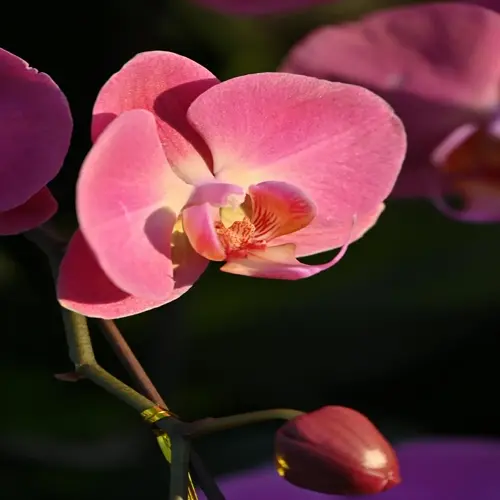

The answer to whether orchids wet or dry is both, just not at the same time. Most orchids prefer a cycle where their roots get thoroughly soaked and then dry out almost all the way before the next watering. This rhythm mimics what happens on a tropical tree branch during rainy season. Heavy rain drenches the roots and then warm breezes dry them within hours.
I spent my first two years with orchids stuck in one extreme or the other. First I kept the bark damp all the time and lost two plants to root rot. Then I overcorrected and let them dry out for weeks, which left the roots shriveled and gray. Finding the orchid wet dry cycle was the turning point. Now I soak the bark until water flows from the bottom, then I don't touch the plant again until the roots go silver and the pot feels light. That simple rhythm keeps every orchid in my collection healthy.
The science behind this cycle starts with how orchids grow in nature. Your orchid is most likely an epiphyte. That means it clings to tree branches in the wild instead of growing in ground soil. When a tropical rainstorm hits, their roots absorb water through a spongy outer layer called the velamen. This tissue soaks up moisture in seconds. Once the rain stops, the wind and warmth dry those exposed roots fast. The velamen then slows moisture loss and keeps your roots fed until the next rain hits.
The USBG confirms that far more orchids die from overwatering than underwatering. Roots that sit in moisture without a drying period lose access to oxygen and start to decompose. If you have to pick between too wet and too dry, lean toward dry. An orchid that goes a few extra days without water will recover fast once you soak it. One that sits in soggy bark for a week may lose its entire root system.
Not every orchid shares the same orchid moisture preference though. Cattleya and Dendrobium orchids want their bark to dry out more between waterings. Their thick pseudobulbs store water reserves that carry them through dry spells. Paphiopedilum orchids (lady slippers) like a bit more steady moisture. They lack pseudobulbs so they can't store water on their own. Phalaenopsis falls in the middle. Let it approach dryness but don't leave it bone dry for days.
Reading moisture cues takes the guesswork out of this cycle. If your orchid sits in a clear pot, the roots tell the whole story. Green means wet. Silver means dry. You can also lift the pot. A freshly watered orchid feels much heavier than a dry one. After a few weeks of checking you'll know the difference by feel alone. Condensation on the inside of the pot means moisture remains in the bark and you should wait. Master these signals and you'll never have to guess when to water again.
Read the full article: Orchid Flower: Complete Growing Guide