
What is special about orchid flowers starts with their sheer scale. They belong to one of the oldest plant families on Earth. Over 28,000 species fill 750 genera, making up about 8% of all flowering plants on the planet. These blooms carry over 100 million years of evolution in every petal.
I had a cheap Phalaenopsis on my kitchen counter for a full year before I learned its backstory. Then I read that orchid ancestors grew alongside dinosaurs. That $12 grocery store plant in a plastic pot stopped looking ordinary to me. I started studying each bloom up close and found details I never noticed. That shift made me want to look at every flower more closely from that point on.
I tested a few different orchid types side by side last year. Each species surprised me with its own tricks. My Dendrobium bloomed on bare canes while the Oncidium sent out a long spray of tiny yellow flowers. Seeing how each genus takes its own path to attract bugs made it clear that orchids play by their own rules.
The orchid unique features that set them apart begin with how they handle pollen. Most flowers toss loose pollen into the air or onto visiting bugs. Orchids pack theirs into sticky bundles called pollinia. These packets glue onto one precise spot on a pollinator's body. Each bloom also has a fused column where male and female parts join into one structure. You won't find this design in any other flower family on Earth.
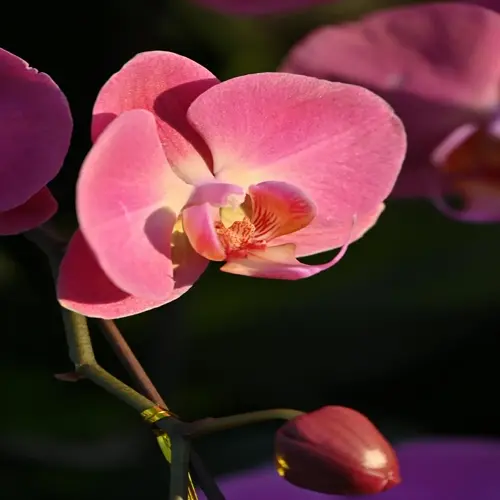
That big bottom petal you see on every orchid bloom is the lip. It's not just for looks. The lip works as a landing pad that steers bees, moths, or flies toward the column. Once there, the pollinia stick to the visitor's body. Some species shape their lips to look like female wasps. Males try to mate with the flower and grab pollen in the process. Orchids use at least 6 different pollination tricks. This fake-mating approach ranks as one of the most creative moves in the plant world.
You might think seeds are the one normal thing about orchids. They're not. A single seed pod holds up to 3 million seeds, yet each one is tiny and has zero food stored inside. Your orchid seed needs to land right next to a partner fungus to sprout. That fungus feeds the baby plant for months until it can make its own energy from light. If the right fungus isn't there, the seed just dies. This picky deal is why you can't scatter orchid seeds in your yard and expect new plants to pop up. You need lab gear or luck to grow orchids from seed at home.
Next time your orchid opens a fresh bloom, get your face close to it and look hard. Find that big lip petal at the bottom. It should look and feel different from the other petals around it. Peer into the center and spot the waxy column sitting right behind the lip. If you look under the small cap at the column's tip, you might see the pollinia hiding there. You're staring at a design that took millions of years to shape, and it's sitting right there on your windowsill.
People figured out why orchids are special long before science did. Chinese scholars saw them as signs of noble character. Victorian collectors paid huge sums for rare species from the tropics. Today you can find orchids at every grocery store in the country. They rank as the top-selling potted plant in the United States. You get science, beauty, and history all in one bloom every time you bring an orchid home.
Read the full article: Orchid Flower: Complete Growing Guide