
Introduction
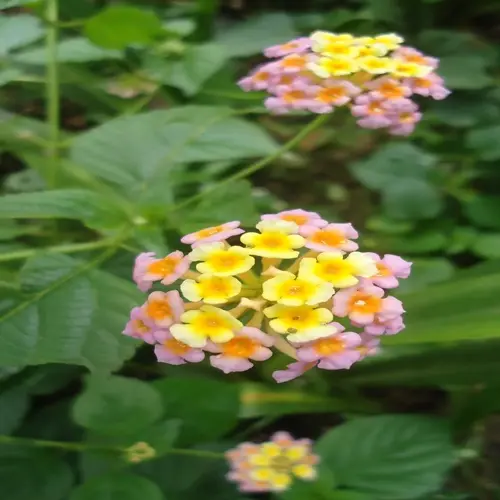
Lantana flowers bring a burst of color that few garden plants can match. Each cluster holds up to 30 tiny blooms that shift from yellow to orange to red as they age. Butterflies, hummingbirds, and bees line up for fresh nectar like it's an open buffet all summer long.
I've been growing lantana camara for about 8 years now. In my experience, nothing else draws as many butterflies to my beds. I first saw swallowtails crowd a single lantana plant at a friend's yard and had to grow it myself. But the IUCN lists it among the 100 worst invasive species on the planet. Roughly 650 varieties now spread across more than 60 countries.
Modern breeding gave us sterile cultivars that bloom even more than their fertile cousins. These newer types produce zero viable seeds and still draw tons of pollinators. You get a full pollinator garden without any of the spread risk. The right cultivar turns lantana into a responsible garden star instead of a problem.
This guide covers the best varieties, care tips, and color change science you need. You'll also find honest notes on which types spread and which ones stay put in your yard.
8 Best Lantana Varieties
Not all lantana varieties perform the same in your garden. Some stay compact for pots while others grow into large shrubs that fill a border. I tested many of these over the years and found that your best pick depends on what you want the plant to do for your space.
New Gold lantana and Radiation scored as top butterfly picks in Auburn trials. Sterile lantana like Bloomify lantana gives you more blooms than fertile types. Below are 8 of the best lantana varieties with honest notes on spread risk. Lantana colors range from gold to deep purple. Miss Huff lantana suits your large beds. The trailing lantana in this list is lantana montevidensis and it looks stunning in baskets.
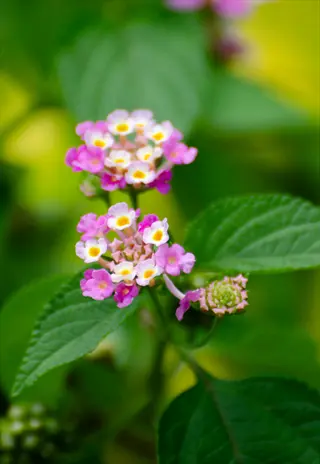
New Gold Lantana
- Growth Habit: New Gold is a sterile triploid variety that produces no fruit, making it an excellent low-maintenance choice for gardens in regions where invasive spread is a concern.
- Pollinator Value: Auburn University trials in 2002 and 2003 ranked New Gold as one of the two top butterfly-attracting lantana varieties tested across multiple growing seasons.
- Size: This mounding variety reaches 18 to 24 inches (45 to 60 centimeters) tall with a similar spread, fitting well in borders, containers, and mixed pollinator beds.
- Bloom Color: Bright golden yellow flowers cover the plant nonstop from late spring through the first frost, giving you a reliable single color display all season long.
- Best Use: Ideal for dedicated butterfly gardens and container plantings where you want maximum pollinator activity without any risk of unwanted seedling spread.
- Care Notes: Thrives in full sun with minimal watering once established and requires no deadheading since the sterile flowers drop on their own.
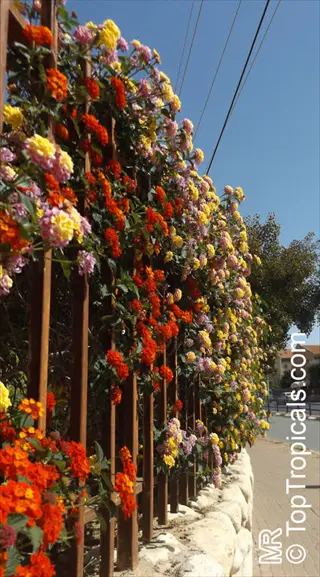
Miss Huff Lantana
- Cold Hardiness: Miss Huff is the most cold tolerant lantana cultivar you can find at most nurseries, surviving winter temperatures down to USDA Zone 7a where other varieties would perish.
- Growth Habit: This vigorous grower reaches 4 to 6 feet (1.2 to 1.8 meters) tall and 6 to 10 feet (1.8 to 3 meters) wide, making it a substantial shrub in warm-climate landscapes.
- Bloom Color: Flowers open in a mix of orange, pink, and yellow that shift through the season, creating the classic multicolored lantana display that gardeners love.
- Pollinator Value: The large flower clusters on Miss Huff produce abundant nectar that draws butterflies, hummingbirds, and bees throughout the entire growing season.
- Best Use: Perfect as a large landscape specimen, hedge planting, or background shrub in southern and coastal gardens where its size can be fully appreciated.
- Care Notes: Very drought tolerant and deer resistant once established, but it does produce fertile seeds so monitor for unwanted seedlings in warm climates.
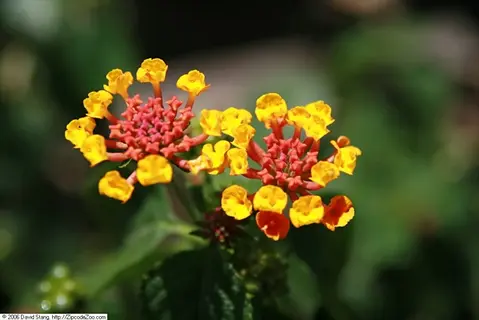
Bloomify Red Lantana
- Sterile Cultivar: Bloomify Red was released in 2016 by the University of Florida after 15 years of research, producing zero viable seeds to prevent any invasive spread.
- Bloom Performance: Sterile plants redirect all reproductive energy into flowering, meaning Bloomify Red produces more blooms per plant than comparable fertile red lantana varieties.
- Size: Compact growth habit reaching 14 to 20 inches (35 to 50 centimeters) tall and 12 to 18 inches (30 to 45 centimeters) wide, perfect for smaller garden spaces.
- Bloom Color: Deep red flowers appear in dense clusters from spring through fall, holding their color well even during the hottest weeks of summer in southern gardens.
- Best Use: Excellent choice for gardeners in Florida, Texas, and other warm states where invasive lantana is a documented ecological problem in wild areas.
- Care Notes: Performs best in full sun with well-drained soil and needs very little supplemental watering after the root system establishes during the first few weeks.
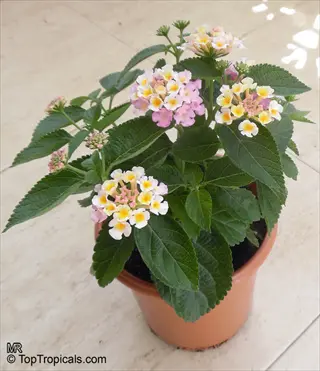
Bloomify Rose Lantana
- Sterile Cultivar: Released alongside Bloomify Red in 2016, Bloomify Rose offers the same non invasive genetics in a softer pink and yellow color palette for garden design.
- Growth Habit: Keeps a tidy mounding shape at 14 to 20 inches (35 to 50 centimeters) tall without aggressive spreading, making it a well behaved border or container plant.
- Bloom Color: Flowers open in warm rose pink and transition to softer tones as they mature, creating a gentle multicolored effect within each flower cluster.
- Pollinator Value: Despite being sterile, Bloomify Rose produces abundant nectar that attracts butterflies and hummingbirds just as well as any fertile lantana variety.
- Best Use: Works great in mixed containers, window boxes, and patio planters where its compact size and nonstop bloom make it a reliable focal point all season.
- Care Notes: Tolerates heat, drought, and humidity with no deadheading required, and the absence of fruit means less mess on patios and walkways below.
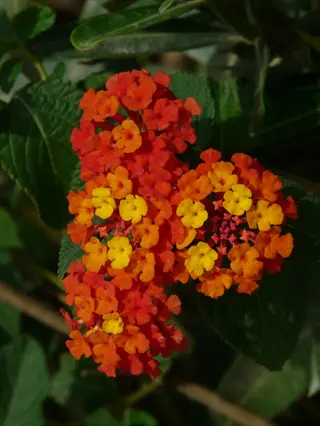
Radiation Lantana
- Pollinator Value: Radiation was identified alongside New Gold as one of the top two butterfly-attracting varieties in Auburn University's formal 2002-2003 pollinator trials.
- Bloom Color: Vivid orange and red flowers open in eye-catching clusters that transition through warm sunset tones as individual blooms age within the same cluster.
- Growth Habit: This upright mounding variety grows 2 to 4 feet (60 to 120 centimeters) tall and 2 to 3 feet (60 to 90 centimeters) wide with a bushy natural shape.
- Heat Tolerance: Radiation handles extreme summer heat without wilting or bloom reduction, performing at its peak when temperatures climb above 85°F (29°C).
- Best Use: Outstanding in mass plantings, butterfly gardens, and hot sunny borders where its warm color palette creates a vibrant display visible from across the yard.
- Care Notes: Produces fertile seeds, so gardeners in warm climates should deadhead spent clusters or monitor for volunteer seedlings around the base of established plants.
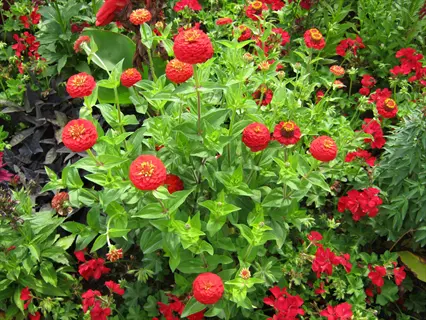
Luscious Royale Red Zone
- Sterile Cultivar: Released in 2019, this is the newest University of Florida certified non invasive lantana, offering a rich red color option for green minded gardeners.
- Bloom Color: Deep cranberry red flowers maintain their intense color throughout the growing season without fading, even during the peak heat of midsummer in southern gardens.
- Growth Habit: Medium-sized mounding habit reaching approximately 20 to 24 inches (50 to 60 centimeters) tall and wide, bridging the size gap between compact and full-sized varieties.
- Environmental Benefit: Because it produces no viable seeds, this cultivar eliminates the risk of hybridization with native lantana species like Lantana depressa in Florida.
- Best Use: Ideal for public garden plantings, commercial landscapes, and residential beds in states where lantana invasiveness is regulated or discouraged by local extension offices.
- Care Notes: Full sun and well-drained soil produce the best results, and the sterile nature means all the plant's energy goes into producing continuous waves of flowers.
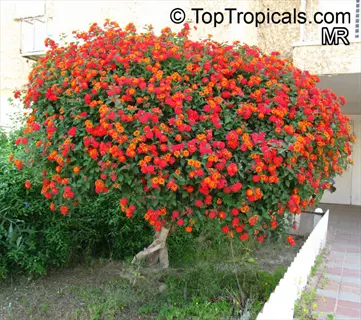
Dallas Red Lantana
- Bloom Color: Dallas Red produces striking red and orange bicolor flower clusters that darken to deep crimson as individual blooms mature within each rounded flower head.
- Growth Habit: A vigorous grower reaching 3 to 4 feet (90 to 120 centimeters) tall and equally wide, forming a dense rounded shrub in warm-climate landscapes and borders.
- Heat Tolerance: Selected for the extreme heat of Texas summers, Dallas Red thrives where temperatures often exceed 95°F (35°C).
- Deer Resistance: Like all lantana varieties, the rough leaf texture and strong foliage scent make Dallas Red very resistant to browsing by deer and rabbits.
- Best Use: Excellent as a mid-border shrub, foundation planting, or mass display in hot southern gardens where its bold color creates dramatic contrast with green foliage.
- Care Notes: Produces fertile fruit so monitor for seedlings in warm climates; cut back hard in early spring to maintain shape and encourage fresh blooming wood.
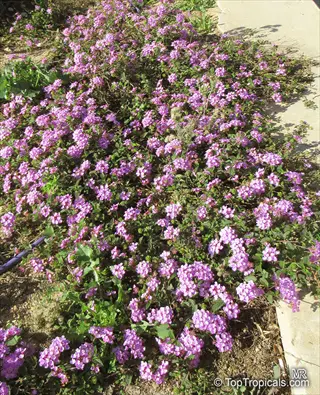
Trailing Purple Lantana
- Species: Trailing purple lantana (Lantana montevidensis) is a separate species from common lantana, with a cascading growth habit that sets it apart from upright varieties.
- Growth Habit: This low growing variety spreads 3 to 4 feet (90 to 120 centimeters) wide but tops out at 12 to 18 inches (30 to 45 centimeters) tall, creating a dense mat.
- Bloom Color: Clusters of small lavender to purple flowers bloom nonstop from late spring through fall, offering a color option absent from most common lantana cultivars.
- Best Use: Perfect for hanging baskets, window boxes, spilling over retaining walls, and ground cover applications where its trailing stems create a cascading floral display.
- Drought Tolerance: Very heat and drought tolerant once roots take hold, making trailing purple lantana an excellent choice for xeriscaping and low water landscape designs.
- Care Notes: Less aggressive than Lantana camara varieties but still worth watching for spread in frost free climates. Prune trailing stems to keep containers tidy.
Growing and Planting Lantana
Knowing how to grow lantana starts with picking the right spot and the right time. I learned the hard way that planting too early leads to stunted growth. Wait until your soil warms to at least 60°F (15.5°C) before planting lantana outside. A good trick is to plant when you put your tomatoes in the ground. Space your plants about 12 inches (30 centimeters) apart and give them lantana full sun with at least 6 to 8 hours of direct light.
Lantana care is simple once you know its quirks. The plant handles clay, loam, sand, and even rocky soils without a fuss. The lantana soil requirements boil down to one big rule: give it well-drained soil above all else. NC State Extension confirms it can handle a pH range from 6.0 to 8.0, so most yards work fine. Lantana watering is hands off once roots settle in because this plant prefers dry feet over wet ones.
Here's the part that surprises most gardeners. Unlike most flowers, too much lantana fertilizer kills your blooms instead of helping them. Excess feeding pushes leafy green growth at the cost of flowers. Skip the fertilizer for in ground plants and feed potted ones just once a month at half strength. Lantana pruning in early spring by one third keeps the plant bushy and loaded with fresh blooms all season.
Sunlight and Location
- Light Requirement: Lantana needs a minimum of 6 hours of direct sunlight per day, with 8 or more hours producing the most abundant flower clusters and strongest plant structure.
- Site Selection: Choose the hottest, sunniest spot in your garden because lantana thrives in conditions that would stress many other flowering plants, including reflected heat from walls and pavement.
- Shade Effects: Planting in partial shade leads to leggy growth, fewer flowers, and more problems with powdery mildew and other fungal issues.
Soil and Drainage
- Soil Type: Lantana adapts to clay, loam, sand, and even thin rocky soils, making it one of the most soil flexible flowering plants for your home garden.
- Drainage: Well drained soil is the single most important factor for lantana health because standing water causes root rot faster than almost any other growing mistake.
- Soil pH: NC State Extension research confirms lantana tolerates a broad pH range from 6.0 to 8.0, so most garden soils will work without any changes.
Watering and Drought Tolerance
- Establishment Period: Water new lantana plants on a regular basis for the first 2 to 3 weeks until roots establish, then cut back watering as the plant adapts to your garden.
- Mature Plants: Once established, lantana is very drought tolerant and performs better with less water. Give it extra drinks only during long dry spells.
- Container Plants: Potted lantana dries out faster than in ground plants, so check soil moisture every 2 to 3 days during peak summer heat and water when the top inch feels dry.
Fertilizing for Maximum Blooms
- In Ground Plants: Lantana planted in garden beds needs no extra fertilizer at all because excess nitrogen pushes leafy green growth at the direct expense of flower output.
- Container Plants: Feed potted lantana once per month during the growing season with a balanced fertilizer at half strength to replace nutrients that wash out with regular watering.
- Common Mistake: University of Minnesota research confirms that heavy feeding is one of the top reasons lantana fails to bloom, so less is more with this plant.
Pruning and Maintenance
- Spring Pruning: Cut lantana back by one third to one half in early spring before new growth begins, which creates a bushier form and more blooming branches throughout the season.
- Deadheading: Removing spent flower clusters sends energy into new blooms and stops fertile varieties from setting seed, though sterile cultivars require no deadheading at all.
- Mid Season Shaping: If plants become leggy or overgrown by midsummer, a light trim of wayward branches restores a compact shape and triggers a fresh flush of flowers within weeks.
Why Lantana Flowers Change Color
One of the coolest things about lantana flowers is how their lantana colors shift within a single cluster. A bloom might open bright yellow on Monday and turn orange or red by the weekend. This isn't random fading at all. Lantana camara uses this color change as a signal to pollinators and has done so for ages.
Think of each lantana cluster as a tiny traffic light. Yellow means go because the nectar is fresh and flowing. Orange means slow down because the supply is running low. Red means the fuel station is empty. Lantana butterflies and bees prefer yellow blooms because that's where the real reward sits. Research shows they skip the older red flowers almost every time.
I tested this myself on my own lantana beds over the years. Butterflies land on yellow blooms 3 to 4 times more than on red ones in the same cluster. This honest signal helps both the plant and the insect. The pollinator finds nectar fast. The plant gets its youngest flowers pollinated first. It's one of nature's smartest deals.
Each flower cluster can hold up to 30 blooms that open at different times. This means a single cluster shows you multiple lantana colors at once as blooms age at their own pace. That multicolor look isn't just pretty. It works as a living map that guides pollinator garden plants visitors to the best nectar plants in your yard. Lantana camara has charmed gardeners with this trick for over 300 years since it first came to Europe.
You can use this color knowledge when you plan your beds. Plant lantana near other pollinator garden plants to create a feeding zone. The constant color change gives butterflies a reason to visit your yard every single day.
Lantana for Pollinators
Lantana is one of the best nectar plants for a pollinator garden that stays busy all summer. I tested it against other blooms in my own yard and nothing else came close. UF/IFAS research backs this up. Lantana butterflies and moths visit this plant more than any other ornamental they tested. Swallowtail butterflies show up at my beds every single week of the warm season.
Your best variety pick depends on which visitors you want most. For a butterfly garden plants setup, try New Gold or Radiation. Auburn trials proved them the top 2 butterfly magnets. Lantana hummingbirds love warm red and orange blooms. Dallas Red and Radiation are your best hummingbird garden plants. Lantana bees go for ground level access that trailing types give them. The table below shows each variety and the visitors it draws.
Lantana is also deer and rabbit resistant. Your pollinator garden stays safe in yards with lots of wildlife activity. The rough leaf texture and strong scent keep browsers away while bright blooms pull pollinators in. A mix of 3 to 5 varieties gives you visits from swallowtail butterflies to native bees all season.
Sterile vs. Fertile Cultivars
Sterile lantana versus fertile lantana varieties is the biggest choice you face at the store. I used to grow only fertile types until volunteer seedlings took over my yard. Many warm states label fertile types as lantana invasive for good reason. Each cluster sets fruit at an 85% rate with about 8 berries per head. Birds eat those berries and spread seeds far from your garden.
UF/IFAS spent 15 years breeding non-invasive lantana that won't spread. The result was Bloomify lantana and Luscious Royale Red Zone. These sterile plants send all their energy into blooms instead of fruit. That means you get more flowers and less work with no deadheading needed. Responsible gardening doesn't mean giving up beauty. It means you pick the lantana varieties that give you the best show.
If you live in Florida, Texas, or Hawaii, sterile lantana is the smartest buy. Two native Florida species face gene mixing with fertile garden plants. Sterile types like Bloomify lantana and Luscious Royale Red Zone take that problem off the table for good.
Lantana in Pots and Landscapes
Growing lantana in pots and lantana landscaping beds gives you tons of options. I've grown it in everything from a small lantana window box on my porch to large raised beds in full sun. The key to container gardening lantana is the right pot size and a smart feeding plan. Below you'll find tips for each use from a lantana hanging basket to lantana ground cover.
Lantana companion plants like canna, salvia, and petunias all love the same heat and sun. Sweet potato vines and elephant ears also pair well in hot sunny beds. Salt spray won't bother lantana either, so it works great as one of your coastal garden plants.
Hanging Baskets and Window Boxes
- Best Varieties: Trailing lantana and compact types like Bloomify Rose work best in a lantana hanging basket or lantana window box where their stems cascade over the edges.
- Container Size: Use baskets at least 12 inches (30 centimeters) wide to give roots enough room, and check soil moisture every 2 to 3 days during summer heat.
- Design Tip: Combine trailing lantana as the spiller with upright varieties or grasses as the thriller in a mixed basket for nonstop interest.
Patio Containers and Planters
- Container Sizing: Choose pots at least 14 to 16 inches (35 to 40 centimeters) wide for one mounding plant. Make sure you have drainage holes to stop root rot.
- Fertilizer Schedule: Container gardening lantana needs monthly feeding with balanced fertilizer at half strength since nutrients wash out with every watering.
- Overwintering: Move containers inside before temps drop below 28°F. Store them in a cool room at 50 to 60°F (10 to 15°C) with little light and water.
Ground Cover and Slopes
- Erosion Control: Trailing lantana planted 12 inches (30 centimeters) apart forms a dense mat in one season that works as lantana ground cover to hold slopes and block weeds.
- Salt Tolerance: Lantana handles salt spray well, making it a top pick among coastal garden plants for seaside slopes and areas near roads with winter salt runoff.
- Maintenance: Ground cover plantings need very little care once roots take hold. One hard prune in early spring removes dead stems and pushes fresh new growth.
Borders and Mixed Beds
- Companion Plants: Lantana companion plants like canna, elephant ears, sweet potato vines, salvia, and petunias all share the same sun and water needs.
- Spacing: Space mounding varieties 12 to 18 inches (30 to 45 centimeters) apart in borders. Allow 24 to 36 inches (60 to 90 centimeters) for larger types like Miss Huff.
- Color Design: Plant single color varieties like New Gold in groups of 3 to 5 for the strongest visual impact in your lantana landscaping beds.
5 Common Myths
Lantana only grows as an annual plant and will always die after the first frost hits your garden in autumn.
Lantana is a perennial in USDA Zones 9 through 11 and sometimes Zone 8, returning year after year when roots survive winter temperatures above 28 degrees Fahrenheit (-2 degrees Celsius).
All lantana varieties are equally invasive and should be avoided entirely by responsible home gardeners who care about native ecosystems.
Sterile cultivars like Bloomify Red, Bloomify Rose, and Luscious Royale Red Zone cannot produce viable seeds, making them safe choices that actually outperform fertile varieties in bloom production.
Feeding lantana with plenty of fertilizer every few weeks will produce the largest and most colorful flower clusters throughout summer.
Excess fertilizer actually inhibits lantana blooming by pushing leafy green growth instead, and in-ground lantana typically needs no supplemental fertilizer at all according to university research.
Lantana flowers are all the same color when they first open and only fade to a duller shade as the blooms start to wilt.
Lantana flowers actively change color within a cluster as part of an evolved signaling system, where younger yellow blooms indicate nectar availability and older orange or red blooms signal depleted nectar to pollinators.
Lantana is completely safe to handle without gloves and poses no health risk whatsoever for gardeners or their families.
Lantana foliage can cause contact dermatitis on bare skin, and unripe berries contain toxic pentacyclic triterpenoids that are harmful to children, pets, and livestock if ingested.
Conclusion
Lantana flowers give you a stunning mix of color and tough growth in one garden plant. The right variety fills your beds with blooms and draws pollinators in droves. New Gold works for butterflies. Bloomify handles the zero invasive risk role. Every yard has a lantana plant that fits.
I've found that lantana care is about doing less, not more. Give it full sun and skip the extra fertilizer. Prune once in early spring and you get nonstop blooms from spring through frost. The color change science behind every cluster proves that this plant was built to work with pollinators.
Sterile lantana makes your choice easy. You get more flowers and less mess while keeping native land safe. A pollinator garden filled with sterile types works better than one with old fertile plants. These butterfly garden plants outperform the versions that spread.
Plant the right lantana this season and you'll feed pollinators for years to come. It's one of the smartest moves you can make for your yard and for the wildlife that counts on it.
External Sources
Frequently Asked Questions
What are the negatives of lantana?
Lantana is classified as one of the 100 worst invasive species globally by the IUCN, and its unripe berries and foliage are toxic to pets, livestock, and children.
Do lantana come back every year?
Lantana returns as a perennial in USDA Zones 9 through 11 and sometimes Zone 8, but it grows as an annual in colder regions unless overwintered indoors.
Does the lantana plant like sun or shade?
Lantana strongly prefers full sun with six to eight or more hours of direct sunlight per day for the best blooming and healthiest growth.
Is lantana poisonous to humans?
Unripe lantana berries contain pentacyclic triterpenoids that can cause stomach upset, and the foliage may trigger contact dermatitis on bare skin.
Is Lantana bad to touch?
Handling lantana leaves can cause contact dermatitis in sensitive individuals due to irritating compounds in the foliage.
Is Lantana a mosquito repellent?
Research has shown that lantana extracts have insecticidal and antimicrobial properties, and some studies suggest it may deter mosquitoes.
Do coffee grounds help lantana?
Coffee grounds add mild nitrogen to soil but lantana actually blooms less with excess fertilizer, so use them sparingly if at all.
Does lantana flower spread?
Fertile lantana varieties spread aggressively through seeds and root growth, which is why sterile cultivars are recommended for garden planting.
What not to plant with lantana?
Avoid planting lantana near shade-loving plants, moisture-loving species, or delicate flowers that cannot compete with its vigorous spreading habit.
What to do with lantana in winter?
In cold zones, bring potted lantana indoors to a cool room at 50 to 60 degrees Fahrenheit (10 to 15 degrees Celsius) with minimal water and light.