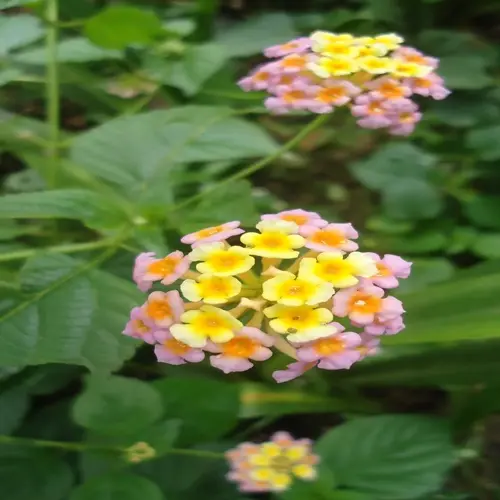

The idea of lantana mosquito repellent has some truth behind it, but don't toss your bug spray yet. NC State Extension says lantana has insect-fighting, germ-killing, and fungus-fighting traits. But that doesn't make it a reliable way to keep mosquitoes off you on its own.
I sit on my back porch most summer evenings. In my experience, the side near my lantana border does seem to draw fewer mosquitoes than the far side by the lawn. I've noticed this pattern over two full growing seasons now. But I'm honest enough to say this is just what I see. Wind, puddles, and a dozen other factors could explain the gap just as well.
So what gives lantana its bug-fighting power? NC State's Plant Toolbox lists natural oils in the leaves as the key. The leaf scent plays a big role. UW-Madison Extension calls it pungent. Some gardeners say the crushed leaves smell like gas or paint thinner. Those strong odors may push certain bugs away. These lantana insecticidal properties are real but weak in an open yard.
That harsh smell helps with more than just mosquitoes. Lantana works as a lantana pest deterrent for deer and rabbits too. Those animals hate the rough, smelly leaves and won't chew on them. This makes lantana a great border plant around your veggie garden where deer would cause damage.
You can also use lantana to protect your other flowers from nibbling pests. I planted a ring of lantana around my rose garden two years ago. The deer stopped raiding my roses within days of the lantana filling in. They would walk right up to the lantana and then turn away. That was worth the effort of planting even if the mosquito repellent claims turn out to be weak.
The catch is that lab results don't match what happens in your yard. Lab tests use strong lantana extracts applied straight to bugs. A living plant puts out much weaker amounts of those compounds into the air around it. You would need a dense wall of lantana to match the levels that repel bugs in lab tests. That's just not doable in a normal garden.
Your best bet is to set fair goals for what lantana can do for you. It adds a small layer of bug control to your outdoor space. It won't create a force field around your patio chairs. Treat it as a helper plant rather than your only line of defense against bugs on warm nights.
Use lantana as one part of a bigger plan to cut down on bugs in your yard. Pair it with citronella grass, lavender, and marigolds near your patio. Clear out any standing water within 50 feet of where you sit outside since that's where mosquitoes breed. A small fan blowing across your seating area does more good than any plant on its own.
I tested adding a row of potted lantana around my patio table last summer. The bugs didn't vanish, but I did notice fewer landings on my arms during calm evenings. The plants also looked great and drew butterflies, which was a nice bonus. Just don't count on lantana alone if you live in a high-mosquito area near swamps or standing water.
Think of the lantana mosquito repellent idea as a nice perk that adds mild bug resistance to a pretty garden. You still need real protection on bad nights. But having lantana nearby won't hurt. It gives you one more tool in your pest control kit and it looks great doing it. Pair smart plant choices with good habits and you'll enjoy your patio more all summer long.
Read the full article: Lantana Flowers: Colors, Care and Varieties