Houseplant · Moraceae
Weeping Fig
Ficus benjamina
Give it steady light, warmth, and a stable spot, and the weeping fig settles into a graceful indoor tree.
Bright indirect
65–85°F · 18–29°C
USDA 10–12
2–50 ft · 0.6–15.2 m
Overview
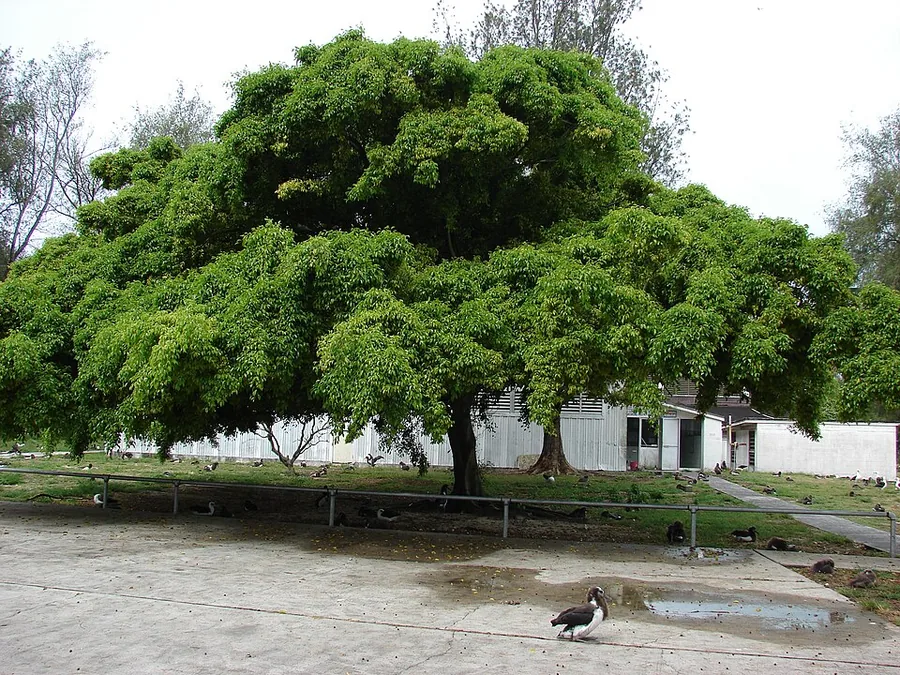
The weeping fig is one of the most popular indoor trees, valued for its slender, arching branches and glossy, pointed leaves. It belongs to the fig family and comes from the tropics of Asia and northern Australia, which tells you what it wants at home: warmth, bright light, and steady moisture. Grown indoors it usually stays a manageable 2 to 10 feet (60 cm to 3 m), a fraction of the towering tree it becomes outdoors in frost-free climates.
It has one famous quirk. Move it, chill it with a draft, or change how you water, and it answers by dropping leaves. This isn't fragility so much as a strong dislike of change. Pick a good spot and leave it there, and the plant rewards you with dense, weeping growth that holds for years.
Two things are worth knowing before you bring one home. The sap is a milky latex that irritates skin and is a documented allergen, and the plant is toxic to cats, dogs, and horses. Handle it with care and place it out of a pet's reach, and it makes a long-lived, elegant houseplant.
Care
The short version: bright indirect light, a warm spot kept clear of drafts, and even moisture that's never waterlogged. Pick one location and leave it there, since this plant hates being moved.
Light
Give it bright, indirect light for the best growth, ideally filtered through a sheer curtain. It survives in partial shade, and the variegated forms cope with somewhat less light, but a dim corner brings on thin growth and dropped leaves.
Water
Keep the soil evenly moist while the plant is growing, then let the surface dry a little between waterings through winter. Never leave the pot standing in water. Both too much and too little set off leaf drop, so consistency matters more than volume.
Soil
Use a well-drained, soil-based potting mix. The plant isn't fussy about pH and handles anything from acidic to alkaline, roughly 6.0 to 8.0, as long as the mix drains freely.
Temperature
Aim for a steady 65°F to 85°F (18°C to 29°C), with nights a touch cooler than days. Cold drafts and sudden swings are what bring the leaves down, so keep it clear of doorways and HVAC vents and never let it drop below about 55°F (13°C).
Humidity
This plant likes high humidity and shows its displeasure in dry indoor air, often with spider mites. Group it with other plants, set it on a pebble tray, or run a humidifier through the dry heating months.
Feeding
Feed monthly with a balanced liquid houseplant fertilizer through spring and summer. Ease off in fall and winter when growth slows, since a resting plant has little use for it.
Pruning
It needs only light pruning to hold its shape and size, best done in late autumn or winter. Wear gloves, because the cut stems weep a milky latex that irritates skin and is a known allergen.
Repotting
Repot infrequently, since this fig actually likes being a little root-bound. Move it up a size in late winter or early spring, when growth slows or the new leaves come in noticeably small.
Size & spacing
Indoors it usually stays in the 2 to 10 foot (60 cm to 3 m) range, far short of the 40-foot tree it becomes in the wild. Give it room for its arching branches to spread, since it can reach several feet across once established.
Troubleshooting
Almost every weeping fig problem shows up the same way, as falling leaves, so the trick is reading what triggered it. Check whether the plant was moved, chilled, over- or under-watered, or starved of light. Match the pattern below, then make the fix and give it time to recover.
A flush of leaves dropping after the plant is moved
This is shock leaf drop, the weeping fig's standard reaction to almost any change. A new spot, a cold draft from a doorway or vent, erratic watering, or a fresh repot can all set it off, and the leaves yellow and fall within days. Stabilize the light, warmth, and watering, keep it above 55°F (13°C), and the plant stops shedding and pushes new growth once it settles.
Fix:
- Move the plant to its new location gradually, in stages, rather than all at once
- Stabilize light, temperature, and watering and keep it away from drafts and heat/AC vents
- Keep it above ~55°F (13°C)
- Be patient - once conditions are adequate it stops dropping and pushes healthy new growth
Yellow leaves dropping while the soil stays wet
Soggy soil points to overwatering, often made worse by water left standing in the saucer. The roots can't breathe, the lower leaves yellow, and they fall. Empty the saucer, let the surface dry a little before the next drink, and make sure the pot drains freely.
Fix:
- Empty the saucer and never let the pot stand in water
- Allow the soil surface to dry slightly before the next watering
- Ensure the pot drains freely
Speckled, sticky, or webbed leaves
Sap-sucking pests are at work, most often spider mites in dry indoor air. Watch for fine webbing and stippling, sticky honeydew, hard bumps from scale, or cottony tufts from mealybugs. Rinse the foliage, wipe off what you can see, treat with insecticidal soap or horticultural oil, and raise the humidity to keep mites from coming back.
Fix:
- Rinse foliage and wipe off visible pests
- Treat with insecticidal soap or horticultural oil, repeating as needed
- Raise humidity to discourage spider mites
Thin, leggy growth that sheds its inner leaves
Pale, stretchy growth that drops its interior leaves usually means too little light, sometimes paired with skimpy feeding. Move the plant, in stages, to a bright spot with indirect light. Feed it monthly through spring and summer with a balanced liquid fertilizer to fill it back out.
Fix:
- Move (gradually) to a bright, indirect-light location
- Feed monthly with a balanced liquid fertilizer during the growing season
Spotted leaves or twigs that die back
Discrete spots or leaf-spot disease and creeping twig dieback do turn up, though disease is rare on plants kept indoors. Pull the marked leaves and prune out the dead wood. Better airflow and keeping water off the foliage usually settle it.
Fix:
- Remove affected leaves and prune out dead wood
- Improve air circulation and avoid wetting foliage
Toxicity
This is not a pet-safe plant. The milky sap holds ficin and psoralen, and the ASPCA lists the weeping fig as toxic to cats, dogs, and horses. The same latex irritates human skin and can trigger allergic reactions, so keep it away from pets and wear gloves whenever you prune.
Toxic to
Cats · Dogs · Horses · Rabbits · Livestock · Birds · People
Cats Toxic
The milky sap holds ficin and psoralen, and the ASPCA lists the plant as toxic to cats. A cat that chews the leaves can drool, paw at an irritated mouth, and vomit.
Dogs Toxic
Dogs react the same way. Expect drooling, mouth and skin irritation, and an upset stomach after a dog bites into a leaf or stem.
Horses Toxic
The ASPCA flags it for horses too. The irritant sap can leave the mouth sore and bring on drooling and digestive upset.
Rabbits Caution
There's no rabbit-specific data, but the same irritant sap is reason enough to keep it well out of reach. Don't let a rabbit nibble the foliage.
Livestock Caution
Grazing animals aren't its usual company indoors, yet the ficin in the leaves makes it a poor risk. Keep it away from goats, sheep, and cattle.
Birds Caution
Pet birds can nip at low leaves, and the irritant latex isn't worth the gamble. Site the plant where curious beaks can't reach it.
People Caution
No part of the plant is edible. The latex can irritate skin on contact and is a known respiratory and contact allergen in sensitized people, so wear gloves when you prune and wash your hands afterward.
Cut stems and broken leaves exude a milky latex; the latex is a documented cause of contact reactions and IgE-mediated respiratory allergy (rhinitis/asthma) in sensitized people, with cross-reactivity to fig fruit and papain. Wear gloves when pruning and wash hands afterward
Helpline numbers

United States
ASPCA Animal Poison Control: (888) 426-4435 (fee applies)
Poison Control: (800) 222-1222



Canada
Poison Centres: 1-844-764-7669
Varieties
Several named selections suit different spots and tastes, from variegated leaves to dwarf forms for bonsai. These are the ones you'll run across most.
'Variegata'
Its cream-and-green leaves are the draw, and like most variegated figs it puts up with a bit less light than the plain species.
'Danielle'
A compact, slow-growing pick with deep green leaves that holds its shape without much fuss.
'Too Little'
A true dwarf that earns its place as a bonsai subject.
'Pandora'
A small grower that tops out around 6 feet (1.8 m) indoors, handy where ceiling height is tight.
How to propagate
You can make new plants from a weeping fig, though it takes a little more patience than an easy houseplant. Stem cuttings work for small pieces, and air-layering is the dependable route for a big, leggy specimen.
Stem cuttingsModerate
Best taken in summer · Several weeks to root
Take cuttings in summer for the best odds. The cut end weeps a milky latex, so wear gloves and let it stop bleeding before you pot the piece up. Give it several weeks to root.
Air layeringModerate
Can be done in any season · Several weeks to months to root before severing
Air-layering is the reliable route for a large or leggy plant, and you can start it in any season. Roots form on the wrapped stem over several weeks to a few months, and only then do you sever it from the parent.
Myths
A weeping fig that drops its leaves is dying and should be thrown out.
Leaf drop is how this plant answers any change, not a death sentence. Give it steady light, warmth, and watering, and it stops shedding and pushes fresh growth once it settles in.
The weeping fig is a harmless, non-toxic houseplant.
The ASPCA lists it as toxic to cats, dogs, and horses, since the sap carries ficin and psoralen. The milky latex is also a proven respiratory and contact allergen for people who become sensitized to it, so it earns careful handling.
Sources
- Plants of the World Online, Royal Botanic Gardens Kew
- NC State Extension Gardener Plant Toolbox
- ASPCA Animal Poison Control
- Missouri Botanical Garden Plant Finder
- Missouri Botanical Garden - Gardening Help FAQ
- Clemson Cooperative Extension HGIC
- PubMed - Allergy (1998): Asthma caused by Ficus benjamina latex
- Atlas of Florida Plants, Institute for Systematic Botany, University of South Florida