Houseplant · Moraceae
Rubber Plant
Ficus elastica
Give it bright indirect light and a steady spot, and the rubber plant grows into a glossy, easygoing tree indoors.
Bright indirect
60–80°F · 16–27°C
USDA 9–12
2–10 ft · 0.6–3 m
Overview
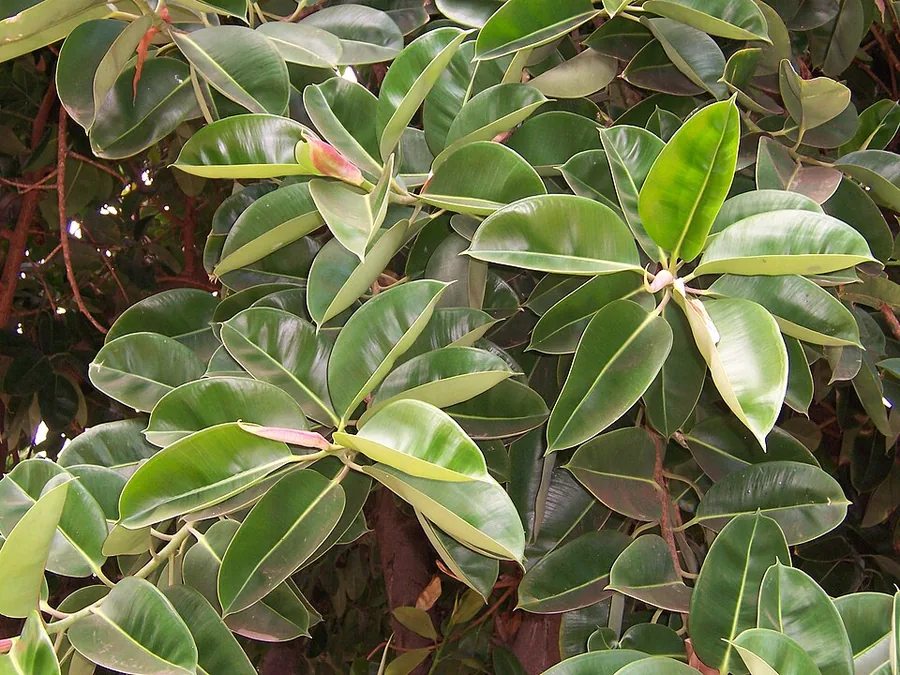
The rubber plant is one of the easiest big houseplants to keep happy. It belongs to the fig family and comes from the forests stretching from Nepal across to southern China and into western Malesia, where it grows into a towering tree. Indoors it stays a manageable 2 to 10 feet (60 cm to 3 m) tall, carrying thick, glossy leaves that give a room real presence.
What makes it forgiving is its tolerance. It does best in bright indirect light but puts up with lower light better than most large foliage plants, and it shrugs off the odd missed watering. The one thing it dislikes is change, so a stable spot away from drafts keeps the leaves where they belong.
Every part of the plant runs with a milky latex sap when cut. That sap is what gives the rubber plant its name, and it's also why you reach for gloves at pruning time. It can irritate skin and is mildly toxic to cats and dogs, so place the plant with both pets and people in mind.
Care
The short version: bright indirect light, a warm and stable spot, and a thorough watering only once the soil surface has dried slightly. Feed through spring and summer, and wear gloves whenever you cut it.
Light
Give the rubber plant bright indirect light near a window that misses the harsh afternoon sun. It will hang on in partial shade or low light, though growth slows and variegated types lose some of their color there.
Water
Water thoroughly, then wait until the soil surface has dried slightly before the next drink. Make sure the pot drains and tip out whatever collects in the saucer, since standing water is the fastest way to rot the roots. Cut back on watering from fall through late winter when growth stalls.
Soil
Plant in a well drained, soil-based potting mix. It isn't fussy about pH and handles anything from 6.0 to 8.0, so the priority is a mix that drains freely rather than one that stays heavy and wet.
Temperature
Keep it in the 60°F to 80°F (16°C to 27°C) range it likes, with warm days and cooler nights. Hold it above 55°F (13°C) and away from cold drafts, since a sudden chill is a common reason the leaves drop.
Humidity
Average household humidity suits it fine, and there's no number to chase. It leans toward humid air but copes well with the dry indoor heat of winter.
Feeding
Feed every two weeks through spring and summer with a water-soluble houseplant fertilizer while the plant is actively growing. Ease off in lower light and through the cooler months, when it needs far less.
Pruning
Prune in spring to keep the height in check, freshen up tall leggy growth, or push the plant toward a bushier shape. Left alone it grows into a tall, tree-like form, so pruning is a choice rather than a chore. Always wear gloves, because the cuts ooze irritating latex.
Repotting
Repot in late winter or early spring when the plant has outgrown its pot. Move it up only a size or two at a time into fresh, well drained mix, and gloves are worth keeping on for this too.
Size & spacing
Indoors a rubber plant reaches 2 to 10 feet (60 cm to 3 m) tall, growing fast in good light. Give it floor space and headroom to match, since left unpruned it keeps climbing toward a tree-like form.
Troubleshooting
Most rubber plant trouble traces back to watering or a sudden change in its surroundings. Read the leaves and roots early and the fixes are simple. Match what you see below, then adjust before a minor problem spreads.
Wilting even though the soil is wet
A rubber plant that droops while sitting in soggy soil is showing root rot. The roots turn mushy and dark and can no longer drink, so the plant wilts despite all that moisture. Cut your watering right back, trim away the dead roots, and repot into fresh, well drained mix in a pot that actually drains.
Fix:
- Reduce watering
- Repot into a well-drained mix and a pot with drainage holes
- Remove affected roots
Lower leaves turning yellow
Yellow leaves on a rubber plant almost always mean the soil is staying too wet. A few yellow leaves at the very bottom can simply be old age, but if they climb up the plant, ease off the watering, check that the pot drains, and empty any water sitting in the saucer.
Fix:
- Reduce watering frequency
- Ensure the pot has drainage holes and empty the saucer
- Use a well-drained, soil-based mix
Leaves dropping after a move or a chill
Rubber plants drop leaves when something around them changes. Too little light, a cold draft, dry air, or soggy roots can all set it off, and so can shuffling the plant from spot to spot. Settle it in one bright, stable place away from drafts and heat vents, keep it above 55°F (13°C), and recheck how you water.
Fix:
- Move to a brighter, stable location with bright indirect light
- Keep away from cold drafts and heat sources; keep above 55°F
- Avoid frequently relocating the plant
- Check and correct watering
Sticky leaves, webbing, or small bumps on the stems
Several sap-sucking pests go after rubber plants, and each leaves its own calling card. Watch for the white cottony tufts of mealybugs, hard bumps of scale, fine webbing and stippling from spider mites, and a sticky film across the leaves. Wipe the foliage clean, treat with insecticidal soap or horticultural oil, and keep the plant apart from others until it recovers.
Fix:
- Wipe or wash insects off the foliage
- Treat with insecticidal soap or horticultural oil
- Isolate the plant until the infestation clears
Toxicity
The rubber plant is not a safe-to-chew houseplant. Its milky latex sap carries ficin and a psoralen, which can irritate the mouth and stomach of cats and dogs and leave human skin red and sore on contact. No part of it is edible, so keep it out of reach of pets and small children and handle it with gloves.
Toxic to
Cats · Dogs · Horses · Rabbits · Livestock · Birds · People
Cats Mild
A cat that chews a leaf usually drools and paws at its mouth from the irritating latex, and an upset stomach with some vomiting can follow. The sap can also leave the skin red and sore where it touches.
Dogs Mild
Dogs tend to drool and act mouth-sore after a bite, often with vomiting or a queasy stomach soon after. Reactions stay mild, but the sticky sap can still irritate the skin on contact.
Horses Caution
NC State lists the plant as toxic to horses. The same latex would irritate the mouth and gut, though horses rarely meet an indoor fig, so keep cuttings and fallen leaves out of reach.
Rabbits Caution
The milky sap holds the same irritants that bother cats and dogs, so a nibbling rabbit risks a sore mouth and a churning stomach. Don't let it browse the leaves.
Livestock Caution
Grazing animals that get into the foliage can suffer mouth and digestive irritation from the latex. It isn't a pasture plant, so the real risk is dumped trimmings or a potted plant within reach.
Birds Caution
Pet birds can react to the irritating sap if they chew the leaves, so treat it as off-limits and keep perches and cages clear of the foliage.
People Caution
The milky latex is a skin and eye irritant and can bring on contact dermatitis, especially in anyone with a natural-rubber latex allergy. No part of the plant is edible, so wear gloves when you prune or repot and keep the sap off bare skin.
The milky latex sap can irritate skin and eyes and cause contact dermatitis in sensitive people (Ficus latex also cross-reacts with natural-rubber latex allergy); wear gloves when pruning or repotting
Helpline numbers

United States
ASPCA Animal Poison Control: (888) 426-4435 (fee applies)
Poison Control: (800) 222-1222



Canada
Poison Centres: 1-844-764-7669
Varieties
Most rubber plants sold are one of a handful of named forms, ranging from plain glossy green to dark maroon and bright variegation. These are the ones worth knowing.
Robusta
The most commonly grown cultivar, prized for its large, thick, dark green leaves.
Decora
A broad-leaved form that has long been a mainstay houseplant.
Rubra
Carries reddish to deep maroon foliage that gives it a darker, moodier look.
Tricolor
A variegated cultivar splashed with green, cream, and a pink tinge.
Doescheri
Another variegated form counted among the ornamental rubber plants.
How to propagate
Rubber plants take a little patience to multiply, but both common methods are reliable once you account for the slow rooting and the messy sap.
Stem cuttingsModerate
Spring to summer during active growth · Several weeks to a couple of months to root
Take stem or tip cuttings in spring or summer while the plant is growing. The cut ends ooze milky latex, so rinse or blot it off before you pot the cutting up. Roots are slow to form here, taking anywhere from several weeks to a couple of months.
Air layeringModerate
Spring to summer · Several weeks to root before separating from the parent
Air layering is the go-to method for tall or leggy rubber plants. You root a stem while it's still attached to the parent, which takes several weeks, then cut the new plant free once the roots have formed.
Myths
The rubber plant is a safe, pet-friendly houseplant.
The ASPCA lists it as toxic to cats and dogs, and the milky latex can irritate skin or the stomach. The trouble comes from ficin, a proteolytic enzyme, and a psoralen in the sap, so keep it out of reach of pets and children.
Like many irritating houseplants, the rubber plant's bite comes from calcium oxalate crystals.
Those crystals are what make philodendron and dieffenbachia sap burn, but a rubber plant works differently. Its irritation comes from the milky latex itself, the enzyme ficin and the psoralen ficusin, not from oxalate crystals at all.
Rubber plants need bright direct sunlight.
Direct sun, especially hot afternoon light, can scorch the leaves. They do best in bright indirect light or part shade, and they put up with lower light better than most.