Tree · Moraceae
Osage Orange
Maclura pomifera
Plant it once and walk away. The Osage orange is just about indestructible, thorns, hedge apples, and all.
Full sun
Every 7–21 days
2555–3650 days
USDA 4–9
Overview
The Osage orange is the tree that built the prairie fence. Before barbed wire, farmers set the seedlings in tight rows and pruned them into a living wall that was, in the old saying, horse-high, bull-strong, and hog-tight. It belongs to the mulberry family, and the same stout thorns that turned it into a fence still arm its lower branches today.
What people remember it for now is the fruit. Female trees drop heavy, yellow-green, brain-textured globes the size of a grapefruit every fall, the famous hedge apples. They aren't an orange and aren't worth eating, but they're hard to forget once you've stepped on one. The flowers that make them are small and green and easy to miss in early summer.
As a tree to grow, it asks for almost nothing. It takes drought, poor ground, clay, salt, and bitter cold without complaint, grows fast, and carries some of the most rot-resistant wood in North America. The trade-off is the thorns and the fruit litter, which is why most planted trees are thornless, fruitless male cultivars.
Care
The short version: give it full sun and almost any soil, water it while it's young, then leave it be. This is a tree that thrives on neglect once its roots are down.
Light
Give it full sun for the best shape and the densest growth. It will put up with partial sun or light shade, but a tree in the open grows fuller and, oddly, arms its sunlit branches with the worst of the thorns.
Water
Water young trees while they root, then step back. Once established it's deeply drought tolerant and copes with dry and wet ground alike, so a long stretch between waterings, anywhere from a week to three, is fine.
Soil
This is where it shines. It takes poor, dry, clay, sandy, shallow rocky, and even alkaline ground, handling a pH from 6.0 to 8.5, though it grows fastest on rich, moist, well-drained bottomland.
Temperature
Cold and heat barely register. The tree rides out winters down to about -29°F (-34°C) and summers up near 100°F (38°C), which is most of what makes it so dependable across the middle of the country.
Humidity
Ordinary outdoor air suits it and there's no number to track. It grows across a wide range of climates without any fuss over moisture in the air.
Feeding
It rarely needs feeding. Skip the fertilizer unless growth has clearly stalled, and then a single balanced slow-release feed in spring is plenty.
Pruning
Prune from late winter into the dormant season to take out dead, crossing, or low thorny limbs and to shape the crown. Wear gloves and eye protection every time, because the thorns are stout and the latex sap irritates.
Repotting
The tree is rarely grown in a pot for long. Move a nursery seedling on once roots start circling, escaping the container, or pushing water straight through, and get it into the ground before it stalls.
Size & spacing
Expect a big tree, 30 to 60 feet (9 to 18 m) tall with an even wider spread of 35 to 50 feet (11 to 15 m). Give it open room well clear of buildings, walks, and overhead lines.
When to plant
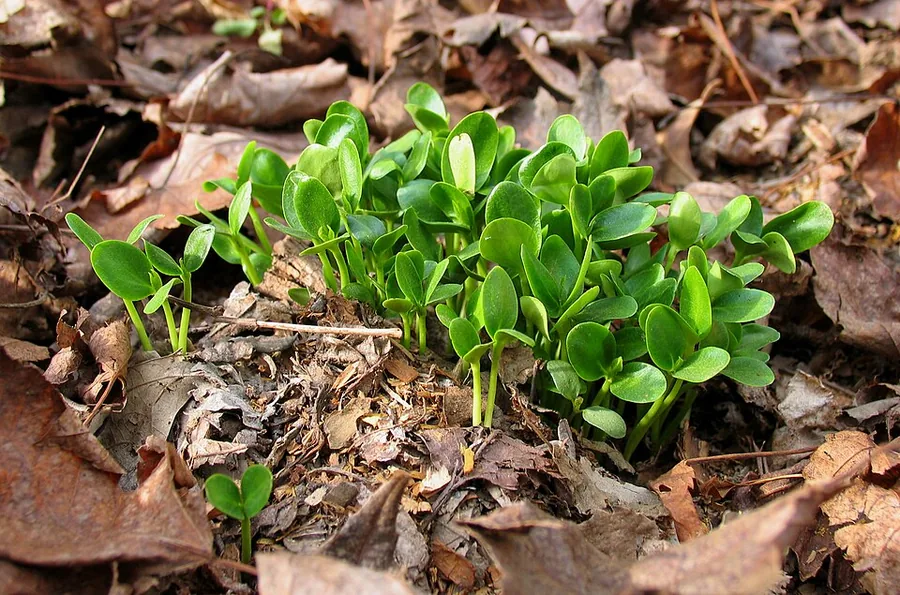
Osage orange is a slow project that lasts a lifetime. Start seed in late winter after a soak or a chill, set young trees out in spring once frost has passed, and watch for the small greenish flowers in June and the heavy fruit on female trees through September and October.
Northern hemisphere
Southern hemisphere
Typical months for a temperate climate: start earlier in warm zones, later where spring frosts linger.
- Sow: Late winter, after soaking seed 48 hours or cold-stratifying about 30 days.
- Plant: Spring after the last frost, or fall in mild areas.
- Harvest: Insignificant greenish flowers late spring to early summer (June); fruit ripens September to October on female trees.
Hardiness
USDA hardiness zones: 4–9
Temperature: down to -34°C
Troubleshooting
This tree rarely gets sick, so the real problems are the ones it hands you rather than the ones it suffers. Thorns, falling fruit, and the irritating sap account for nearly every complaint. Match what you're dealing with below and handle it before it becomes a nuisance.
Sharp thorns that snag clothing and puncture skin
Sun-lit branches carry stout woody thorns up to 1 inch (2.5 cm) long in the leaf axils, and they tear clothes and skin when you work in close. Wear heavy gloves, eye protection, and thick sleeves for any pruning, and take off the low thorny branches to cut down on contact. In busy spots, a thornless male cultivar sidesteps the problem.
Fix:
- Wear heavy gloves, eye protection, and thick clothing when pruning
- Prune off low thorny branches to reduce contact
- Use thornless male cultivars in high-traffic areas
Red, itchy skin after handling the plant or fruit
The milky latex sap that weeps from broken stems, leaves, and cut fruit can leave skin red and itchy. Wash the spot with soap and water, and keep your hands away from your eyes until they're clean. Long sleeves and gloves stop it from reaching skin in the first place.
Fix:
- Wash the area with soap and water
- Wear gloves and long sleeves when handling the plant or fruit
- Avoid touching the eyes or face until hands are washed
Heavy fruit littering the ground in fall
Mature female trees shed dozens of hard, grapefruit-sized fruits each autumn, and they pile up under the canopy as a slip and impact hazard. Rake them up as they fall, and keep female trees well back from walks, drives, and parking. Where litter would be a nuisance, plant a fruitless male cultivar instead.
Fix:
- Rake and remove fallen fruit promptly
- Site female trees away from walkways, drives, and parking
- Plant male (fruitless) cultivars where litter is a concern
Toxicity
There's little to worry about here. Osage orange isn't on the ASPCA's toxic lists, and the bitter hedge apple, for all its reputation, won't poison a pet, a person, or livestock. The one real caution is the milky sap, which can redden and irritate skin or a chewed mouth, and a whole fruit large enough to choke a grazing animal.
Safe for
People · Cats · Dogs · Horses · Rabbits · Livestock · Birds
Cats Safe
No poison here, so a cat that bats the fruit around comes to no harm. The one thing to watch is the milky sap, which can leave a chewed mouth or paw a little raw.
Dogs Safe
Not toxic to dogs in any way. The fruit is tough and fibrous, though, so a whole one swallowed by a small dog could lodge as a blockage, and the sap may sting a mouth that gnaws on it.
Horses Safe
Feeding studies cleared the fruit of any poison, and despite the nickname horse apple it won't harm them. A whole fruit can still jam in the throat, so the real risk is choking rather than toxicity.
Rabbits Safe
Safe for rabbits, with nothing toxic in the leaves or fruit. The sticky sap can irritate a tender mouth, so it isn't a treat worth offering.
Livestock Safe
Old reports of hedge apples killing cattle turned out to be wrong once researchers tested it. The fruit poisons nothing, but a whole one can choke a cow that bolts it down, and the latex may irritate the mouth.
Birds Safe
Birds face no poison from this tree. Most leave the dense, hard fruit alone anyway.
People Safe
Nothing on this tree will poison you, and the bitter fruit isn't eaten. Just mind the milky sap when you cut or handle it, since it can redden and irritate skin or the mouth on contact.
The milky latex sap can cause mild contact dermatitis in some people; wear gloves when pruning or handling fruit. Watch for sharp thorns.
Varieties
Most trees sold for yards are named male clones, bred to drop the thorns and skip the fruit. These are the ones worth asking for.
White Shield
A male selection that bears no fruit and counts among the most nearly thornless of all the cultivars, which makes it the easy pick for a tidy yard.
Wichita
A male, thornless, fruitless tree grown as a clean shade tree where you want the toughness without the litter or the thorns.
Park
Another male, thornless, fruitless clone chosen for landscape planting where dropped fruit would be a nuisance.
How to propagate
Few trees are easier to multiply. Osage orange grows from seed, cuttings, and root pieces with little fuss, though copying a named thornless male means grafting.
SeedEasy
Sow in spring after soaking seed in water about 48 hours or cold-stratifying 30 days; historically sown to grow dense hedgerow living fences. · 1-2 growing seasons to a transplantable seedling
Dig the seeds out of the soft fall fruit, then soak them 48 hours or chill them for about a month before you sow in spring. Give them full light and bare mineral soil and they sprout readily, the same way settlers once raised whole living fences from them. Figure on one to two seasons before a seedling is big enough to move.
Stem cuttingsModerate
Take softwood or greenwood cuttings in summer, or hardwood/dormant cuttings in winter. · One growing season to root
Take soft greenwood cuttings in summer or hardwood cuttings while the tree is dormant in winter. The dormant winter wood roots with real vigor, usually settling in over a single growing season, and if you cut from the upper, thornless growth the new plants come up thornless too.
DivisionModerate
Lift and separate root cuttings or root suckers in the dormant season. · One growing season
The tree throws up suckers and roots easily from pieces of root, so lift and split them while it's dormant. A separated root cutting or sucker takes hold in about one growing season.
GraftingDemanding
Chip-bud or graft thornless male clones onto seedling rootstock in the growing season. · 1-2 seasons
Grafting is the demanding option but the only sure way to copy a named thornless, fruitless male true to type. Chip-bud or graft the clone onto a seedling rootstock during the growing season, and the union takes over one to two seasons.
Myths
Hedge apples scattered around the house keep spiders and insects away.
This is the most common claim about the tree, and it doesn't hold up. Iowa State researchers found that compounds pulled from the fruit can repel insects, but only at concentrations far higher than the fruit itself contains. Set out whole hedge apples and the bugs simply ignore them.
The fruit is poisonous to people and animals.
The fruit is bitter and inedible, which is probably where the rumor started, but it isn't a poison. Feeding experiments put the old story of hedge apples killing cattle to rest. The only real danger is a whole fruit choking a grazing animal, not anything toxic inside it.