Houseplant · Crassulaceae
Aeonium
Aeonium
Give it bright light, gritty soil, and a dry summer rest, and this winter grower stays full and firm.
Full sun
Every 7–21 days
41–77°F · 5–25°C
USDA 9–11
Overview
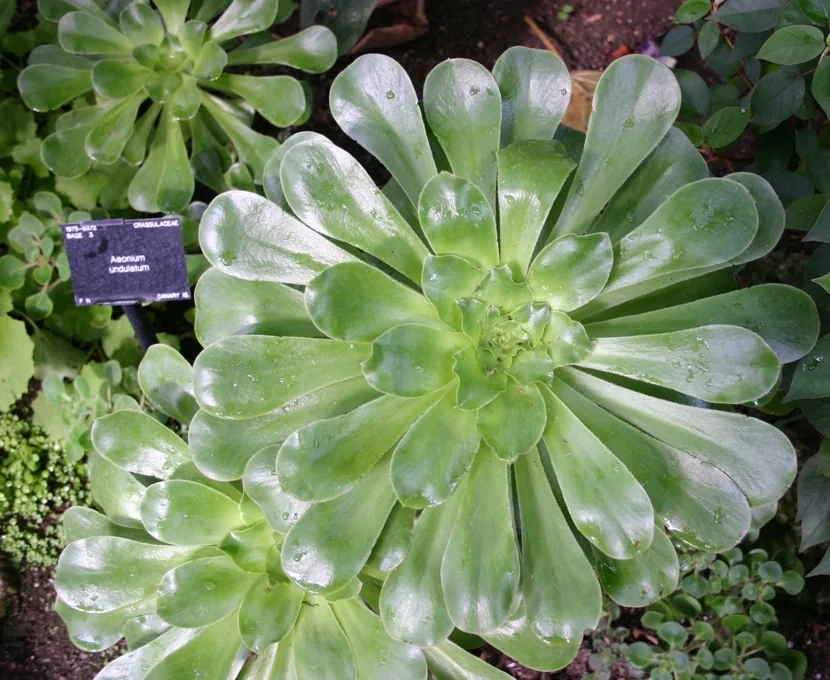
Aeonium is a rosette-forming succulent in the stonecrop family, grown as a houseplant or in mild gardens. Each plant carries its leaves in tight, fleshy rosettes at the tips of its stems, and the look ranges from a low plate on the ground to a branching little tree. It earns its easy reputation: give it sun and a gritty mix, and it asks for almost nothing else.
What sets Aeonium apart is its backwards calendar. Most plants push growth through the warm months and slow down in winter, but this one does the opposite. It grows through the cool season and goes semi-dormant in summer heat, when the rosettes close up and lower leaves shrivel and drop. That habit looks alarming the first time, yet it is the plant resting, not failing.
The genus runs from tidy windowsill rosettes to spreading clumps, and the range of color is wide. Some stay bright green, while the famous black rose holds rosettes so dark they read as purple-black. Outdoors in the right climate it forms a sculptural mound, and in a pot it makes a clean, low-care companion for a sunny sill.
Care
The short version: full sun to bright light, planted in a gritty, fast-draining mix. Water only when the soil has dried during the cool growing season, keep it much drier through the summer rest, and feed at half strength while it grows.
Light
Aeonium wants full sun to bright light, and it also takes partial sun or a bright indirect spot indoors. Plenty of light keeps the rosettes tight and compact. Skimp on it and the stems stretch and lean, leaving bare gaps between the leaves.
Water
Water only when the soil has dried out, and remember this is a winter grower. Through the cool active months a drink every 7 to 21 days suits it, but in summer dormancy keep it much drier and let the closed rosettes rest. Soggy soil in summer is the fastest way to rot the stem.
Soil
Plant in a gritty, fast-draining mix that never holds water around the roots. A pH between 6.0 and 7.0 sits in the comfortable range. Sharp drainage matters more than richness here, since standing moisture is what this succulent cannot stand.
Temperature
Aeonium is happy from about 41°F to 77°F (5°C to 25°C). It has no frost hardiness to speak of, so protect it from a freeze. Once heat climbs past the top of that range, the plant slips into its summer rest.
Humidity
This succulent prefers low humidity and shrugs off dry indoor air with no fuss. There is no moisture number to chase. Good airflow around the rosettes does more good than any humidity tray.
Feeding
Feed with a balanced fertilizer cut to half strength, and time it to the cool active-growth season from fall through spring. Once a month is plenty. Give it nothing during summer dormancy, when the plant is resting and not taking up much.
Pruning
Cut leggy or bare stems back to a leaf rosette to push fresh branching. Snip off spent flower stalks and any dead lower leaves to keep the plant tidy. The pieces you remove are not waste, since the cuttings root with ease.
Repotting
Repot every 2 to 3 years, and time it to the start of the cool growing season so the plant settles in as it wakes. Step up when roots poke from the drainage holes, the mix dries out too fast, or the rosettes crowd the pot edge. A fresh gritty mix sets it up for the next stretch of growth.
Size & spacing
Plants range from 6 to 35 inches (15 to 90 cm) tall, depending on the type, with a spread of 6 to 24 inches (15 to 60 cm). The low, flat kinds stay close to the soil, while branching tree types reach for real height. Growth runs at a moderate pace, so the look you plant is close to the look you keep.
Troubleshooting
Most Aeonium trouble traces back to two things: water and light. The plant tells on itself early, through soft tissue, stretched stems, or a summer slump that just looks worse than it is. Match what you see below, then adjust before a small issue turns serious.
Soft, mushy stem or a rosette base going translucent
This is rot from overwatering, and it shows up most when a dormant summer plant sits in wet soil. Cut every soft, discolored piece back to firm tissue, let the healthy cuttings callus, then re-root them in dry gritty mix. A fast-draining mix and water only during active growth keep it from coming back.
Fix:
- Cut away all rotted tissue back to firm, healthy stem
- Let cuttings callus, then re-root in dry gritty mix
- Withhold water until new roots form
Rosettes close up and lower leaves drop in summer heat
This is normal summer dormancy, not a dying plant. Aeonium grows through the cool months and rests when summer turns hot, so the central rosette stays firm even as outer leaves curl in and fall. Ease off the water, give a little shade from harsh afternoon sun, and the plant wakes back up as fall cools down.
Fix:
- Reduce watering and let the plant rest
- Provide light shade from intense summer afternoon sun
- Resume normal care as temperatures cool in fall
Tall bare stems with rosettes only at the tips
Stretched, leggy stems point to too little light. The stems lean toward the window and the leaves space out as the plant reaches for more sun. Move it somewhere brighter with a few hours of direct sun, and you can behead the leggy rosettes and re-root them to start compact growth again.
Fix:
- Move to a brighter location with several hours of direct sun
- Behead leggy rosettes and re-root them to restart compact growth
Toxicity
Good news for pet owners and parents: Aeonium is non-toxic and pet-safe. The ASPCA does not list it as toxic to cats or dogs, and it poses no poisoning risk to the other animals that share a home or garden. A curious nibble does no harm, so the plant earns a spot on any windowsill without worry.
Safe for
People · Cats · Dogs · Horses · Rabbits · Livestock · Birds
Cats Safe
Cats can share a windowsill with one and come to no harm if they nibble a leaf.
Dogs Safe
A dog that chews a rosette has nothing to worry about, since the plant carries no toxins.
Horses Safe
Horses face no poisoning risk from grazing on it.
Rabbits Safe
Rabbits are safe around it, though leafy greens should stay a small part of their daily diet.
Livestock Safe
Cattle, goats, and sheep can be near it without any threat of poisoning.
Birds Safe
Pet birds and backyard poultry stay safe in its company.
People Safe
The plant is harmless around children and curious toddlers who like to touch.
Varieties
Aeonium comes in many forms, from flat ground-huggers to branching stems that act like small trees. These three turn up most often and show off the range.
Aeonium 'Zwartkop' (black rose)
Tall branching stems carry near-black, deep purple rosettes that give this one its black rose name.
Aeonium arboreum
Bright green rosettes sit atop woody, tree-like stems that give the plant real height.
Aeonium tabuliforme
Its flat, plate-like rosette hugs the ground with leaves packed in tight, dense rings.
How to propagate
Aeonium is one of the simplest succulents to multiply, and the best window is the cool growing season. Take a cutting or pull a side rosette, and you get a fresh plant with little effort.
Stem cuttingsEasy
During the cool active growing season (fall to spring) · 2 to 4 weeks to root after callusing
Stem cuttings root with almost no fuss. Take them during the cool growing season, then let the cut ends callus for a few days before you set them in gritty mix. New roots form in 2 to 4 weeks, though keep in mind that many Aeonium rosettes are monocarpic, so a rosette dies after it flowers.
Offsets & pupsEasy
During the cool active growing season · 2 to 4 weeks once detached and rooted
Branching types throw side rosettes that pull off as ready-made plants. Remove a pup during the cool growing season, root it in gritty mix, and it settles in within 2 to 4 weeks. Remember that many Aeonium rosettes are monocarpic, so a rosette dies after it flowers.
Myths
Aeonium needs frequent watering like a typical houseplant.
It is a drought-adapted, winter-growing succulent that asks for little water. Keep it nearly dry through summer dormancy, and water only when the soil has dried during the cool growing months.
A rosette dropping its lower leaves and closing up in summer means the plant is dying.
This is normal summer dormancy, the rest period of a winter grower. The plant picks up growth again when cool weather returns in fall, so let it sit dry and wait it out.