Houseplant · Crassulaceae
Ghost Plant
Graptopetalum paraguayense
Give it bright light and a dry rest between waterings, and the ghost plant all but grows itself.
Full sun
Every 10–21 days
50–86°F · 10–30°C
USDA 9–11
Overview
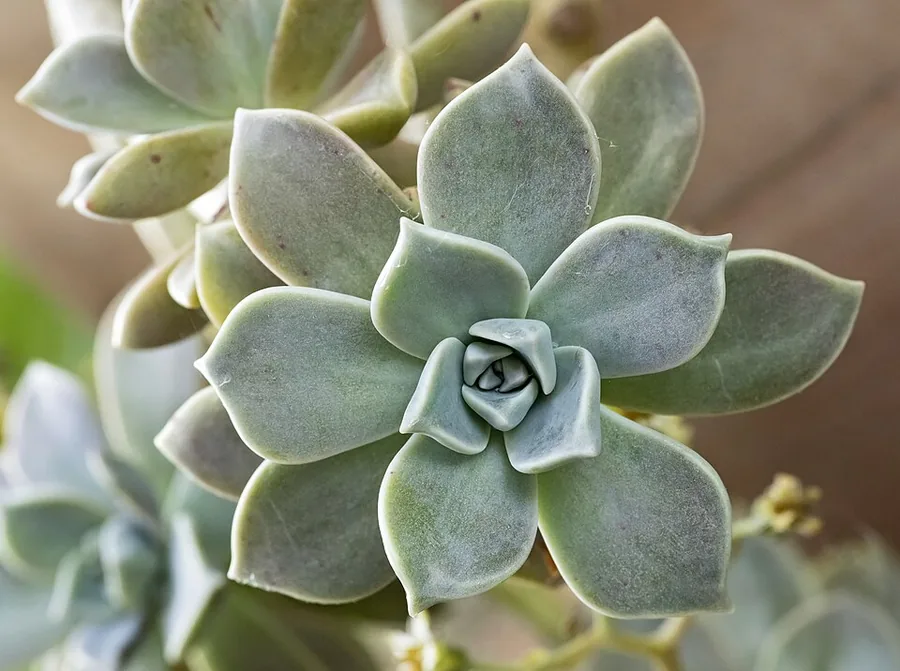
The ghost plant is a hardy little succulent from Mexico, named for the pale, powdery bloom that gives its rosettes a chalky, ghostly cast. It belongs to the same family as the jade plant and the houseleeks, and like them it stores water in fat, fleshy leaves that range from gray-blue to soft pink. Few plants ask for less.
It forms low rosettes that trail and spread as the stems lengthen, spilling over a pot edge or a wall with age. The leaves let go at the lightest touch, which looks alarming the first time it happens. That habit is also the plant's gift, because nearly every fallen leaf will root itself and start a new plant where it lands.
What it wants most is strong light and very sharp drainage. Give it those two things and it shrugs off heat, drought, and neglect. Crowd it in damp soil or a dim corner and it tells you fast, stretching out and going soft at the base.
Care
The short version: bright light or full sun, a gritty mix that drains fast, and a deep soak only once the soil has dried out completely. Go easy and it thrives on a little neglect.
Light
Give the ghost plant full sun or very bright light and the rosettes stay tight and well colored. It will get by in bright indirect light, but anything dimmer and the stems stretch out and the leaves space apart.
Water
Water deeply, then wait until the soil is bone dry before the next drink, which usually falls every 10 to 21 days. The fleshy leaves hold their own reserve, so the real danger is too much water, not too little. Overwatering is what brings on rot.
Soil
Plant in a gritty cactus or succulent mix that drains in seconds, never ordinary potting soil that stays wet. A pH anywhere from 6.0 to 7.5 suits it fine, so the texture matters far more than the chemistry.
Temperature
It is happy between 50°F and 86°F (10°C to 30°C) and takes summer heat in stride. It is not frost hardy, so bring it in or protect it before the cold arrives.
Humidity
This is a low-humidity plant with no number to hit, content in the dry air of most homes. Damp, stagnant air does it no favors, so good airflow beats any misting.
Feeding
Feed monthly through spring and summer while it is actively growing, using a diluted balanced or low-nitrogen succulent feed at half strength. Stop over the cooler months, and never push it with rich fertilizer, which only forces soft, weak growth.
Pruning
Pruning is minimal. Pull off dead leaves and snip away leggy or stretched stems to keep the plant compact, and behead any rosette that has reached up too far so you can replant the top.
Repotting
Repot every 2 to 3 years, or sooner if the rosettes crowd over the pot edge, and do it in spring. Roots poking from the drainage holes or soil that dries almost at once are the plant's way of asking for more room.
Size & spacing
Each plant stays low, around 6 to 12 inches (15 to 30 cm) tall, and spreads wider as the stems trail, reaching 12 to 24 inches (30 to 60 cm) across. Leave room for that spread and for new rosettes to fill in around the base.
Troubleshooting
Most ghost plant trouble traces back to two things: too much water or too little light. Both show up early if you know what to look for. Match the sign below and fix it before the rot or the stretch sets in.
Mushy, translucent leaves and a soft base
This is root and stem rot, almost always from too much water or soil that holds it. Tip the plant out and check the roots and lower stem for black, soft, or smelly tissue. Cut away everything that has gone bad, let the healthy rosettes or cuttings callus for a few days, and start over in dry gritty mix.
Fix:
- Stop watering immediately
- Remove the plant and cut away all rotted tissue
- Let healthy cuttings or rosettes callus for several days
- Replant in dry gritty succulent mix
Stretched stems with leaves spaced far apart
This is etiolation, the plant reaching for light it isn't getting. The stems lean toward the window and the tight rosettes loosen and flatten out. Move it somewhere with several hours of direct sun, then behead the stretched rosette and replant the top while the bare stem pushes out fresh offsets.
Fix:
- Move to a brighter location with several hours of direct sun
- Behead the stretched rosette and replant the top
- Propagate the bare stem to produce new offsets
Scorched brown patches after a move into the sun
This is sunburn, the price of jumping straight from soft indoor light to full sun. The marks turn up on the most exposed surfaces within a day or two of the move. Pull the plant back into bright but shaded light, then step the sun up over a week or two, and leave the scarred leaves until the plant sheds them.
Fix:
- Move to bright but slightly shaded light temporarily
- Acclimate gradually to stronger sun over one to two weeks
- Leave scarred leaves in place until they are naturally shed
Toxicity
Good news for a home with animals or small children. The ghost plant is non-toxic across the board, with the ASPCA listing it as safe for cats and dogs, and no toxin in it that would trouble other pets or people. The worst a stray nibble brings is a bit of passing stomach upset from the bulk.
Safe for
People · Cats · Dogs · Horses · Rabbits · Livestock · Birds
Cats None
Safe to keep around cats. A cat that nibbles a leaf might get a brief tummy ache from the bulk, but nothing in the plant is poisonous.
Dogs None
No real worry with dogs. The ASPCA lists it as non-toxic, and the worst a chewed leaf is likely to bring is a passing bit of stomach upset.
Horses None
Nothing toxic for horses here, though a stable succulent is an unusual snack. A stray mouthful won't cause harm.
Rabbits None
Rabbits can be around it without trouble. The fleshy leaves carry no toxin, so a curious bite is harmless.
Livestock None
Goats, sheep, and other grazers face no poison risk from this succulent. Treat a few eaten leaves as a non-event.
Birds None
No toxic compounds threaten birds. A pecked leaf might leave a powdery smudge on the beak, which wipes away and means nothing.
People None
Handling and accidental nibbles are safe for people, including children. The chalky bloom on the leaves rubs off but is harmless.
The powdery (farinose) coating on leaves rubs off easily when handled, which is cosmetic and harmless.
Varieties
Only a couple of forms turn up often, and they trade the plain gray-blue rosette for more color. These are the ones worth knowing.
Graptopetalum paraguayense 'Pink Form'
Its rosettes flush pink to rose when the light is strong or the nights turn cool, while the plain form stays a chalky gray-blue.
×Graptosedum (Graptopetalum × Sedum hybrids)
These crosses with sedum carry the ghost plant's looks into brighter colors and a faster, more trailing habit.
How to propagate
Few plants spread as easily as this one. A single leaf, an offset, or a beheaded rosette will all root with almost no help from you.
Leaf cuttingsEasy
Spring through summer during active growth · 3 to 6 weeks to root and form new rosettes
Working in spring or summer, twist off a whole healthy leaf and let the broken end callus for a few days before laying it on dry gritty mix. New roots and a tiny rosette show up in about 3 to 6 weeks, and dropped leaves do the same trick on their own wherever they land.
Offsets & pupsEasy
Spring through summer · 2 to 4 weeks
Through spring and summer the plant throws rosette offsets along its stems. Snap one off, let it callus briefly, and plant it, and it settles in within 2 to 4 weeks.
Stem cuttingsEasy
Spring through summer · 2 to 4 weeks
In the warm months, behead a rosette with a short length of stem and let the cut callus over. Replant it and it roots readily, taking hold in roughly 2 to 4 weeks.
Myths
The ghost plant needs frequent watering because it looks dusty and dry.
That pale, powdery coat is a natural waxy bloom, not a sign of thirst. The plant banks water in its plump leaves and would rather dry out fully between drinks. Watering on the dusty look is the fastest way to rot it.
It is toxic to pets, the way many succulents are.
Plenty of succulents are best kept out of reach, but this one isn't among them. The ASPCA lists the ghost plant as non-toxic to cats and dogs, so a curious nibble is no cause for alarm.