Houseplant · Crassulaceae
Flaming Katy
Kalanchoe blossfeldiana
Give it bright light, gritty soil, and dry spells between waterings, and this succulent rewards you with weeks of bloom.
Bright indirect
59–77°F · 15–25°C
USDA 10–12
6–12 in · 15–30 cm
Overview
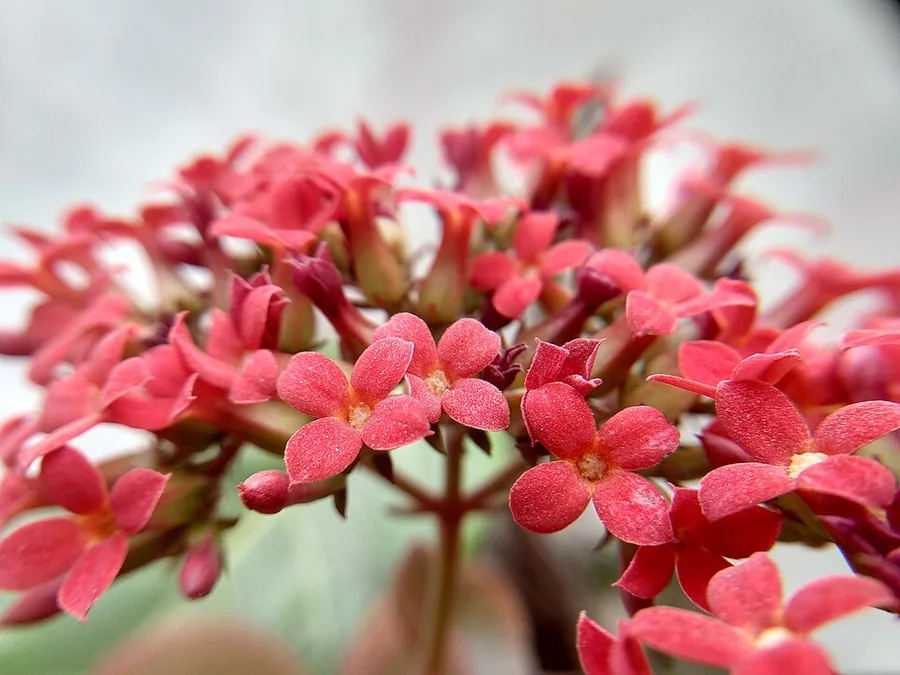
Flaming katy is a small succulent from Madagascar grown for its long-lasting clusters of bright flowers. It belongs to the same family as jade and sedum, and like them it stores water in thick, glossy leaves. That makes it forgiving of a missed watering but quick to rot if you overdo it.
Most plants reach just 6 to 12 inches (15 to 30 cm) tall, so it fits a windowsill with room to spare. The flowers come in red, orange, pink, yellow, and white, and a single flush can hold its color for weeks. Florists force it into bloom year-round, which is why it turns up as a gift plant in every season.
The plant is easy to keep alive and easy to bring back into flower once you know the trick. It needs bright light and a stretch of long nights to set buds, and it wants its soil to dry out completely between drinks. Get those two things right and it blooms again and again for years.
Care
The short version: bright indirect light, gritty fast-draining soil, and a thorough soak only once the soil has dried out completely. Feed lightly in the growing season and give it long fall nights to rebloom.
Light
Give flaming katy bright indirect light, such as a spot near a sunny window that misses the harshest midday rays. It takes some direct sun and even partial sun, but too little light leaves it stretched and reluctant to bloom.
Water
Let the soil dry out completely between waterings, then soak it through and tip out whatever collects in the saucer. This is a succulent that rots fast in soggy soil, so when in doubt, wait. To bring it back into flower it also needs about six weeks of long nights, roughly 14 hours of uninterrupted darkness.
Soil
Plant it in a gritty, well-drained mix that water runs through freely, like a cactus blend. A slightly acidic pH of 6.0 to 6.5 suits it, and sharp drainage is what keeps the roots from rotting.
Temperature
Ordinary room warmth works well, ideally 59°F to 77°F (15°C to 25°C). Keep it away from cold drafts and frost, since this is a tender plant that won't take a chill.
Humidity
Average household air is plenty, and it's happiest on the low side of humidity. There's no number to chase here, and dry indoor air suits it better than a steamy bathroom.
Feeding
Feed monthly through spring and summer while it's growing, using a balanced water-soluble fertilizer diluted to half strength. Ease off in fall and winter when growth slows.
Pruning
Deadhead the spent blooms to keep it looking neat, then pinch back the stems after flowering. That encourages bushy, compact growth instead of a few long, bare stalks.
Repotting
Move it up a pot size every 1 to 2 years, or sooner if it's crowded, always choosing a container with drainage. Roots poking from the holes, water running straight through, or stalled growth all say it's time.
Size & spacing
Expect a compact plant of 6 to 12 inches (15 to 30 cm) tall with a spread of 8 to 16 inches (20 to 40 cm). Give it enough elbow room that air moves freely around the leaves, which helps keep powdery mildew at bay.
Troubleshooting
Almost every problem with flaming katy traces back to water or light. Too much water rots the roots, while too little light leaves it leggy and shy of flowers. Match what you're seeing below and fix the cause, not just the symptom.
Soft, blackening stems and a collapsing base
This is root and crown rot, almost always the result of overwatering and soil that holds too much water. Unpot the plant and you'll find brown, soft, foul-smelling roots where firm pale ones should be. Cut away every rotted piece with clean tools, repot into fresh gritty mix, and hold off watering until the plant picks back up. The lasting fix is a pot with drainage and letting the soil dry out completely each time.
Fix:
- Remove the plant from wet soil
- Cut away all rotted tissue with clean tools
- Repot into fresh gritty, well-drained mix
- Withhold water until the plant recovers
Stretched, leggy growth with few or no blooms
A plant that leans toward the window with wide gaps between its leaves is short on light, and one that won't rebloom is missing the long nights it needs to set buds. Move it to a bright spot with indirect light, then give it about six weeks of roughly 14 hours of complete darkness each night to trigger budding. Pinch back the leggy stems while you're at it. Bright light year-round plus a controlled short-day spell in fall keeps it flowering.
Fix:
- Move to a bright spot with indirect light
- Provide about six weeks of roughly 14 hours of complete darkness each night to trigger budding
- Pinch back leggy stems
White, powdery coating on the leaves
Those dusty white patches that wipe off the foliage are powdery mildew, which takes hold in crowded plants sitting in still, humid air. Pull off the worst leaves, open up the spacing so air can move, and stop wetting the foliage when you water. Watering at the soil line and keeping the humidity low keeps it from coming back.
Fix:
- Remove badly affected leaves
- Improve air circulation and spacing
- Avoid wetting the foliage when watering
Toxicity
Treat this plant as a real hazard around animals. Every part holds bufadienolides, cardiac glycosides that upset the gut and, in larger amounts, disturb the heartbeat. Keep it out of reach of pets and livestock, and call a vet right away if an animal eats any of it.
Toxic to
Cats · Dogs · Horses · Rabbits · Livestock · Birds · People
Cats Toxic
Expect drooling, vomiting, and diarrhea soon after a cat nibbles any part. A larger mouthful can disturb the heart rhythm, so treat it as urgent.
Dogs Toxic
Drooling, vomiting, diarrhea, and a drop in energy are the usual signs. The same bufadienolides can slow or skip the heartbeat when a dog eats a lot.
Horses Toxic
The cardiac glycosides run through the whole plant, so a grazing horse risks colic, diarrhea, and a dangerous heart arrhythmia.
Rabbits Toxic
There is no safe amount for a rabbit. Even a few leaves can bring on gut upset and the heart-rhythm trouble these glycosides are known for.
Livestock Toxic
Cattle, goats, and sheep that get into it can suffer drooling, scouring, weakness, and an irregular heartbeat from the bufadienolides.
Birds Toxic
Keep it well out of reach of birds. The same cardiac toxin affects them, and their small size means even a little does harm.
People Caution
No part of this plant is meant to be eaten, and swallowing it can cause stomach upset. Keep it away from small children who might taste the bright flowers.
Helpline numbers

United States
ASPCA Animal Poison Control: (888) 426-4435 (fee applies)
Poison Control: (800) 222-1222



Canada
Poison Centres: 1-844-764-7669
Varieties
Most flaming katy sold today are bred for fuller flowers and tidy, compact growth. These two groups cover what you'll find at the garden center.
Calandiva series
These compact plants carry fully double, rose-like flowers across a wide run of colors.
Flapjacks-flowered florist hybrids
These are the single-flowered florist forms that pack dense clusters of red, orange, pink, or yellow bloom.
How to propagate
Flaming katy is simple to multiply, and a single plant gives you plenty of starts. You can root a stem tip or grow new plants from a leaf, both best done in spring or summer while the plant is actively growing.
Stem cuttingsEasy
Spring to summer during active growth · 2 to 3 weeks to root
The easiest way to make more is from a stem tip taken in spring or summer while the plant is growing. Snip a healthy tip, let the cut end callus for a day or two so it won't rot, then push it into gritty, barely moist mix. It roots in about 2 to 3 weeks.
Leaf cuttingsModerate
Spring to summer · 3 to 6 weeks to form plantlets
You can also grow new plants from a single leaf taken in spring or summer. Let the leaf callus, lay or set it on well-drained mix, and keep it lightly moist while tiny plantlets form at the base over 3 to 6 weeks.
Myths
It is a harmless gift plant that is safe around pets.
This florist favorite is genuinely toxic to cats and dogs. Its bufadienolides are cardiac glycosides that bring on vomiting and diarrhea and, in quantity, can throw off the heartbeat. Treat it as a plant to keep out of reach, not a worry-free houseplant.