Vegetable · Fabaceae
Snap Pea
Pisum sativum var. macrocarpon
Sow them while the ground is still cold and snap peas pay you back with sweet, crunchy pods before summer even arrives.
Full sun
Every 5–7 days
39–75°F · 4–24°C
55–70 days
Overview
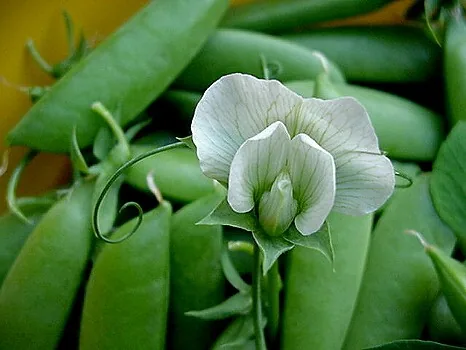
The snap pea is a cool-season legume grown for its plump, rounded pods that you eat whole, snap and all. It came out of crossing the flat-podded snow pea with the round-seeded shelling pea, which is how it ended up both sweet and crisp. It belongs to the bean family and shares their best trick: roots that pull nitrogen out of the air to feed themselves.
Peas live for the cold end of the season. They go in the ground the moment the soil can be worked in early spring, sprint through cool weather, and crop before the heat of summer shuts them down. The vining kinds climb 5 to 6 feet on a trellis while the bush types stay near 2 feet, so the kind you pick decides how much support you need to build.
Snap peas are about as forgiving a crop as a beginner can grow. Give them sun, a little water, and something to climb, and they mostly look after themselves. The one thing they will not tolerate is a late start, since pods that try to fill in hot weather turn tough and the plants quit.
Care
The short version: plant in full sun in early spring, give them well-drained soil and about an inch of water a week, hold back on the nitrogen, and put up a trellis for the vines to climb.
Light
Snap peas crop best in full sun, though they'll handle a bit of partial shade, which can even help stretch the season where spring warms up fast. Less light than that and you trade away pods for thin, leggy vines.
Water
Give them about 1 inch of water a week, soaking deep enough to reach several inches down, and keep the soil evenly moist once the flowers and pods are forming. Water at the soil line rather than over the top so the leaves stay dry and disease has less to work with.
Soil
Plant in well-drained loam with a pH anywhere from 6.0 to 7.5, which covers most garden ground. Good drainage matters most here, since peas sown into cold, soggy soil are the ones that rot at the root.
Temperature
This is a cool-weather crop, happiest between 39°F and 75°F (4°C to 24°C). Once the heat climbs past the mid-80s the flowering stalls and the plants begin to wind down, which is why an early start counts for so much.
Humidity
Average outdoor humidity of 40% to 70% suits them fine, so there's no number to manage. Airflow is the thing to mind instead, because crowded, still air is what lets powdery mildew settle in late in the season.
Feeding
Peas feed themselves by fixing their own nitrogen through bacteria on the roots, so they need little to no fertilizer. If the soil is genuinely poor, a low-nitrogen mix such as 5-10-10 helps, but too much nitrogen just grows leaf at the expense of pods.
Pruning
No real pruning is needed, though you can pinch the growing tips to keep tall vines in check. Once the last pods are off, pull the spent vines and compost them.
Size & spacing
Plants run from 2 to 6 feet (60 to 180 cm) tall depending on whether you grow a bush or a vining type, spreading only 6 to 12 inches (15 to 30 cm) wide. The tall kinds need a trellis to climb and good spacing keeps air moving through the row.
When to plant
Snap peas are a race against the heat. Sow the seeds straight into the ground as soon as it can be worked in early spring, roughly 4 to 6 weeks before the last frost, and you'll be picking pods from late spring into early summer before the warm weather ends the run.
Northern hemisphere
Southern hemisphere
Typical months for a temperate climate: start earlier in warm zones, later where spring frosts linger.
- Sow: Not typically started indoors; direct sow
- Plant: Early spring, as soon as the soil is workable and at least 45°F (7°C); about 4-6 weeks before the last frost
- Harvest: Late spring to early summer, roughly 55-70 days after sowing
Hardiness
USDA hardiness zones: 2–11
Temperature: down to -46°C
Troubleshooting
Most snap pea trouble comes down to weather and timing rather than neglect. Watch the leaves and pods for the early signs below, then act while there's still a crop to save. Match what you see and step in before it spreads.
Lower leaves yellowing while the whole plant stays stunted
When the bottom leaves fade and the plants never size up, the trouble is usually root rot or Fusarium wilt taking hold in cold, soggy ground. Dig up and discard the affected plants, because there is no saving them once the roots brown out. Plant in well-drained soil, rotate where the peas go each year, and reach for resistant varieties to keep it from coming back.
Fix:
- Remove and discard affected plants
- Improve soil drainage
White powdery dust spreading across the leaves
This is powdery mildew, a fungus that moves in late in the season when the days run warm and dry but the nights turn cool and damp. Pull the worst vines, open the planting up so air can move through it, and treat with sulfur or a labeled fungicide if it keeps spreading. Sowing early so the crop finishes before the heat is the surest way to dodge it.
Fix:
- Remove severely affected vines
- Improve air circulation
- Apply a labeled fungicide or sulfur if needed
Curled, sticky leaves crawling with tiny green insects
Those soft green specks clustered on the shoot tips are pea aphids, and beyond the damage they do feeding, they can pass viruses from plant to plant. Blast them off with a hard jet of water, follow up with insecticidal soap, and let lady beetles do the rest. Keep the nitrogen low, since the lush growth heavy feeding produces is exactly what draws them.
Fix:
- Spray plants with a strong stream of water
- Apply insecticidal soap
- Encourage natural predators such as lady beetles
Flowers falling off without ever forming pods
Once early summer heat pushes past about 85°F (29°C), snap peas simply quit flowering and setting pods. There is no fix in the moment, so pick whatever pods remain and hand the row over to a warm-season crop. The real answer is timing: sow early enough that the plants flower while the weather is still cool.
Fix:
- Harvest any remaining pods promptly
- Replace with a warm-season crop
Pods turning tough, stringy, and starchy
Leave the pods on too long and the sugars inside turn to starch, which is what makes them fibrous and tough. There is nothing to do for pods that have gone past their prime except move on to the next picking. Pick every 1 to 3 days while the pods are plump but still tender, and the quality stays high.
Fix:
- Harvest promptly when pods are plump but still tender
- Pick every 1-3 days
Toxicity
Snap peas are an edible crop through and through, and every part is safe, pods, seeds, shoots, and flowers alike. People and pets can eat them without worry. Just don't confuse them with the ornamental sweet pea (Lathyrus), which looks similar but is toxic and not food.
Safe for
People · Cats · Dogs · Horses · Rabbits · Livestock · Birds
Cats None
Snap peas are not toxic to cats, so a nibbled vine or a stray pod is no cause for worry. A cat that gulps a lot of plant matter at once might have a brief upset stomach, but that is true of any greens.
Dogs None
Dogs can eat snap peas without harm, and plenty enjoy a fresh pod as a crunchy snack. The only thing to watch is the usual digestive grumbling that follows any sudden helping of vegetables.
Horses Safe
The pods, leaves, and vines are all safe for horses to graze. Peas even add a little protein, though they should stay a treat rather than a staple feed.
Rabbits Safe
Rabbits do well with snap pea leaves, pods, and shoots, which make a wholesome part of their greens. Introduce any new forage slowly so their gut has time to adjust.
Livestock Safe
Cattle, goats, and sheep can graze pea vines safely, and the foliage is a familiar forage crop. There is no toxin here to limit how much they take.
Birds Safe
Backyard hens and other birds peck happily at peas and tender shoots with no risk. The seeds are a good source of protein for them.
People Safe
Snap peas are grown to be eaten, pod and all, raw or lightly cooked. They are a safe, sweet vegetable for the whole family, children included.
No special handling needed; this is a safe edible crop.
Varieties
Snap peas come in a few reliable types, sorted mostly by how tall they grow and how their pods eat. These are the ones worth knowing by name.
Sugar Snap
The original sugar snap, climbing 5 to 6 feet and hanging with plump, rounded pods that are sweet enough to eat whole straight off the vine.
Sugar Ann
A compact bush type around 2 feet tall that ripens early and needs little in the way of support.
Snow pea (var. saccharatum)
An edible-pod pea picked for its flat, tender pods before the seeds swell, setting it apart from the plump-podded snap pea.
Companions
Peas grow well alongside cucumbers and other legumes that share their easygoing habits, and poorly next to onions and their allium kin, which stunt legume growth.
Plant near
cucumbers: Listed as a compatible companion for peas in extension companion-planting guidance.
beans: Other legumes pair well with peas and similarly help build soil nitrogen.
Keep apart
onions: Alliums such as onions can stunt the growth of legumes and should not be interplanted with peas.
How to propagate
Snap peas are grown from seed sown right where they'll grow, which is just about the easiest way there is to start a crop.
SeedEasy
Direct sow in early spring as soon as the soil is workable and at least 45°F (7°C) · Germinates in about 7-14 days; pods ready to harvest in roughly 55-70 days
Snap peas go straight into the ground rather than starting indoors. Sow the seeds 1 to 1.5 inches deep and 1 to 2 inches apart as soon as the soil works in early spring, and set up a trellis or netting for the vining types to climb. They sprout in about 7 to 14 days and reach picking size in roughly 55 to 70 days, and dusting the seed with Rhizobium bacteria first helps them fix nitrogen.
Myths
Peas need heavy nitrogen fertilizer to crop well.
Peas pull their own nitrogen from the air through bacteria living on their roots, so they rarely need feeding. Pile on extra nitrogen and you actually get fewer pods, all leaf and little harvest.
All edible-pod peas are the same thing.
They split into clear types. Snap peas have plump, rounded pods you eat whole, snow peas have flat pods picked before the seeds swell, and shelling peas are opened for the seeds while the pod is thrown away.
Ornamental sweet peas and snap peas can be used the same way.
They are different plants entirely. The ornamental sweet pea is Lathyrus, it is toxic and never a food crop, while only Pisum sativum peas like the snap pea are grown to eat.