Vegetable · Fabaceae
Peanut
Arachis hypogaea
Give it full sun, loose sandy soil, and a long warm season, and the peanut ripens a whole crop underground.
Full sun
Every 5–10 days
64–95°F · 18–35°C
120–150 days
Overview
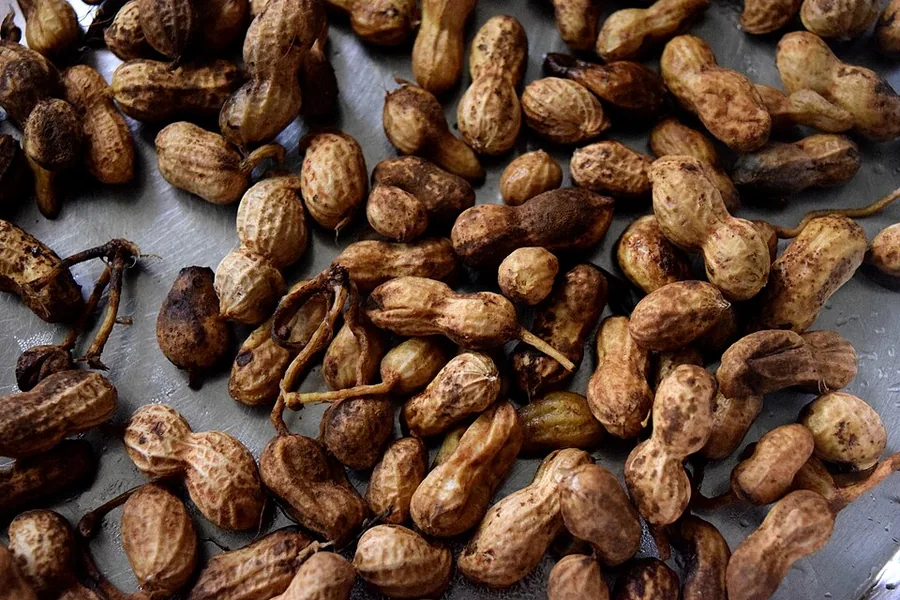
The peanut is one of the strangest crops you can grow at home. It flowers above ground like any other plant, but after the bloom is pollinated a stalk called the peg bends down and buries the young pod, so the nuts ripen out of sight in the soil. It belongs to the bean and pea family, not to the nut trees its name suggests.
It came from South America and needs a long, warm season, which is why it thrives in zones 7 through 11 and across the South. The plant stays low, between 8 and 20 inches tall, and either climbs into a tidy bunch or sprawls along the ground depending on the type you grow. Either way it asks for heat, sun, and patience.
Peanuts reward a gardener who gets the soil right. They want loose, sandy ground rich in calcium so the pegs can drive in and the pods can fill, and as legumes they fix much of their own nitrogen. Give them that, water them steadily while they flower, and you can dig a heavy crop of nuts come fall.
Care
The short version: full sun, loose sandy soil with plenty of calcium, and about an inch of water a week while the plant flowers and sets pods. Go easy on nitrogen, since the plant makes its own, and ease off the water as the pods mature.
Light
Peanuts want full sun, ideally 8 or more hours a day. They'll tolerate a little partial sun, but shade gives you weak, leggy plants and a thin crop of pods.
Water
Give about 1 inch of water a week, and keep the soil evenly moist while the plant is flowering and sending pegs into the ground. That stretch matters most for pod fill. Once the pods are maturing, ease off the water to help the crop cure and lift cleanly.
Soil
Plant in loose, sandy, well-drained loam that's high in calcium, which lets the pegs push in and the shells fill out. A slightly acidic pH of 5.8 to 6.5 suits them, and working gypsum in at bloom keeps the calcium where the pods need it.
Temperature
Peanuts are heat lovers that run best between 64°F and 95°F (18°C to 35°C). They have no tolerance for frost at either end of the season, so the long warm middle is what fills the pods.
Humidity
Average humidity between 40% and 70% is plenty. Steady airflow matters more than the number, since long spells of wet foliage are what invite leaf spot.
Feeding
Because peanuts are legumes that fix their own nitrogen, go low on nitrogen and lean instead on phosphorus, potassium, and calcium. Work gypsum in at early bloom and pegging, when the pods are starting to form and the plant needs the calcium most.
Pruning
Peanuts need no pruning at all. Cultivate shallowly to knock down weeds early on, but once the pegs start entering the soil, leave the ground undisturbed so the developing pods aren't damaged.
Repotting
not applicable; grown as a field/garden annual from seed each year
Size & spacing
Plants stay low, from 8 to 20 inches (20 to 50 cm) tall, and spread out to 12 to 35 inches (30 to 90 cm) as the vines run. Give each plant that much room so the pegs have open soil to reach.
When to plant
Peanuts need a long, frost-free stretch of warmth to ripen underground. Wait until the last frost has passed and the soil has warmed to about 65°F, usually late spring, then count on a full season of growth before you dig the crop in fall.
Northern hemisphere
Southern hemisphere
Typical months for a temperate climate: start earlier in warm zones, later where spring frosts linger.
- Plant: After last frost when soil reaches about 65°F, typically late spring (May)
- Harvest: Yellow flowers appear ~6-8 weeks after planting; harvest pods in fall before frost when inner shells show veining and darkened color
Hardiness
USDA hardiness zones: 7–11
Temperature: down to -18°C
Troubleshooting
Most peanut trouble hides where you can't see it, down in the pods, or creeps up from the lower leaves. Knowing what healthy vines should be doing helps you catch a problem before harvest. Match what you find below, then act before the season runs out.
Moldy or off-color kernels after harvest
Discolored kernels, a fuzzy mold, or a musty smell are warning signs of Aspergillus and the aflatoxin it produces, which takes hold when the crop is drought stressed in the field or dried and stored damp. Never eat or feed nuts that look or smell off, and throw them out. Cure the pods quickly after harvest and keep them cool and dry to head it off.
Fix:
- Discard moldy peanuts; do not eat or feed them
- Dry pods promptly and thoroughly after harvest
- Store cured peanuts cool and dry
Healthy vines but the pods come up blank
When the tops look fine but the pods are empty, the cause is almost always calcium starved or compacted soil in the pegging zone. The pegs need to drive into loose ground and pull up calcium to fill out the shells, so work in gypsum at early bloom and keep the moisture even through pod fill. Heavy soil hilled over the crown blocks the pegs before they ever reach the dirt.
Fix:
- Apply gypsum (calcium sulfate) at early bloom/pegging
- Grow in loose sandy soil and avoid hilling heavy soil over the crown
- Maintain even moisture during pegging and pod fill
Dark leaf spots that yellow and strip the lower leaves
Circular brown to black spots, often ringed with a yellow halo, point to early or late leaf spot, a fungal disease that climbs from the oldest leaves up in warm, humid spells. Left alone it strips the plant of foliage and cuts the yield. Rotate away from old peanut ground, keep the leaves dry by watering early, and spray a labeled fungicide before it spreads.
Fix:
- Apply a labeled fungicide on a preventive schedule
- Remove or rotate away from previous peanut residue
- Improve air movement and avoid prolonged leaf wetness
Toxicity
Peanuts are a safe, wholesome food for people and pets alike, with no toxin in the plant or the plain nuts. The real cautions are about how they're served: keep them plain and unsalted, never feed moldy nuts, and watch out for peanut butter that contains xylitol, which is dangerous to dogs.
Safe for
People · Cats · Dogs · Horses · Rabbits · Livestock · Birds
Cats None
Plain peanuts hold nothing that poisons a cat. The shells can be a choking hazard, and rich or salty ones may upset the stomach, so keep treats plain and small.
Dogs None
A few plain, unsalted peanuts are fine for most dogs. The real danger sits in some peanut butters: xylitol is highly toxic and can trigger vomiting, weakness, and collapse, so always read the label first.
Horses Safe
The plant and plain nuts pose no poisoning risk to horses. Peanut hay is even used as forage in some regions, though the fatty kernels are best fed only in small amounts.
Rabbits Safe
Nothing in the peanut plant is toxic to rabbits, but the nuts are far too fatty and starchy for them. Stick to hay and greens and skip the peanuts altogether.
Livestock Safe
Cattle, goats, and sheep graze peanut foliage and hay without harm. Only moldy nuts and vines are a worry, since aflatoxin can build up in spoiled feed.
Birds Safe
Plain, unsalted peanuts are a popular feeder food for wild and pet birds alike. Just keep them dry, since damp nuts grow the molds that make aflatoxin.
People Safe
Peanuts are a wholesome, protein-rich food eaten worldwide. The main caution is allergy, which can be serious in sensitive people, and tossing any nuts that smell musty or look moldy.
Salted or heavily seasoned peanuts add excess sodium and fat that are not ideal for pets and can cause stomach upset or pancreatitis with rich/fatty intake. MOLDY peanuts can carry aflatoxin and should never be fed. Critically, some commercial PEANUT BUTTER contains XYLITOL, an additive that is highly toxic to dogs even in small amounts and can cause hypoglycemia and liver failure; always check labels.
Varieties
Peanuts fall into four main market types, and which one you grow shapes the size, flavor, and use of the nuts. These are the names worth knowing.
Runner
A low, spreading type with medium kernels that dominates U.S. acreage and goes into most peanut butter.
Virginia
The big-kerneled type sold as gourmet in-shell and cocktail peanuts.
Spanish
A small, round, red-skinned peanut with more oil, which is why it ends up in candy and pressed oil.
Valencia
A sweet type that carries three or more kernels to a pod and shines boiled or roasted in the shell.
Companions
Plant near
Corn: Tall companion that does not compete heavily and benefits from the nitrogen peanuts fix.
Squash: Sprawling vines provide ground cover while peanuts enrich soil nitrogen.
Keep apart
Cabbage and other brassicas: Heavy feeders that compete and prefer firmer, less sandy soil management than peanuts.
How to propagate
Peanuts grow from their own kernels, so a single packet of raw seed peanuts is all it takes to start a patch.
SeedModerate
Plant raw, viable seed (kernels) outdoors after last frost when soil is about 65°F · Germinates in about 7-14 days; full maturity in 120-150 days
Peanuts grow from their own raw kernels, so start with fresh, untreated seed peanuts rather than roasted ones. Sow them 1 to 2 inches deep in loose sandy soil once the last frost has passed and the ground has warmed, and dusting the seed with a Rhizobium inoculant helps the plant fix more of its own nitrogen. Seedlings push up in 7 to 14 days, but the full crop takes a long season of 120 to 150 days to mature underground.
Myths
Peanuts are tree nuts.
Peanuts are not nuts at all. They are legumes in the family Fabaceae, closer kin to beans and peas, and their pods ripen underground after the flower stalk bends down into the soil. People with a peanut allergy aren't automatically allergic to tree nuts, and the reverse holds too.
Peanuts grow on bushes or trees like other nuts.
The peanut does something almost no other crop does. After the flower self-pollinates, a stalk called the peg grows down from the plant and pushes the young pod into the ground, where the nuts swell and mature out of sight.