Vegetable · Fabaceae
Chickpea
Cicer arietinum
Give it full sun, a cool spring start, and lean soil, and the chickpea fixes its own nitrogen and feeds you by late summer.
Full sun
Every 7–10 days
50–86°F · 10–30°C
90–120 days
Overview
The chickpea is one of the oldest crops people grow, a bushy annual legume from the pea family that came out of the Near East thousands of years ago. It stands about knee high and carries its seeds two or three to a short, puffy pod. You'll know it by the small, fern-like leaves and the fine glandular hairs that coat the whole plant.
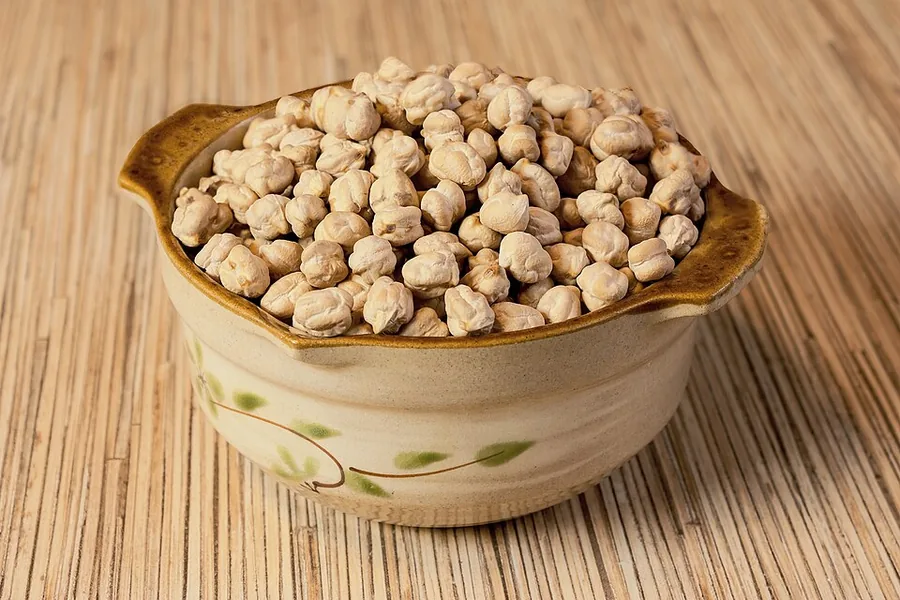
It splits into two camps. The Kabuli type gives the big, pale garbanzos sold for cooking, while the smaller, darker Desi type dominates South Asian kitchens and gets split into dal. Both want the same thing in the garden: full sun, free-draining soil, and a cool spring to get going.
What sets chickpeas apart is that they make much of their own food. Working with Rhizobium bacteria in their roots, they pull nitrogen straight from the air, so they need little feeding and leave the soil richer than they found it. Give them an early start and steady moisture through bloom, and they ask for very little else.
Care
The short version: full sun and lean, well-drained soil, with even moisture through flowering and pod fill. Sow early in spring while it's still cool, skip the nitrogen, and let the pods dry on the plant before you harvest.
Light
Chickpeas want full sun, a spot that catches direct light all day. They don't tolerate shade, and a plant grown in too little sun sets fewer pods and stays weak.
Water
Water on the deep side roughly every 7 to 10 days, leaning toward even moisture while the plant is flowering and filling pods. Chickpeas shrug off drought once established, but soggy ground invites root rot. As the pods begin to dry for harvest, cut the water back.
Soil
Plant in well-drained sandy loam to loam, since drainage matters more here than richness. The plant is easygoing about pH and runs happily anywhere from 6.0 to 8.0, taking even mildly alkaline ground in stride.
Temperature
Chickpeas grow best in the cool stretch between 50°F and 86°F (10°C to 30°C). A seedling shrugs off light frost, but heat during flowering makes the blossoms drop before they set pods.
Humidity
This is a low-humidity plant that does best around 30% to 50%. Damp, still air is the enemy, since the leaf diseases that hit chickpeas hardest all thrive in prolonged wet.
Feeding
Feed lightly, and only at planting. As a nitrogen-fixing legume the plant makes most of its own, so a phosphorus starter and a Rhizobium inoculant at sowing are usually all it needs, and extra nitrogen does more harm than good.
Pruning
No pruning needed. This bushy annual just grows to maturity, gives up its pods, and gets pulled out after harvest.
Repotting
Not applicable (field/garden annual, not container-grown long term)
Size & spacing
Chickpeas stay compact, reaching 12 to 24 inches (30 to 60 cm) tall with a spread of 8 to 18 inches (20 to 45 cm). That tidy size makes them easy to fit in rows or among other cool-season crops.
When to plant
Chickpeas are a cool-season crop, so they go in early. Sow the seed straight into the ground in early to mid spring as soon as the soil can be worked and has warmed to around 50°F (10°C). The plants take the long way to maturity, so give them 90 to 120 days and let the pods brown on the stem before you pull them.
Northern hemisphere
Southern hemisphere
Typical months for a temperate climate: start earlier in warm zones, later where spring frosts linger.
- Plant: Direct-sow in early-to-mid spring once soil is workable and has warmed to about 10°C (50°F); chickpea is a cool-season crop that tolerates light frost as a seedling.
- Harvest: Harvest green (immature) seeds earlier for fresh use; for dry seed, harvest when the whole plant and pods have dried and turned brown.
Hardiness
USDA hardiness zones: 4–10
Temperature: down to -34°C
Troubleshooting
Most chickpea trouble traces back to wet weather and warm soil, and it shows up on the leaves, the stems, or the flowers. Catch it early and you can often keep one sick plant from taking the whole row. Match what you see below, then act before it spreads.
Ringed brown lesions on leaves, stems, and pods
This is ascochyta blight, the disease that does the most damage to a chickpea crop, and it spreads fast in cool, rainy weather. Look closely and you'll see tiny dark dots arranged in rings inside the spots. Start with clean, treated seed, keep water off the leaves, and clear out infected debris so it can't carry over.
Fix:
- Use certified disease-free, treated seed
- Apply registered foliar fungicides preventively in high-risk wet seasons
- Remove and destroy infected crop residue
Plants yellowing and wilting in scattered patches
When chickpeas yellow, wilt, and die off in uneven patches across a bed, suspect fusarium wilt, a soil fungus that clogs the plant from the inside. Split a lower stem and you'll find brown streaks running through it. There's no rescue once it takes hold, so pull the affected plants, fix the drainage, and rely on resistant cultivars and rotation next time.
Fix:
- Remove and destroy affected plants
- Improve drainage and avoid overwatering
Flowers dropping with few pods setting in the heat
Chickpeas are a cool-season crop, so a hot spell during bloom makes the flowers drop before they can set pods. Dry soil at flowering makes it worse. Keep the moisture even through bloom, and time your sowing so the plants flower before the worst of the summer heat arrives.
Fix:
- Maintain even soil moisture during flowering
- Time planting so flowering avoids peak summer heat
Toxicity
Good news on this one: chickpeas are food, not poison. The cooked seed is safe for people and pets alike, and you'll even find it in some pet foods. The only real caution is at harvest, when the plant's acidic, hairy foliage can irritate bare skin, so wear gloves and long sleeves.
Safe for
People · Cats · Dogs · Horses · Rabbits · Livestock · Birds
Cats None
Cooked chickpeas are harmless to cats and even turn up in some pet foods, so a nibble of the plant is nothing to worry about.
Dogs None
Dogs can eat plain cooked chickpeas without any trouble, and the growing plant poses no poisoning risk if one takes a bite.
Horses Safe
There's nothing toxic here for a horse that grazes the foliage.
Rabbits Safe
A rabbit can sample the leaves safely, though the sticky, acidic hairs may make the plant less appealing than fresh greens.
Livestock Safe
Cattle, sheep, and goats can graze chickpea without harm, and the crop residue is sometimes fed as fodder.
Birds Safe
Backyard hens and other birds can eat cooked chickpeas, and the seed is a common ingredient in feed mixes.
People Safe
Cooked chickpeas are a staple food eaten the world over. Cook the raw seed first, and wear gloves at harvest since the plant's acidic hairs can irritate skin.
The foliage and pods are covered in glandular hairs that secrete an acidic exudate (chiefly malic and oxalic acid). Prolonged skin contact during harvest can cause irritation, so wear gloves and long sleeves when handling plants by hand. Raw seeds are cooked before eating.
Varieties
Chickpeas sort into two broad types, and which one you grow decides the size, color, and use of the seed you harvest.
Kabuli
The large, pale cream garbanzo with smooth round seeds and a thin coat, this is the type you'll find dried or canned for cooking.
Desi
A smaller, darker chickpea with angular seeds and a thicker, often colored coat, common across South Asia and frequently split into chana dal.
How to propagate
There's only one way to start chickpeas, and it's the easy one: seed, sown right where the plants will grow.
SeedEasy
Direct-sow in early-to-mid spring once soil is workable and around 10°C (50°F). · Seedlings typically emerge in about 1-2 weeks under suitable conditions.
Chickpeas grow only from seed, sown straight into the ground in early to mid spring once the soil is workable and near 50°F (10°C), with seedlings up in about 1 to 2 weeks. If chickpeas haven't grown in that ground before, coat the seed with the right Rhizobium inoculant at planting so the roots can fix their own nitrogen.
Myths
Chickpeas need heavy nitrogen fertilizer to grow well.
As a legume, chickpea teams up with Rhizobium bacteria and fixes much of its own nitrogen straight from the air. Piling on nitrogen fertilizer is wasted effort, and too much can actually cut back the nodulation the plant relies on.