Vegetable · Fabaceae
Pea
Pisum sativum
Sow them while the soil is still cold, give them something to climb and steady moisture, and the pods come sweet and early.
Full sun
Every 3–7 days
45–75°F · 7–24°C
55–70 days
Overview
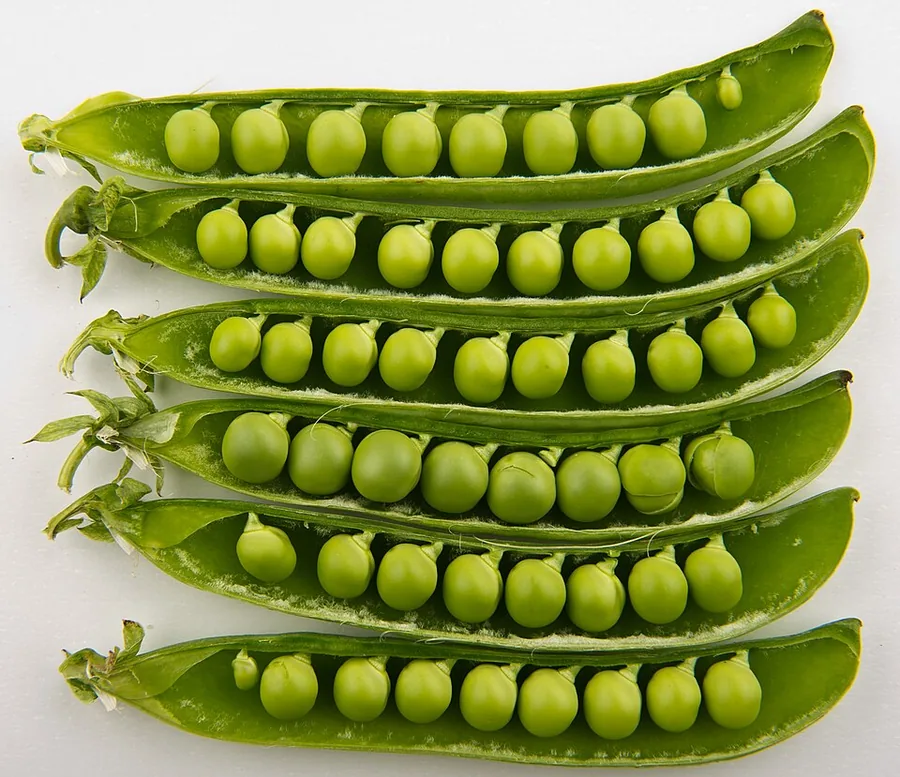
Peas are a cool-season legume and one of the first things you can sow each spring. They belong to the bean family and grow almost anywhere, putting up climbing vines that grab a trellis with curling tendrils and hang it with plump green pods. The garden pea, Pisum sativum, is the familiar shelling pea, prized for the sweet seeds tucked inside each pod.
What sets peas apart is how little they ask. As a legume, the plant pulls its own nitrogen from the air through bacteria living in its roots, so it feeds itself and even leaves the soil richer for whatever follows. Sow the seed straight into the ground, give the vines something to climb, and keep the soil evenly moist through flowering and pod fill.
Timing is the whole game with peas. They thrive in the cool weather of early spring and quit once summer heat arrives, so the trick is to sow early and harvest before it turns hot. Get that window right and you pick sweet, tender pods; miss it, and the plants stall out and the peas turn starchy.
Care
The short version: full sun and cool weather, sown straight into rich, well-drained soil as early as the ground can be worked. Keep the moisture steady through flowering, give the vines a trellis, and skip the nitrogen feed.
Light
Peas crop best in full sun, though they'll get by with a bit of afternoon shade, which actually helps in warmer spots by keeping them cool a little longer. The more sun they get, the heavier the pod set.
Water
Give peas about 1 inch of water a week and keep it steady, especially while they're flowering and filling pods. Don't let the soil swing between bone dry and soaked. Waterlogged ground is just as bad, since it invites root rot.
Soil
Plant in well-drained loam worked through with compost or other organic matter. Peas take a fairly wide pH, anywhere from 6.0 to 7.5, and good drainage matters more than almost anything else because soggy roots rot fast.
Temperature
Peas are built for cool weather and grow best between 45°F and 75°F (7°C to 24°C). They shrug off a light frost, but once the heat climbs past their range, flowering falters and the pods stop coming.
Humidity
Ordinary outdoor humidity suits peas fine, so there's no figure to aim for. Air movement counts for more, since damp, crowded foliage is what powdery mildew waits for.
Feeding
Peas feed themselves. As a legume, the plant fixes its own nitrogen through Rhizobium bacteria in its roots, so go easy, or skip feeding altogether. In poor soil, a light dose of low-nitrogen phosphorus and potassium at planting is plenty; too much nitrogen just grows leaves instead of pods.
Pruning
Peas need no real pruning. Pinch the growing tip if a vine climbs past its support, and pull off any mildewed or diseased leaves the moment you spot them to slow the spread.
Size & spacing
The vines run from 2 to 6 feet (60 to 180 cm) tall depending on the type, while each plant stays narrow at 6 to 12 inches (15 to 30 cm) across. Give the taller climbers a trellis and they'll go straight up rather than sprawl.
When to plant
Peas are a cool-weather crop with no taste for summer heat. Sow them straight into the garden in very early spring, as soon as the soil can be worked, and you'll be picking pods within a couple of months, well before the hot weather shuts the plants down.
Northern hemisphere
Southern hemisphere
Typical months for a temperate climate: start earlier in warm zones, later where spring frosts linger.
- Plant: Direct sow in very early spring as soon as soil can be worked, when soil temperature reaches about 45°F; peas tolerate light frost.
- Harvest: Harvest shelling peas about 3 weeks after flowering when pods are well filled, plump, and bright green but before they become tough and starchy.
Hardiness
USDA hardiness zones: 2–11
Temperature: down to -46°C
Troubleshooting
Most pea trouble shows up on the leaves or at flowering time, and a lot of it traces back to weather and watering. Catch the early signs and you can often turn things around before the crop suffers. Match what you see below, then act while it still counts.
Seedlings collapse with brown, rotted roots
Seedlings that never come up, or topple with mushy brown roots and water-soaked stems, have fallen to root rot from soil fungi like Fusarium, Pythium, and Aphanomyces. It strikes hardest in cold, soggy ground, so there's no saving the affected plants. Pull and discard them, fix the drainage, and wait for the soil to warm before sowing again. Crop rotation, well-drained beds, and treated seed keep it from coming back.
Fix:
- Remove and discard affected plants
- Improve drainage and avoid overwatering
- Replant in well-drained soil once conditions warm
White powdery dust on the leaves and stems
This is powdery mildew, a fungus that takes hold late in the season when days run warm and nights turn cool. Strip out the worst leaves, open the planting up so air can move through, and reach for a labeled fungicide only if it keeps spreading. Sowing early so the crop matures before the fungus peaks is the surest way to dodge it.
Fix:
- Remove and destroy heavily infected foliage
- Improve air circulation by proper spacing and trellising
- Apply a labeled fungicide if infection is severe
Curled leaves crawling with small green insects
Those soft green clusters on the tips and leaf undersides are pea aphids, and the sticky film they leave behind soon draws ants and sooty mold. Blast them off with a sharp jet of water, follow up with insecticidal soap or horticultural oil if they hang on, and let lady beetles and lacewings do the rest. Skip the heavy nitrogen, since the soft new growth it forces is exactly what aphids pile onto.
Fix:
- Dislodge aphids with a strong spray of water
- Use insecticidal soap or horticultural oil
- Encourage natural predators such as lady beetles and lacewings
Plenty of flowers but hardly any pods
When peas bloom but set little, the usual culprit is heat stress as a warm spell pushes them past their cool-season comfort. A flush of nitrogen can do the same, leaving you a leafy plant with few pods. Keep the soil evenly moist, throw some afternoon shade over them during a hot stretch, and time future sowings so flowering lands in cool weather.
Fix:
- Maintain even soil moisture during flowering
- Provide afternoon shade during heat waves where practical
- Time plantings so flowering avoids hot weather
Toxicity
Good news on this one: the garden pea is completely safe. The seeds, pods, and tender shoots are all edible, and no part of the plant is toxic to people or pets. Just don't confuse it with the ornamental sweet pea (Lathyrus), a different plant whose seeds are not safe to eat.
Safe for
People · Cats · Dogs · Horses · Rabbits · Livestock · Birds
Cats None
Garden peas are not on the ASPCA toxic list, so a cat that nibbles a vine or a pod has nothing to fear. A few cooked peas are a harmless treat.
Dogs None
Peas are safe for dogs, and plain shelled ones even turn up in plenty of dog foods. No part of the plant poses a poisoning risk.
Horses Safe
Horses can graze pea foliage without harm. As with any rich green feed, introduce it slowly rather than all at once.
Rabbits Safe
Rabbits relish pea leaves, vines, and pods, and all of it is safe to offer. The plant carries no toxins that would trouble them.
Livestock Safe
Peas are grown as a forage and fodder crop, so cattle, goats, and sheep can eat the plant without risk.
Birds Safe
Chickens and other birds happily peck at peas with no danger. The seeds make a wholesome, protein-rich snack.
People Safe
Garden peas are a familiar vegetable, eaten as shelled peas, whole pods, or tender shoots. The whole plant is safe in the kitchen.
Pea seeds, pods, and shoots are commonly eaten; no special handling precautions are required for the edible garden pea.
Varieties
Most home gardeners grow a small handful of reliable shelling peas. These are the ones worth knowing by name.
Little Marvel
A compact, early dwarf shelling pea that tops out around 18 inches, which makes it a favorite for small gardens and short seasons.
Green Arrow
A heavy cropper that carries long, slender, well-filled pods of 8 to 11 peas each and shrugs off many common diseases.
Wando
A shelling pea bred for extra heat tolerance, so you can sow it a little later in spring than most others.
Alaska
A very early, smooth-seeded type that sprouts well in cold soil and earns its place in the earliest plantings.
Companions
Peas grow happily beside quick crops and other vegetables that share the bed well, and they leave the soil richer for the nitrogen they fix. Keep them clear of onions and garlic, which are reported to stunt them.
Plant near
Carrots: Commonly grown with peas as compatible bed companions that use space efficiently.
Radishes: Quick-maturing companion harvested before peas need the space.
Cucumbers: Listed as a compatible companion that benefits from the nitrogen peas contribute to the soil.
Beans: Another legume considered a compatible companion in the vegetable bed.
How to propagate
Peas are about as simple as plants get to start. You grow them from seed sown right where they'll crop, and that's the only way worth bothering with.
SeedEasy
Direct sow in very early spring as soon as the soil can be worked and reaches about 45°F. · Seeds typically germinate in 7 to 14 days depending on soil temperature.
Peas start from seed sown straight into the garden, because they hate having their roots disturbed by transplanting. Sow the seed 1 to 1.5 inches deep as soon as the soil can be worked in early spring, around 45°F (7°C), and the sprouts push through in 7 to 14 days once the ground warms. Set up a trellis or netting early for the climbing types, and in a bed where peas have never grown, coating the seed with Rhizobium inoculant helps the plants fix their own nitrogen.
Myths
All peas are interchangeable, so the ornamental sweet pea is safe to eat like the garden pea.
The garden pea you grow for shelling, Pisum sativum, is a non-toxic vegetable, but the ornamental sweet pea, Lathyrus odoratus, is a different plant whose seeds are toxic and can cause lathyrism. Never treat a sweet pea as food, no matter how alike the names sound.
Peas need heavy nitrogen feeding to crop well, like other vegetables.
Peas are legumes that pull their own nitrogen from the air through bacteria in their root nodules, so they barely need feeding. Pile on the nitrogen and you grow leaves instead of pods, which is the opposite of what you want.