Ornamental · Poaceae
Fountain Grass
Pennisetum alopecuroides
Plant it in full sun and lean soil, and fountain grass arches up into a soft, plumed mound that carries the garden through winter.
Full sun
Every 7–14 days
USDA 5–9
2–5 ft · 0.6–1.5 m
Overview
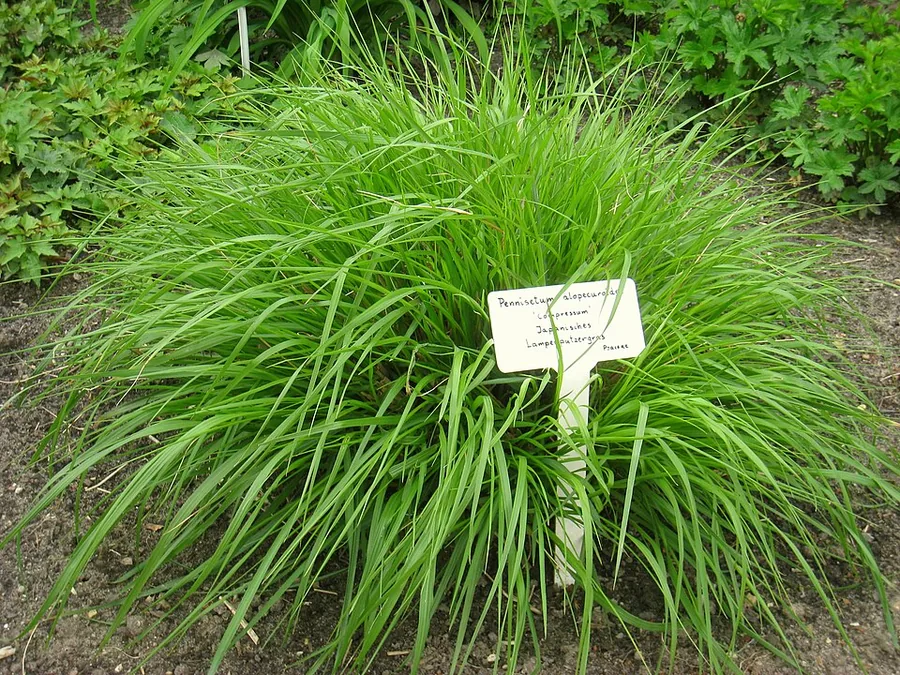
Fountain grass earns its name. The leaves arch up and spill back over in a tidy mound, and in late summer the soft, bottlebrush plumes rise above the foliage and catch every breeze. It's a warm-season clump-former in the grass family, grown across a wide stretch of cold-hardy ground from zone 5 to zone 9.
What makes it a workhorse is how little it asks. Once it's settled in, it shrugs off drought, wants almost no feeding, and brings no serious pests along with it. The plumes open silvery to pinkish and the whole clump turns gold in fall, holding its shape and color well past the first hard frosts.
The one thing to keep an eye on is its habit of seeding itself around. The hardy fountain grass can self-sow into nearby beds and even escape into wild ground, and its tender cousin, crimson fountain grass, is a serious weed in warm, dry regions. Cut the plumes before the seed drops and you get all the looks with none of the trouble.
Care
The short version: give it full sun and average, well-drained soil, water it regularly until it's established and then mostly leave it alone, and cut the whole clump to the ground in late winter before new growth starts.
Light
Fountain grass wants full sun to look its best, where it grows dense and stands upright. It will take partial shade, but in too little light the stems go soft and the whole clump flops open.
Water
Water it regularly through its first season while the roots take hold. After that it's drought tolerant and gets by on rain in most spots, though it's happiest in soil that stays medium to wet, so a deep drink in a long dry spell keeps it looking fresh.
Soil
Average, well-drained soil suits it fine, and it isn't fussy about pH. Skip the rich, heavily amended beds, since too much fertility grows floppy stems that won't hold the fountain shape.
Temperature
It's tough across a wide range, hardy from about -20°F to 100°F (-29°C to 38°C). That cold-hardiness is what lets it grow as a true perennial through zone 5.
Humidity
Ordinary outdoor humidity is all it needs, so there's no number to chase. Air moisture is a non-issue for a grass this rugged.
Feeding
This is a low-feed plant. A light dose of balanced fertilizer or a little compost in spring is plenty, and many gardeners skip it altogether, since rich soil only makes the clump flop.
Pruning
Cut the whole clump back to a few inches above the ground in late winter or early spring, before the new growth pushes through. Where self-seeding is a worry, snip the plumes off in fall before the seed drops.
Repotting
Divide a clump every 2 to 4 years to keep it vigorous. When the center dies out and bare ground rings the middle, it's telling you it's overdue for splitting.
Size & spacing
A clump runs 2 to 5 feet (60 to 150 cm) tall and about as wide. Give it that much room to spread so the fountain shape has space to arch over without crowding its neighbors.
When to plant
Fountain grass runs on the warm season. Start seed indoors in late winter or set divisions out in spring once the cold has passed and the soil has warmed, and the plumes arrive in late summer and hang on through fall and into winter.
Northern hemisphere
Southern hemisphere
Typical months for a temperate climate: start earlier in warm zones, later where spring frosts linger.
- Sow: 8 to 10 weeks before last frost
- Plant: spring after last frost once soil has warmed
- Harvest: late summer into fall, plumes often persisting through winter
Hardiness
USDA hardiness zones: 5–9
Temperature: down to -29°C
Troubleshooting
Fountain grass rarely gets sick, so most of its problems are about habit rather than disease. The few things that go wrong show up in the shape of the clump or in seedlings turning up where you didn't plant them. Match what you see below and the fix is usually simple.
Unwanted seedlings popping up around the clump
The plumes are pretty, but they scatter a lot of seed, and in mild-winter areas that seed survives to sprout the next spring. This self-seeding is how fountain grass turns weedy and even escapes into wild ground. Cut the plumes off in fall before they shatter, and pull or hoe the volunteers while they're small.
Fix:
- Cut off and remove flower plumes before seeds mature and shatter
- Pull or hoe volunteer seedlings while young
- Choose sterile or low-seed cultivars where available
A dead, hollow center ringed by living growth
Every few years an old clump quits in the middle and keeps growing only around the edge. This center die-out is just age catching up, not a disease. Dig the whole thing in early spring, throw away the dead core, and replant the healthy outer pieces.
Fix:
- Dig and divide the clump in early spring
- Discard the dead center and replant healthy outer divisions
Stems flopping open instead of arching upright
A fountain grass should arch up and spill over like its name, so a sprawling, splayed clump usually means too little sun or too rich a soil. Flopping comes from shade and heavy feeding, both of which push soft, weak growth. Move it into full sun, ease off the fertilizer, and the stems firm back up.
Fix:
- Move or plant in full sun
- Avoid heavy fertilizing and overly rich soil
Toxicity
Good news for pet owners: fountain grass is not poisonous to animals or people. The only thing to handle with care is the plant itself, since the leaf edges can be sharp and the bristly seed plumes carry barbed awns that can catch in fur or skin like a foxtail.
Safe for
People · Cats · Dogs · Horses · Rabbits · Livestock · Birds
Cats Safe
Nothing in this grass will poison a cat that nibbles a blade. The one thing to watch is the bristly seed head, since those barbed awns can catch in fur or work into skin like a foxtail.
Dogs Safe
A dog can chew the foliage with no risk of poisoning. Keep an eye on the seedy plumes, though, because the little barbed awns can lodge between toes or in the ears.
Horses Safe
Horses graze it without harm. The mature seed heads are the only nuisance, with stiff awns that can irritate the mouth, so it's best mown or cut before it sets seed in a pasture.
Rabbits Safe
Rabbits can eat the leaves safely, and the tender spring growth is the part they like best.
Livestock Safe
Cattle, goats, and sheep can graze it with no toxic effect. The sharp-edged blades and bristly seed heads are the only thing to mind, since the awns can bother the mouth once the plumes harden off.
Birds Safe
Birds are in no danger here, and finches and other seed-eaters often work the ripe plumes through fall and winter.
People Safe
There's nothing poisonous to people in this plant. Wear gloves when you cut it back, since the leaf edges are sharp enough to give you a paper-cut sting.
Not chemically poisonous, but the bristly flower and seed plumes carry tiny barbed bristles and awns that can act as a mild mechanical or foxtail-type irritant, and the leaf edges can be sharp; handle plumes with care around pets and children.
Varieties
Several fountain grass cultivars are worth knowing, mostly sorted by size and plume color. These are the ones you'll run into most.
Hameln
A compact dwarf form that blooms earlier and rides out cold winters better than the straight species.
Little Bunny
The smallest of the bunch, topping out around 12 to 18 inches, which makes it a neat fit for edging and small pots.
Moudry
Grown for its near-black, purple plumes, though it self-seeds harder than any other cultivar and can become a nuisance.
Pennisetum setaceum 'Rubrum' (purple/crimson fountain grass)
A tender, burgundy-leaved cousin grown as an annual in cold climates that turns seriously invasive in warm, dry regions and should be left out of those gardens.
How to propagate
Fountain grass is easy to multiply, either by splitting an existing clump or by sowing the plain species from seed.
DivisionEasy
Early spring before new growth · One growing season
Division is the go-to way to multiply fountain grass. Dig the clump in early spring before the new growth pushes, throw out any dead center, and split the healthy outer ring into chunks that fill back in over a single season. It's also the only way to keep a named cultivar true, since those won't come back the same from seed.
SeedEasy
Spring · One to two growing seasons
The plain species comes up easily from seed sown in spring, taking one to two seasons to make a full clump. Be careful, though, since the named cultivars won't breed true this way and seed-grown plants can self-sow hard enough to become a weed.
Myths
All fountain grass is the same and safe to plant anywhere.
Two very different plants share the name. The hardy, clump-forming Pennisetum alopecuroides is the well-behaved garden grass, while the tender Pennisetum setaceum, including 'Rubrum', is grown as an annual and runs wild in warm, dry places like California, Hawaii, and the arid Southwest. Even the hardy kind can self-seed and turn weedy, so cut the plumes before the seed drops where spread is a worry.