Ornamental · Poaceae
Centipede Grass
Eremochloa ophiuroides
Feed it little, lime it never, and centipede grass keeps a low-care lawn green all season.
Full sun
Every 5–7 days
42–56 days
USDA 7–9
Overview
Centipede grass earned its nicknames honestly. People call it lazy man's grass because it asks for so little: low feeding, less mowing, and none of the fuss that other lawns demand. It creeps along the ground on above-ground runners called stolons, knitting into a dense, apple-green mat across the warm Southeast.
It grows slowly, and that is the whole point. Slow growth means fewer cuts and a lawn that holds together with minimal work. The trade-off is that centipede grass has a real cold limit, surviving down to about 10°F (-12°C), so it belongs in USDA zones 7 to 9 and sulks anywhere the winters bite harder.
The one rule that trips people up is fertility. Centipede grass actually wants poor, acidic soil and very little nitrogen, and treating it like a hungry bluegrass lawn is the fastest way to kill it. Get that one thing right and it nearly takes care of itself.
Care
The short version: full sun, infrequent deep watering, acidic soil, and a light hand with fertilizer. Mow it low, skip the lime, and let it grow slow.
Light
Centipede grass does best in full sun but takes light or partial shade better than most warm-season lawns. Deep shade thins it out over time, so give it as much open sky as the yard allows.
Water
Water deeply but rarely rather than a little every day. Established turf wants about 1 inch (2.5 cm) a week, soaking the soil 5 to 7 inches down, and letting it wilt slightly between drinks pushes the roots to grow deeper. Water before sunrise so the blades dry off fast.
Soil
This grass actually prefers infertile, acidic, sandy ground that drains well, and a pH of 5.0 to 6.0 suits it best. Skip heavy clay and soggy, poorly drained spots, since wet feet bring on disease.
Temperature
Centipede grass handles heat up to about 95°F (35°C) without complaint and survives winter lows near 10°F (-12°C), which marks its cold edge. Below that, the cold does real damage, which is why it stays in the warmer southern zones.
Humidity
Ordinary outdoor humidity is fine, so there's no number to chase. Good drainage and airflow matter far more here, because muggy, slow-drying turf is where large patch and dollar spot get started.
Feeding
Go light. Centipede grass needs only about 1 pound of actual nitrogen per 1,000 square feet a year, split into small doses from spring green-up through fall. If the color fades on higher-pH soil, reach for iron, not lime, since extra lime does real harm here.
Pruning
Mow at 1 to 2 inches (2.5 to 5 cm) and never take off more than a third of the blade in one pass. Raise the deck a notch during heat or drought so the grass keeps more leaf to shade its own roots.
Repotting
none
Size & spacing
The turf itself stays low, about 1 to 2 inches (3 to 5 cm) tall, while each plant creeps outward by stolons to spread 1 to 3 feet (30 to 100 cm) across. That slow, steady creep is how plugs and sprigs eventually close into a solid lawn.
When to plant
Centipede grass is a warm-season grass, so it goes in once the soil has warmed and the season is long enough to settle it. Plant from April through July to give the lawn a full warm stretch to root in, and steer clear of fall planting, since young grass takes winter cold hard.
Northern hemisphere
Southern hemisphere
Typical months for a temperate climate: start earlier in warm zones, later where spring frosts linger.
- Plant: Seed, sod, plug, or sprig from April to July so the grass establishes over a full warm season; avoid fall seeding due to winter cold injury risk.
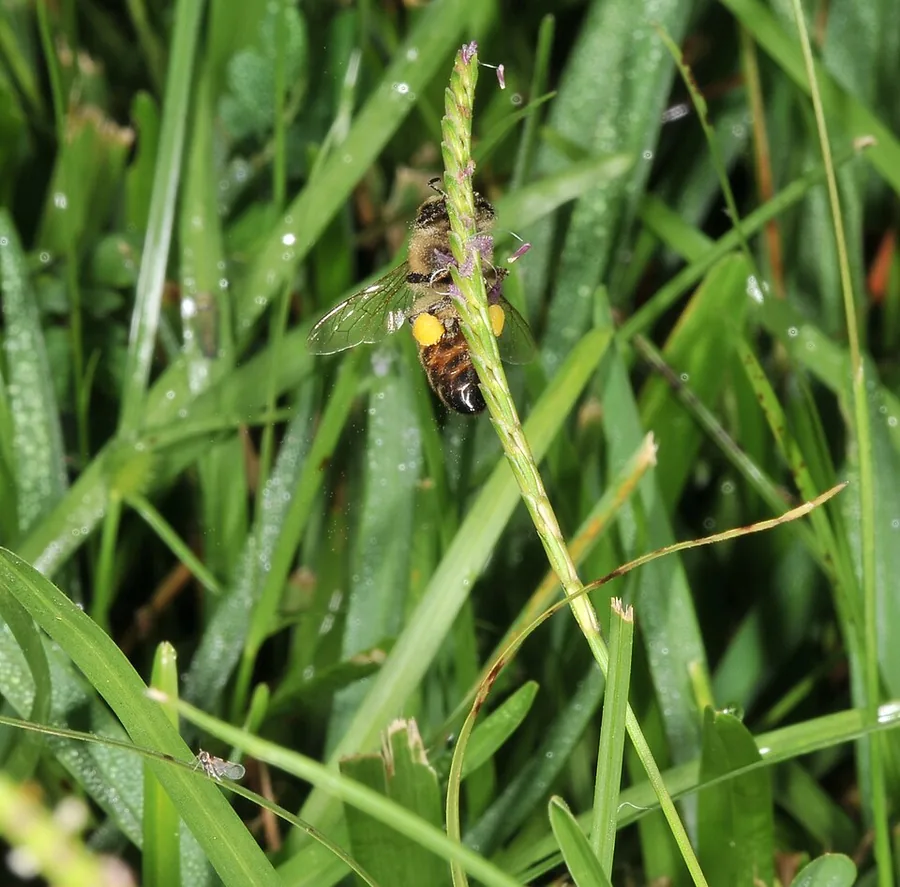
- Harvest: Inconspicuous seedheads on slender spikes in summer; grown for turf, not bloom.
Hardiness
USDA hardiness zones: 7–9
Temperature: down to -18°C
Troubleshooting
Most centipede grass trouble traces back to one habit: too much care. Overfeeding, liming, and watering on a daily drip cause more failures than any pest. Match what you see below, then ease off rather than pile on.
Patchy spring green-up with weak, easily lifted turf
This pattern points to centipedegrass decline, the slow collapse that follows years of too much feeding. Heavy nitrogen builds thatch, high soil pH locks up iron, and the roots stay shallow until whole patches give out. Back off the fertilizer to about 1 pound of nitrogen per 1,000 square feet a year, hold the soil acidic near a pH of 5.5, and dethatch lightly so the roots can dig in.
Fix:
- Stop heavy feeding; apply no more than about 1 lb nitrogen per 1,000 sq. ft. per year in small splits
- Correct soil pH toward 5.0-6.0 and base phosphorus and lime only on a soil test
- Reduce thatch with light vertical mowing and core aeration, and raise mowing height during stress
Even yellowing of the blades, worst in early spring
Blades that turn pale all over while the grass still stands thick usually mean iron chlorosis, not hunger. Once the soil pH climbs above about 6.5, the grass can no longer pull iron from the ground, and cold spring soils make it worse. A foliar spray of ferrous sulfate greens the lawn back up within days, but the lasting fix is to keep the soil acidic and skip the lime.
Fix:
- Apply ferrous sulfate at about 1 tablespoon per 3 gallons of water per 1,000 sq. ft., repeating every 2-4 weeks as needed
- Lower soil pH over time with sulfur per soil-test guidance
- Avoid lime and high-phosphorus fertilizers
Thinning patches that lift away by the handful
When turf pulls up like a loose mat and limps along, the trouble is underground. Ring nematodes and ground pearls both feed on the roots, and neither has a cure you can spray on a lawn. Send a soil and root sample for a nematode assay to confirm it, then keep the stand vigorous with the right low fertility, steady moisture, and core aeration to relieve compaction.
Fix:
- Improve overall vigor with proper low fertility, correct pH, and good watering since no rescue treatment cures nematodes or ground pearls in lawns
- Relieve compaction with core aeration
- Reduce thatch to encourage deeper roots
Round brown patches in warm, wet weather
Circular dead spots that spread during humid spells are the work of large patch, a Rhizoctonia fungus, with dollar spot sometimes joining in. The disease feeds on excess nitrogen and leaves that stay wet overnight. Water before sunrise so the blades dry fast, keep the feeding light through spring and fall, and reach for a labeled fungicide only when the damage gets out of hand.
Fix:
- Water early in the day so foliage dries quickly
- Avoid excess nitrogen, especially in spring and fall
- Apply a labeled turf fungicide only if the problem is severe
Toxicity
Centipede grass is safe. It is not on any toxic-plant list, and pets, livestock, and people are all in the clear around it. The only thing to keep in mind is that grass pollen can bother someone prone to hay fever.
Safe for
People · Cats · Dogs · Horses · Rabbits · Livestock · Birds
Cats Safe
A cat can nibble centipede grass without harm. The most you might see is the odd hairball or a little vomiting if it swallows a long blade, which is the grass coming back up, not poison going down.
Dogs Safe
Dogs graze on lawn grass all the time, and centipede grass is one of the safe ones. A pup that gulps a big mouthful may bring it back up, but the blades themselves carry nothing toxic.
Horses Safe
Horses can graze it freely with no risk of poisoning.
Rabbits Safe
Rabbits can crop it as part of their forage without trouble. Bring in any new green slowly, the way you would with any fresh grass, so a sensitive gut has time to adjust.
Livestock Safe
Cattle, goats, and sheep can graze a centipede grass lawn safely, since none of it is poisonous to them.
Birds Safe
Backyard hens and other birds can peck at the blades and seedheads with no harm done.
People Safe
The plant poses no danger to people. The one thing to know is that grass pollen can set off hay fever in someone who is already sensitive to it.
Pets may nibble grass and occasionally vomit, and grass pollen can trigger allergies in sensitive people or animals, but the plant itself is not toxic.
Varieties
There are only a couple of types worth knowing, and they cover most lawns. Here is how they differ.
TifBlair
An improved cultivar that shrugs off cold and freezes better than the rest, fills in faster, and holds its green well into fall.
Common centipede
The standard apple-green type that creeps low and slow, and it is the one most people lay down for a hands-off lawn.
How to propagate
You can start centipede grass cheaply from seed or get there faster with sod, plugs, or sprigs. Either way, patience pays, because this grass never rushes.
SeedModerate
April to July · Slow; full coverage from seed can take 2 to 3 years
Seeding is the cheapest way in, and also the slowest. Sow from April through July, and the seed sprouts in about 2 to 3 weeks, but be patient: a full, knit-together stand can take 2 to 3 years to fill in.
DivisionEasy
Late spring to summer · One season for sod; longer for plugs or sprigs
Sod, plugs, or sprigs root in faster and more reliably than seed. Lay them from late spring through summer, and sod can knit down in a single season while plugs and sprigs take a bit longer. Centipede grass creeps outward only by above-ground stolons, with no underground rhizomes to speed things along.
Myths
Centipede grass needs heavy feeding and lime to stay green, just like any other lawn.
It wants the opposite of the usual lawn routine. Centipede grass thrives on low nitrogen and acidic soil, and the heavy feeding and liming that suit other turf are exactly what trigger iron chlorosis and the slow collapse known as centipedegrass decline.