Ornamental · Poaceae
Buffalo Grass
Bouteloua dactyloides
A tough native prairie grass that gives you a green lawn on a fraction of the water.
Full sun
Every 14–28 days
28–120 days
USDA 3–9
Overview
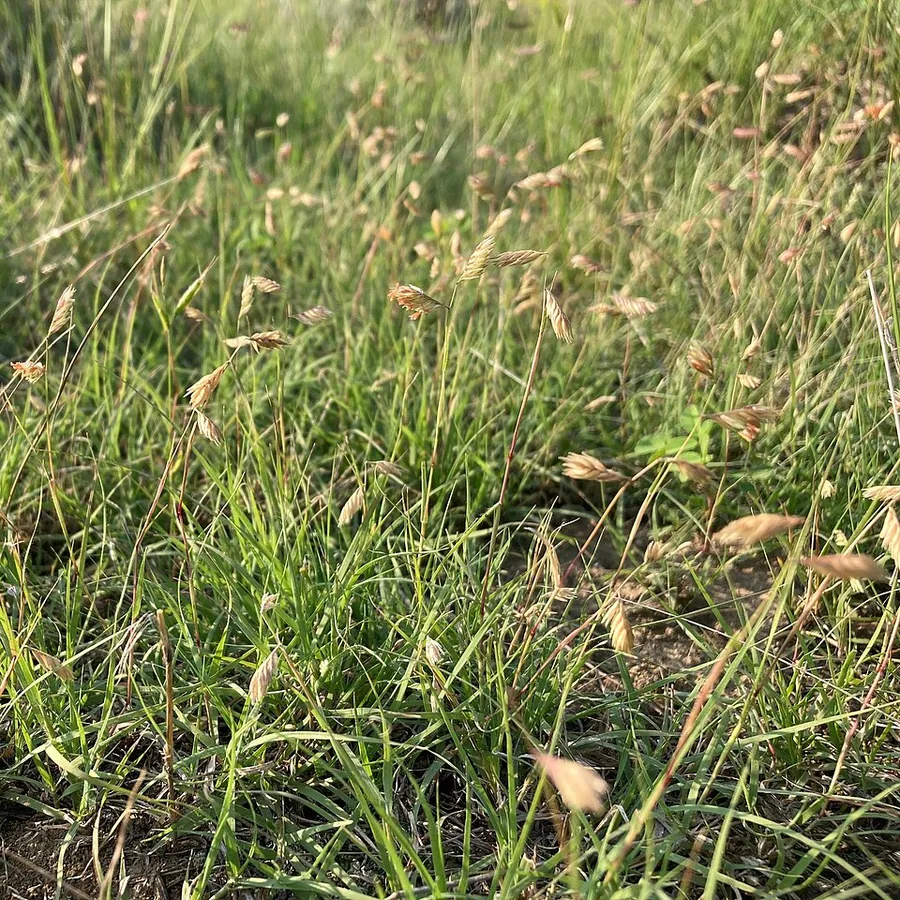
Buffalo grass is a warm-season native that carpeted the shortgrass prairie from central Canada down to Mexico long before anyone mowed it. It spreads by surface runners called stolons into a soft, blue-green to gray-green turf that sits low to the ground. Where summers are dry and the soil leans toward clay, few lawns ask for less and give back more.
What sets it apart is how little it needs. It drinks 50 to 75 percent less water than a Kentucky bluegrass lawn, wants almost no fertilizer, and can be mowed now and then or left to grow into a loose meadow. The trade-off is that it browns off in winter and in deep drought, and it has little patience for shade or heavy foot traffic.
Treat it as the lean prairie grass it is and it rewards you. Plant it in full sun on well-drained ground, hold back on the hose and the feed, and it stays thick and weed-free. Pamper it like a conventional lawn and you invite the very weeds and disease it was built to avoid.
Care
The short version: full sun and well-drained, heavier soil, very little water once established, a light feeding at most, and mowing that is optional rather than required.
Light
Buffalo grass is a sun lover that needs at least 6 to 8 hours of direct light a day. It has poor shade tolerance, so it thins under trees and on the north side of buildings while the open, sunny stretches stay dense.
Water
This is the grass's whole appeal: once established it gets by on 1 to 2 inches of rain or water every 2 to 4 weeks in summer. More water doesn't help and actually invites weeds and disease. Water freely only while a new planting is taking hold.
Soil
It does best in well-drained, heavier clay or clay-loam soils of low-rainfall country and does poorly in sand. On high-pH ground it can show iron chlorosis, a yellowing of the blades, but it tolerates a wide pH range from 6.0 to 8.5.
Temperature
Buffalo grass is remarkably hardy, surviving from about -29°F to 104°F (-34°C to 40°C) across USDA zones 3 to 9. It greens up later in spring and browns earlier in fall than cool-season lawns, going dormant rather than dying back.
Humidity
It belongs in low-humidity, low-rainfall regions and struggles where rainfall runs high. Damp, muggy sites let cool-season weeds crowd it out, so it suits dry climates far better than wet ones.
Feeding
Feed it lightly or not at all: 0 to 2 lbs of nitrogen per 1000 sq ft a year is plenty, split between late May to mid-June and late July. Over-feeding is one of the surest ways to let weeds invade.
Pruning
Mowing is optional. As a lawn, cut it to about 2 to 3 inches every 7 to 14 days; as a meadow, leave it at 4 to 8 inches or mow just once or twice a year. Once established it needs no mowing at all.
Repotting
none
Size & spacing
The turf stays low at 2 to 8 inches (5 to 20 cm) tall, spreading by stolons to 6 to 12 inches (15 to 30 cm) per plant so it knits into a continuous mat over time.
When to plant
Buffalo grass is a warm-season grass, so timing follows the heat. Seed it from spring through late July, or dormant-seed in late fall for spring sprouting, and set plugs or sod after the last frost with June the ideal month. Its inconspicuous flowers come and go from June to August.
Northern hemisphere
Southern hemisphere
Typical months for a temperate climate: start earlier in warm zones, later where spring frosts linger.
- Plant: Seed treated burrs in spring through late July, or dormant-seed October to December for spring germination; set plugs or sod after the last spring frost and at least 6 weeks before the first fall frost (June is ideal).
- Harvest: Inconspicuous green flowers June to August; dioecious, with male plants holding small comb-like spikes above the turf.
Hardiness
USDA hardiness zones: 3–9
Temperature: down to -40°C
Troubleshooting
Most buffalo grass trouble traces back to treating it like a thirsty conventional lawn or planting it where it doesn't belong. Read the lawn before you reach for the hose, since brown often means dormant, not dead. Match what you see below, then adjust the inputs or the site.
Thinning turf taken over by weeds
A buffalo grass lawn that goes lush and weedy is usually getting treated like a conventional lawn. Too much water and nitrogen hand cool-season weeds the edge they need, and a damp, high-rainfall site only makes it worse. Cut the irrigation back to 1 to 2 inches every 2 to 4 weeks in summer, ease off the feed, and pull weeds by hand while the stand fills back in.
Fix:
- Cut back irrigation to only what is needed (about 1 to 2 inches every 2 to 4 weeks in summer)
- Reduce nitrogen to 0 to 2 lbs per 1000 sq ft per year
- Remove weeds by hand or spot-treat, especially in the first one to two years
- Avoid scalping; mow at 2 to 3 inches or leave unmowed
Patches that fade out under trees and in shade
Buffalo grass needs full sun and has poor shade tolerance, so it thins and gives up wherever it gets less than about 6 hours of direct light. The open, sunny parts of the same lawn stay thick. Save this grass for bright spots and switch to a shade-tolerant groundcover under trees and on the north side of the house.
Fix:
- Relocate buffalo grass to full-sun areas
- Use a shade-tolerant grass or groundcover under trees and on the north sides of structures
Bare, worn tracks where the lawn gets used hard
Buffalo grass has poor wear and traffic tolerance, so damage shows up right where feet and tires keep passing. Paths and play areas thin out while the rest of the lawn holds. Reroute the traffic, or plant a tougher grass in the spots that take a beating, and skip buffalo grass altogether for small, heavily used yards and sports fields.
Fix:
- Limit concentrated traffic on buffalo grass
- Reroute paths or use a more wear-tolerant grass in high-traffic zones
Straw-brown lawn that is slow to wake up
Brown buffalo grass is almost always normal dormancy, not death. As a warm-season grass it browns off after the first hard frost and can also go dormant in a long summer drought, then greens up again with warmth or water. The crowns stay alive underneath, so the simplest fix is to wait for mid- to late spring, or give it a light watering if you want the color back sooner.
Fix:
- Wait for warm temperatures in mid- to late spring for green-up
- Apply light irrigation to break drought dormancy if green color is desired
- Accept brown dormancy as normal for this species
Toxicity
Good news for households with animals: buffalo grass is non-toxic and is not on the ASPCA's list of poisonous plants. It is grazing forage on the open range and safe around cats, dogs, and livestock alike. The only thing to keep in mind is that grass pollen can trigger allergies in sensitive people or pets.
Safe for
People · Cats · Dogs · Horses · Rabbits · Livestock · Birds
Cats Safe
Buffalo grass is safe for cats. A cat that nibbles a few blades might cough one back up, the way any grass can tickle the stomach, but the plant itself does no harm.
Dogs Safe
Dogs can run, roll, and graze on it without worry. The only thing to watch is the odd bout of grass-eating that ends in a little vomit, which is the grass texture and not any poison.
Horses Safe
This is good pasture grass, and horses graze it freely with no toxic risk.
Rabbits Safe
Rabbits can browse buffalo grass as part of a normal forage diet. It holds nothing that would upset them.
Livestock Safe
Cattle, goats, and sheep have grazed buffalo grass on the plains for a long time. It is nutritious range forage, not a hazard.
Birds Safe
Birds are safe around it and feed on the seed. Nothing in the plant poses a threat.
People Safe
The grass is harmless to people. The one caveat is that grass pollen can set off hay fever in those who are sensitive, which is an allergy rather than poisoning.
Like any grass, pets may nibble it and occasionally vomit, and grass pollen can trigger allergies in sensitive people or animals, but the plant itself is not poisonous.
Varieties
Buffalo grass comes in named cultivars split between plug-planted female types bred for fine, dense turf and seeded types you can sow yourself. These are the ones you'll run into most.
Legacy
A female cultivar planted from plugs that gives you a dark green, dense, low lawn with top turf quality and almost no scratchy male flower stalks.
Prestige
Another plug-planted female with bright green color, better chinch bug resistance, an earlier spring green-up, and color that holds longer into fall.
UC Verde
A fine, dense, low female cultivar the University of California bred for the warm low desert and California heat.
Cody
A widely adapted seeded cultivar with good density and drought tolerance that breeders often measure newer types against.
Bowie
A medium green seeded cultivar with fine texture, good density, quick establishment, and solid winter hardiness.
Texoka
An older seeded cultivar still easy to find for both lawns and range plantings.
How to propagate
You can start buffalo grass from seed if you're patient and don't mind the labor, or set plugs and sod for a faster, more even stand.
SeedModerate
Spring through late July, or dormant-seed October to December for spring germination · Full coverage in one season at higher seeding rates; can be labor intensive
Sow treated seed burrs from spring through late July, or dormant-seed them October to December so they sprout the following spring. A rate of 1 to 3 lbs per 1000 sq ft can knit a full stand in a single season at the higher end, though it asks for some labor. Drought tolerant as the grass is, water it freely while it is getting started.
DivisionEasy
After last spring frost, at least 6 weeks before first fall frost (June ideal) · Plugs can fill in within about 4 to 6 weeks when set closely
Set plugs at least 2 inches across and 2.5 inches deep, spaced anywhere from 6 to 24 inches apart, after the last spring frost and at least 6 weeks before the first fall frost, with June the sweet spot. The closer you space them, the faster the stolons knit together, and tight plantings can fill in within about 4 to 6 weeks. Sod works too if you want instant cover.
Myths
Buffalo grass needs the same watering and feeding as a Kentucky bluegrass or fescue lawn.
It is a low-input native that pampering actually harms. Pour on the water and fertilizer and you open the stand to weeds and disease, the opposite of what you want. Once established it gets by on 50 to 75 percent less water than Kentucky bluegrass and only 0 to 2 lbs of nitrogen per 1000 sq ft a year.