Ornamental · Poaceae
Annual Ryegrass
Lolium multiflorum
Sow it in fall and annual ryegrass gives you fast cover, hungry roots, and a stand that mostly bows out by spring.
Full sun
Every 3–7 days
50–120 days
USDA 6–9
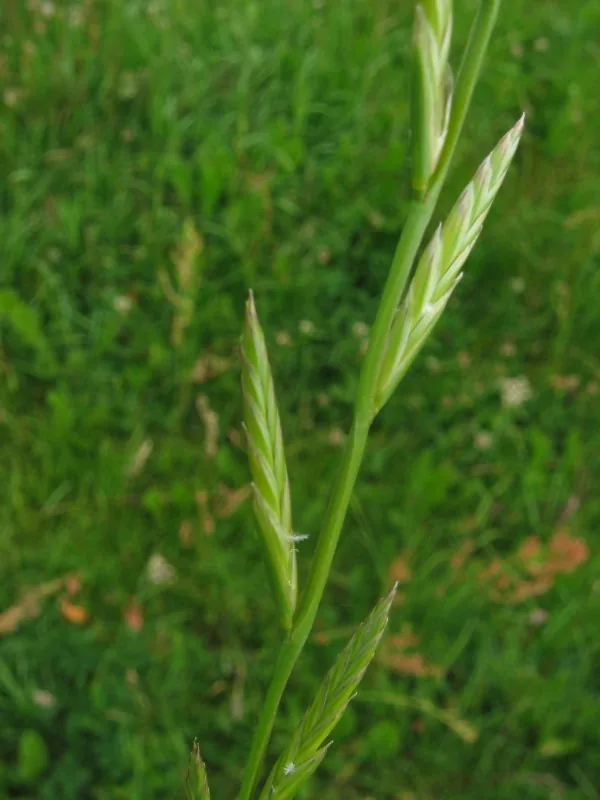
Overview
Annual ryegrass is the workhorse cover crop you reach for when you need ground covered fast. It's a cool-season bunchgrass from the genus Lolium, with bright, glossy leaves, and it germinates and roots quicker than almost anything else you can sow. Gardeners and farmers grow it to hold soil over winter, soak up leftover nitrogen, and feed grazing animals.
Don't confuse it with cereal rye or with its perennial cousin. This is a true annual that runs its whole life in a single season, throwing up flower spikes in spring and dying back when the heat or cold arrives. That short life is the point, since a cover crop that ends on its own saves you a termination pass.
The catch is its appetite for spreading. Annual ryegrass sets seed heavily and can be stubborn to kill, so it slips into fields and margins as a weedy volunteer if you let a stand mature. Manage the timing well and it works for you; ignore it and it works against you.
Care
The short version: sow it shallow into moist soil in full sun, keep it watered while it establishes, and it handles most soils on its own. Mow no closer than 3 to 4 inches, and terminate it at early bloom before it seeds.
Light
Annual ryegrass does best in full sun but takes partial shade in stride. More light means a thicker, faster stand, which is what you want from a cover crop racing to cover bare ground.
Water
It needs steady soil moisture to germinate fast and establish, and it sulks in drought. Sustained heat and dry weather will kill it outright, though it shrugs off wet and even briefly flooded soil better than most cover crops.
Soil
Few grasses are this easygoing about ground. It adapts to clay, loam, sand, rocky, and high-organic soils across a wide pH of 5.0 to 7.5, though it grows best in rich, moist, well-drained loam.
Temperature
This is a cold-tolerant grass that runs from about 10°F to 81°F (-12°C to 27°C). It thrives in cool weather and fades once summer heat sets in, which is exactly why it's sown for fall and spring.
Humidity
Outdoor humidity is a non-issue, so there's no figure to hit. What matters far more is moisture in the soil, the thing that drives its quick germination and early growth.
Feeding
Most of the time it needs no feeding at all, since it scavenges leftover soil nitrogen rather than living off fertilizer. Add a nitrogen source at planting only on genuinely poor soils.
Pruning
Mow to keep it as living mulch or temporary turf, but never closer than 3 to 4 inches. When you're done with it, terminate at early bloom by mowing, tilling, or a contact herbicide, since mowing alone may not finish off an established stand.
Repotting
none
Size & spacing
Sown as a stand rather than spaced plants, it grows 1 to 3 feet (30 to 91 cm) tall, with each plant taking up only about 8 to 12 inches (20 to 30 cm). Seeding rate, not spacing, sets the density you get.
When to plant
Annual ryegrass is a cool-season grass, so it works in the shoulders of the year, not the heat of summer. Direct sow it from late summer into fall to overwinter in mild zones, or in early spring, and in cold country get it down at least 40 days before the first killing frost. Flower spikes come in spring, which is your cue to terminate before seed sets.
Northern hemisphere
Southern hemisphere
Typical months for a temperate climate: start earlier in warm zones, later where spring frosts linger.
- Sow: not typically started indoors; direct sown
- Plant: Late summer to early fall (late July through October) for overwintering in mild zones, or early spring; in zone 5 and colder sow at least 40 days before first killing frost
- Harvest: Flower spikes in spring; terminate before seed set. As a cover crop, biomass is produced over fall, winter and spring.
Hardiness
USDA hardiness zones: 6–9
Temperature: down to -23°C
Troubleshooting
Trouble with annual ryegrass is less about disease and more about timing and control. The big risks are letting it seed, losing a stand to winter or drought, and a thin start from dry ground. Match what you see below and act before a small problem spreads into the next crop.
It keeps coming back as a weedy volunteer
Let annual ryegrass flower and set seed, and you've made trouble for next season. One plant drops around 300 seeds with very high viability, and mowing alone won't finish it off, especially since some populations shrug off glyphosate. Terminate the stand at early bloom by disking, plowing, or a contact herbicide, before any seedheads mature.
Fix:
- Terminate at early bloom before seed set by disking, plowing, or a non-persistent contact herbicide
- Use a chaff/seed collection system at harvest if grown to seed nearby
- Repeat control passes since seeds germinate in both fall and spring across a wide temperature range (36 to 104 degrees F)
Bare, brown patches open up over winter
This is winterkill, and it hits hardest in zone 5 and colder where there's no snow to insulate the crowns. Summer heat and drought above about 80°F (27°C) thin a stand the same way. Plant early enough to root in before the cold, at least 40 days ahead of the first killing frost, or treat the dieback as a free, self-terminating cover where that's what you wanted.
Fix:
- Reseed bare areas in mild zones, or accept winterkill where a self-terminating cover is desired
- Plant early enough (at least 40 days before first killing frost) so plants establish before cold
Thin, patchy emergence after sowing
Dry soil is the usual culprit, since the seed needs steady moisture to sprout fast, and seed buried too deep struggles to reach the surface. Sow shallow, at 1/4 to 1/2 inch deep, and water in if rain doesn't come. Stick to the right rate too, around 10 to 20 lb per acre drilled or 20 to 30 lb broadcast, and the gaps fill quickly.
Fix:
- Sow at 1/4 to 1/2 inch depth and ensure rainfall or irrigation for good establishment
- Use proper seeding rates (10-20 lb/acre drilled, 20-30 lb/acre broadcast)
Toxicity
As a lawn or cover crop, annual ryegrass is safe around cats and dogs, which at most get a mild upset stomach from chewing grass. The real warning is for horses and grazing livestock: ryegrass infected with fungal endophytes carries alkaloids that cause ryegrass staggers, a tremor and incoordination syndrome. Graze or cut it before the seedheads form.
Toxic to
Horses · Rabbits · Livestock · Birds · People
Safe for
Cats · Dogs
Horses Moderate
Grazing endophyte-infected ryegrass can trigger ryegrass staggers, with muscle tremors, a stiff or spastic gait, and stumbling that gets worse the moment the horse is stressed or asked to move. Ergot alkaloids in the seedheads also pinch the blood vessels.
Rabbits Caution
Plain ryegrass is ordinary forage, but the same fungal alkaloids that affect grazing livestock can build up in mature, seedy growth. Keep rabbits off heading or endophyte-affected stands and stick to young, clean grass.
Livestock Moderate
Cattle, sheep, and goats grazing affected pasture can develop the same staggers from lolitrem B, trembling and falling when they get excited or try to run. The ergovaline alongside it narrows blood vessels and hurts performance.
Birds Caution
Ryegrass seed turns up in plenty of bird diets and isn't a recognized poison. The unknown is ergot in mature seedheads, so it's wise not to let birds load up on heavy, fungus-marked grain.
People Caution
No part of this grass is meant to be eaten, so there's nothing to harvest for the table. The real nuisance for people is the pollen, a well-known driver of hay fever in late spring.
Cats None
The grass itself isn't toxic, and the ASPCA doesn't list it as a hazard. A cat that nibbles a few blades might bring up a little, but that's the worst of it.
Dogs None
Safe to have underfoot as a lawn or cover crop. Chewing on the foliage causes nothing worse than the mild, passing stomach upset any grass can.
Safe as a lawn, forage, or cover-crop grass around pets; the foliage itself is non-toxic to cats and dogs. For pastured horses and livestock, manage endophyte- and ergot-affected seedheads - cut or graze before heading and avoid feeding affected, mature ryegrass.
Helpline numbers

United States
ASPCA Animal Poison Control: (888) 426-4435 (fee applies)
Poison Control: (800) 222-1222



Canada
Poison Centres: 1-844-764-7669
Varieties
A few distinct types travel under the ryegrass name, and they don't behave the same. These are the ones worth telling apart before you buy seed.
Annual / Italian ryegrass (Lolium multiflorum)
This is the fast cover-crop and forage type, a short-lived cool-season bunchgrass with bright, glossy leaves that usually winterkills in cold zones.
Perennial ryegrass (Lolium perenne)
A close relative grown for turf and pasture that comes back year after year, unlike the annual Lolium multiflorum that dies off each season.
Westerwolds annual ryegrass
A true-annual form of Lolium multiflorum that flowers and sets seed in its very first season without a cold spell, prized for very fast, single-season cover or forage.
Diploid vs tetraploid types
Tetraploid cultivars carry doubled chromosomes that give them larger, juicier leaves and seeds and better palatability, while diploids form denser, finer stands.
How to propagate
Annual ryegrass is grown one way, from seed sown straight into the ground, and it could hardly be easier.
SeedEasy
Late summer to early fall for overwintering, or early spring; sow at least 40 days before first killing frost in cold zones · Germinates and establishes very quickly, often within 1-2 weeks in moist cool soil
Annual ryegrass grows from seed sown straight into the ground, never started indoors. Sow in late summer to early fall if you want it to overwinter, or in early spring, and in cold zones get it down at least 40 days before the first killing frost. Broadcast at 20 to 30 lb per acre or drill at 10 to 20 lb per acre, just 1/4 to 1/2 inch deep, into moist soil, and it sprouts and takes hold within a week or two.
Myths
Annual ryegrass is the same plant as cereal rye.
They share a word in their names and nothing else. Annual ryegrass is Lolium multiflorum, a fine-leaved forage and turf bunchgrass, while cereal rye is Secale cereale, the tall, very cold-hardy grain that goes into bread. Two different grasses from two different genera, so seed and growing advice for one won't transfer to the other.