Ornamental · Poaceae
Blue Fescue
Festuca glauca
A neat silver-blue tuft for hot, dry, lean ground where fussier plants give up.
Full sun
Every 7–14 days
USDA 4–8
8–12 in · 20–30 cm
Overview
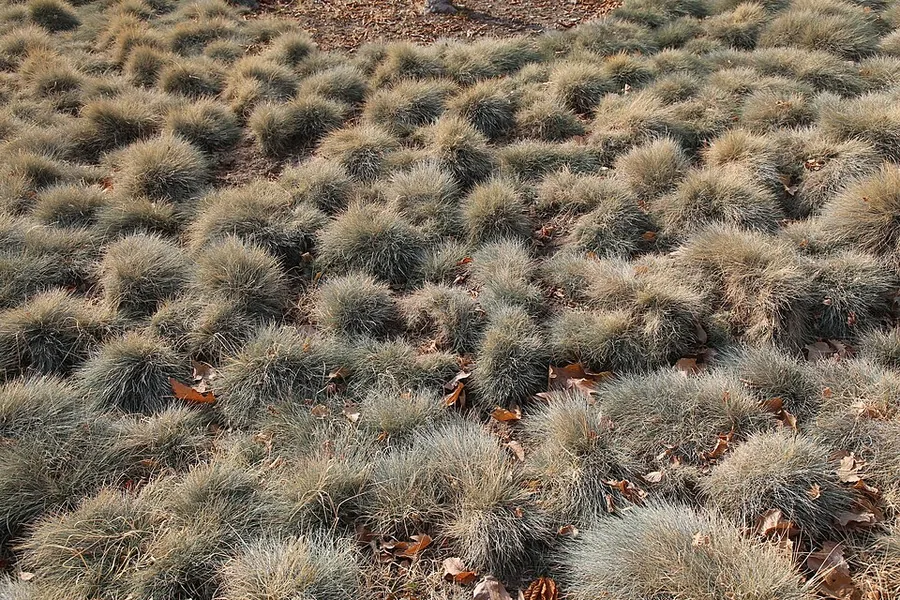
Blue fescue is a small, tidy ornamental grass that forms a rounded, silver-blue tuft about a foot tall. It comes from the cooler parts of Europe and earns its place in a garden through color and form rather than size, holding a neat dome shape all season. Plant it where the blue can catch the light against gravel, dark mulch, or greener plants.
It thrives on neglect in the right spot. Give it full sun and sharp drainage in lean, even rocky soil, and it shrugs off drought and cold down to zone 4. Rich ground and wet feet are what undo it, leaving the clump floppy or rotted, so the trick is to plant it hard and water it little.
The one catch is its short life. A clump is short-lived and tends to hollow out from the middle after 2 to 3 years, so plan to divide it or start fresh on a regular cycle. Do that, keep it in full sun, and a row of blue domes stays crisp year after year.
Care
The short version: full sun, lean and sharply drained soil, and little water once it's established. Feed almost never, shear it back in early spring, and divide the clump every 2 to 3 years before the center dies out.
Light
Give blue fescue full sun. That's what brings out the silver-blue color, and a plant in too much shade greens up and flops. It will take light shade, but the foliage pays for it.
Water
This is a drought-tough plant once established, so water sparingly and let the soil dry out between drinks. It strongly dislikes wet, soggy ground, and overwatering is the fastest way to rot the crown.
Soil
Plant it in average to lean, sharply drained soil, even poor, dry, rocky ground. It rots in wet or heavy clay, so drainage matters far more than fertility. A pH anywhere from 5.5 to 7.5 suits it fine.
Temperature
It is genuinely cold-hardy, taking winters down to about -29°F (-34°C) and summer heat up to 86°F (30°C). The real stress comes from hot, humid summers rather than the thermometer alone, which can push it into decline.
Humidity
Low humidity is what it wants, in keeping with its dry-soil habit. Hot, muggy summers are hard on it and can cause the clump to rot or fade, so good airflow and dry roots count for a lot.
Feeding
Feed it almost never. A single light feeding in spring is plenty, and rich soil works against you by producing floppy, weak growth. Lean ground is exactly where this grass looks its best.
Pruning
In early spring, shear or comb the clump back to about 3 to 4 inches to pull out the old brown blades before new growth pushes up. That yearly haircut keeps the tuft fresh and tidy.
Repotting
Rather than repotting, divide the clump every 2 to 3 years to keep it vigorous. When the center goes brown and bare or the tuft thins out, it's telling you it's time to lift and split.
Size & spacing
Each plant stays small, reaching about 8 to 12 inches (20 to 30 cm) tall and roughly the same across. Set plants around 10 to 12 inches (25 to 30 cm) apart so the blue domes read as distinct mounds.
When to plant
Blue fescue is a cool-season grass that does its growing in the milder shoulders of the year. Set new plants out in spring after the last frost or in early fall, and look for its modest flower spikes from late spring into early summer. Early spring is also the moment to shear and divide.
Northern hemisphere
Southern hemisphere
Typical months for a temperate climate: start earlier in warm zones, later where spring frosts linger.
- Sow: Late winter to early spring (species only; named blue cultivars do not come true from seed)
- Plant: Spring after last frost or early fall
- Harvest: Late spring to early summer (June-July)
Hardiness
USDA hardiness zones: 4–8
Temperature: down to -34°C
Troubleshooting
Most blue fescue trouble traces back to one of two things: too much water or not enough sun. The clump dying out in the middle is the other near-certainty as a plant ages. Match what you see below and you can usually fix it with a move, a haircut, or a division.
Yellowing, collapse, and a mushy crown
Wet feet are almost always the cause. Heavy, rich, or poorly drained soil leads to crown and root rot, and a hot, humid summer can push a plant into the same decline. Move it to sharply drained, lean ground in full sun, ease off the water, and cut back the tired foliage so it can recover when the weather cools.
Fix:
- Move or replant in sharply well-drained, lean soil with full sun
- Reduce watering and avoid wet feet
- Cut back declining foliage and allow recovery in cooler weather
Dead, bare center ringed by living foliage
This is the plant's natural short life showing itself, since blue fescue starts to hollow out from the middle after 2 to 3 years. A crowded clump that has gone too long without division speeds it up. Dig the whole thing up in early spring, throw away the dead center, and replant the healthy outer pieces.
Fix:
- Dig up the entire clump in early spring
- Discard the dead center and divide the vigorous outer portions into smaller sections
- Replant the divisions in well-drained soil and water in
Blue fading to dull green
The famous silver-blue color is a sun effect, so a plant in too much shade greens up and grows lax. Age plays a part too, as older clumps drift toward a greener summer cast. Shift it into full sun and divide tired clumps to bring the brightest blue back.
Fix:
- Transplant to a full-sun location
- Divide and replant aging clumps to restore vigor and color
Toxicity
Good news for pet and livestock owners: blue fescue is not toxic. It is a true grass with no poisonous parts, safe around cats, dogs, horses, rabbits, and grazing stock. A pet that nibbles too much may bring it back up like any grass, and the pollen can bother hay fever sufferers, but nothing here will poison anyone.
Safe for
People · Cats · Dogs · Horses · Rabbits · Livestock · Birds
Cats None
Safe to be around. A cat that chews a few blades might bring them back up, the way cats do with any grass, but the plant itself holds nothing harmful.
Dogs None
No toxins here. A dog can nose through it without worry, and at worst a big mouthful of grass may come back up later.
Horses Safe
Not poisonous to horses. It is a true grass, so grazing on it causes no trouble.
Rabbits Safe
Rabbits browse fescue without harm. In fact rabbits and deer often graze the clumps, which is one reason gardeners reach for it.
Livestock Safe
Safe for cattle, goats, and sheep. Fescue is a common pasture grass and this ornamental form is no different.
Birds Safe
Nothing in the plant threatens birds, and the seed heads draw in finches and other small feeders.
People Safe
Not toxic to people. The only thing to note is the grass pollen, which can set off hay fever in anyone already sensitive to it.
Not poisonous, but pets that nibble grass may vomit, and grass pollen can aggravate allergies in sensitive people.
Varieties
Most garden blue fescue is one of a few named selections, sorted mainly by how blue and how heat-tough they are. These are the ones worth knowing.
Elijah Blue
By far the most widely grown cultivar, valued for its soft, silvery powder-blue blades.
Boulder Blue
A fine-textured pick in steely slate-blue that takes heat and drought better than most.
Cool as Ice
Chosen for its especially icy silver-blue color, the coolest tone in the group.
Beyond Blue
A sport of Elijah Blue that keeps its blue longer and shrugs off heat and humidity that fade the rest.
How to propagate
Division is the standard way to make more blue fescue, and it doubles as the fix for an aging clump. Seed works for the plain species but won't reproduce the named blue selections.
DivisionEasy
Early spring · 4-8 weeks
Division is the way to go, since the named blue cultivars don't come true from seed and splitting an old clump keeps both the color and the form. Dig and split in early spring, replant the lively outer pieces, and they settle in over the next 4 to 8 weeks. It doubles as the cure for a clump that has died out in the middle.
SeedEasy
Late winter to spring · 4-8 weeks
You can raise the plain species from seed sown from late winter into spring, and it roots in about 4 to 8 weeks. Just know that seedlings vary a lot in color and the named cultivars won't reproduce true this way, so seed is best for the species rather than a prized blue selection.
Myths
Blue fescue is a plant-once-and-forget grass that lasts for years.
It is a short-lived cool-season grass, and the center of the clump tends to hollow out within 2 to 3 years. To keep it looking sharp you have to divide it every few years or replace it when it tires out.