Ornamental · Poaceae
Blue Oat Grass
Helictotrichon sempervirens
Give it full sun and poor, dry soil, and blue oat grass holds a tidy steel-blue mound year round.
Full sun
Every 7–14 days
USDA 4–8
18–30 in · 46–76 cm
Overview
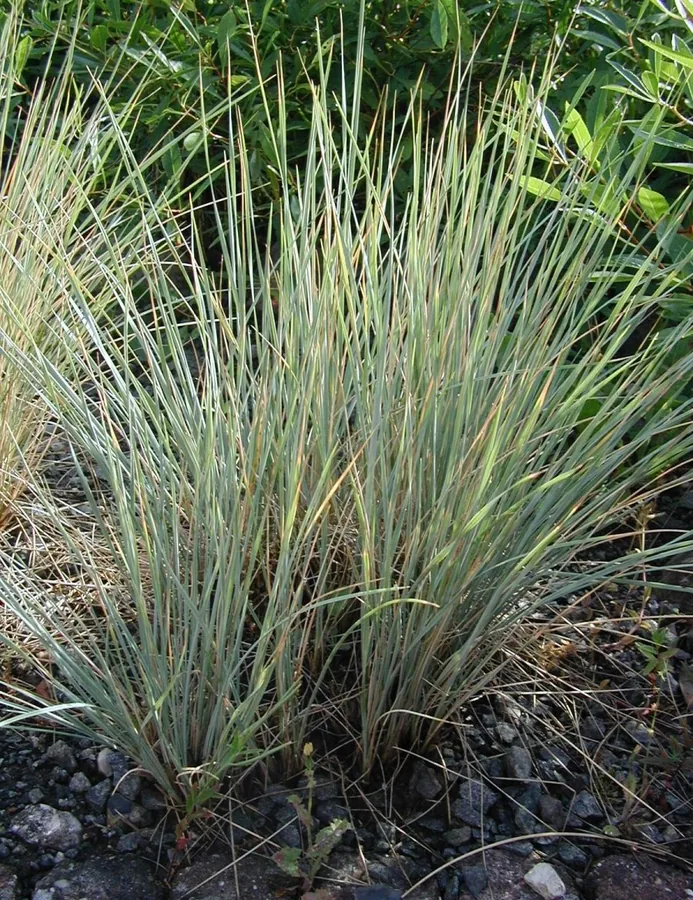
Blue oat grass earns its place for color alone. It forms a neat, rounded clump of fine steel-blue blades that hold their shade right through the seasons, since this is one of the cool-season grasses that stays evergreen in mild winters. The mound reaches 18 to 30 inches (46 to 76 cm) across and keeps the same upright, fountain-like shape without any staking.
Come early summer, slender flower stems rise above the leaves carrying oat-like, straw-colored panicles, the feature that gives the grass its name. It is a slow grower and a long-lived perennial, hardy from USDA zones 4 to 8, so once a clump settles in it stays put for years with almost no fuss.
The secret to the best color is to treat it rough. Lean, dry, sharply drained soil and full sun give you the tightest mound and the bluest foliage, while rich ground and shade make it flop and fade to green. Poor soil is a feature here, not a problem.
Care
The short version: full sun and lean, sharply drained soil, with almost no feeding and only a drink during long dry spells once it's established. Cut it back close to the ground in late winter and otherwise leave it be.
Light
Blue oat grass wants full sun, the more the better. It will take a little light shade, but anything more makes the clump open up and flop and washes the blue out of the foliage.
Water
Once established this is a very drought-tolerant grass that prefers dry to medium soil and only needs a drink every 7 to 14 days in a real dry spell. What it can't stand is wet feet. Soggy, heavy, or humid conditions rot the crown, so err on the dry side.
Soil
Give it lean, sharply drained soil and it rewards you with the bluest color and the firmest shape. It copes with poor, dry, even rocky ground, and a pH anywhere from 6.0 to 7.5 suits it. Rich soil only makes it loose and floppy.
Temperature
This is a tough plant that handles a huge range, from -29°F to 100°F (-34°C to 38°C). Cold down to zone 4 is no trouble, and the real risk in heat is the humidity that comes with it rather than the temperature itself.
Humidity
It likes things on the dry side and dislikes muggy air, which invites rust on the leaves and rot at the base. Good airflow around the clump matters far more than any humidity reading, so don't crowd it.
Feeding
Feed it little to nothing. A clump in lean soil keeps its tight shape and best blue color, while a feed in spring or rich ground just pushes soft, green, floppy growth you don't want.
Pruning
The one yearly job is to cut the whole clump back close to the ground in late winter or early spring before new growth starts. Through the season you can comb or rake out the tattered old blades by hand to keep it looking sharp.
Repotting
Blue oat grass resents disturbance and rarely needs lifting. Divide it in spring only if the center dies out or you want another plant, and otherwise let an established clump sit undisturbed for years.
Size & spacing
A mature clump stands 18 to 30 inches (46 to 76 cm) tall and spreads about 24 to 30 inches (61 to 76 cm) wide. Space plants to that width so air moves freely between them and the foliage stays dry.
When to plant
Blue oat grass is planted, not sown by season like a vegetable. Set new plants out in spring once the frost has passed, expect the oat-like flower stems in early summer around June, and give the whole clump its one yearly haircut in late winter before fresh growth starts.
Northern hemisphere
Southern hemisphere
Typical months for a temperate climate: start earlier in warm zones, later where spring frosts linger.
- Sow: Late winter to early spring
- Plant: Spring after last frost
- Harvest: Early summer (June); oat-like straw-colored panicles rise above the foliage
Hardiness
USDA hardiness zones: 4–8
Temperature: down to -34°C
Troubleshooting
A grass grown this hard rarely has problems, and the few it gets trace back to too much water or too little sun. Read the early signs on the blades and at the base of the clump, then fix the conditions before rot or rust gets a hold.
The center of the clump rots and falls apart
Wet, heavy soil sitting against the crown over winter brings on crown and root rot, and there is no saving a clump once the base turns soft and brown. The cure is drainage. Lift the plant into a raised, gritty bed, cut back any soggy mulch piled against the crown, and never let it stand in water.
Fix:
- Improve drainage or replant in a raised, gritty, sharply drained bed
- Reduce watering and cut off wet, mulch-heavy material at the crown
- Remove severely rotted plants
Rusty orange spots that rub off as powder
This is foliar rust, a fungus that takes hold in warm, humid weather and on plants packed too close together. Strip off the marked blades, open the clump up so air can move through it, and water at the base instead of over the top. In muggy regions, the Sapphire selection shrugs off rust far better than the plain species.
Fix:
- Remove and discard affected foliage
- Improve air circulation by spacing and thinning
- Avoid wetting the foliage; water at the base
- Grow rust-resistant cultivars such as Saphirsprudel/Sapphire in humid regions
Floppy growth and a fading blue color
When the mound splays open and turns more green than steel-blue, it is asking for lean soil and full sun. Shade and rich, watered ground push soft, lazy growth. Move it somewhere sunnier, hold back on feed and water, and shear it down so it regrows tighter and bluer.
Fix:
- Move or replant in full sun
- Reduce fertilizer and water; grow in leaner, drier soil
- Cut back to tidy the clump and let it regrow firmer
Toxicity
Blue oat grass is safe to grow around pets, livestock, and children. The ASPCA doesn't list it as poisonous, and it carries no toxin in its leaves or roots. The only thing worth a mention is grass pollen, which can bother people prone to hay fever.
Safe for
People · Cats · Dogs · Horses · Rabbits · Livestock · Birds
Cats Safe
Blue oat grass isn't poisonous to cats, so a curious nibble does no harm. A cat that wolfs down a big mouthful of blades may bring it back up, the same as with any grass.
Dogs Safe
Nothing in this grass will poison a dog. Chewing a lot of it can lead to a little vomiting, but that's the roughage at work, not a toxin.
Horses Safe
Safe to have around horses, who tend to ignore the wiry blue blades in favor of softer pasture grass.
Rabbits Safe
Rabbits can graze it without any risk, though most prefer tender greens to these stiff, coarse leaves.
Livestock Safe
Cattle, goats, and sheep face no poisoning from blue oat grass. It's an ornamental clump rather than a forage crop, so they get little real feed from it.
Birds Safe
Harmless to birds, which often pull thin strands from the clump for nest building in spring.
People Safe
The plant is non-poisonous and safe to handle. The one thing to know is that grass pollen can set off hay fever in people prone to seasonal allergies.
Grass pollen can trigger seasonal allergies in sensitive people; pets that nibble grass blades may vomit, but the plant is not poisonous.
Varieties
There aren't many named forms of blue oat grass, but the choice between the species and its best selection matters in a humid garden.
Saphirsprudel (Sapphire)
A German selection that turns a deeper blue than the species and stands up far better to rust, heat, and humid summers.
Species (Helictotrichon sempervirens)
The plain species forms a steel-blue mound of 18 to 30 inches (46 to 76 cm) topped in summer by oat-like straw-colored panicles that arch above the leaves.
How to propagate
You can make more blue oat grass by splitting an old clump or by sowing seed, though it's slow to bulk up either way and resents being disturbed.
DivisionModerate
Spring · One growing season
Blue oat grass dislikes being dug up, so divide only when an old clump starts to thin or you want a second plant. Do it in spring, and the splits settle in and fill out over a single growing season.
SeedModerate
Late winter to spring · One to two growing seasons
You can raise the species from seed sown in late winter or spring, with a new plant taking one to two seasons to reach full size. Named selections like Saphirsprudel won't come true this way, so divide those instead if you want a faithful copy.
Myths
Blue oat grass and blue fescue are the same plant.
They share a blue color and little else. Blue oat grass is the bigger, longer-lived of the two, forming an 18 to 30 inch (46 to 76 cm) clump with arching oat-like flower stems. Blue fescue stays a small 8 to 12 inch (20 to 30 cm) tuft that dies out in the middle and needs splitting every couple of years to look its best.