Houseplant · Lamiaceae
Coleus
Coleus scutellarioides
Grown for its bold, painted leaves, coleus brings color to a shady corner or a sunny bed with almost no fuss.
Bright indirect
USDA 10–11
0–3 ft · 0.2–0.9 m
Overview
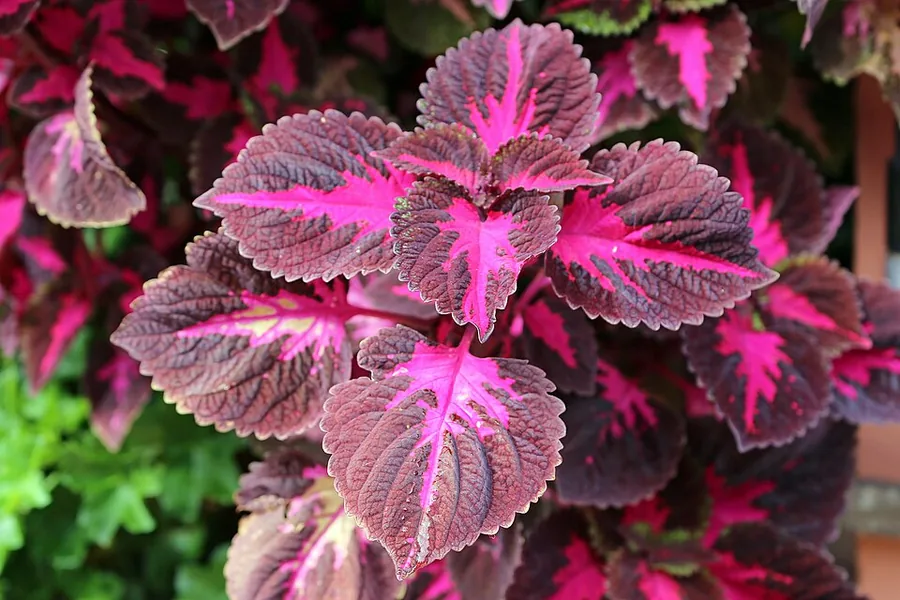
Coleus is grown for its leaves, and what leaves they are, splashed in greens, reds, purples, and gold in patterns no flower could match. It belongs to the mint family and traces back to the tropics of Southeast Asia and northern Australia. Hardy outdoors only in the warmest zones, it shines as a houseplant or a container plant almost anywhere.
The plant is fast and forgiving, which makes it a favorite for beginners. Pinch the tips now and then and it grows dense and bushy instead of tall and bare. Older cultivars want shade and bleach in hot sun, while newer ones like Wasabi and Pineapple hold their color in full sun, so the right spot comes down to which one you have.
Coleus is a tender perennial that most people treat as an annual, since the first frost ends it. The catch is that cuttings root so easily you can carry a plant through winter on a windowsill and set it back out in spring. Let it flower and it fades, so the one real chore is pinching off the bloom spikes to keep the foliage coming.
Care
The short version: match the cultivar to its light, give it bright indirect light indoors or the right sun-shade balance outside, keep the soil lightly moist without ever letting it dry out or sit soggy, and pinch the tips often for a full, bushy plant.
Light
Coleus does best in bright indirect light indoors, and the right exposure outdoors depends on the cultivar. Shade-preferring types take part shade to full shade and bleach in hot sun, while sun-tolerant selections hold their color in full sun. Too little light leaves any of them leggy and washed out.
Water
Keep the soil lightly moist at all times and never let it dry out, but don't leave it soggy either. Water when the top inch of soil feels dry, and remember that plants in pots dry out faster and need it more often. Overwatering stunts growth and damages the leaves, so let excess drain away.
Soil
Plant in moist, rich, loose soil that drains well, worked over with plenty of organic matter. That mix holds the steady moisture coleus likes while still letting water pass through, which keeps the roots from sitting wet and rotting.
Temperature
Coleus is a warm-weather tropical and wants to stay above 50°F (10°C). It has no tolerance for cold, and the first frost kills it outright, so bring containers indoors well before the season turns.
Humidity
Average household humidity suits it fine, so there's no number to chase. Good airflow matters more here, since stagnant, damp air around crowded plants is what invites downy mildew and other leaf problems.
Feeding
Feed through the active season from spring into summer with a balanced bedding-plant fertilizer. A foliage formula such as 24-8-16 beats a high-phosphorus bloom feed, which only pushes the plant to stretch and get leggy.
Pruning
Pinch the stem tips often to force branching and keep the plant bushy and compact. Cut off the flower spikes as soon as they appear in late summer, because letting it bloom and set seed makes coleus lose vigor and decline.
Repotting
Repot as needed when you grow coleus as a houseplant or in containers, and pot up rooted cuttings as they take. Watch for roots circling or poking from the drainage holes, water running straight through, and growth that slows, which all signal it's time for a bigger pot.
Size & spacing
Coleus runs from 6 to 36 inches (15 to 91 cm) tall, with a spread that matches, depending on the cultivar and how hard you pinch it. Regular pinching keeps it fuller and more compact than it would grow left alone.
Troubleshooting
Most coleus trouble traces back to two things: the wrong light for the cultivar, or water that's either too little or too much. Read the leaves and stems and you can usually spot the cause before it spreads. Match what you see below, then act while it still helps.
Sudden collapse or blackened stems after a cold night
Coleus is a tender tropical, and the first frost kills it outright, blackening the stems and toppling the whole plant. There is no saving a frosted plant, so bin it. To keep a favorite going, take stem cuttings or pot it up and bring it indoors before the cold arrives, since it survives outdoors only in USDA zones 10 to 11.
Fix:
- Take stem cuttings or dig and pot favorite plants before frost to overwinter indoors
- Move containers indoors before cold weather
- Discard frost-killed plants
Stunted growth and rot from soggy soil
Coleus likes steady moisture, but soil that stays waterlogged brings on root and stem rot. The roots turn brown and mushy, the base of the stems goes soft, and growth stalls. Ease off the watering, make sure the pot or bed drains freely, and keep the soil lightly moist rather than soaked.
Fix:
- Reduce watering and let excess drain away
- Ensure pots and beds have excellent drainage
- Avoid wetting foliage when watering
Angular brown blotches with leaf drop and stunting
This is downy mildew, and it shows as yellowing, angular brown blotches, curling leaves, and dropped foliage. Turn a leaf over and look for white, purple, or gray fuzz on the underside only, sometimes needing a hand lens. It thrives between 60°F and 80°F (16°C to 27°C) when humidity climbs above 85%, so bag and bin infected leaves, open the plants up for airflow, and water at the base to keep the foliage dry.
Fix:
- Remove and discard infected material in the trash, not compost
- Improve air circulation by spacing, thinning, and pruning
- Water at the base with drip irrigation rather than overhead, and keep foliage dry
Flower spikes forming as the plant fades
Coleus is grown for its leaves, so those slim spikes of small blue-violet flowers are a problem, not a bonus. Once a plant flowers and sets seed in late summer, the foliage display falls apart and the plant loses vigor. Pinch the spikes off the moment they show, and keep pinching to push that energy back into the leaves.
Fix:
- Pinch or cut off flower spikes as soon as they appear
- Continue pinching to redirect energy into foliage
Wilting, drooping leaves
Coleus wilts fast when the soil dries out, and a plant in a pot droops soonest of all. Check the soil first, since a dry plant usually perks back up within hours of a good drink. A shade-loving type can also flag in too much afternoon sun, so move it somewhere with a break from the heat.
Fix:
- Water thoroughly and keep soil lightly moist
- Increase watering frequency for containers
- Provide afternoon shade for non-sun-tolerant cultivars
Sticky leaves, distortion, and visible bugs
Indoor coleus draws sap-feeders, and you'll spot soft white cottony mealybugs, clusters of aphids, or clouds of tiny whiteflies. In warm, dry rooms, spider mites add fine webbing and stippled leaves. Rinse the plant, isolate it from the rest, and treat with insecticidal soap, repeating until the bugs are gone.
Fix:
- Treat with insecticidal soap
- Rinse plants and isolate affected specimens
- Repeat treatments as needed for indoor infestations
Stretched, bare stems with faded leaf color
This is legginess, and it usually means the light is wrong for the cultivar or the tips never got pinched. A shade type bleaches in harsh sun, while a sun type stretches and pales in deep shade, leaving long internodes and bare lower stems. Move it to the right light, pinch the growing tips often, and cut the gangly stems back hard to force dense regrowth.
Fix:
- Move to the light level recommended for the cultivar (bright indirect light indoors; correct sun/shade outdoors)
- Pinch growing tips regularly to force branching
- Cut back leggy stems to encourage dense regrowth
Leaves bleaching or scorching in strong sun
Most older coleus are shade-preferring, and hot direct sun washes the color right out of their leaves and can leave them wilting. The fix is to move that plant to part shade or dappled light. For a bright, sunny spot, reach instead for a sun-tolerant cultivar such as Wasabi or Pineapple, which holds its color in full sun.
Fix:
- Move shade-type cultivars to part shade or dappled light
- Choose sun-tolerant cultivars (e.g., 'Wasabi', 'Pineapple') for full-sun sites
Toxicity
Coleus is mildly toxic to pets. The essential oils in the leaves can cause vomiting, diarrhea, and skin irritation in cats and dogs, and the ASPCA lists it as toxic to horses too. People are essentially safe, though the sap can irritate skin, so keep it out of reach of pets and wash your hands after pruning.
Toxic to
Cats · Dogs · Horses · Rabbits · Livestock · Birds · People
Cats Mild
The essential oils in the leaves are mildly toxic to cats. A cat that chews them usually drools and gets an upset stomach with vomiting or diarrhea, and the sap can leave a mouth or skin irritation.
Dogs Mild
A dog that nibbles the foliage tends to vomit, run loose stools, and go off its food for a day. The reaction is mild, but the sap can also redden the skin and mouth.
Horses Mild
The ASPCA lists coleus as toxic to horses too, with the same oils bringing on stomach upset and a dull, off-feed mood. Keep grazing animals away from planted beds.
Rabbits Caution
The aromatic oils that bother cats and dogs make coleus a poor choice for rabbits, so keep it out of reach rather than risk an upset gut.
Livestock Caution
Cattle, goats, and sheep aren't well documented with coleus, but the same irritant oils warrant caution, so fence it off from anything that grazes.
Birds Caution
There's little hard data on birds, and pet species can be sensitive to plant oils, so treat coleus as off-limits and keep it away from cages and aviaries.
People Caution
Coleus is essentially safe for people, though the sap can irritate the skin. Repeated, frequent handling sometimes brings on an allergic rash, so wear gloves and wash up after pruning.
Wear gloves or wash hands after handling or pruning; repeated, frequent skin contact can cause allergic dermatitis
Helpline numbers

United States
ASPCA Animal Poison Control: (888) 426-4435 (fee applies)
Poison Control: (800) 222-1222



Canada
Poison Centres: 1-844-764-7669
Varieties
Coleus comes in hundreds of cultivars, but they sort cleanly into shade-preferring types and the newer sun-tolerant ones. These are the names that turn up most often.
'Wizard' series
A popular seed-grown series of compact, shade-preferring coleus that's easy to find and quick to fill out.
'Kong' series
A shade lover grown for its outsized leaves, which run far larger than those of most other coleus.
'Wasabi'
A sun-tolerant pick with bright chartreuse-green foliage that holds its color in a full-sun spot.
'Pineapple'
A sun-tolerant selection from the Pineapple group, dependable where the light is strong.
'Alabama Sunset'
A sun-tolerant cultivar that takes bright light without bleaching the way older shade types do.
How to propagate
Coleus is one of the easiest plants to multiply, whether you root a free cutting in a glass of water or start a tray from seed.
Stem cuttingsEasy
Spring through summer · Roots in about 2 weeks (often in water)
Coleus roots so willingly that a tip cutting set in a plain glass of water strikes roots in about two weeks. Take cuttings any time from spring through summer. This is the simplest way to carry a favorite plant through winter, since the parent won't survive frost outdoors.
SeedEasy
Spring · Germinates in 10-15 days at 70-75°F
Many of the named series are grown from seed. Sow in spring and keep the tray warm, around 70°F to 75°F (21°C to 24°C), and the seedlings come up in 10 to 15 days. Cuttings clone an exact plant, but seed is the easy route to a whole tray at once.
Myths
Coleus is grown for its flowers.
Coleus earns its place with its bold, multicolored leaves, not its bloom. The small blue-violet flowers are slight, and once they form the plant starts to coast and lose vigor. Pinch the spikes off and the foliage stays at its best.
Coleus is harmless to pets.
The ASPCA lists coleus as toxic to cats, dogs, and horses because of the essential oils in its leaves. A pet that chews it can drool, vomit, and run loose stools, and the sap may irritate skin. The reaction is mild, but keep it out of reach all the same.
All coleus must be grown in shade.
The older cultivars do prefer part shade and bleach in hot sun, which is where this idea comes from. Plenty of newer selections, though, are bred to hold their color in full sun. The right light depends entirely on the cultivar you have.