Herb · Lamiaceae
Bee Balm
Monarda didyma
Give it full sun, moist soil, and room to breathe, and bee balm pulls in bees and hummingbirds all summer.
Full sun
Every 3–7 days
USDA 4–9
2–4 ft · 0.6–1.2 m
Overview
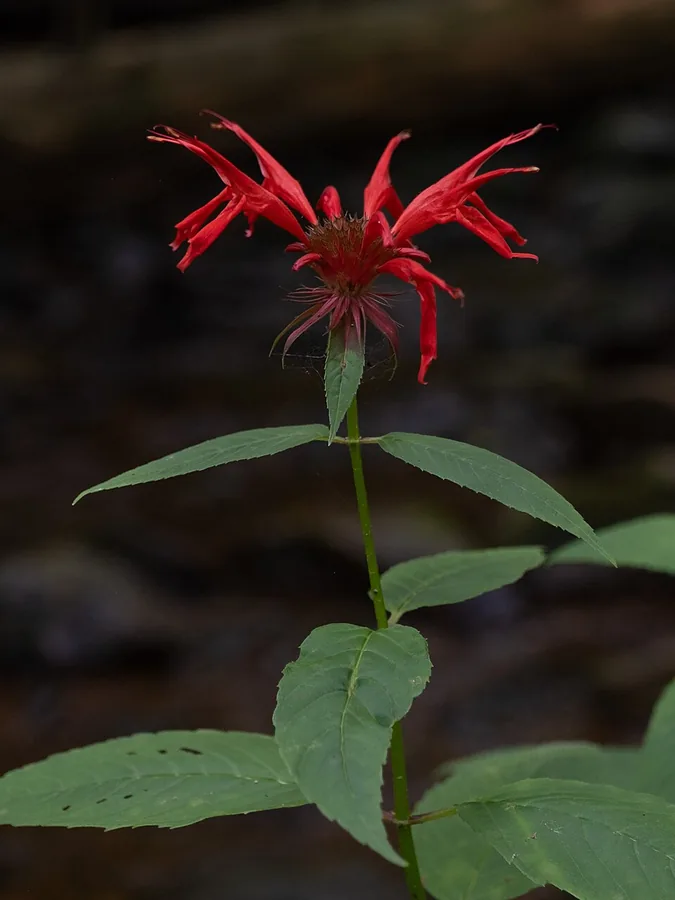
Bee balm is a North American native in the mint family, and it earns its keep the moment it flowers. The shaggy red, pink, or wine blooms sit on square stems above aromatic leaves, and they pull in bees, butterflies, and hummingbirds for weeks. Crush a leaf and you'll catch the citrusy scent that gave the plant its other name, bergamot.
It spreads by underground rhizomes, so a single plant becomes a wide clump in a few seasons. That vigor is a gift in a meadow planting and a chore in a tidy border, where you'll want to divide it to keep it in bounds. The leaves have a long history as a tea the Oswego people brewed, which is where the name Oswego tea comes from.
Bee balm asks for little: sun, steady moisture, and air moving through the stems. Give it those and it returns the favor with months of color. Skimp on the airflow and you invite the powdery mildew that is this plant's one real weakness.
Care
The short version: full sun, rich soil kept evenly moist, and good air circulation. Divide the clump every 3 to 4 years to keep it vigorous, and deadhead spent blooms to pull a second round of flowers.
Light
Bee balm wants full sun to flower hard and stay healthy. It will take a little partial shade, but shade is the main reason a plant blooms poorly and the main thing that lets mildew take hold.
Water
Keep the soil evenly moist, the way it would be on the moist meadows and streambanks where the plant grows wild. Water every 3 to 7 days depending on weather, but always at the base, since wet leaves invite powdery mildew.
Soil
Plant in rich, humusy ground that holds moisture, even heavy clay, which bee balm tolerates well. A pH between 6.0 and 7.0 suits it best, on the slightly acidic to neutral side.
Temperature
This is a tough, cold-hardy perennial that takes winters down to -29°F (-34°C) and summer heat up to 90°F (32°C). That range covers a lot of gardens, which is part of why it's so widely grown.
Humidity
Average humidity around 40% to 60% is fine. What matters far more is moving air, because still, muggy conditions around crowded stems are exactly what powdery mildew needs to spread.
Feeding
Feed once in spring with a balanced fertilizer or a top-dressing of compost. That single yearly boost is plenty for a native that thrives in ordinary garden soil.
Pruning
Deadhead spent flowers through the season to pull a second flush of bloom, then cut the plant back to its basal leaves once flowering ends. Thin crowded stems for airflow, and leave a few hollow stems standing over winter as nesting habitat for native bees.
Repotting
Bee balm grows as a garden perennial rather than a potted plant, so the real maintenance is dividing the clump every 3 to 4 years. Lift and split it once the center starts to die out or the flowering falls off.
Size & spacing
Plants reach 2 to 4 feet (60 to 120 cm) tall and spread 16 to 35 inches (40 to 90 cm) wide. Give each clump that full width so air can move freely and mildew stays down.
When to plant
Bee balm runs on the rhythm of a cold-winter perennial. Start seed indoors in late winter, set plants out in spring once frost has passed, and the showy flowers arrive from midsummer into early fall. Pick the leaves for tea just before the plant blooms, when their flavor peaks.
Northern hemisphere
Southern hemisphere
Typical months for a temperate climate: start earlier in warm zones, later where spring frosts linger.
- Sow: Late winter, 6-8 weeks before last frost
- Plant: Spring after last frost
- Harvest: Showy flowers mid-to-late summer (July-September); harvest aromatic leaves before flowering for best tea flavor
Hardiness
USDA hardiness zones: 4–9
Temperature: down to -34°C
Troubleshooting
Almost every bee balm problem traces back to crowded, stagnant air or too little sun. Read the leaves and the shape of the clump and you'll catch most trouble early. Match what you see below, then act before it spreads.
A bald, dead center with growth racing outward
Bee balm spreads by rhizomes, so an old clump hollows out in the middle while it pushes ever wider at the edges. This is the plant's nature, not a disease. Lift and divide it every 3 to 4 years, replant the strong outer pieces, and pull stray rhizomes to keep it in bounds.
Fix:
- Divide clumps every 3-4 years, replanting vigorous outer sections
- Remove unwanted rhizomes to control spread
White, dusty film spreading across the leaves
This is powdery mildew, the classic bee balm complaint, and crowding plus stale air bring it on every time. Overhead watering and muggy, still conditions only make it worse. Thin and divide congested clumps, water at the base, strip off the worst leaves, and lean on mildew-resistant cultivars.
Fix:
- Improve air circulation by thinning and dividing crowded clumps
- Avoid overhead watering; water at the base
- Remove and dispose of affected foliage
- Choose mildew-resistant cultivars
Orange-brown bumps on the undersides of leaves
Raised rusty pustules on the leaf undersides point to a rust infection. Pick off and destroy the marked leaves, open the planting up for better airflow, and keep water off the foliage so the spores have nowhere damp to settle.
Fix:
- Remove and destroy infected leaves
- Improve air circulation
- Avoid wetting foliage
Healthy leaves but barely any flowers
Two things hold back the bloom: too much shade and an overcrowded clump that has run out of room. Move the plant into full sun or thin what shades it, split a congested clump to renew its vigor, and deadhead spent blooms to coax a second flush.
Fix:
- Relocate to or thin for full sun
- Divide overcrowded clumps
- Deadhead to encourage rebloom
Toxicity
Good news here: bee balm is safe all around. The aromatic leaves are edible, long brewed as Oswego tea, and no extension source lists the plant as toxic to people or pets. A pet that grazes a few leaves has nothing to fear.
Safe for
People · Cats · Dogs · Horses · Rabbits · Livestock · Birds
Cats None
Bee balm isn't a poison plant, so a curious cat that nibbles a leaf has nothing to fear. A big mouthful of any strong herb might leave the stomach a little unsettled, but that passes on its own.
Dogs None
Dogs can brush past or chew the aromatic foliage without harm. The worst a greedy eater is likely to get is a brief bout of loose stool from the sheer volume, not from any toxin.
Horses Safe
Horses graze bee balm without trouble, which is how the wild plant earned the name horsemint. There's no toxin here to watch for.
Rabbits Safe
Rabbits can sample the leaves safely. The mint-family scent often keeps them from making a meal of it in the first place.
Livestock Safe
Cattle, goats, and sheep can graze the foliage with no ill effect. Nothing in the plant poses a risk to a grazing herd.
Birds Safe
The plant is harmless to birds, and its nectar-rich blooms are a draw for hummingbirds all summer. Backyard hens can pick at the leaves without worry.
People Safe
The aromatic leaves are edible and have long been brewed as Oswego tea. Pick them before the plant flowers for the best flavor, and the blossoms make a pretty edible garnish too.
Generally safe to handle; the aromatic foliage is edible. As with any plant, discourage pets from grazing large quantities.
Varieties
Plenty of named bee balm cultivars exist, chosen mostly for flower color and for standing up to mildew. These are the ones you'll meet most often.
'Jacob Cline'
Carries large red flowers and shrugs off powdery mildew better than most, which is why it stays a garden favorite.
'Marshall's Delight'
Bears clear pink flowers on a plant bred for strong mildew resistance.
'Raspberry Wine'
Throws wine-red blooms on tall, vigorous stems that stand well in a border.
'Petite Delight'
Stays compact and dwarf with lavender-pink flowers, a good fit for small beds and containers.
How to propagate
Bee balm is easy to multiply, and the quickest route is the same chore that keeps it healthy. You can also start it from cuttings or seed when you want more plants from scratch.
DivisionEasy
Spring or fall, every 3-4 years · One growing season
Division is the easiest way to multiply bee balm and you'll be doing it anyway to keep the clump healthy. Dig up the spreading clump in spring or fall, split it, and replant the vigorous outer sections while discarding the woody, spent center. The new divisions settle in over a single growing season.
Stem cuttingsModerate
Late spring to early summer from softwood growth · Several weeks to root, established by next season
Take softwood cuttings from non-flowering shoots in late spring or early summer and stand them in a moist medium. They take several weeks to root and are usually established by the following season.
SeedModerate
Start indoors late winter or sow outdoors in spring · Blooms typically in the second year
Start seed indoors in late winter or sow it outdoors in spring, but expect to wait until the second year for blooms. Seed from a named cultivar won't come true to type, so go with division if you want an exact copy of the parent.
Myths
Bee balm is the source of the bergamot that flavors Earl Grey tea.
The bergamot in Earl Grey comes from the bergamot orange, Citrus bergamia, a fruit with no link to this plant. Monarda picked up the bergamot nickname only because its scent recalls that citrus. The two are completely unrelated.