Herb · Lamiaceae
Catnip
Nepeta cataria
Give it full sun and lean, dry soil, and catnip thrives on neglect while your cat does the rest.
Full sun
Every 7–14 days
59–86°F · 15–30°C
USDA 3–9
Overview
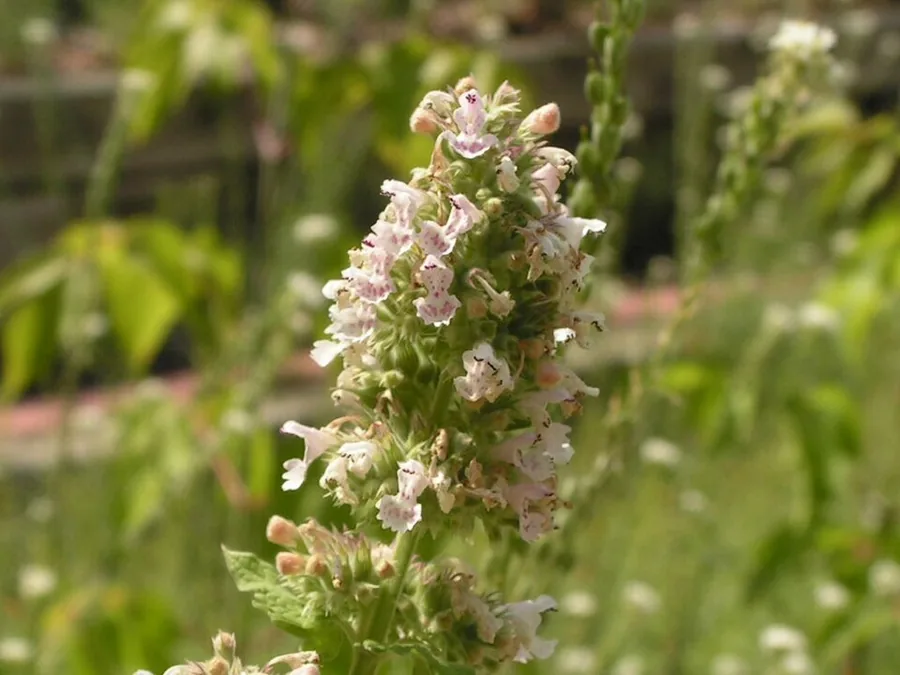
Catnip is a tough, fast-growing perennial in the mint family, with soft gray-green leaves and small white flowers spotted in purple. It comes from Eurasia and has settled across much of the temperate world, where it grows as easily in a garden bed as in a pot. Hardy from zones 3 to 9, it shrugs off cold winters and dry summers alike.
The plant earns its name from nepetalactone, the aromatic oil in its leaves that sends many cats into a brief, happy frenzy of rolling and rubbing. People have long valued it too, picking the leaves for a mild herbal tea. It draws bees and other pollinators while quietly putting off a few garden pests.
Easy is the word for catnip. It asks for sun, sharp drainage, and almost nothing else, and it punishes kindness more than neglect, since rich soil and heavy feeding only make it flop. The one real catch is its eagerness to spread, so most of the work is keeping it where you want it.
Care
The short version: full sun, lean and well-drained soil, and a deep drink only when the top half has dried out. Shear it after bloom, feed it little, and pen it in if you don't want it self-seeding everywhere.
Light
Catnip wants full sun for the strongest plants and the best aroma. It puts up with part shade, but too little light leaves it leggy and floppy with weaker scent.
Water
Once it's established, catnip is drought-tolerant and far happier dry than wet. Water deeply but only every 7 to 14 days, letting the top half of the soil dry out first. Soggy ground rots it, and wet soil over winter can kill it outright.
Soil
Plant it in average, well-drained loamy or sandy soil, and don't fuss over fertility, since it handles poor and dry ground without complaint. A pH anywhere from 6.0 to 7.5 suits it. Sharp drainage is the one thing it truly needs.
Temperature
Catnip grows well across a wide range, roughly 59°F to 86°F (15°C to 30°C). It is cold-hardy through the winter in zones 3 to 9 and handles summer heat without missing a beat.
Humidity
Ordinary air suits it, somewhere around 30% to 60%, so there's nothing to manage. What matters far more is airflow, since stagnant, crowded conditions invite powdery mildew on the leaves.
Feeding
Feed catnip sparingly, just a light dose of balanced fertilizer or compost in spring if anything. Overdo it and you trade aroma and a tidy shape for soft, floppy growth.
Pruning
Shear the plant back by one-third to one-half after the first flush of bloom to spark a rebloom, keep it compact, and cut down on self-seeding. In late fall or early spring, cut the spent stems right to the ground.
Repotting
Lift and divide clumps every 2 to 3 years to keep them vigorous, and repot container plants in spring. Roots circling the pot, smaller leaves, water running straight through, and a woody crowded center all say it's time.
Size & spacing
Catnip grows into a rounded clump about 24 to 35 inches (60 to 90 cm) tall and roughly as wide. Give each plant that much room so air moves freely and mildew stays away.
When to plant
Catnip follows the spring frost like most garden herbs. Start seed indoors in late winter, move plants out once the cold has passed in mid to late spring, and the flowers open from late spring through summer. Pick the leaves just as the buds form for the strongest aroma.
Northern hemisphere
Southern hemisphere
Typical months for a temperate climate: start earlier in warm zones, later where spring frosts linger.
- Sow: 6-8 weeks before the last spring frost
- Plant: After the last spring frost, in mid to late spring
- Harvest: White-to-pale-lavender, purple-spotted flowers from late spring through summer; harvest leaves just before or at flowering for peak aroma
Hardiness
USDA hardiness zones: 3–9
Temperature: down to -40°C
Troubleshooting
Catnip rarely gives serious trouble, and most of what goes wrong is cosmetic. The usual suspects are cats wrecking the stems, a flop after flowering, and seedlings turning up where you never sowed them. Match what you see below and the fix is usually quick.
Volunteer seedlings popping up all over the bed
Catnip is a profuse self-seeder and also creeps outward on short rhizomes to form colonies. Deadhead or shear it before the seeds set, and pull the volunteers while they are still small and easy. If you want it firmly in check, grow it in a container.
Fix:
- Deadhead or shear before seed set
- Pull or hoe volunteer seedlings while young
- Grow in a container to contain spread
Stems crushed flat and the whole clump matted down
This is cat damage, plain and simple. Cats roll on, rub against, and chew the plant because the nepetalactone draws them in, and heavy rain or wind can flatten the soft stems too. Cage a young or prized plant until it grows large and woody, and put in a few spare clumps that cats are free to wreck.
Fix:
- Protect young or prized plants with a wire cloche or low cage
- Plant extra clumps so cats can use some freely
- Stake or surround floppy stems for support
Leaves yellowing, stippled, or dusted with white
A few culprits look alike here. Aphids twist new growth, spider mites stipple the leaves in hot dry spells, and powdery mildew lays a white coating on crowded, stagnant plants. Hose pests off with a hard jet of water, reach for insecticidal soap if they hang on, and open the plant up to better airflow to clear the mildew.
Fix:
- Hose off pests with a strong jet of water
- Apply insecticidal soap or horticultural oil for aphids and mites
- Improve spacing and airflow and remove affected foliage for mildew
Plant gone leggy and flopping open after bloom
This is natural post-bloom decline, made worse by too much shade or overly rich soil that pushes weak, soft growth. Shear the plant back by a third to a half once the first flush of flowers fades, and it tightens up and often reblooms. Keep it in full sun with lean soil and go light on the feed.
Fix:
- Shear the plant back by one-third to one-half after the first bloom
- Move container plants into full sun
- Reduce fertilizer
Toxicity
Catnip is safe all around. It carries no real toxin, so cats, dogs, horses, rabbits, livestock, birds, and people can all be near it without worry. Cats just react to the nepetalactone with a harmless few minutes of euphoria, and for people the leaves make a gentle tea.
Safe for
People · Cats · Dogs · Horses · Rabbits · Livestock · Birds
Cats None
This is the whole point of the plant, and it is safe. The nepetalactone sets off a brief, harmless buzz, so a cat may roll, rub, lick, and shake its head for about 10 minutes before wandering off. Gorging on a big pile of leaves can bring on a little passing vomiting or loose stool, nothing more.
Dogs None
Dogs shrug catnip off. Most pay it no attention at all, and a nibble does no harm.
Horses None
A horse can graze catnip without trouble. It is a mint-family herb with no toxin behind it.
Rabbits None
Safe for rabbits in the modest amounts they would ever eat. Like any fresh green, a sudden large helping is best avoided.
Livestock None
Cattle, goats, and sheep can browse catnip safely. It holds no compound that poisons them.
Birds None
Pet and backyard birds are fine around catnip, and many ignore it entirely. There is nothing in the leaves that harms them.
People None
Catnip is an old kitchen and tea herb for people, brewed as a mild, pleasant infusion. The leaves are safe to handle and to drink, and the scent does nothing to us the way it does to a cat.
Smelling or eating catnip causes a temporary euphoric response in many cats (rolling, rubbing, head-shaking, drooling, vocalizing) lasting roughly 10 minutes, after which the cat loses interest; this behavioral effect is harmless, while eating very large amounts may cause mild, transient vomiting or diarrhea. The aroma is harmless to people.
Helpline numbers

United States
ASPCA Animal Poison Control: (888) 426-4435 (fee applies)

United Kingdom
Animal PoisonLine: 01202 509000 (fee applies)

Australia
Animal Poisons Helpline: 1300 869 738
Varieties
Most gardens grow plain catnip, but one named form is worth knowing.
Nepeta cataria 'Citriodora'
Lemon catnip carries a strong lemon scent layered over the usual minty catnip aroma.
How to propagate
Catnip multiplies with little effort. You can raise it from seed, split an old clump, or root a cutting, and it often saves you the bother by seeding itself.
SeedEasy
Sow indoors 6-8 weeks before the last frost, or direct sow in spring · 10-20 days to germinate; harvestable within the first season
Seed is the usual start. Sow indoors 6 to 8 weeks before your last frost, or scatter seed straight into the ground in spring, and it sprouts in 10 to 20 days and gives you leaves to harvest that same first season. Once it settles in, catnip seeds itself freely, often more than you bargained for.
DivisionEasy
Spring or early fall · 2-4 weeks to re-establish
Lift and split an established clump in spring or early fall to refresh a tired plant and make new ones for free. Each piece settles back in within 2 to 4 weeks. Doing this every few years keeps the center from going woody and bare.
Stem cuttingsModerate
Late spring to summer, from non-flowering shoots · 2-3 weeks to root
Take softwood cuttings from non-flowering shoots in late spring or summer. Stand them in moist, well-drained mix under high humidity and they root in 2 to 3 weeks. It takes a bit more care than seed or division, so it ranks as the trickiest of the three.
Myths
Catnip is a dangerous, addictive drug that gets cats high.
The nepetalactone sets off a brief behavioral response, not a real high, and it isn't addictive. The effect fades in about 10 minutes, and a cat then stays immune to it for a while before it can work again.
Every cat goes wild for catnip.
The reaction is inherited, so only about half to two-thirds of cats respond at all. Kittens under roughly 3 months and a fair share of adult cats feel nothing from it.