Herb · Lamiaceae
Creeping Thyme
Thymus serpyllum
Give it full sun and sharp drainage, and creeping thyme spreads into a tough, fragrant carpet that shrugs off drought.
Full sun
Every 10–14 days
USDA 4–9
1–4 in · 2–10 cm
Overview
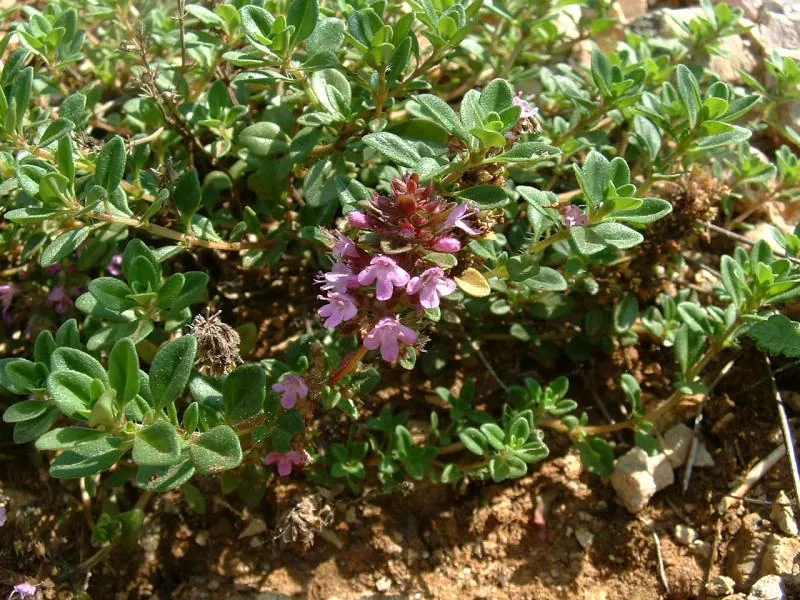
Creeping thyme is a low, woody groundcover in the mint family that hugs the ground in a dense evergreen mat just an inch or two high. Brush against it or step on it and the leaves give off the warm, herby scent thyme is known for. It earns its keep filling gaps between pavers, spilling over walls, and covering ground where a lawn would struggle.
Toughness is the draw here. Once it has rooted, the plant takes drought, poor stony soil, and hard winters in its stride, hardy all the way down through USDA zones 4 to 9. In early summer the whole mat disappears under tiny pink-to-purple flowers that pull in bees by the dozen.
It asks for very little, but it does have one firm rule. Sharp drainage and full sun are everything, and rich soil or wet feet will undo it faster than any pest. Get the site right and it more or less looks after itself.
Care
The short version: full sun and lean, gritty, sharply drained soil. Water deeply but rarely once it's established, skip the fertilizer, and shear it back after bloom to keep the mat dense.
Light
Creeping thyme wants full sun, the more the better. It will scrape by in partial sun, but the mat grows thin and floppy and flowers far less, so give it the brightest, most open spot you have.
Water
Once established it is genuinely drought-tolerant and prefers dry to medium soil. Water deeply but rarely, only every 10 to 14 days in a dry spell, and let the top half of the soil dry out first. Soggy ground is the one thing it won't forgive.
Soil
Lean is the goal. Plant in loose, sandy, gritty or rocky soil with sharp drainage, the poorer the better, since rich ground softens the plant and cuts its flowering. It handles a wide pH range, anywhere from 6.0 to 8.0.
Temperature
This is a cold-hardy plant that takes a remarkable swing, from about -29°F to 86°F (-34°C to 30°C). Bitter winters don't faze it, and it shrugs off summer heat as long as the soil drains.
Humidity
It likes things on the dry side and has no use for muggy air. Good airflow matters more than any humidity reading, since stagnant, damp conditions invite rot and mites.
Feeding
Go light or skip it altogether. Creeping thyme is a light feeder, and rich soil actually works against it, cutting both its winter hardiness and its bloom. A little feed in spring is plenty if you bother at all.
Pruning
Shear or cut the stems back after flowering to tidy the mat, hold its spread in check, and slow the woody buildup that bares the center over time. A yearly trim keeps it dense and good-looking.
Size & spacing
Each plant stays low, just 1 to 4 inches (2 to 10 cm) tall, while spreading into a mat 12 to 18 inches (30 to 45 cm) across. Space plants by that spread so they knit together into solid cover.
When to plant
Creeping thyme is a hardy perennial, so you plant it once and it returns each year. Start seed indoors in late winter, set plants out in spring after the frost has passed, and the mat flowers through summer while you can pick the leaves whenever you like.
Northern hemisphere
Southern hemisphere
Typical months for a temperate climate: start earlier in warm zones, later where spring frosts linger.
- Sow: Late winter to early spring, 6-8 weeks before last frost
- Plant: Spring, after danger of frost has passed
- Harvest: Tiny deep pink to purple flowers appear early-to-mid summer (June-September) and are highly attractive to bees; aromatic leaves can be harvested anytime.
Hardiness
USDA hardiness zones: 4–9
Temperature: down to -34°C
Troubleshooting
Creeping thyme stays trouble-free in the right spot, and almost every problem traces back to too much water or too much age in the mat. Read the early signs below and you can step in before a patch dies out. Match what you see, then act while it still helps.
Blackened stems and a mat that caves in at the base
This is root and crown rot, and it traces straight back to soggy ground rather than any disease you can spray away. Wet, poorly drained soil or a heavy hand with the watering can suffocates the roots until they turn soft and foul. Cut out the dead sections, dig in sand or grit to open the soil up, and water far less often.
Fix:
- Remove affected sections
- Improve drainage by amending with sand or grit
- Reduce watering frequency
- Replant healthy divisions in a faster-draining site
A bare, woody hole in the middle of the mat
This is simply the natural woody aging of the oldest central stems, not a pest or a disease. The middle goes brown and leafless while the outer ring stays green and keeps creeping. Shear the whole mat back after it flowers to push fresh growth, and lift and divide the vigorous outer pieces every few years to start over.
Fix:
- Shear back after flowering to encourage fresh basal growth
- Divide and replant vigorous outer sections to rejuvenate
Speckled, dusty leaves with faint webbing
Spider mites move in during hot, dry summer spells and drink the leaves dry from the underside. You'll spot the fine stippling first, then the thin webbing as numbers build. Blast them off with a strong jet of water, open the planting up for better airflow, and reach for insecticidal soap only if they hang on.
Fix:
- Rinse foliage with a strong jet of water
- Increase airflow
- Treat persistent infestations with insecticidal soap or horticultural oil
Toxicity
There's nothing to worry about here. Creeping thyme is non-toxic across the board, safe for cats, dogs, horses, rabbits, livestock, birds, and people alike. The aromatic leaves are edible too, so a curious pet or child taking a nibble is no cause for concern.
Safe for
People · Cats · Dogs · Horses · Rabbits · Livestock · Birds
Cats None
Safe around cats. A curious nibble of the aromatic foliage won't cause any harm.
Dogs None
Non-toxic to dogs, so a dog brushing through the mat or sampling a leaf has nothing to worry about.
Horses Safe
Listed as safe for horses, with no toxic compounds in the leaves or stems.
Rabbits Safe
Rabbits can graze the foliage without any risk, and many enjoy the scented leaves.
Livestock Safe
Grazing cattle, goats, and sheep tolerate creeping thyme without trouble.
Birds Safe
No hazard to birds. The summer flowers mostly draw bees rather than posing any threat.
People Safe
Safe for people, leaves and all. The aromatic foliage is edible, though it's milder than the kitchen thyme most cooks reach for.
No special handling precautions; foliage is aromatic and safe to touch and taste.
Varieties
Most creeping thyme sold is the plain species, but a couple of named selections are worth knowing for their size or flower color.
Elfin
An extremely dwarf, tight cushion that stays only about an inch tall, which makes it the one to tuck between stepping stones.
Coccineus
A vigorous mat that throws deep magenta-red flowers, far more intense than the soft pink-purple of the plain species.
How to propagate
Creeping thyme is easy to multiply, whether you split an existing mat, root a few cuttings, or start the species from seed.
DivisionEasy
Spring or early fall · 4 to 8 weeks
Lift an established mat in spring or early fall and pull it apart, making sure each piece keeps its own roots. Replanted divisions settle in over 4 to 8 weeks, and this is the dependable way to copy a named cultivar true to type.
Stem cuttingsEasy
Late spring to summer · 3 to 6 weeks
Take softwood cuttings from non-flowering shoots in late spring or summer and stand them in a gritty, well-drained mix. They root readily in 3 to 6 weeks and hold onto the parent's traits, so a favorite cultivar carries straight through.
SeedModerate
Late winter to spring, indoors before last frost · Several weeks to germinate; full mat coverage over a season or more
Seed is the usual route for the plain species. Surface-sow the tiny seeds indoors before the last frost and keep them lightly moist, and they take several weeks to sprout and a full season or more to knit into a mat. Cultivars won't come true this way, so save seed for the species alone.
Myths
Creeping thyme is the same as the thyme you cook with.
They are close cousins but not the same plant. The thyme in your kitchen is Thymus vulgaris, while creeping thyme is grown mostly as an ornamental groundcover. It is edible, just milder, and rarely lands in a recipe.