Herb · Lamiaceae
Hyssop
Hyssopus officinalis
Give it full sun and lean, fast-draining soil, and hyssop rewards you with aromatic leaves and bee-loved blue spikes.
Full sun
Every 7–14 days
USDA 4–9
12–24 in · 30–60 cm
Overview
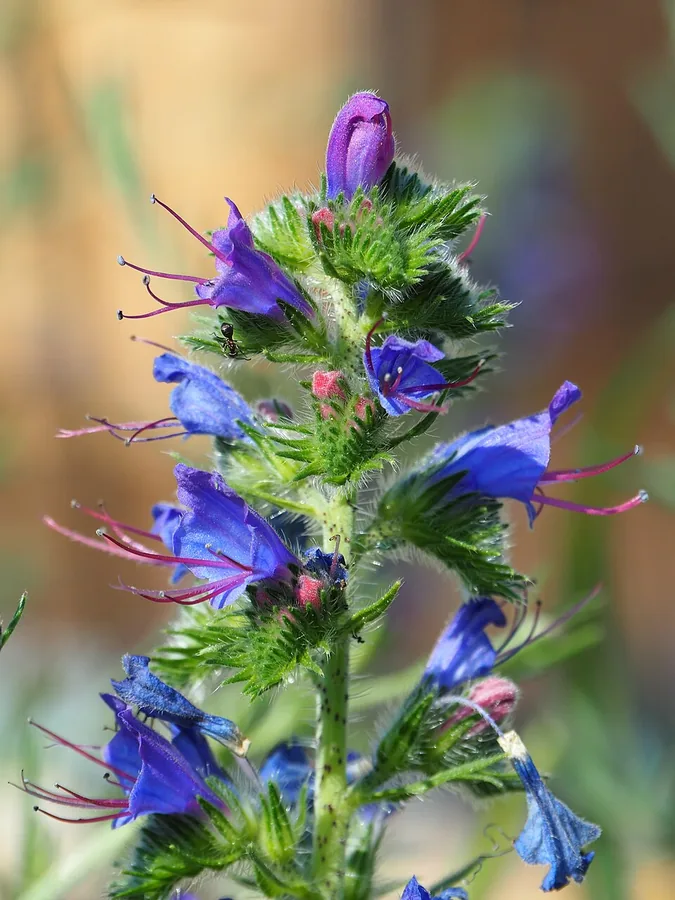
Hyssop is a tough little woody-based perennial from the Mediterranean, grown for centuries as both a kitchen herb and a medicinal one. It forms a low, bushy mound of narrow, deep green leaves with a sharp, minty scent, topped in summer by spikes of blue-purple flowers that bees and butterflies cannot resist. Hardy from USDA zones 4 through 9, it shrugs off cold winters and dry spells alike.
What hyssop wants most is full sun and soil that drains fast. It thrives in lean, sandy, or rocky ground where fussier herbs would sulk, and it asks for very little once its roots take hold. The one thing it won't forgive is wet feet, so the wrong spot does far more harm than any neglect.
Left alone, the plant turns woody and open at the base after a few years. A spring trim and the odd hard cutback keep it dense and leafy, and it self-seeds so freely that you'll rarely be short of replacements.
Care
The short version: full sun, lean and sharply drained soil, and only occasional water once the plant is established. Trim it in spring to keep it bushy, feed it almost never, and renew it every few years before it goes woody.
Light
Hyssop wants full sun for the best growth, flowering, and scent. It will take a little partial shade, but a shaded plant grows open and floppy and produces far fewer of its summer flower spikes.
Water
Let the top half of the soil dry out between waterings, then water deeply. Established plants are drought-tolerant and need only the odd drink, since the one thing hyssop won't tolerate is soggy, waterlogged ground.
Soil
Plant in well-drained loam, sandy, or even shallow rocky soil, where most herbs would struggle. Hyssop handles a wide pH range from 6.0 to 8.0 and copes happily with poor, dry ground, so the priority is drainage over richness.
Temperature
This is a hardy plant, comfortable across a broad band from -22°F to 86°F (-30°C to 30°C). That cold tolerance is what lets it overwinter outdoors as a perennial through USDA zones 4 to 9.
Humidity
Hyssop prefers it on the dry side, around 30% to 50%, in keeping with its Mediterranean roots. Damp, still air invites powdery mildew, so good airflow matters more than any target reading.
Feeding
This is a light feeder that gets by on almost nothing. A single spring application of balanced fertilizer or a little compost is plenty, and overfeeding only produces soft, leggy growth at the expense of scent.
Pruning
Cut hyssop back by about one-third in early to mid spring to shape it and clear winter-damaged growth, then shear it lightly after flowering. Regular trimming keeps it from turning leggy and woody, though you'll still want to replace plants every few years.
Repotting
A container-grown hyssop needs moving up only every 2 to 3 years. Repot when you see roots circling the pot or poking through the drainage holes, water running straight through, or growth slowing down.
Size & spacing
Expect a compact mound of about 12 to 24 inches (30 to 60 cm) tall with a spread of 12 to 18 inches (30 to 45 cm). Give each plant that much room so air moves freely and the foliage stays healthy.
When to plant
Hyssop follows the seasons of a hardy perennial. Start seed indoors in late winter, about 8 to 10 weeks before your last frost, and set young plants out in spring once the cold has broken. The blue spikes open from early summer into fall, and the leaves carry the most flavor when picked just before or as the flowers come on.
Northern hemisphere
Southern hemisphere
Typical months for a temperate climate: start earlier in warm zones, later where spring frosts linger.
- Sow: Late winter to early spring, about 8-10 weeks before the last expected frost
- Plant: Spring, after danger of frost has passed
- Harvest: Blue-purple flower spikes from early summer into fall (roughly June-September), highly attractive to bees and butterflies; harvest aromatic leaves just before or at flowering for best flavor
Hardiness
USDA hardiness zones: 4–9
Temperature: down to -34°C
Troubleshooting
Hyssop is one of the easier herbs to keep, and most of its troubles trace back to too much water or too little sun. Read the early signs on the roots, stems, or leaves and you can usually fix things before the plant declines. Match what you see below, then act while it still helps.
Wilting and a collapsing plant in soggy ground
When hyssop sits in wet, airless soil, root rot sets in and the roots turn dark, mushy, and foul-smelling. Cut back the water and let the soil dry out, or better still move the plant to a raised, sandier spot where water drains away fast. A badly rotted plant won't recover, so pull it and start over.
Fix:
- Reduce watering and let soil dry
- Improve drainage or move to a raised/sandier site
- Remove and discard severely rotted plants
Sparse, woody stems that are bare at the base
An open, leggy plant with leaves only at the tips usually means too little light, too little pruning, or both. Move it into full sun and cut it back by about one-third in spring to push fresh, bushy growth from low down. Hyssop turns woody with age no matter what, so renew it every few years from cuttings or divisions.
Fix:
- Move to or site in full sun
- Cut back by about one-third in spring to encourage bushy regrowth
- Replace old woody plants with fresh divisions or cuttings
Weak, stunted plants over knotted roots
When a plant fades despite good care, dig one up and look for swollen, knotted roots that point to root-knot nematodes in the soil. There's no quick cure, so lift and bin the affected plants and grow hyssop somewhere fresh next time. Working plenty of organic matter into the bed builds the soil life that keeps these pests in check.
Fix:
- Remove and discard affected plants
- Rotate planting location
- Improve soil with organic matter
A dusty white film over the leaves
Those white patches that rub off are powdery mildew, a fungus that takes hold when air sits still around crowded plants. Pull the worst leaves, open the planting up so air can move, and keep water off the foliage. It rarely does lasting harm, but it spoils the look of the plant.
Fix:
- Improve spacing and air circulation
- Remove affected foliage
- Avoid overhead watering
Toxicity
Good news for households with pets and children: garden hyssop is safe. Its leaves and flowers are a long-standing culinary and tea herb, with no toxicity reported for cats, dogs, livestock, or people in normal amounts. The only thing to keep out of reach is the concentrated essential oil, which is a different matter from the living plant.
Safe for
People · Cats · Dogs · Horses · Rabbits · Livestock · Birds
Cats None
Garden hyssop is safe around cats, and a curious nibble of the leaves won't do any harm.
Dogs None
Dogs can brush against or chew on the plant without trouble, since the foliage carries no toxin.
Horses Safe
Horses grazing near hyssop have nothing to fear from it.
Rabbits Safe
Rabbits can browse the leaves safely, though most pass over its strong, minty scent.
Livestock Safe
Grazing cattle, goats, and sheep are fine around hyssop, and the aromatic leaves tend to keep them from eating much of it.
Birds Safe
The plant poses no risk to birds, and its summer flowers draw in bees and butterflies more than any feathered visitor.
People Safe
The leaves and flowers are a long-standing kitchen and tea herb, safe to eat in normal amounts. Only the concentrated essential oil, rich in pinocamphone, is a concern in large doses.
Concentrated hyssop essential oil contains pinocamphone and can be neurotoxic and seizure-inducing in large doses; keep concentrated oil away from pets and children, but the garden plant and culinary leaf are regarded as non-toxic.
Varieties
Most gardeners grow the plain blue-flowered species, but a couple of color forms are worth knowing if you want something different in the border.
Alba
A white-flowered form that stands apart from the usual blue-purple species.
Rosea
A cultivar that blooms in soft pink rather than the species blue.
How to propagate
Hyssop is generous about multiplying. You can raise it from seed, root soft cuttings, or split an established clump, and all three are well within reach of a beginner.
SeedEasy
Spring (start indoors in late winter or sow outdoors after frost) · Germinates in about 2-3 weeks; establishes over the first growing season
Seed is the simplest way to raise hyssop. Start it indoors in late winter or sow it straight outside once frost has passed, and the seedlings come up in about 2 to 3 weeks before filling out over the first season. Established plants then self-seed freely, so you'll often find volunteers to move around the garden.
Stem cuttingsModerate
Late spring to summer from softwood/semi-ripe growth · Roots in several weeks; establishes over a few months
Cuttings give you an exact copy of a plant you like. Take them from healthy, non-flowering shoots in late spring or summer while the growth is still soft to half-ripe, and they root over several weeks and settle in across a few months.
DivisionEasy
Spring · Re-establishes within one growing season
The quickest route with an older clump is to split it. Lift an established plant in spring, pull or cut it into pieces, and each one re-establishes within a single growing season.
Myths
Garden hyssop is poisonous to people and pets.
The garden plant and its leaves are a long-used culinary and tea herb, and extension sources flag no toxicity for cats, dogs, or people. Only the concentrated essential oil is a real concern, since it carries pinocamphone that can be neurotoxic and trigger seizures in large doses.
Hyssop and anise hyssop are the same plant.
They share a name but not a genus. True hyssop is Hyssopus officinalis, a woody-based Mediterranean herb, while anise hyssop is Agastache foeniculum, a separate plant grown mainly for its licorice scent.