Shrub · Lamiaceae
Bluebeard
Caryopteris × clandonensis
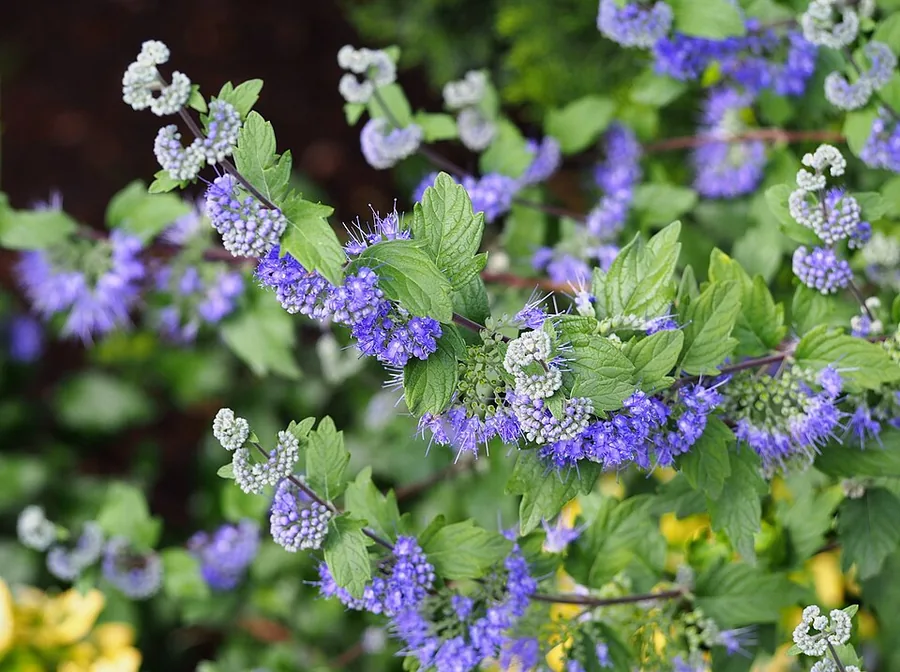
Cut it back hard each spring and bluebeard answers with a haze of blue flowers when the rest of the garden is winding down.
Full sun
Every 7–14 days
USDA 5–9
24–35 in · 60–90 cm
Overview
Bluebeard is a small deciduous shrub grown for the cloud of blue flowers it opens in late summer. It belongs to the mint family and stays neat at 2 to 3 feet (60 to 90 cm) tall and about as wide, which makes it easy to tuck into a border or a sunny corner. The aromatic gray-green leaves give off a clean scent when you brush past them.
What sets this shrub apart is its timing. The flowers arrive from July into September, long after most shrubs have finished, and they pull in bees and butterflies right when other nectar is running short. Because it blooms on new wood, the plant rebuilds itself every year from a hard spring cut.
Bluebeard asks for little once it settles in. Give it full sun and lean, fast-draining soil, and it shrugs off heat and drought. Its one real weakness is wet feet, so the quickest way to lose a plant is to sit it in soggy ground.
Care
The short version: full sun, lean and well-drained soil, a deep drink only when the top of the soil dries, and a hard cut back to 6 to 12 inches every late winter or early spring.
Light
Give bluebeard full sun, ideally 6 or more hours a day. It will take a little partial shade, but shade is the fastest route to weak, floppy stems and a thin scattering of flowers.
Water
Once established, this is a drought-tolerant shrub. Water deeply but only when the top half of the soil has dried, roughly every 7 to 14 days, and never let it sit in standing water, which rots the crown and roots.
Soil
Plant in average, loose, well-drained soil, either loamy or sandy. Rich ground does more harm than good here, and wet feet are the one thing it can't survive, so drainage matters more than fertility.
Temperature
Bluebeard is hardy across a wide range, from about -20°F to 100°F (-29°C to 38°C). In the colder end of its range it may die back to the ground over winter and resprout in spring, which suits its bloom-on-new-wood habit just fine.
Humidity
Ordinary outdoor humidity is all it needs, so there's nothing to track. Good airflow and dry roots count for far more than any moisture in the air.
Feeding
Feed lightly. A single balanced feed or some compost in spring is plenty, and overfeeding only grows soft, floppy stems that flop over and bloom poorly.
Pruning
This is the one job that matters. Cut the whole plant back hard to 6 to 12 inches (15 to 30 cm) in late winter or early spring before new growth starts, since the flowers all come on the fresh wood that follows.
Repotting
Bluebeard is grown in the ground and rarely needs repotting. If you do keep one in a container, move it up only when roots circle the pot or water runs straight through.
Size & spacing
Plants form a tidy mound of 2 to 3 feet (60 to 90 cm) tall and roughly the same across. Give each one about that much room so air moves freely and the rounded shape can fill in.
When to plant
Bluebeard runs on a simple yearly rhythm. Set new plants out in spring once the frost has passed, cut established shrubs back hard before they break dormancy, and the blue flowers follow from midsummer into early fall.
Northern hemisphere
Southern hemisphere
Typical months for a temperate climate: start earlier in warm zones, later where spring frosts linger.
- Plant: spring after last frost
- Harvest: late summer to early fall (July-September)
Hardiness
USDA hardiness zones: 5–9
Temperature: down to -29°C
Troubleshooting
Bluebeard has few troubles, and almost all of them trace back to soggy soil or too little sun. Read the early signs below and the fix is usually a matter of drainage, light, or a well-timed prune.
Wilting and blackened lower stems even though the soil is wet
This is crown and root rot, and it sets in when the roots sit in soggy ground. Dig down and you'll find dark, mushy roots and soil that stays wet long after watering. Pull badly hit plants, work grit into the bed or move the shrub to a raised, fast-draining spot, and ease off the water.
Fix:
- Remove and discard severely affected plants
- Improve drainage by amending soil with grit or replanting in a raised, well-drained site
- Reduce watering frequency
Sparse bloom on weak, floppy stems
Leggy, flowerless growth usually means too much shade, a missed spring pruning, or soil that's too rich. Bluebeard flowers on new wood, so move it into full sun, cut it back hard in late winter or early spring, and lay off the fertilizer. Lean ground and a sunny spot bring the bloom back.
Fix:
- Site in full sun (6+ hours)
- Cut back hard in late winter or early spring to force vigorous flowering new growth
- Avoid overfeeding and overly rich soil
Toxicity
Good news for households with animals: bluebeard is safe. The ASPCA lists it as non-toxic to pets, and there's no record of it harming livestock, birds, or people. Plant it freely where curious noses roam.
Safe for
People · Cats · Dogs · Horses · Rabbits · Livestock · Birds
Cats None
Safe to have around cats. A curious nibble won't poison them, though a big mouthful of any plant can upset a cat's stomach for a day.
Dogs None
No toxin here that troubles dogs. The worst a chewed stem might bring is a little loose stool, and that passes on its own.
Horses Safe
Bluebeard is fine to plant where horses graze. It carries nothing known to harm them.
Rabbits Safe
Rabbits can be around it without risk. They tend to leave the aromatic foliage alone anyway.
Livestock Safe
Cattle, goats, and sheep face no danger from this shrub, and its strong-smelling leaves rarely tempt a grazing animal.
Birds Safe
Birds are in no danger near bluebeard. The late summer flowers draw bees and butterflies, which makes the shrub a lively stop in the garden.
People Safe
No part of the plant is poisonous to people. It isn't grown to be eaten, so there's no reason to taste it, but a stray leaf does no harm.
No special handling required; as with any plant, ingestion of large amounts may cause mild gastrointestinal upset.
Varieties
A few named cultivars cover most of what you'll find at the nursery, differing mainly in flower shade, foliage color, and size. These are the ones worth knowing.
Dark Knight
A compact 2 to 3 foot mound carrying deep blue to bluish-purple flowers.
Longwood Blue
Reaches about 4 feet, taller than most, with violet-blue flowers set against silvery gray-green foliage.
Worcester Gold
Golden-yellow leaves play off its light lavender-blue flowers for a striking two-tone look.
Blue Mist
Named for its soft powder-blue flowers.
How to propagate
Bluebeard is easy to multiply, and how you go about it depends on whether you want an exact copy or don't mind a little variation.
Stem cuttingsEasy
Late spring to summer · Several weeks to root
The easiest way to make more bluebeard is from softwood or semi-hardwood cuttings taken in late spring or summer. Strip a healthy shoot, set it in moist mix, and it roots over the next several weeks into a copy of the parent plant.
SeedModerate
Spring · Weeks to germinate
You can sow seed in spring, and it sprouts over a few weeks, but named cultivars won't come true this way. Expect mixed results, so most gardeners stick with cuttings when they want a particular variety.
Myths
Pruning bluebeard hard in spring removes the flowers for the year.
Bluebeard flowers on the new wood it grows each season, so a hard cut in spring takes nothing away. It actually drives stronger flowering stems, which is why a yearly chop is the standard advice.