
Introduction
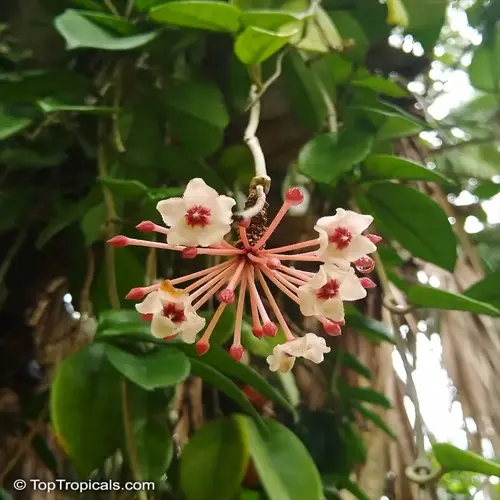
Your next favorite houseplant might just be a hoya plant. This genus has over 300 species found across tropical Asia and Australia. Growers have kept them indoors since the 1970s. You might hear people call it the wax plant for its thick glossy leaves or the porcelain flower for its star shaped blooms.
Penn State Extension educator Mandy L. Smith said it best. You need patience and persistence with hoyas. The genus got its name from botanist Thomas Hoy, which feels right for a plant that rewards your dedication with fragrant flowers. I grew my first hoya from a small cutting over 8 years ago and it still blooms on the same vine each summer.
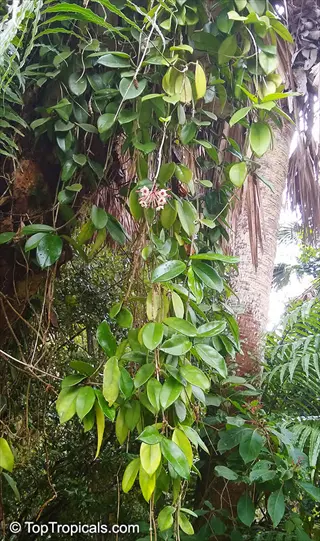
Think of hoyas as tree guests in nature. They cling to branches rather than dig into the ground. This makes them epiphytic plants that need air flow around their roots to stay healthy. That single fact explains why your hoya needs chunky soil and why too much water kills them fast. Good houseplant care starts with knowing where your plant comes from.
This guide gives you the best hoya varieties to grow plus proven care tips from real university sources. You will learn blooming secrets and simple ways to make more plants from cuttings. Whether you just got your first wax plant or you want to grow your collection, these sections have what you need.
8 Popular Hoya Varieties
Picking the right hoya varieties can feel tricky when you see hundreds of hoya types on store shelves and online shops. When I first started collecting, I stood in a nursery for 20 minutes trying to choose between 3 species. Each one has its own leaf shape, growth pattern, and bloom style that sets it apart.
I have grown most of these 8 picks over the years. You will see the classic hoya carnosa plus variegated hoya options like Krimson Queen and Krimson Princess. The list also includes the best hoya for beginners and collector favorites like the Hindu rope plant. Each profile gives you the care level and leaf details.
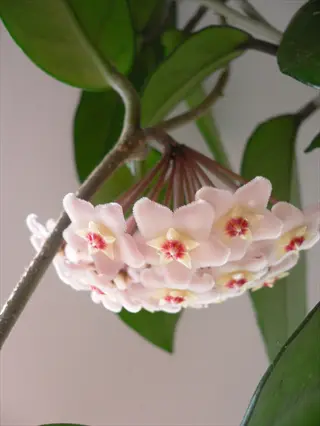
Hoya Carnosa (Classic Wax Plant)
- Growth Form: Vigorous vining plant that can trail several feet from a hanging basket or climb a trellis with ease in most indoor settings.
- Leaves: Thick, glossy, dark green leaves measuring 3 to 6 inches (7.6 to 15.2 centimeters) long with a waxy coating that gives the plant its common name.
- Flowers: Produces star-shaped pink and white flower clusters with a sweet fragrance. You can expect blooms from spring through fall once your plant matures.
- Care Level: One of the easiest hoyas for beginners, tolerating a wide range of indoor conditions including lower light and inconsistent watering schedules.
- Best For: First-time hoya growers who want a reliable bloomer that rewards patience with fragrant flower clusters year after year.
- Special Note: The species name 'carnosa' means fleshy, referring to the thick succulent-like leaves that store water and resist drought.
Hoya Krimson Queen
- Growth Form: Trailing vine with moderate growth rate that looks stunning in hanging baskets or cascading from high shelves in bright rooms.
- Leaves: Creamy white to pink variegated edges surround a green center on each leaf, with new growth often showing vivid pink tones.
- Flowers: Produces the same classic star-shaped pink flower clusters as standard Hoya carnosa, though variegated plants may bloom less often.
- Care Level: A bit more demanding than plain carnosa because variegated leaves have less chlorophyll and need brighter light to keep their coloring.
- Best For: Growers who want eye-catching variegation without the high price tag of rarer hoya species and cultivars.
- Special Note: Often confused with Krimson Princess, but Queen has variegation on the leaf edges while Princess has variegation in the leaf center.
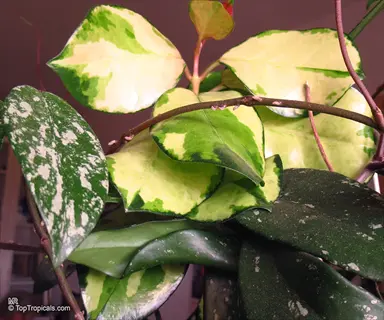
Hoya Krimson Princess
- Growth Form: Compact trailing vine that grows a bit slower than Krimson Queen, producing dense foliage along its cascading stems.
- Leaves: Center-variegated leaves with creamy yellow or pink centers surrounded by dark green margins, creating a striking reverse pattern.
- Flowers: Can produce fragrant pink star-shaped blooms similar to other carnosa cultivars once the plant reaches maturity after two to three years.
- Care Level: Needs bright indirect light to keep the inner variegation vibrant, and slightly less water than non-variegated types since it grows more slowly.
- Best For: Collectors who already own Krimson Queen and want the complementary reverse-variegation pattern to display side by side.
- Special Note: New leaves often emerge almost all pink or cream before developing more green as they mature and harden off.
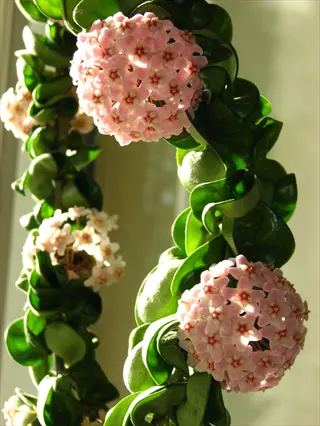
Hoya Compacta (Hindu Rope Plant)
- Growth Form: Distinctive curled and twisted rope-like vines that hang downward, making it one of the most unique houseplants you can find.
- Leaves: Tightly curled, crinkled leaves wrap around the stem in a spiraling formation that resembles thick braided rope or twisted cord.
- Flowers: Produces ball-shaped clusters of pink star flowers that emerge from between the curled leaves, often with a light sweet fragrance.
- Care Level: Moderate difficulty because the tightly curled foliage can trap moisture and hide pests like mealybugs that are hard to spot.
- Best For: Plant enthusiasts looking for an unusual conversation piece that grows well in hanging baskets near bright windows.
- Special Note: Also known as Hoya carnosa 'Crispa' or 'Regalis' according to Penn State Extension, and variegated forms command premium prices.
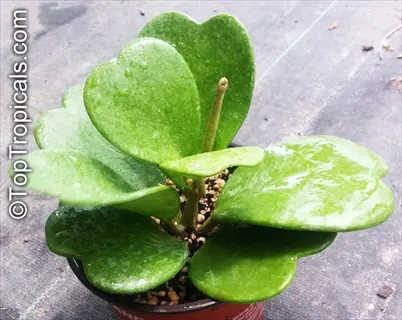
Hoya Kerrii (Sweetheart Hoya)
- Growth Form: Vining growth habit when grown from a stem cutting with nodes, producing heart-shaped leaves along trailing or climbing stems.
- Leaves: True heart-shaped, thick, succulent leaves that can reach 4 inches (10 centimeters) across on mature vines with good light.
- Flowers: Produces small clusters of waxy flowers, though this species blooms less often than Hoya carnosa in typical indoor conditions.
- Care Level: Easy if grown from a proper stem cutting, but single-leaf cuttings sold commercially will not develop into a vine and remain one leaf.
- Best For: Gift-giving around Valentine's Day, though buyers should know a single leaf cutting will never become a full plant without a node.
- Special Note: University sources confirm that a Hoya kerrii single-leaf cutting without a node will stay as one leaf indefinitely, never forming a vine.
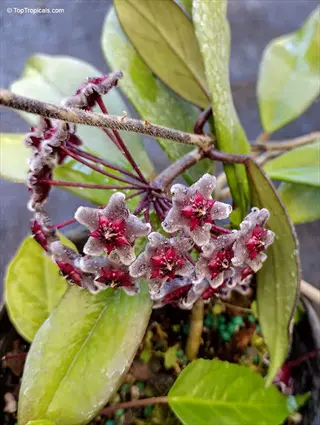
Hoya Pubicalyx
- Growth Form: Fast-growing vining species that can produce several feet of new growth per year in bright conditions with regular feeding.
- Leaves: Long, slender, dark green leaves often covered with silver flecks or splashes that become more prominent with brighter light exposure.
- Flowers: Produces dramatic clusters of dark pink to deep maroon star-shaped flowers with a strong sweet fragrance that you notice most at night.
- Care Level: One of the more forgiving hoya species, handling a range of light conditions and bouncing back fast from missed waterings.
- Best For: Growers who want fast results and dramatic dark-colored blooms without the fussy care requirements of rarer collector varieties.
- Special Note: Silver splash patterns on the leaves are caused by air pockets in the leaf cuticle, not variegation, and intensity varies by light.
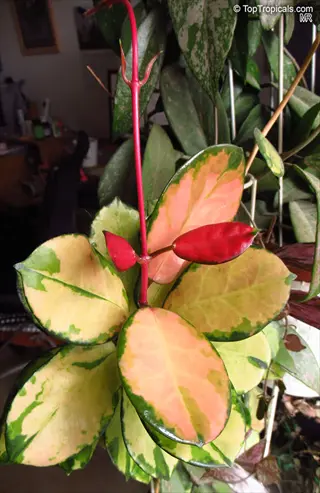
Hoya Australis
- Growth Form: Strong climbing vine native to Australia that grows vigorously and attaches well to trellises, poles, and other vertical supports.
- Leaves: Rounded, glossy green leaves that are a bit thinner than Hoya carnosa, giving the plant a lighter and more delicate look.
- Flowers: White star-shaped flowers with red centers that produce a strong sweet fragrance. You can count on blooms once your plant matures.
- Care Level: Beginner-friendly species that adapts well to average household conditions and is less prone to leaf drop than some other types.
- Best For: Indoor gardeners who want a fast-growing hoya that can cover a trellis or fill out a hanging basket within one to two growing seasons.
- Special Note: The University of Florida lists this as one of the most popular hoya species alongside Hoya carnosa and Hoya lanceolata bella.
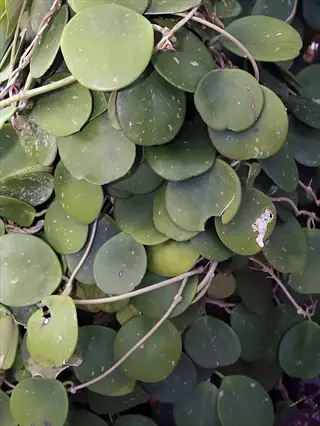
Hoya Obovata
- Growth Form: Semi-compact vining plant with thick stems that can trail from a pot or be trained upward on a support structure.
- Leaves: Large, round, dark green leaves with distinctive silver splash patterns, thicker and more substantial than most other hoya species.
- Flowers: Produces fragrant pink flower clusters with a notable chocolate or cocoa scent that distinguishes it from the sweeter-smelling species.
- Care Level: Moderate care requirements with a preference for consistent bright indirect light and well-draining soil to prevent root problems.
- Best For: Collectors who appreciate bold foliage and unique bloom fragrances, and those with bright spots that can support the larger leaves.
- Special Note: The chocolate-scented blooms make this a favorite among collectors, and the large round leaves create a dramatic statement in any room.
Essential Care Fundamentals
Good hoya care starts with one key idea. In the wild, hoyas cling to tree branches in tropical canopies. Your goal is to copy those conditions with bright indirect light, a fast draining substrate, and warm air. Iowa State warns that overwatering in dense soil leads to fast root decline. Your hoya soil mix matters more than most people think.
I lost my first hoya to root rot because I used regular potting soil without any amendments. Once I switched to a mix of potting soil, orchid bark, and perlite, my plants took off. The chart below breaks down each hoya care basic so you can set up the right conditions from day one and keep your well-draining soil working as it should.
Light Requirements
- Ideal Placement: Put your hoya near an east or bright north window where it gets several hours of bright indirect light each day without harsh afternoon sun.
- Low Light Warning: The University of Florida says poor light is the top reason hoyas fail to bloom, so pick the brightest spot you can for your plant.
- Direct Sun Tolerance: Most hoyas handle gentle morning sun well, but intense afternoon direct sunlight can scorch leaves on variegated cultivars with less chlorophyll.
- Artificial Light Option: Hoyas respond well to grow lights placed 12 to 18 inches (30 to 46 centimeters) away, making them a good fit for offices and darker rooms.
Watering Schedule
- General Rule: Let the top one third to one half of the soil dry out between hoya watering sessions during the growing season from spring through fall.
- Winter Reduction: Water very little during winter when growth slows. Let the soil dry out more between each session to prevent root rot from setting in.
- Expert Technique: Penn State Extension says experienced collectors wait until the leaves start to pucker before watering, which signals your plant is ready for a drink.
- Overwatering Risk: Iowa State warns that overwatering in dense soil is the fastest path to root decline, so good drainage matters more than your watering schedule.
Soil and Potting Mix
- Recommended Recipe: Iowa State suggests mixing standard potting soil with orchid bark and perlite or pumice to create the chunky well-draining soil hoyas need.
- Why Chunky Soil Works: Hoyas grow as epiphytes on tree branches in nature. Their roots need air flow and fast drainage rather than dense soil that holds moisture.
- Soil pH Range: NC State Extension reports hoyas prefer a neutral soil pH between 6.0 and 8.0, which most standard potting mixes provide without any extra work.
- Avoid Dense Mixes: Never use straight garden soil or heavy potting mixes made for moisture loving plants. These compact around roots and hold far too much water.
Temperature and Humidity
- Ideal Hoya Temperature: Keep your hoyas between 65°F and 80°F (18°C and 27°C) during the growing season, and never let them drop below 55°F (13°C).
- Hoya Humidity Range: Iowa State recommends 40% to 60% humidity for best growth and blooming, which most homes provide without extra equipment or effort.
- Boosting Humidity: If your home is very dry, place the pot on a pebble tray with water or group it with other tropical plants. Avoid misting since it can cause leaf fungus.
- Cold Damage Warning: The University of Florida advises never exposing hoyas below 45°F (7°C), as cold damage can kill stems and roots even after brief exposure.
Getting Hoyas to Bloom
Hoya blooming is the reward you get for months of steady care. NC State Extension says each flower cluster can hold up to 30 star-shaped flowers, each less than 1 inch (2.5 centimeters) across. These fragrant flowers fill a room with sweet scent and make all that patience worth it.
Getting a hoya to bloom is like training for a long race. Your plant needs the same conditions for months on end with no sudden changes near the finish line. I waited 3 full years for my first hoya carnosa to flower, and the blooms came after I stopped fussing with it. If you want to know how to get hoya to bloom, the checklist below covers every step from light to bud blast prevention.
Provide Enough Bright Light
- Why It Matters: The University of Florida says poor light is the single most common reason hoyas refuse to bloom, even when all other conditions are perfect.
- What To Do: Move your hoya to the brightest indirect light you have. An east or south window with several hours of filtered sun each day works best.
- Testing Approach: If your hoya grows well with healthy leaves but never produces hoya flowers, try adding more light over several weeks before you change other factors.
Keep the Pot Snug
- Why It Matters: Hoyas bloom more when they are a bit root bound. An oversized pot sends energy toward root growth rather than flower production.
- What To Do: Only repot when roots circle the drainage holes. Choose a new container no more than 2 inches (5 centimeters) larger than the current one.
- Common Mistake: Jumping to a much larger pot after purchase often delays hoya blooming by a year or more while the plant fills the extra soil space with roots.
Never Remove the Peduncle
- Why It Matters: The peduncle, also called the flower spur, is a permanent structure that produces new flower clusters over several years from the same stalk.
- What To Do: After flowers fade and fall off, leave the bare peduncle attached to the vine. It will produce the next round of blooms from that exact spot.
- Key Warning: Removing the peduncle means your plant must grow a brand new spur, which can delay the next bloom cycle by a full year or longer.
Avoid Moving Budding Plants
- Why It Matters: Iowa State identifies bud blast as a common problem caused by moving, rotating, or changing conditions after flower buds form on your hoya.
- What To Do: Once you spot a flower bud forming, leave the plant right where it is. Keep the same watering and temperature routine until the blooms open.
- Penn State Advice: Extension educator Mandy L. Smith says that once a flower begins to form, do not move, adjust, rotate, or pamper the plant in any way.
Be Patient With Young Plants
- Why It Matters: NC State Extension confirms that most hoya plants will not flower until they are 2 to 3 years old, no matter how perfect your growing conditions are.
- What To Do: Focus on building a healthy plant with strong roots and plenty of vine growth during the first few years before you expect any fragrant flowers at all.
- Realistic Timeline: A hoya you buy as a small starter plant may need 3 to 5 years before producing its first bloom cluster based on the species and your setup.
Propagation and Repotting
Hoya propagation is one of the best ways to grow your collection without spending a lot of money. I have turned a single mother plant into over a dozen new hoyas using simple stem cuttings over the years. The key is making sure each cutting includes at least one or two nodes, because that is where new roots and growth will come from.
Iowa State Extension warns that leaf cuttings without a node will never form a vine. This is a huge frustration for people who buy single Hoya kerrii leaves as gifts. Those cute heart shaped leaves will root and survive for years, but they stay as one leaf forever. Always make sure your stem cuttings have nodes before you start water propagation or any other method.
Take a cutting with 2 to 3 nodes and remove the lower leaves. Place it in water or moist sphagnum moss and wait for roots at least 1 inch (2.5 centimeters) long before potting. You can dip the cut end in rooting hormone to speed things up, but it isn't required for most hoya species.
For hoya repotting, less is more. Your hoya does best when it is a bit root-bound in a snug pot. Only move it to a new container when you see roots circling the drainage holes. The new pot size should be no more than 2 inches larger than the old one to keep your plant happy and on track to bloom.
Seasonal Hoya Care Calendar
Your hoya seasonal care routine changes with the calendar just like your own wardrobe does. Spring is wake up season, summer brings peak growth, fall starts the slowdown, and winter is rest time for your plant. Each phase calls for specific changes to your watering, feeding, and light setup.
My hoyas improved a lot after I started giving them different care each season. I used to water and feed them the same all year, which was a mistake. Iowa State Extension says to use half strength fertilizer in the growing season only. Stop fertilizing hoya plants once winter hits. The hoya feeding schedule below gives you a clear plan for the whole year.
The winter hoya care phase is where most people go wrong. Your plant needs this rest period to build energy for the next growing season. Cut back on water and skip the fertilizer until you see new growth return in spring.
Troubleshooting Common Issues
Even the best growers run into hoya common problems now and then. The trick is to start with what you see and then work backward to find the cause. Yellow leaves can mean too much or too little water. Check the soil moisture level first before you make any changes.
I dealt with a bad mealybugs outbreak on my Hindu rope plant last year. I almost lost it before I spotted the white cottony clusters hidden in the curled leaves. NC State Extension lists mealybugs, fungus gnats, spider mites, and thrips as the main hoya pests to watch for. The table below helps you match each symptom to its cause so you can fix issues fast.
Root rot from overwatering is the number one killer of hoyas based on what Iowa State Extension reports. If you see yellow leaves and the soil feels wet, pull the plant out and check the roots. Healthy roots look white and firm while rotted roots turn brown and mushy. Cut away any damaged roots and repot in fresh chunky soil to save your plant.
Wrinkling leaves tell you the opposite story. Your hoya is thirsty and needs a good soak. Hoya leaf drop from cold drafts is another common issue during winter months. Keep your plant away from cold windows and heating vents to avoid sudden temperature swings that cause stress.
5 Common Myths
Hoyas need constant high humidity above 70 percent to survive and grow well indoors as tropical plants.
Most hoyas grow perfectly well at normal household humidity between 40 and 60 percent, and excessive moisture can promote fungal problems.
You should cut off the old flower stalk after blooming ends because it looks messy and wastes plant energy.
The peduncle (flower spur) produces new blooms year after year, and removing it means waiting much longer for the next round of flowers.
A single heart-shaped Hoya kerrii leaf cutting will eventually grow into a full trailing vine with proper care.
A leaf cutting without a stem node will stay as a single leaf indefinitely and cannot develop into a vine according to university sources.
Hoyas grow best when repotted into a much larger container each year to give their roots plenty of room.
Hoyas prefer being slightly root-bound, and the new pot should be no more than 2 inches (5 centimeters) larger than the previous one.
All hoya species are slow growers that take many years to produce even a few feet of vine growth.
Growth rates vary significantly between species, with some like Hoya carnosa growing rapidly in ideal conditions while others are naturally slower.
Conclusion
Your hoya plant can thrive for 30 years or more with proper wax plant care. Hoyas are a low maintenance indoor tropical plant that rewards patient growers with fragrant blooms when you give them the right conditions. I have watched my oldest hoya produce more flowers each year as it matures.
The critical takeaways are simple to follow. Give your plant bright indirect light, use chunky well draining soil, and practice conservative watering. Never remove the peduncle after blooms fade because it will flower again from that spot. Keep the pot snug and your hoya will thank you with new blooms each season.
Hoyas are a pet safe houseplant since they are non toxic to cats, dogs, and horses. When you add to your hoya collection, buy from reputable nurseries that propagate their own plants. Research from Odago et al. 2022 flags conservation concerns about wild harvested plants. Your shopping choices matter for these species.
With over 300 species to explore, your first hoya plant is just the start of a hoya collection that brings decades of beauty to your home. I started with one small cutting and now I tend over a dozen thriving plants. Each new variety adds something fresh to the mix.
External Sources
Frequently Asked Questions
Is Hoya a good indoor plant?
Hoyas are excellent indoor plants because they tolerate low humidity, prefer bright indirect light found near windows, and are non-toxic to pets.
How do you care for a Hoya plant?
Provide bright indirect light, water when the top half of soil is dry, use chunky well-draining soil, and keep temperatures between 60 and 85 degrees Fahrenheit (15 and 29 degrees Celsius).
Do Hoyas like sun or shade?
Hoyas prefer bright indirect sunlight for several hours each day but can tolerate some morning direct sun, while deep shade reduces growth and prevents blooming.
Are Hoyas indoor or outdoor plants?
Hoyas are primarily grown as indoor houseplants in most climates, though they can live outdoors year-round in USDA Zones 10 through 12.
Do hoyas like to hang or climb?
Hoyas are natural epiphytic climbers in the wild, but they grow beautifully in hanging baskets or trained on trellises and moss poles indoors.
Do hoya plants clean the air?
Some retailers claim hoyas purify air, but no peer-reviewed study has confirmed air-cleaning ability specifically for hoya plants.
How to make a hoya happy?
Give your hoya bright indirect light, a snug pot with chunky soil, consistent watering during the growing season, and avoid moving it once flower buds form.
Do Hoyas like shallow or deep pots?
Hoyas prefer shallow, snug pots with drainage holes because their epiphytic roots do not grow deep and excess soil holds too much moisture.
Do Hoyas like much water?
Hoyas do not like much water and prefer to dry out partially between waterings, with experienced growers waiting until leaves slightly pucker before watering.
Do Hoyas like coffee grounds?
Coffee grounds are not recommended for hoyas because they can compact soil, alter pH unpredictably, and attract fungus gnats.