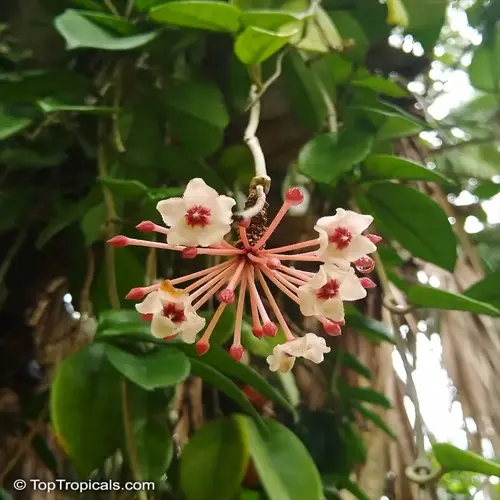

Hoyas do not like much water. Good hoya watering means letting the soil dry out between drinks and never keeping it wet all the time. These plants come from tropical forests where rain soaks them fast and drains away just as quick. Copy that pattern indoors and your hoya will stay healthy for years.
I used to water my hoyas on the same schedule as my tropical ferns, soaking them every few days. The result was yellow leaves, mushy stems, and one plant that nearly died from root rot before I caught the problem. Then I read about the leaf-pucker method from Penn State Extension and everything changed. You gently squeeze an older leaf. If it feels firm and rigid, the plant still has plenty of water. If the leaf gives a little and feels soft or slightly wrinkled, it's time to water. This simple test replaced my guessing game and saved every hoya I own.
Your hoya's low water needs make perfect sense once you know the science. Hoya leaves are thick with a waxy coating that locks in moisture. Think of them like succulents that store water in their tissue. In nature, their roots grow on tree branches where rain soaks them and drains away fast. Those roots evolved for quick wet-dry cycles. They aren't built for sitting in damp soil day after day. ISU Extension says it plain: hoya watering gone wrong in heavy soil is the quickest path to root decline.
UF Extension recommends letting the top one-third to one-half of the soil dry before you water again. Here's a practical way to check. Stick your finger about 2 inches into the soil. If it still feels damp at that depth, wait a few more days. If it feels dry, give your hoya a thorough soak until water pours from the drainage holes. Then dump the saucer so the pot never sits in standing water.
How often water hoya depends on the season. During spring and summer when growth kicks into gear, most hoyas need water every 7 to 10 days. The warmer temperatures and active growth use moisture faster. In fall and winter, hoyas slow down and their water needs drop. I water my hoyas every 3 to 4 weeks during the cold months, and they stay happy and healthy with that reduced schedule.
Hoya overwatering is the number one killer of these plants. Yellow leaves dropping from the bottom of the vine, soft brown stems, and a sour smell from the soil all point to too much moisture. If you catch root rot early, unpot the plant, trim away any dark mushy roots, and repot in fresh dry soil mixed with extra perlite. Cut back on watering and the plant can often recover.
Train yourself to under-water rather than over-water your hoyas. A thirsty hoya with a bit of leaf pucker will bounce back within hours of a good drink. A waterlogged hoya with rotting roots may not recover at all. Use the finger test, watch your leaves, and adjust your hoya watering schedule with the seasons. Your plant will thank you by growing strong and blooming when it's ready. You'll find that less water almost always leads to a healthier, happier hoya in the long run.
Read the full article: Hoya Plant Care and Growing Guide