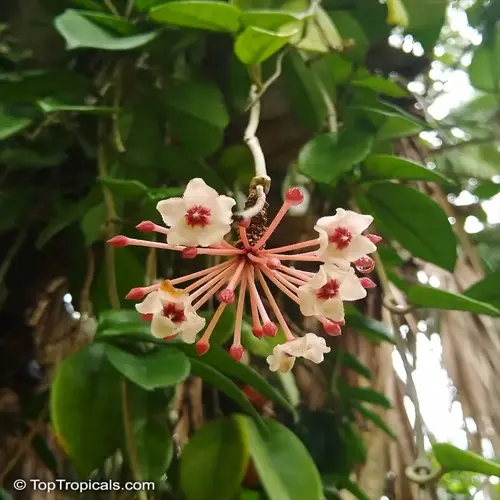

Good hoya plant care comes down to four things. Give your hoya bright filtered light, careful watering, chunky soil, and steady warm temps. Get these four right and your plant will grow strong and push out new vines. The routine is simple once you know what these tropical plants need.
Caring for hoya starts with learning how they drink. Hoyas store water in their thick, waxy leaves, so they don't need frequent watering like thirsty ferns or calatheas. I used to water mine on a strict weekly schedule, and the lower leaves turned yellow within a month. Then I tried the leaf-pucker method that Penn State Extension recommends. You wait until the oldest leaves feel slightly soft and flexible instead of firm. That small change saved two plants I thought were beyond help.
The connection between hoya biology and care needs makes sense once you know where they come from. Hoyas grow as epiphytes on tree branches in tropical forests. Their roots cling to bark, not buried soil. They get drenched by rain and then dry out fast in the warm breeze. Your indoor care should copy this pattern. Water deep, then let the top one-third to one-half of the soil dry before you water again.
Soil matters more than most people think for good hoya plant care. A standard potting mix holds too much moisture and chokes hoya roots. ISU Extension recommends mixing potting soil with orchid bark and perlite. I use a one-third split of each, and root rot hasn't been a problem since I switched. This blend drains fast and keeps air flowing around the roots, which is what an epiphyte craves.
Temperature and light are the final two pillars. Keep your hoya between 65°F and 80°F (18°C and 27°C) for the best growth. ISU Extension warns that temperatures below 55°F (13°C) can cause serious damage. For light, place your hoya near a bright window with filtered sun. East-facing windows work best in my experience. Direct afternoon sun can scorch the leaves, while too little light stops blooms from forming.
Check Soil Moisture First
- Finger test: Push your finger 2 inches into the soil and water only if it feels dry at that depth.
- Leaf check: Gently squeeze an older leaf to see if it feels soft or firm, since soft means the plant is thirsty.
- Seasonal shift: Water every 7 to 10 days in summer and cut back to every 3 to 4 weeks in winter.
Inspect Leaves and Stems
- Pest watch: Look under leaves for mealybugs and spider mites, which love the waxy surface of hoya foliage.
- Yellowing alert: Yellow lower leaves often signal overwatering, the most common hoya care mistake by far.
- New growth: Fresh tendrils at vine tips mean your plant is happy and getting enough light to keep growing.
Feed During Growing Season
- Fertilizer strength: Use a balanced liquid fertilizer at half strength once a month from spring through early fall.
- Winter rest: Stop feeding in late fall and winter since hoyas slow their growth and don't need extra nutrients.
- Bloom boost: A fertilizer with slightly higher phosphorus can encourage flower production in mature plants.
One tip that took me years to learn: never rotate or move your hoya once you see flower buds forming. Hoyas are sensitive to position changes during budding, and they'll drop those buds if you spin the pot. Wait until the flowers open and fade before you adjust anything.
This hoya care guide works across most species, from common Hoya carnosa to trickier varieties like Hoya linearis. Adjust your watering frequency based on the season, keep the soil chunky, and give your plant steady warmth with bright filtered light. That's the whole formula for a hoya that thrives for years.
Read the full article: Hoya Plant Care and Growing Guide