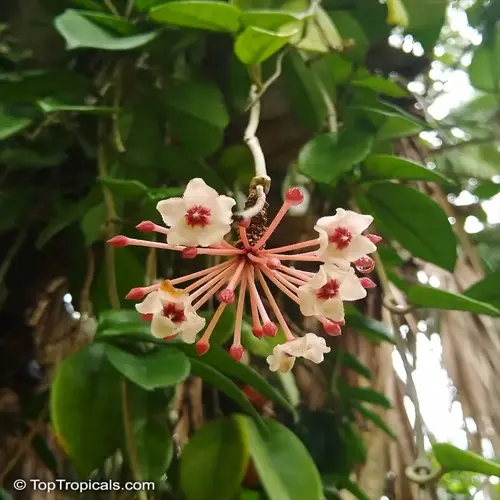

The hoya hang or climb debate has an easy answer: hoyas do both. In the wild they climb tree trunks using aerial roots, but indoors they adapt to hanging baskets or climbing supports with equal enthusiasm. Your choice depends on the species you own and the look you want in your space.
I've tested both setups with several hoya species over the years. My Hoya compacta with its curly rope-like leaves looks stunning trailing from a hoya hanging basket mounted on a high shelf. The cascading vines create a living curtain that catches every visitor's eye. But my Hoya australis told a different story. It grew leggy and tangled in a hanging pot until I gave it a bamboo hoya trellis to climb. Within weeks it grabbed on with its aerial roots and started growing upward with new purpose.
The biology explains why both methods work. Hoyas are epiphytes that start life on the forest floor and climb tree trunks toward the canopy light above. They develop aerial roots along their stems that grip bark and absorb moisture from the humid air. When you give a hoya a support to climb, you trigger this natural growth pattern. When you let it hang, the vines still grow long and healthy because the plant adapts its energy toward trailing instead of climbing.
University of Florida says hoyas do great in hanging baskets where the vines twine around each other. This works well for many species and gives you a low-fuss display. The vines wrap and weave over time, forming a thick cascade of foliage that needs almost no help from you. I tested this with my Hoya carnosa and it filled out a basket in about eight months without me training a single vine. A hoya hanging basket near a bright window makes one of the best indoor displays you can set up.
Climbing setups deserve attention too. A hoya trellis gives vigorous species room to spread upward, and the vertical display can fill a bare wall with green. Moss poles work great because they hold moisture that aerial roots love. Bamboo frames, small wooden trellises, and even tension wire grids all serve as good climbing supports. Joy Us Garden suggests getting creative with trellis shapes to turn your hoya into living wall art.
Hoya Compacta for Hanging
- Growth habit: Twisted rope-like leaves form thick cascading strands that look best when gravity pulls them downward.
- Display tip: Hang at eye level or higher so the curling vines create a dramatic waterfall effect from a shelf or macrame holder.
- Maintenance: Grows slow enough that you won't need to prune or train it for months at a time.
Hoya Australis for Climbing
- Growth speed: One of the fastest growers that can add several feet of new vine in a single growing season.
- Support needs: Thrives on moss poles, bamboo frames, or any vertical structure where it can grip with aerial roots.
- Training tip: Gently wrap new growth around the support every few weeks until the aerial roots grab hold on their own.
Hoya Carnosa for Either Style
- Flexibility: This popular species adapts to both hanging and climbing displays without missing a beat.
- Hanging look: Creates long trailing vines with thick waxy leaves that fill out a basket over time.
- Climbing look: Wraps around a trellis or moss pole and grows a dense upright column of green foliage.
The container you choose matters for each display style. Hanging baskets should be lightweight with good drainage so water doesn't pool. Climbing setups need a heavier pot at the base to anchor the trellis and prevent tipping as the plant grows taller. Either way, make sure the pot has drainage holes to keep roots healthy.
Pick the display that fits your space and your hoya species. Compact slow growers look best hanging. Vigorous fast growers shine on a trellis. And versatile species like Hoya carnosa let you experiment until you find what works. Your hoya will thrive either way as long as you give it the right light, water, and soil.
Read the full article: Hoya Plant Care and Growing Guide