
Introduction
Creeping phlox gets its name from the Greek word for flame. That name fits when you see a whole hillside covered in its spring blooming flowers. Native Americans called April's full moon the Full Pink Moon after wild Phlox subulata. It was one of the first flowers to carpet the ground each year.
I started growing moss phlox about 8 years ago when a bare slope in my yard kept washing away. One flat of plants changed that slope from an eyesore into the best part of my garden. It paints a slope with color the way an artist fills a canvas. The best part is that it comes back stronger every year on its own.
Most gardeners don't know that this perennial ground cover resists powdery mildew while most other phlox species struggle with it. NC State Extension data shows it is native to 27 U.S. states and 5 Canadian provinces. It grows just 4 to 6 inches tall and spreads 2 to 3 feet wide. It handles drought, deer, salt, and even pollution.
This guide covers how to pick the right variety and fix common problems. You will learn expert planting tips and care schedules backed by real university research. You will also find design ideas that help your garden thrive for years.
8 Best Creeping Phlox Varieties
Not all creeping phlox varieties perform the same in your garden. Mt. Cuba Center tested over 140 phlox varieties across 3 years. They worked with the University of Delaware to rate each one for looks and disease resistance. The results showed big gaps between the best phlox cultivars and the rest.
I've grown Emerald Blue and Candy Stripe side by side for 5 years and the differences are real. You will see pinks, reds, whites, and bicolors below grouped by creeping phlox colors for quick browsing. Fort Hill and Scarlet Flame even add sweet fragrance that most gardeners don't expect from a ground cover.
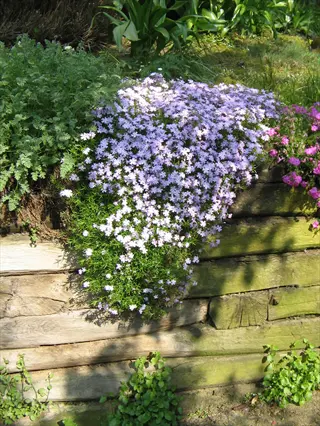
Emerald Blue
- Color: Produces lavender-blue flowers that create a striking carpet of cool-toned color across rock gardens and borders from mid to late spring.
- Growth: Reaches 4 to 6 inches (10 to 15 centimeters) tall and spreads up to 2 feet (60 centimeters) wide with dense needle-like emerald green foliage year-round.
- Hardiness: Thrives in USDA zones 3 through 9, tolerating winter temperatures down to minus 4 degrees Fahrenheit (minus 20 degrees Celsius) without damage.
- Best Use: Ideal for cascading over rock walls, filling gaps between stepping stones, and creating mass plantings on gentle slopes for erosion control.
- Soil Needs: Performs best in well-drained sandy or loamy soil with a pH range of 5.7 to 7.5, and tolerates poor rocky soil once established.
- Pollinator Value: Provides early-season nectar for butterflies and moths, which are the primary pollinators capable of reaching phlox flower tubes.
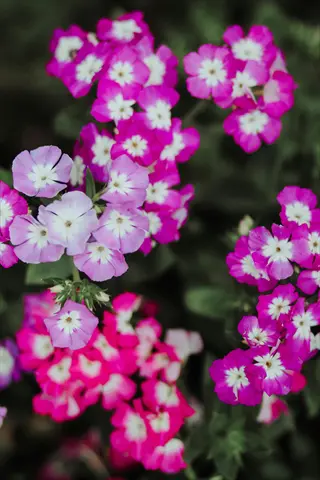
Candy Stripe
- Color: Features white petals with striking pink stripes that create a bicolor candy-cane effect, adding playful contrast to spring garden displays.
- Growth: Forms a tight mat 4 to 6 inches (10 to 15 centimeters) tall with semi-evergreen foliage that stays attractive through mild winters.
- Hardiness: Grows reliably in USDA zones 3 through 9 and handles drought, salt exposure, and poor soil conditions without losing vigor.
- Best Use: Works beautifully as a border edging plant or cascading over low walls where the bicolor pattern catches the eye from a distance.
- Soil Needs: Requires well-drained soil and will not tolerate standing water; amend clay soil with coarse sand or perlite before planting.
- Maintenance: Shear back by half after flowering to maintain compact form and prevent the woody bare centers that develop in older untrimmed plants.
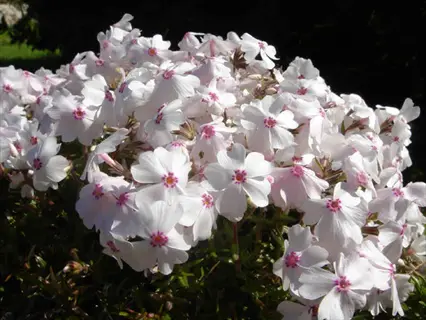
Amazing Grace
- Color: Displays pure white flowers with a soft lilac-pink eye at the center, offering an elegant and refined look in cottage garden settings.
- Growth: Spreads steadily to form a dense low mat that roots at the stem nodes, covering roughly 2 feet (60 centimeters) in two growing seasons.
- Hardiness: Performs well in USDA zones 3 through 9, maintaining semi-evergreen foliage even through harsh northern winters with minimal browning.
- Best Use: Pairs well with darker-flowered varieties like Fort Hill or Scarlet Flame for high-contrast mass plantings on slopes and garden edges.
- Soil Needs: Prefers slightly acidic to neutral soil with a pH of 5.7 to 7.5 and excellent drainage to prevent phytophthora root rot.
- Special Feature: The lilac eye deepens in color during cooler spring temperatures, making early blooms especially vivid in northern climates.
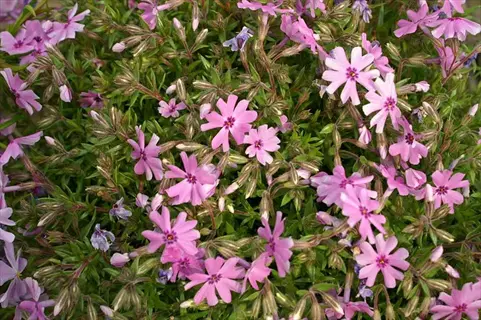
Fort Hill
- Color: Produces deep rose-pink flowers with a darker pink eye that create a warm and vibrant carpet during the peak spring blooming season.
- Growth: Develops a dense spreading mat 4 to 6 inches (10 to 15 centimeters) tall with dark green needle-like foliage that stays through winter.
- Hardiness: Tolerates conditions from USDA zone 3 through 9 with strong resistance to drought, deer browsing, and air pollution in urban areas.
- Best Use: Excellent for mass planting on sunny hillsides where its deep pink color creates dramatic sweeping drifts visible from a considerable distance.
- Fragrance: One of the few creeping phlox cultivars with a noticeable sweet fragrance, attracting both pollinators and gardeners who appreciate scent.
- Maintenance: Responds well to post-bloom shearing with garden clippers or even a mower set at a high level, a technique unique to Phlox subulata.
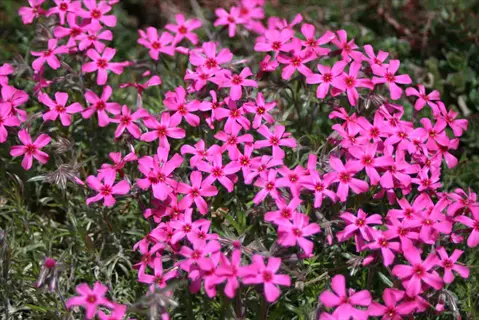
Scarlet Flame
- Color: Blazes with vivid scarlet-red flowers that stand out boldly against the green foliage, offering the most intense warm color among common cultivars.
- Growth: Reaches 4 to 6 inches (10 to 15 centimeters) in height and spreads about 2 feet (60 centimeters) wide with a medium growth rate.
- Hardiness: Reliable in USDA zones 3 through 8, preferring cooler summer nights for best color intensity and longer bloom duration.
- Best Use: Creates a striking focal point when planted alongside white varieties like Amazing Grace or Snowflake for dramatic color contrast in borders.
- Fragrance: Offers a mild sweet fragrance similar to Fort Hill, adding sensory appeal beyond the visual display of bright scarlet blooms.
- Care Tip: Benefits from afternoon shade in the hottest zones to prevent petal fading, and needs excellent drainage to avoid root rot issues.
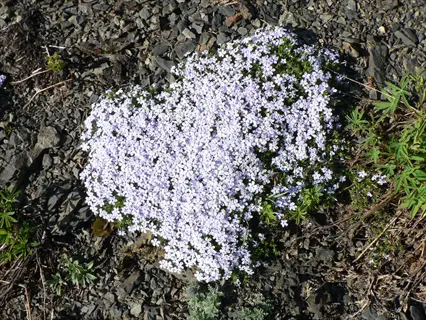
Snowflake
- Color: Bears pure white flowers without any contrasting eye, creating a clean bright carpet that reflects moonlight beautifully in evening gardens.
- Growth: Forms a vigorous spreading mat that can reach 2 to 3 feet (60 to 90 centimeters) wide, making it one of the faster-spreading cultivars.
- Hardiness: Grows in USDA zones 3 through 9 with strong tolerance for cold, drought, and the salt spray common in coastal garden environments.
- Best Use: Works perfectly for brightening shady edges of sunny gardens, lining pathways, or creating a luminous border against dark mulch or stone.
- Companion Planting: Pairs beautifully with spring bulbs like grape hyacinth and daffodils, blooming at the same time for layered garden color.
- Maintenance: Shear after flowering to prevent the center from thinning out and to encourage dense fresh green growth that lasts through summer.
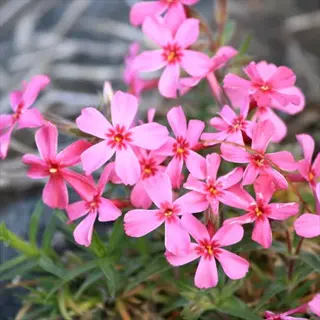
Red Wing
- Color: Shows crimson-red flowers with a darker center eye that creates depth and richness uncommon among the typical pastel creeping phlox palette.
- Growth: Develops a low dense mat reaching 4 to 6 inches (10 to 15 centimeters) tall with a moderate spreading habit across well-drained soil.
- Hardiness: Performs reliably in USDA zones 3 through 9, with the deep red color holding better in cooler climates than in extreme southern heat.
- Best Use: Ideal for rock gardens and alpine-style plantings where its compact form and rich color complement stone textures and gravel pathways.
- Content Gap: Red Wing is rarely featured in online guides despite being widely available at nurseries, giving gardeners an underappreciated option for bold color.
- Care Tip: Like all creeping phlox, ensure excellent soil drainage and avoid overhead watering to reduce risk of phytophthora root rot in humid climates.
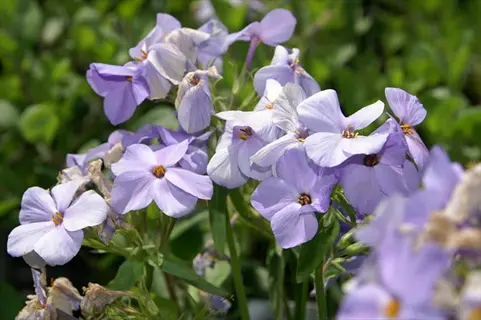
Blue Ridge (Phlox stolonifera)
- Species Note: Blue Ridge belongs to Phlox stolonifera, a shade-loving species also called creeping phlox, which spreads by stolons rather than forming mats.
- Color: Produces lavender-blue flowers on taller stems reaching 8 to 12 inches (20 to 30 centimeters), with rounder oval leaves instead of needle-like foliage.
- Hardiness: Hardy in USDA zones 5 through 9, less cold-tolerant than Phlox subulata but better suited for shaded woodland and north-facing garden spots.
- Best Use: Perfect for shady areas under deciduous trees where Phlox subulata would struggle, filling the gap for gardeners with limited sunny space.
- Key Difference: Unlike sun-loving Phlox subulata, Blue Ridge prefers partial to full shade with humus-rich moist soil, making it a true shade ground cover.
- Why It Matters: Many gardeners buy Blue Ridge expecting it to behave like moss phlox, so knowing this species distinction prevents planting failures in sunny spots.
Planting and Soil Preparation
Good soil preparation makes or breaks your creeping phlox before it even starts growing. I've lost plants to root rot because I skipped the drainage step on a clay bed. That mistake taught me to test my soil first every single time. You need well-drained soil with a pH between 5.7 and 7.5 for the best results.
Start your soil preparation by loosening the ground 12 to 15 inches deep with a garden fork. Mix in a 2 to 4 inch layer of compost to boost drainage. If you have clay soil, add coarse sand or perlite to stop water from pooling around the roots. Phytophthora root rot kills more creeping phlox than any other problem, and poor drainage is the cause.
You can learn how to plant creeping phlox at two ideal times each year. Spring planting from March through May lets you buy plants in bloom so you can confirm the exact flower color before you commit. Fall planting in September or October gives roots time to settle before winter hits.
Set your planting spacing at 15 to 18 inches apart for full coverage within two growing seasons. Dig each hole just as deep as the root ball and twice as wide. Water each plant well right after you put it in the ground. Creeping phlox grows wild in rocky crevices and sandy sites across North America. You don't need perfect soil for this tough plant.
Pick a spot with at least 6 hours of direct sun for the strongest blooms. Light shade works but you will get fewer flowers. I've tested both spring planting and fall planting on the same slope and found that fall transplants often take hold faster. They spend the cool months building roots instead of pushing blooms.
Seasonal Care and Maintenance
Creeping phlox care takes very little effort once your plants settle in. I spend maybe 30 minutes per season on my entire slope planting and it looks great all year. The trick is knowing what to do and when rather than doing too much. This is a true low maintenance ground cover that rewards a light touch.
Pruning creeping phlox is the single most important task on your list. You should cut back after flowering by shearing stems to half their length with garden clippers. Penn State Extension confirms you can even use a mower set high, which saves time on large plantings. This shearing step can trigger a second flush of blooms later in the season.
Watering creeping phlox is simple once the roots take hold. Give new plants about an inch of water each week during the first growing season. After that first year, you only need to deep water every 10 to 14 days during dry summer spells. Skip the overhead sprinkler and water at the base to keep the foliage dry.
Go easy on fertilizer with this plant. A thin layer of compost each spring gives your creeping phlox all the food it needs. Too much fertilizer pushes soft growth that attracts pests and disease. I stopped feeding mine years ago and they bloom just as strong as ever.
Divide your mats every 3 to 4 years to keep them thick and healthy. Older plantings thin out as growth moves away from the center. A quick division in fall fixes this fast and gives you free plants for other spots in your garden.
Propagation Methods
Creeping phlox propagation lets you turn one plant into dozens for free. NC State Extension lists division, stem cuttings, and root cuttings as the main methods. I've tried all of them and division wins every time for speed and ease. Growing from seed works too but it takes 2 to 3 years before you see your first blooms.
Pick the method that fits your timeline and skill level. Division gives you blooming plants the same year while stem cuttings need a full season to mature. Root cuttings fall in between but work best when you can't get good stem material. The comparison below breaks down each option so you can choose with confidence.
Division in Spring or Fall
- Best Time: Divide established clumps in early spring before new growth begins or in early fall at least four weeks before the first expected frost date.
- How To: Lift the entire mat with a garden fork, separate into sections with roots and stems attached, and replant at the same soil depth immediately.
- Success Rate: Division is the most reliable method with near-certain success because each section already has an established root system ready to grow.
Stem Cuttings in Summer
- Best Time: Take 4 to 6 inch (10 to 15 centimeter) stem cuttings from healthy non-flowering shoots in late spring through early summer for best rooting results.
- How To: Dip cut ends in rooting hormone, insert into moist perlite or sandy potting mix, cover with a humidity dome, and keep in bright indirect light.
- Success Rate: Stem cuttings root within two to four weeks and typically produce blooming-size plants by the following spring with proper overwintering care.
Root Cuttings in Late Fall
- Best Time: Take root cuttings in late fall or early winter when the plant is dormant, using pencil-thick root sections about 2 inches (5 centimeters) long.
- How To: Place root sections horizontally in moist potting mix just below the surface, keep cool but frost-free, and wait for new shoots to emerge.
- Success Rate: Root cuttings are less commonly used but effective for producing genetically identical plants when stem material is unavailable during dormancy.
Growing from Seed
- Best Time: Sow seeds indoors in late winter or use the winter sowing method outdoors in containers exposed to natural cold stratification cycles.
- How To: Scatter seeds on moist seed-starting mix, press lightly without covering, provide light for germination, and expect sprouts in one to two weeks.
- Success Rate: Seeds germinate readily but plants take two to three years to reach blooming size, making this the slowest method best suited for patient gardeners.
I fill bare spots in my garden beds by dividing one thick mat into 6 or 7 pieces each fall. Every piece takes root and fills in by the next spring. It's the fastest free way to spread creeping phlox across your yard.
Landscape Uses and Design Ideas
Creeping phlox fits into more garden designs than most people expect. NC State Extension confirms it resists erosion, fire, salt, and air pollution. It's also safe around dogs, cats, and horses. That makes it one of the most flexible ground covers you can plant in any yard.
I use it in 4 different spots across my property and each one serves a different purpose. My creeping phlox rock garden steals the show each spring while the slope planting handles erosion control without any help. The border edging along my front walk softens the hard lines. I even tried container growing on my deck and it works great with at least 6 hours of sun.
One thing most guides skip is that creeping phlox tolerates juglone from black walnut trees. If you have walnuts in your yard, you know how hard it is to find plants that survive near them. This tough ground cover handles that toxic soil with no trouble at all. It also fits well in xeriscape designs and pollinator garden layouts.
Rock Gardens and Stone Walls
- Placement: Tuck plants into crevices between rocks or along the top edge of stone retaining walls so the flowering mat cascades downward like a colorful waterfall.
- Companions: Pair with sedums, hens-and-chicks, and dianthus for a low-water rock garden that blooms from early spring through fall with minimal maintenance.
- Benefit: The dense root system grips rocky terrain naturally, reflecting how creeping phlox grows wild on ledges and rocky slopes across eastern North America.
Slopes and Erosion Control
- Placement: Plant in staggered rows across sunny slopes spaced 15 to 18 inches (38 to 46 centimeters) apart so mats knit together within two growing seasons.
- Companions: Combine with ornamental grasses and daylilies for year-round root coverage that holds soil even during heavy rainfall on moderate inclines.
- Benefit: NC State Extension confirms creeping phlox resists erosion, and the mat-forming habit creates a living mulch that protects exposed hillside soil.
Pollinator and Butterfly Gardens
- Placement: Use as a front-of-border ground layer in pollinator gardens so early-season nectar is accessible to butterflies and moths emerging in spring.
- Companions: Follow with summer bloomers like coneflower, bee balm, and black-eyed Susan to create continuous nectar availability from spring through fall frost.
- Benefit: Mt. Cuba Center research found phlox are obligate-pollinator plants, with only butterflies and moths able to reach nectar through the narrow flower tubes.
Borders, Pathways, and Containers
- Placement: Line walkways and garden bed edges with creeping phlox so the spreading mat softens hard edges and spills gently over borders for a cottage garden feel.
- Companions: Grow alongside creeping thyme and low sedums for a fragrant walkway border that handles light foot traffic and tolerates reflected heat from stone paths.
- Benefit: Creeping phlox grows well in containers and hanging baskets too, making it suitable for patios, balconies, and small spaces with at least six hours of sun.
Pests, Diseases, and Solutions
Most guides warn you about powdery mildew on creeping phlox but that advice is wrong. This species resists powdery mildew per NC State Extension data. The real creeping phlox diseases you need to watch are phytophthora root rot and southern blight. I lost a whole section of my rock garden to root rot before I figured this out.
Creeping phlox pests are a short list compared to other garden plants. Spider mites show up during hot dry weather and leave tiny yellow dots on your leaves. The plant is deer resistant, which is a huge win for rural gardeners. Penn State Extension notes that rabbit damage is a bigger threat than deer, so protect new plantings with low wire mesh if rabbits visit your yard.
The best defense against all these problems is good drainage and air flow. Water at the base of plants and keep mulch away from the stems. Catch issues early and remove affected sections before they spread to healthy parts of your mat.
5 Common Myths
Creeping phlox is highly susceptible to powdery mildew like other phlox species and needs frequent fungicide treatment to survive.
Phlox subulata is actually resistant to powdery mildew unlike most other phlox species according to NC State Extension research data.
Creeping phlox is an invasive ground cover that will take over your entire garden and smother neighboring plants aggressively.
Creeping phlox spreads at a moderate rate and stays just 4 to 6 inches (10 to 15 centimeters) tall, making it easy to manage with annual trimming.
Creeping phlox needs rich moist soil with frequent watering and heavy fertilization to produce a good display of flowers.
Creeping phlox is drought tolerant once established and actually prefers poor to average well-drained soil with minimal fertilizer needs.
Creeping phlox dies completely in winter and you need to replant it every spring for ground cover in cold climates.
Creeping phlox is a hardy perennial surviving to minus 4 degrees Fahrenheit (minus 20 degrees Celsius) with semi-evergreen foliage that persists through winter.
Deer constantly eat creeping phlox so it is not worth planting in areas with heavy deer populations in rural gardens.
NC State Extension confirms creeping phlox is deer resistant, though Penn State notes rabbits pose a greater threat than deer to phlox plants.
Conclusion
Creeping phlox earns its place as one of the best ground cover plants you can grow in your yard. This native perennial survives in USDA zones 3 through 9 and shrugs off drought, deer, salt, and poor soil. It feeds butterflies and moths as an obligate pollinator plant when few other flowers bloom in early spring.
The biggest lesson I've learned from years of growing this plant is that drainage matters more than soil quality. Rich soil and extra water cause more harm than good. Phytophthora root rot is the real threat, not powdery mildew. Get the drainage right and your creeping phlox will reward you for many years.
Think about your garden in layers that bloom through each season. Creeping phlox anchors the early spring window when most gardens sit bare and brown. Follow it with summer bloomers in your pollinator garden and you get nectar for bees and butterflies from March through frost.
With over 140 varieties tested by Mt. Cuba Center, there is a low maintenance creeping phlox for every sunny spot you have. Pick a color you love, give it good drainage and full sun, and watch it spread into a carpet of blooms each spring. Your garden will thank you for adding this tough and stunning native plant.
External Sources
Frequently Asked Questions
What are the downsides of creeping phlox?
Creeping phlox can develop bare woody centers after several years, requires well-drained soil to avoid root rot, and offers a relatively short bloom window of two to four weeks in spring.
Does creeping phlox like sun or shade?
Creeping phlox performs best in full sun with at least six hours of direct light daily, though it tolerates light partial shade with reduced flowering.
Does creeping phlox spread fast?
Creeping phlox spreads at a moderate rate, covering two to three feet wide over about two years as stems root at the nodes.
What does creeping phlox look like in winter?
Creeping phlox is semi-evergreen, keeping low needle-like foliage that may bronze or thin in colder zones but stays green in mild climates.
What is the problem with phlox?
The biggest problems with phlox are powdery mildew in tall species, spider mites in hot dry conditions, and phytophthora root rot in poorly drained soil.
Will creeping phlox come back every year?
Yes, creeping phlox is a hardy perennial that returns every year in USDA zones 3 through 9, surviving temperatures as low as minus 4 degrees Fahrenheit.
Will creeping phlox choke out weeds?
Mature creeping phlox forms dense mats that suppress many weeds, but it cannot fully eliminate aggressive perennial weeds already established.
Can you plant creeping phlox in October?
Yes, you can plant creeping phlox in October in most zones as long as the ground is workable and plants have at least four weeks before the first hard frost.
How aggressive is creeping phlox?
Creeping phlox is not aggressive or invasive; it spreads steadily by rooting at stem nodes but stays low and is easy to control with trimming.
What are the benefits of creeping phlox?
Benefits include erosion control, weed suppression, pollinator support, deer and drought resistance, and a vibrant spring color display.