
Introduction
Picture a rocky slope covered in a thick mat of silvery blue foliage that stays green all year. That's creeping juniper doing what it does best. The USDA Forest Service calls this shrub a stabilizing pioneer on sandy sites. It's the first plant to colonize bare, eroding ground in the Saskatchewan grasslands.
I've grown Juniperus horizontalis in my own yard for over 8 years now. This native North American plant isn't just another evergreen ground cover you toss into a bare spot. Individual plants can live 20 to 140 years based on USDA studies in central Montana. The average shrub age there came in at 56.7 years. That kind of staying power makes it a smart long term pick for your yard.
Most guides treat creeping juniper as a simple ground cover and stop right there. This guide goes much further. You'll learn how to grow new plants through layering, which copies how the species spreads in the wild. You'll get a seasonal care calendar so you know what to do each month. And you'll find out why over 14 bird species need juniper berries when other food runs dry.
You can pick from over 60 cultivars with colors from silver blue to bright gold. Creeping juniper grows well across USDA zones 3 through 9. It's drought tolerant, deer resistant, and serves as real wildlife habitat. Let's get into what makes this native species so useful and how you can grow it the right way.
8 Best Creeping Juniper Varieties
Picking the right creeping juniper cultivars can feel tough when you have over 60 options in the trade. I've grown 5 of these creeping juniper varieties in my own garden and tested them through harsh winters and dry summers. Each one handles conditions a bit different, so matching the right plant to your yard matters more than most people think.
The 8 best creeping juniper varieties below cover a range of sizes, colors, and growth habits. Blue rug juniper spreads like a silver blue carpet. Bar Harbor juniper turns plum purple in winter. Icee Blue juniper hugs the ground at just 3 inches tall. And Andorra juniper fills in large slopes fast. Use this list to find the perfect match for your zone and landscape goals.
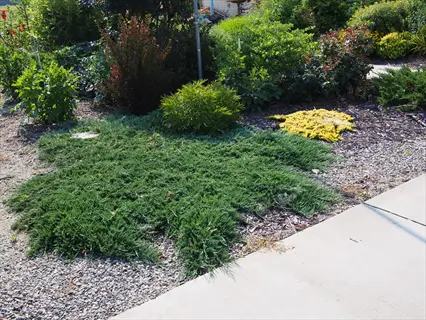
Blue Rug (Wiltonii)
- Height and Spread: Grows just 4 to 6 inches (10 to 15 centimeters) tall and spreads 6 to 8 feet (1.8 to 2.4 meters) wide, forming a dense silver-blue carpet.
- Foliage Color: Intense silver-blue foliage year-round that develops a slight purplish tint during cold winter months in northern zones.
- Hardiness Zones: Thrives in USDA zones 3 through 9, making it one of the most versatile creeping juniper cultivars you can find.
- Best Use: Ideal for large open slopes, draping over retaining walls, and covering ground where a flat uniform mat is desired.
- Growth Rate: Among the fastest spreading cultivars, reaching mature spread in about 5 to 8 years with full sun and well-drained soil.
- Maintenance Notes: Super low maintenance once established. Prune only to control spread direction or remove any dead branches in early spring.
Bar Harbor
- Height and Spread: Reaches 6 to 12 inches (15 to 30 centimeters) tall and spreads 6 to 8 feet (1.8 to 2.4 meters) wide in a low-hugging mat.
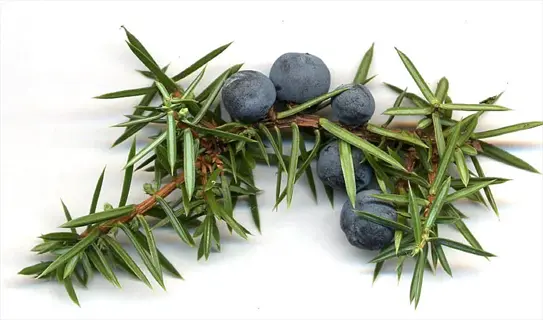
- Foliage Color: Blue-green foliage in summer that transforms to a striking plum-purple color during winter, adding seasonal interest to the landscape.
- Hardiness Zones: Hardy in USDA zones 3 through 9, first collected from the coast of Maine where it handles salt spray and harsh winds.
- Best Use: Perfect for coastal landscapes, rocky slopes, and areas with salt exposure where other ground covers fail to survive.
- Growth Rate: Moderate spreading rate with a natural trailing habit that follows the contours of slopes and rocky terrain with grace.
- Maintenance Notes: Tolerates poor sandy soil and drought with ease. Minimal pruning needed beyond occasional shaping of wayward branches.
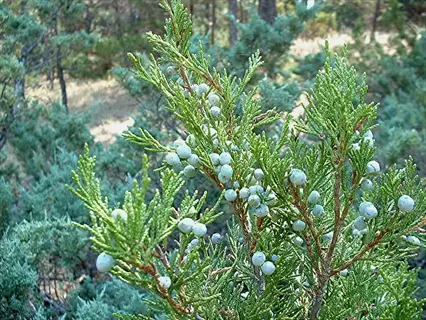
Lime Glow
- Height and Spread: Grows 12 to 18 inches (30 to 46 centimeters) tall and spreads 4 to 6 feet (1.2 to 1.8 meters) wide in a mounding form.
- Foliage Color: Bright chartreuse-yellow new growth that matures to lime green, providing a bold color contrast against blue and green plantings.
- Hardiness Zones: Performs well in USDA zones 4 through 9, tolerating cold winters while maintaining its vibrant foliage color through the seasons.
- Best Use: Excellent as a color accent in rock gardens, mixed borders, or planted alongside blue-foliage junipers for dramatic visual contrast.
- Growth Rate: Moderate growth rate with a more compact habit than trailing varieties, making it easier to contain in smaller garden spaces.
- Maintenance Notes: Benefits from occasional pruning to maintain its mounding shape. Avoid heavy shade which causes the golden color to fade to plain green.
Icee Blue (Monber)
- Height and Spread: Ultra-low profile at just 3 to 4 inches (8 to 10 centimeters) tall, spreading 6 to 8 feet (1.8 to 2.4 meters) for maximum ground coverage.
- Foliage Color: Striking icy silver-blue foliage that holds its intense color throughout the year, even during winter months in cold regions.
- Hardiness Zones: Hardy in USDA zones 3 through 9, recommended by Clemson Extension for southeastern landscapes with heat and humidity.
- Best Use: Outstanding for flat areas where the lowest possible profile is desired, as well as cascading over walls and raised bed edges.
- Growth Rate: Steady spreader that forms a very tight mat, making it one of the best cultivars for suppressing weeds once fully established.
- Maintenance Notes: Requires excellent drainage as its tight mat can trap moisture. Space plants 6 to 8 feet apart for full coverage within a few years.
Andorra (Plumosa)
- Height and Spread: Grows 18 to 24 inches (46 to 61 centimeters) tall and spreads 6 to 10 feet (1.8 to 3 meters) wide with a feathery arching habit.
- Foliage Color: Gray-green summer foliage that turns a rich reddish-purple in fall and winter, offering year-round ornamental value to landscapes.
- Hardiness Zones: Thrives in USDA zones 3 through 9 and handles heat well, making it versatile across a wide range of North American climates.
- Best Use: Works well on larger slopes and embankments where its taller profile and arching branches provide substantial erosion control coverage.
- Growth Rate: Vigorous grower that fills in faster than many lower-profile cultivars, reaching mature spread in about 5 to 7 years.
- Maintenance Notes: The taller growth may require light pruning to keep a tidy appearance. Compact Andorra (Plumosa Compacta) offers a denser, shorter alternative.
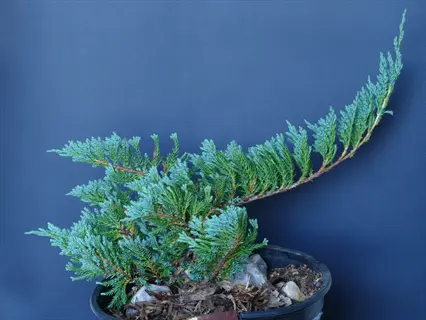
Blue Chip
- Height and Spread: Compact grower reaching 8 to 10 inches (20 to 25 centimeters) tall and spreading 4 to 6 feet (1.2 to 1.8 meters) wide.
- Foliage Color: Bright blue foliage that intensifies in summer and takes on a slight purple cast during winter months for seasonal color change.
- Hardiness Zones: Hardy in USDA zones 3 through 9, documented by NC State Extension as one of the more refined compact creeping juniper selections.
- Best Use: Ideal for smaller gardens, rock gardens, and foundation plantings where a contained spreading juniper with vivid blue color is wanted.
- Growth Rate: Slow to moderate growth creates a neat, uniform appearance without requiring frequent pruning to control its compact spreading habit.
- Maintenance Notes: Good disease resistance when planted in full sun with adequate air circulation. Avoid crowding with other plants to prevent moisture buildup.
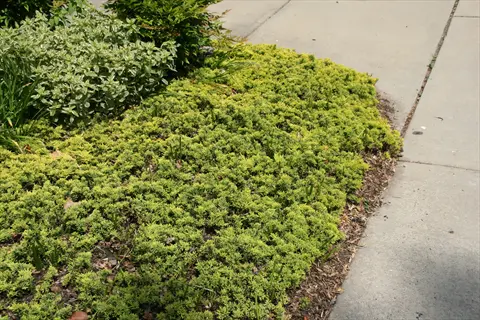
Mother Lode
- Height and Spread: Low-growing at 3 to 4 inches (8 to 10 centimeters) tall and spreading 4 to 6 feet (1.2 to 1.8 meters) wide in a tight golden mat.
- Foliage Color: Golden-yellow foliage that glows brightest in full sun, turning deep bronze-orange in winter for striking year-round color variation.
- Hardiness Zones: Performs well in USDA zones 4 through 9, selected as a golden sport of Blue Rug with the same excellent spreading growth habit.
- Best Use: Perfect as a bright accent plant in rock gardens, mixed borders, or mass planted for a golden ground cover carpet effect.
- Growth Rate: Similar spreading rate to Blue Rug but a bit less vigorous, reaching mature coverage in about 6 to 9 years in ideal conditions.
- Maintenance Notes: Full sun is essential to maintain the golden foliage color. Any shade will cause the foliage to revert toward green, reducing visual impact.
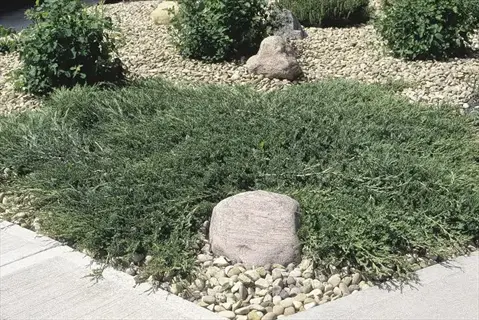
Hughes
- Height and Spread: Grows 12 to 18 inches (30 to 46 centimeters) tall and spreads 6 to 8 feet (1.8 to 2.4 meters) wide with a radial branching pattern.
- Foliage Color: Silvery blue-green foliage that holds its color well through all seasons without the dramatic winter color change seen in other cultivars.
- Hardiness Zones: Hardy in USDA zones 4 through 9, valued for consistent performance across a range of soil types including clay if drainage is adequate.
- Best Use: Excellent general-purpose ground cover for medium to large areas, highway median plantings, and commercial landscapes needing reliable coverage.
- Growth Rate: Moderate to fast spreader that establishes well in challenging conditions including urban environments with pollution and reflected heat.
- Maintenance Notes: Virginia Tech Extension notes its adaptability to clay soils if well drained. Prune in early spring to maintain shape and remove winter-damaged tips.
Your best bet is to pick a cultivar based on your specific growing zone and the look you want in your yard. Short spreaders like Blue Rug and Icee Blue work great for flat areas, while taller picks like Andorra handle slopes with ease.
How to Plant Creeping Juniper
Knowing how to plant creeping juniper the right way saves you from the biggest killer of this species: root rot. I've lost 3 plants over the years to soggy soil before I figured out that drainage matters more than anything else at planting time. Get this step right and your juniper will reward you with decades of trouble free growth.
The best time for when to plant creeping juniper is spring or early fall. Both windows give roots time to settle in before extreme heat or cold hits. Plant 6 weeks before your first frost if you go with fall planting. Spring planting works best after your last frost date passes and the soil warms up enough to dig.
Creeping juniper needs well-drained soil above all else. In its native habitat, the soil contains 57.5 to 72.4% sand based on USDA studies. If you have sandy soil, you're in luck because you won't need much work at all. For clay soil, mix in coarse sand or perlite at a 1:1 ratio with your native dirt to boost drainage. The soil pH can range from acid below 6.0 to neutral up to 8.0, so most garden soils work fine.
Dig your planting hole twice as wide as the root ball but no deeper. Set the plant so the top of the root ball sits level with the ground surface. Backfill with your native soil or your amended mix and water deep to settle things in. In my experience, you should skip the fertilizer at planting time because these tough plants don't need it right away.
Creeping juniper spacing plays a big role in how fast you get full coverage. NC State and Clemson both suggest 6 to 12 feet apart for standard plantings. If you space at 6 feet, you'll get a solid mat in about 3 to 5 years. Space at 12 feet and you're looking at 7 to 10 years for full coverage. Closer spacing also helps with weed control during those first years when the plants haven't filled in yet.
Water your new plants once a week for the first growing season. After that first year, you can back off to watering only during long dry spells. Overwatering is the fastest way to kill creeping juniper in your garden, so let the soil dry out between drinks.
I tested both spring and fall planting in my own yard over several years. Fall plantings took off faster the next spring because their roots had extra time to establish before the growth season kicked in. Either window works, but fall gives you a slight head start if your timing lines up.
Seasonal Care Calendar
Creeping juniper care changes with each season, and knowing what to do at the right time keeps your plants healthy for decades. I put together this seasonal care guide based on USDA growth data and my own hands on experience. Twig growth starts in early April, peaks in June and July, and slows down by October.
One honest truth about creeping juniper care: weed control is your main job during the first few years. Virginia Tech professor Alex Niemiera points out that short plant height makes weed seeds sprout fast in young plantings. Once your juniper fills in, this problem fades. The table below breaks down what you need to do each season so you never miss a key task.
Pruning creeping juniper takes just a few minutes each spring. Cut back any dead or brown branch tips before new growth starts in April. You don't need to shape these plants much because their natural spreading form looks great on its own. I only prune mine to steer branches away from walkways or garden borders.
Winter care creeping juniper owners need is minimal at best. I freaked out the first winter when I saw my Blue Rug turn purplish bronze in the cold. This color shift is 100% normal and not a sign of disease at all. Your juniper will bounce right back to its green or blue tones once spring warmth returns. The only winter task worth doing is brushing heavy snow off branches to prevent breakage. Watering creeping juniper in winter is almost never needed since the plant goes dormant. This low maintenance schedule makes it one of the simplest plants you can grow.
Propagation Methods
Creeping juniper propagation is easier than most people think when you pick the right method. I've tried all 3 approaches over the years. Creeping juniper layering works best for home gardeners. The USDA Forest Service confirms that this species reproduces in the wild through layering, not seeds. In fact, seed germination rates sit at a tiny 0.1% in lab studies, so don't waste your time with seeds.
Creeping juniper cuttings work well too if you use rooting hormone and stay patient through the process. Transplanting juniper from nursery pots gives you the fastest results of all. The guide below walks you through each method so you can pick the one that fits your timeline and skill level.
Stem Layering (Easiest Method)
- How It Works: Creeping juniper naturally roots where branches contact moist soil, and you can encourage this by pinning a healthy branch to the ground with a landscape staple or small stone.
- Success Rate: This mirrors the species' primary natural reproduction method. The USDA Forest Service documents that young plants from vegetative origin are far more common than seedlings in the wild.
- Timeline: Expect roots to form at the contact point within 3 to 6 months during the growing season. Sever the rooted section from the parent plant the following spring.
- Best Tip: Choose a flexible branch from the current or previous year's growth and scratch the bark on the underside where it contacts the soil to speed up rooting.
Stem Cuttings (Moderate Difficulty)
- How It Works: Take 4 to 6 inch (10 to 15 centimeter) cuttings from healthy semi-hardwood growth in late summer or early fall and dip the cut end in rooting hormone before planting.
- Success Rate: Moderate success with proper rooting hormone application. Cuttings take longer to establish than layered sections but allow you to produce many new plants at once.
- Timeline: Cuttings root in 6 to 12 weeks when kept in moist, well drained media under indirect light. Transplant to the garden the following spring after hardening off.
- Best Tip: Use a mix of perlite and peat moss as the rooting medium and keep humidity high by covering the container with a clear plastic dome or bag during the rooting period.
Seed (Not Recommended)
- How It Works: Collect ripe berries in fall and extract seeds, then provide about 100 days of cold stratification at 41°F (5°C) before sowing.
- Success Rate: A USDA Forest Service study found that only 9 of 9,500 seeds sprouted, a seed germination rate of just 0.1%, making this method impractical for home gardeners.
- Timeline: Even with stratification, germination can take 1 to 3 years. Young seedlings grow very slow and may take 5 to 10 years to reach a useful landscape size.
- Best Tip: Unless you are running a research project, skip seed propagation and use layering or cuttings instead for reliable and much faster results.
Transplanting Nursery Plants
- How It Works: Purchase container grown creeping juniper from a nursery and transplant directly into prepared garden soil in spring or early fall for the fastest landscape results.
- Success Rate: Very high when planted in full sun with well drained soil. This is the most reliable method for gardeners who want coverage right away without waiting for propagation.
- Timeline: Nursery plants in 1 to 3 gallon containers establish roots within one growing season and begin spreading outward by the second year in the ground.
- Best Tip: Space plants 6 to 12 feet (1.8 to 3.7 meters) apart depending on how fast you want full coverage. Closer spacing means faster coverage but higher upfront cost.
Wild creeping juniper populations have a 2:1 male to female ratio. That means fewer plants produce berries for birds. If you want berries in your yard, ask your nursery which cultivars are female plants before you buy.
Cone maturation takes 2 growing seasons from flower to ripe berry. Plan ahead if you want to collect seeds or attract wildlife to your garden.
Wildlife and Ecological Value
You might plant creeping juniper for its looks, but the ecological value goes much further. I've watched Cedar Waxwings swarm my female junipers every winter to feast on the berries. This wildlife habitat juniper gives food and shelter when other plants have nothing left. Native plant landscaping with creeping juniper adds a deer resistant ground cover to your yard. It feeds birds and shelters small mammals all winter long.
Over 14 bird species eat juniper berries based on USDA and wildlife studies. The connection between birds and juniper berries goes back thousands of years across North America. Female plants average 23.5 ripe berries per 100 twigs, which keeps songbirds fed when other food dries up. Dense mats also provide erosion control on slopes while giving ground nesting birds safe places to hide.
Berry-Eating Bird Species
- Species List: Cedar Waxwings, American Robins, Wild Turkey, Northern Flickers, Mourning Doves, Chipping Sparrows, Brown Thrashers, Hermit Thrushes, and Crossbills all feed on juniper berries.
- Feeding Season: Birds rely on juniper berries in fall and winter when other fruit and seed sources become scarce across northern and mountain landscapes.
- Berry Production: Female creeping juniper plants average 23.5 ripe berries per 100 twigs, providing a steady food supply that lasts through cold months.
- Garden Benefit: Planting female cultivars near windows or bird watching areas creates a natural feeding station that attracts a wide mix of songbird species.
Mammals and Ground Dwellers
- Deer Browse: On Montana winter ranges, mule deer diets consist of 51.5 to 53.7% juniper in January through February when snow covers other forage plants.
- Small Mammals: Prairie voles cache juniper berries as winter food stores, and the dense low mats provide protective cover from aerial predators like hawks.
- Shelter Value: The tight branching structure creates micro habitats that small mammals, reptiles, and ground nesting insects use for nesting and hiding all year.
- Native Context: Creeping juniper is native to North America from Alaska to Maine, meaning local wildlife species have evolved alongside it for thousands of years.
Erosion Control and Soil Health
- Pioneer Species: The USDA Forest Service classifies creeping juniper as a stabilizing pioneer, meaning it is the first shrub to colonize and stabilize eroding sandy sites.
- Root Network: Horizontal roots extend up to 13 feet (4 meters) long, creating an underground web that holds soil in place on slopes, dunes, and disturbed ground.
- Soil Building: As branches spread and shed needles, they create an organic mulch layer that improves soil quality and moisture retention over time.
- Pollinator Support: While juniper is wind pollinated, the ground cover mats protect nesting sites for ground nesting native bees in your garden.
Native Habitat and Range
- Distribution: Creeping juniper is native across North America from Alaska and Canada south through the northern United States, growing from Maine to Montana and beyond.
- Natural Habitat: In the wild it colonizes sand dunes, rocky ridges, bluffs, and grassland edges at elevations from 2,150 to 8,200 feet (655 to 2,500 meters) in Montana.
- Ecological Role: Coverage of creeping juniper increases with grazing intensity in areas like the North Dakota Badlands, showing its resilience to disturbance and browsing pressure.
- Conservation Note: Creeping juniper is listed as rare in several states due to habitat loss, making garden plantings a small but meaningful contribution to preserving this native species.
Pests, Diseases, and Fixes
When you see your juniper turning brown, the first step is figuring out what's causing the damage. I've dealt with creeping juniper pests and creeping juniper diseases in my own garden. The fix always depends on getting the right diagnosis first. Brown tips can mean spider mites, fungal blight, or even just normal winter color. The table below helps you match what you see to the actual problem and its fix.
Virginia Tech professor Alex Niemiera notes that shade and wet soil make junipers prone to disease. Your best defense is planting in full sun with great drainage from day one. Prevention beats treatment every time with these plants. NC State Extension lists 8 insect pests and 3 major diseases for creeping juniper. Most of them only show up when growing conditions are wrong.
Spider mites juniper owners face cause the most trouble in hot, dry summers. I check my plants every 2 weeks during July and August by holding a white paper under a branch and tapping it. If you see tiny dots moving on the paper, you've got mites. A strong blast of water from your hose knocks most of them off before they do real harm.
Bagworms juniper growers spot are easy to deal with once you know the signs. The small bags look like tiny pine cones hanging from your branches. Hand picking in fall and winter is the best control method because you remove them before they hatch in spring. For Cercospora blight and Phomopsis blight, good air flow is your top defense. Space your plants far enough apart and prune out any crowded inner branches. Cedar-apple rust only matters if you grow apple trees nearby.
5 Common Myths
Creeping juniper is invasive and will take over your yard if you do not constantly cut it back.
Creeping juniper grows only about 1.4 inches per season and spreads slowly by vegetative layering, making it easy to manage.
You can grow creeping juniper in shade as long as you water it enough to keep it healthy.
Creeping juniper requires full sun with at least 6 hours of direct sunlight daily. Shade causes thin growth, disease, and eventual decline regardless of watering.
Creeping juniper has deep roots that can damage foundations, pipes, and underground utilities.
The root system is very shallow, averaging only 8.8 inches (22.4 centimeters) deep with no taproot, posing no risk to structures.
You should water creeping juniper frequently because it grows in sandy soil that dries out quickly.
Once established, creeping juniper is highly drought tolerant and overwatering is a leading cause of root rot and fungal disease.
All creeping juniper varieties look the same and produce identical blue-green foliage year-round.
Over 60 cultivars offer foliage colors from silver-blue to gold to lime green, and many develop a purplish winter hue in cold climates.
Conclusion
Creeping juniper gives you a ground cover that works hard while you do very little. Pick the right cultivar for your zone, plant it in full sun with good drainage, and the plant handles the rest on its own. I've watched my own junipers spread into thick mats that look better every year with almost zero effort from me.
This low maintenance evergreen ground cover can live 20 to 140 years in your yard. That kind of lifespan makes it one of the smartest picks for any landscape project. You also get real wildlife habitat value from the dense mats and winter berries that feed birds when food gets scarce. Few other plants give you this much return for so little work.
The one honest task you should expect is weed control during the first 2 to 3 years before your plants fill in. After that, the dense mat does the weeding for you. Creeping juniper is drought tolerant once it gets going, so you won't spend your weekends dragging a hose around the yard. A plant that the USDA calls a stabilizing pioneer can handle your garden with ease.
More gardeners now choose native plant landscaping over thirsty lawns and fussy ground covers. Creeping juniper fits that trend better than most options on the market today. It saves you water, time, and money while adding year round green to your landscape. Start with one or two plants this spring and you'll see why this native species has earned its place in smart gardens across the country.
External Sources
Frequently Asked Questions
How quickly does creeping juniper grow?
Creeping juniper grows slowly, averaging about 1.4 inches of terminal growth per growing season, mainly during June and July.
Is creeping juniper a good ground cover?
Yes, creeping juniper is an excellent ground cover that is drought tolerant, deer resistant, and spreads up to 20 feet wide while staying under 2 feet tall.
Do creeping junipers like sun or shade?
Creeping junipers strongly prefer full sun with at least 6 hours of direct sunlight per day, and they struggle in shaded conditions.
Will creeping juniper choke out weeds?
Mature creeping juniper mats can suppress many weeds, but short plant height makes young plantings vulnerable to weed invasion.
What are common problems with junipers?
Common problems include spider mites, bagworms, Cercospora needle blight, Phomopsis blight, cedar-apple rust, and overwatering.
What is the fastest spreading ground cover?
Among juniper ground covers, Blue Rug (Wiltonii) is one of the fastest spreaders, reaching 6 to 8 feet (1.8 to 2.4 meters) wide.
What kills creeping juniper?
Overwatering, poor drainage, heavy shade, Phomopsis blight, and root rot are the most common causes of creeping juniper death.
Does creeping juniper have deep roots?
No, creeping juniper has a shallow root system averaging 8.8 inches (22.4 centimeters) deep with no taproot.
What problems affect juniper ground cover?
Juniper ground covers face weed invasion, spider mites, scale insects, needle blights, and fungal diseases especially in humid or shaded conditions.
What is the lifespan of a juniper plant?
Creeping juniper plants live 20 to 140 years, with an average age of about 57 years recorded in Montana studies.