Herb · Lamiaceae
Thyme
Thymus vulgaris
Give it full sun and lean, dry soil, and thyme rewards you with fragrant sprigs for years.
Full sun
Every 7–14 days
USDA 5–9
6–12 in · 15–30 cm
Overview
Thyme is a low, woody herb from the Mediterranean that has earned a permanent spot in the kitchen garden. It belongs to the mint family and grows as a hardy perennial, returning each spring once it's established. Tough and forgiving, it asks for little more than sun and sharp drainage.
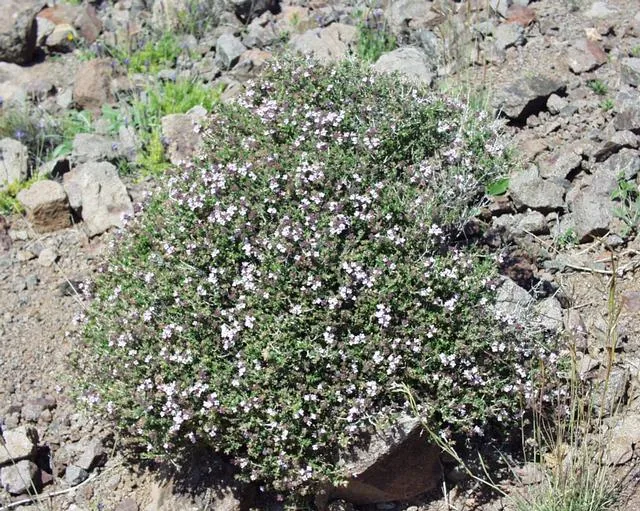
The plant stays small, reaching just 6 to 12 inches (15 to 30 cm) tall and spreading slowly into a tidy, aromatic mound. In early summer it throws up tiny pink to lilac flowers that bees adore. You can snip sprigs whenever you cook, though the flavor peaks just before those flowers open.
Where thyme catches people out is in its tastes, which run opposite to most herbs. It wants poor, gritty soil and a dry spell between drinks, not rich beds and frequent watering. Treat it lean and it stays fragrant and flavorful; pamper it and you get soft, bland growth and rot.
Care
The short version: full sun, lean and fast-draining soil, and water only once the top half of the soil has dried out. It's drought-tolerant, a light feeder, and needs a yearly trim to stay bushy.
Light
Thyme wants full sun, at least six hours of direct light a day, and that sunshine is what concentrates the oils behind its flavor. It will tolerate a bit of partial sun, but shade leaves it leggy and bland.
Water
Let the top half of the soil dry out before you water again, roughly every 7 to 14 days. Once established the plant is genuinely drought-tolerant, and soggy ground is its single biggest enemy, leading straight to root rot.
Soil
Plant it in well-draining sandy or gravelly loam, the leaner the better. Thyme is comfortable across a wide pH band of 6.0 to 8.0, so the priority is sharp drainage rather than fertility.
Temperature
This is a tough herb, hardy from 0°F to 95°F (-18°C to 35°C). It shrugs off both winter cold within its range and summer heat, though hot, dry spells can invite spider mites.
Humidity
Thyme prefers low humidity, around 30% to 50%, in keeping with its dry Mediterranean home. Damp, stagnant air encourages disease, so give it room to breathe.
Feeding
Go light here, because thyme is a light feeder and too much food dulls its flavor. A single spring application of balanced fertilizer or a little compost is all it needs.
Pruning
Shear or trim lightly after flowering and again in early spring to keep growth bushy and delay woodiness. Never cut back into the old bare wood, since thyme is slow to resprout from it.
Repotting
Move container plants into fresh soil every 2 to 3 years, or sooner if roots circle the pot, push through the drainage holes, or growth stalls. A snug pot is fine, but a rootbound one starves the plant.
Size & spacing
Thyme stays compact at 6 to 12 inches (15 to 30 cm) tall, spreading 8 to 16 inches (20 to 40 cm) wide. Space plants so air can move freely between the mounds, which keeps the foliage dry and healthy.
When to plant
Thyme is hardy down to 0°F (-18°C), so in zones 5 to 9 it lives outdoors year-round. Start seeds indoors 6 to 10 weeks before your last frost, set young plants out in spring once the cold has passed, and watch for its small flowers in early summer.
Northern hemisphere
Southern hemisphere
Typical months for a temperate climate: start earlier in warm zones, later where spring frosts linger.
- Sow: 6-10 weeks before last frost
- Plant: spring after danger of frost has passed
- Harvest: Tiny pink to lilac flowers in early summer, attractive to bees; harvest sprigs anytime, best just before flowering for peak flavor.
Hardiness
USDA hardiness zones: 5–9
Temperature: down to -29°C
Troubleshooting
Thyme is rarely fussy, and most of its problems come back to too much water or too little pruning. Read the early signs below and you can usually fix the cause before the plant declines.
Wilting plant with blackened, mushy stems
This is root rot, and it almost always traces back to wet feet rather than disease in the air. Soil that stays soggy suffocates the roots until they turn soft and brown. Cut back on water, move the plant into gritty, fast-draining soil, and strip away any growth that has already gone to mush.
Fix:
- Reduce watering
- Improve drainage or repot into gritty, well-draining soil
- Remove affected growth
Speckled, yellowing leaves laced with fine webbing
Hot, dry air invites spider mites, which drain the tiny leaves until they look dusty and pale. The giveaway is the faint webbing slung across the undersides. Hose the foliage down to knock them loose, and follow up with insecticidal soap if a few stragglers hang on.
Fix:
- Rinse foliage with water
- Apply insecticidal soap if needed
Woody, bare stems with leaves only at the tips
Every thyme plant turns woody and leggy with age, and skipping the yearly trim only speeds it along. The base goes hard and brown while fresh growth retreats to the very ends. A light shear each spring and again after flowering keeps it bushy, but once the wood is bare it's time to propagate or replace the plant.
Fix:
- Trim lightly each spring and after flowering
- Replace or propagate new plants every 3-4 years
Toxicity
Good news for anyone with pets or children: thyme is non-toxic. The ASPCA lists common thyme as safe for cats and dogs, and the culinary leaves are harmless to people and animals alike. The only thing to keep out of reach is concentrated thyme essential oil, which is a far stronger product and can mildly upset a pet's stomach.
Safe for
People · Cats · Dogs · Horses · Rabbits · Livestock · Birds
Cats Safe
The ASPCA lists thyme as non-toxic, so a cat that nibbles a sprig has nothing to fear. The one thing to keep out of reach is concentrated thyme essential oil, which can mildly upset a cat's stomach.
Dogs Safe
Dogs can chew or graze on the leaves with no harm done. A large dose of the essential oil is a different matter and may leave a dog briefly queasy, so store that bottle away.
Horses Safe
Thyme is safe for horses to browse, and the leafy herb causes no trouble at the amounts a horse would actually eat.
Rabbits Safe
Rabbits handle fresh thyme well, and a few sprigs make a fine addition to their greens.
Livestock Safe
Grazing animals such as goats and sheep can eat thyme without ill effect; it's an aromatic herb, not a poisonous one.
Birds Safe
The plant poses no risk to pet or backyard birds that peck at the foliage.
People Safe
Thyme is a kitchen staple, safe to cook with and eat in any normal amount. Only the concentrated essential oil should be treated with care and never swallowed undiluted.
Concentrated thyme essential oil is a different product and can be irritating; the plant and its leaves are non-toxic.
Varieties
A few culinary thymes show up again and again in herb gardens. These are the ones worth knowing by name.
'English' thyme
This is the broad-leaved workhorse most cooks reach for, with the classic, full thyme flavor.
'French' thyme
Its leaves are narrower and grayer, and the flavor runs sweeter and more refined than English thyme.
Lemon thyme (Thymus × citriodorus)
A related hybrid grouped with the culinary thymes, it carries a bright lemon scent in its foliage.
How to propagate
Thyme is easy to multiply, and most gardeners skip seeds in favor of faster, surer methods.
Stem cuttingsEasy
Late spring to early summer · 4-6 weeks to root
Cuttings are the most reliable way to copy a plant you like. In late spring or early summer, snip soft, non-flowering shoots and stand them in a gritty, well-draining medium, where they take root over the next 4 to 6 weeks.
DivisionEasy
Spring or early fall · A few weeks
An established clump can simply be split. Lift it in spring or early fall, tease it into sections with the roots left intact on each piece, and replant them to settle in over a few weeks.
SeedModerate
Spring · Several weeks to germinate, slow to establish
Starting from seed in spring works but tests your patience. Germination drags on for several weeks and the seedlings are slow to fill out, so most gardeners reach for cuttings or division instead.
Myths
Thyme needs frequent watering and rich soil to thrive.
This Mediterranean herb is built for lean, dry ground and shrugs off drought once it settles in. Pile on the water or plant it in rich, fluffy soil and you get root rot and soft, watery growth with little flavor. Thyme tastes best when you keep it a little hungry and a little dry.