Tree · Anacardiaceae
American Smoketree (Tree Form)
Cotinus obovatus
Give it poor, dry ground and full sun, and the American smoketree throws up its hazy summer smoke and a blaze of fall color.
Full sun
Every 7–21 days
USDA 4–8
20–30 ft · 6.1–9.1 m
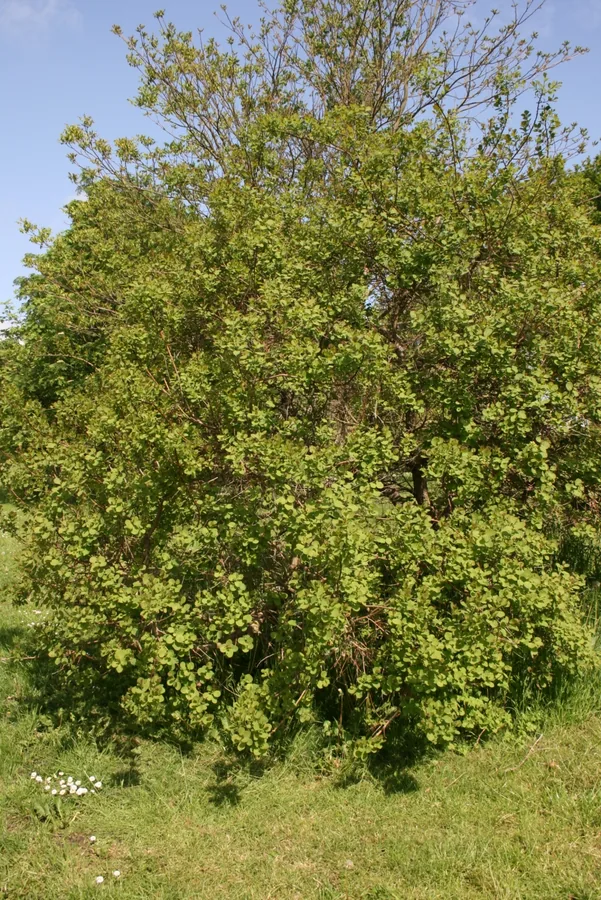
Overview
The American smoketree is a tough native that earns its name from the airy, smoke-like plumes it floats above its branches in early summer. Grown as a single-trunk tree, it reaches 20 to 30 feet (6 to 9 m) tall, larger and more upright than the European smokebush most gardeners know. It belongs to the same family as cashews and sumacs, and it shares their knack for thriving where little else will.
What sets this tree apart is how little it asks. It takes drought in stride once its roots are down, settles into poor, dry, rocky, even alkaline limestone ground, and handles cold to -29°F (-34°C). The trade-off works in your favor, because the leaner the soil, the better the flowers and the fall color.
Patience is the one thing it does want. The smoketree grows slowly, but it pays off twice a year, first with the summer haze of bloom and then with leaves that turn orange, red, and purple before they drop. Site it in full sun, keep the soil sharp-draining, and it will hold up for decades.
Care
The short version: full sun and lean, well-drained soil, with steady water only while the tree is young. Once established it handles drought on its own, asks for little or no fertilizer, and needs only light pruning to keep its shape.
Light
Plant the smoketree in full sun, where it flowers hardest and colors up best in fall. It will take partial sun or light shade, but every hour of shade you give it costs you some of that smoky bloom and the autumn fire.
Water
Water young trees on a regular schedule while the roots take hold, roughly every 7 to 21 days depending on the weather. Once it's established the tree is drought tolerant and needs water only through a long dry spell. Steer clear of soggy ground, since wet soil is what invites disease.
Soil
This tree is happiest in lean, well-drained ground and adapts to poor, dry, rocky, clay, and alkaline limestone sites that defeat fussier plants. It handles a wide pH band from 5.5 to 8.5, so the soil rarely needs amending.
Temperature
The American smoketree is cold-hardy and heat-tough, holding up from -29°F to 100°F (-34°C to 38°C). That range covers a lot of climates, which is part of why it's such a dependable landscape tree.
Humidity
Ordinary outdoor humidity suits it fine, so there's no target to hit. What matters far more is air movement and dry soil, since stagnant, damp conditions are what let leaf fungi and rust take hold.
Feeding
Feed it sparingly or not at all, because this is a tree that prefers infertile ground. A heavy hand with fertilizer cuts down the flowering and the fall color, so if you feed at all, do it lightly in spring.
Pruning
Keep pruning to a minimum. Work in late winter or early spring to shape the tree, clear out dead or crossing wood, and train it to a single trunk. Go light, because the smoke forms on last year's growth and hard pruning trades away the display.
Repotting
A smoketree rarely needs repotting and is best given a permanent home in the ground. If you do grow a young one in a container, move it up only when you see roots circling the edge or pushing out the drainage holes.
Size & spacing
Grown as a tree this gets big, reaching 20 to 30 feet (6 to 9 m) tall and about as wide. Give it that much open room from buildings and other trees so the crown can spread and air can move through it.
When to plant
The American smoketree goes in the ground while it's dormant or settling toward dormancy, so plant it in spring or fall and give the roots time before the heat or cold arrives. The smoky bloom opens in May and June and lingers as a hazy display through summer, with the real fireworks coming when the leaves turn in autumn.
Northern hemisphere
Southern hemisphere
Typical months for a temperate climate: start earlier in warm zones, later where spring frosts linger.
- Plant: spring or fall
- Harvest: May to June, with the smoky display persisting through summer
Hardiness
USDA hardiness zones: 4–8
Temperature: down to -34°C
Troubleshooting
This is a low-trouble tree, and most of what goes wrong traces back to wet soil or a stressed plant. Watch the branches and leaves for the two issues below, and act early while it still makes a difference.
Branches wilting or dying back one section at a time
This is verticillium wilt, a soilborne fungus that climbs the water-carrying tissue and chokes off whole branches. Cut into an affected limb and you'll usually find dark streaking in the wood. There's no cure, so prune the dead wood out well below the symptoms, keep the tree watered through drought, and never replant a susceptible species back into the same ground.
Fix:
- Prune out and destroy affected branches well below symptoms
- Keep the tree vigorous with appropriate water during drought
- Do not replant susceptible species in confirmed infested soil
Spots or orange pustules dotting the leaves
These are leaf spot and rust fungi, and they mostly turn up on trees already under stress. The damage is cosmetic and rarely worth fretting over. Rake up the fallen leaves, open the canopy so air can move, and fix whatever stressed the tree in the first place, whether that's a dry spell or a soggy site.
Fix:
- Rake and remove fallen infected leaves
- Improve air circulation and avoid overhead watering
- Reduce plant stress with proper siting and watering
Toxicity
Good news for households with animals: the American smoketree is not toxic to pets or people, and it stays off the ASPCA poison lists. The one thing to know is that its sap, like that of its sumac cousins, can leave sensitive skin a little irritated, so pull on gloves before you prune.
Safe for
People · Cats · Dogs · Horses · Rabbits · Livestock · Birds
Cats None
A curious cat can nibble the leaves without coming to harm, since smoketree carries no toxins that affect them.
Dogs None
Dogs are fine around this tree, and a chewed leaf or twig won't poison them.
Horses Safe
Horses grazing near a smoketree have nothing to fear from it.
Rabbits Safe
The foliage holds no compounds that would trouble a rabbit.
Livestock Safe
Cattle, goats, and sheep can share a pasture with this tree safely.
Birds Safe
Birds that perch in or feed around the branches face no risk.
People Safe
The tree poses no poisoning risk to people, though the sap can leave sensitive skin a little irritated, so wear gloves when you prune.
The plant is in the Anacardiaceae (cashew/sumac) family, and its sap contains urushiol-type compounds that may cause mild contact dermatitis in sensitive people; wear gloves when pruning. This does not affect pet toxicity rating.
Varieties
Smoketrees split between the larger American native and the showier European types and their hybrids. These are the ones you're most likely to find and train into a tree.
Cotinus obovatus (American smoketree, species)
This native runs larger and more tree-like than the European smokebush, with standout orange-red-purple fall color and a real knack for dry, rocky, alkaline ground.
Cotinus coggygria 'Royal Purple'
A purple-leaved European smoketree whose foliage deepens to a near-black maroon, usually a multi-stemmed shrub but trainable into a small single-trunk tree.
Cotinus x 'Grace'
A vigorous hybrid of the European and American species with big purple-red leaves and a showy pink smoke that can be grown as a small tree.
How to propagate
You can multiply a smoketree from seed, from cuttings, or by layering, and the method you pick depends on whether you want the wild species or a named cultivar held true.
SeedModerate
Fall (sow outdoors) or stratify for spring · 1-2 growing seasons
Starting from seed asks for some patience. The seed is dormant, so a spell of cold stratification, either sown outdoors in fall or chilled for a spring start, wakes it up and improves germination. The species comes true from seed, and a young plant takes one to two growing seasons to establish.
Stem cuttingsModerate
Early to mid summer (softwood) · Several weeks to root, then 1-2 seasons
Take softwood cuttings in early to midsummer and root them under mist, where they strike in several weeks before settling in over the next season or two. This is the route for named cultivars, since only cuttings keep them true to the parent.
LayeringEasy
Spring · 1 growing season or more
Layering is the easy way in. Pin a low branch down to the soil in spring and let it root in place over a growing season or more, then sever it as a ready-made plant.
Myths
The smoketree is dangerously poisonous like its poison ivy and poison sumac relatives.
It does share a family with those plants, but it doesn't share their reputation. Cotinus is not classed as toxic to pets and stays off the ASPCA lists. The only catch is the sap, which can leave sensitive skin mildly irritated, so glove up before you prune.
American smoketree needs rich, fertile, moist soil to thrive.
The opposite is true. It wants well-drained, infertile ground and shrugs off drought, doing its best work on poor, dry, rocky, and alkaline sites. Pile on the water and fertilizer and you trade away the flowers and the fall color.