Shrub · Anacardiaceae
Smoke Bush
Cotinus coggygria
Give it full sun and sharp drainage, and a smoke bush rewards you with summer haze and fiery fall leaves.
Full sun
Every 7–14 days
USDA 4–8
10–15 ft · 3–4.6 m
Overview
Smoke bush earns its name from the soft, smoky haze that hangs over it through summer. It's a tough, fast-growing deciduous shrub from the cashew and sumac family, the kind of plant that thrives on neglect once it's settled in. Left to its own devices it climbs to 10 to 15 feet (3 to 4.5 m) tall and just as wide, so give it room from the start.
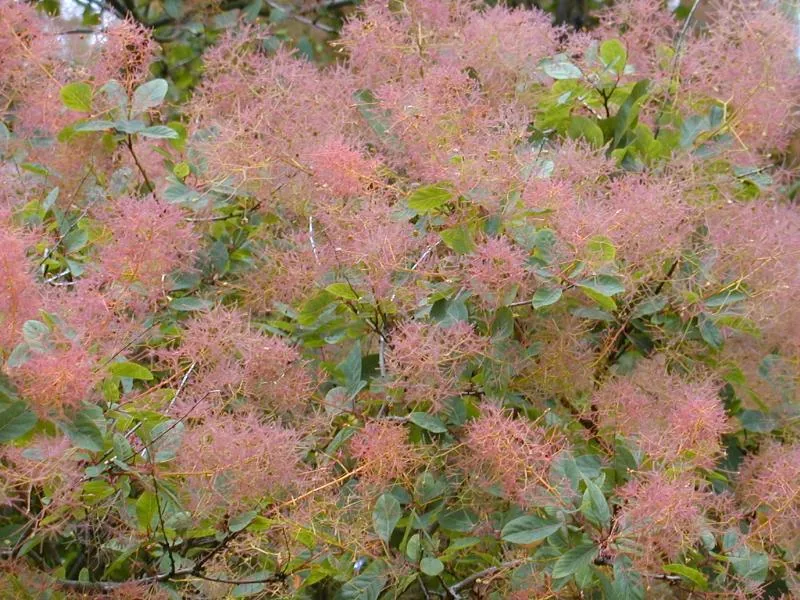
What pulls people in is the color. The foliage runs from soft green to deep, near-black purple depending on the cultivar, and most forms catch fire in autumn with orange and red. Above the leaves, billowy plumes rise off the spent flowers and drift like smoke caught in the branches.
It asks for almost nothing in return. Full sun, lean soil, and sharp drainage are the whole recipe, and once the roots take hold it shrugs off drought. The one thing it won't forgive is wet feet, so keep it out of soggy ground.
Care
The short version: full sun, average to poor soil with sharp drainage, and a deep soak only while the plant is young. After that it handles drought on its own, rarely needs feeding, and asks for little more than the pruning style that matches whether you want smoke or color.
Light
Plant it in full sun for the strongest leaf color and the fullest smoke display. It will take partial sun, but the purple cultivars fade toward green and the haze thins out in too much shade.
Water
Keep the soil moist while the shrub is getting established, then ease off, since a settled plant is drought tolerant and waters far better deep but seldom, every 7 to 14 days. What it can't stand is wet, poorly drained ground, which rots the roots.
Soil
This is a plant that prefers it lean. Average, well-drained loam is fine, and it does just as well in poor, rocky soil that would starve fussier shrubs. The pH range is wide, from 5.5 to 8.0, but sharp drainage is non-negotiable.
Temperature
Smoke bush is cold-hardy and heat-tough, riding out anything from -29°F to 95°F (-34°C to 35°C). That toughness is why it grows happily across most temperate gardens.
Humidity
Ordinary outdoor humidity suits it, so there's no level to manage. Air movement matters more than moisture in the air, since crowded, damp foliage is where leaf spot and rust get started.
Feeding
Feed it little, if at all. A light spring dose of balanced fertilizer is plenty, and most plants never need it, because this shrub actually prefers infertile soil and rich ground can make it leggy.
Pruning
How you prune decides what you get. Light trimming in early spring keeps the smoke display, since the haze forms on old wood. For the boldest foliage on purple cultivars, coppice hard in late winter, cutting stems back to 6 to 8 inches, which trades that year's smoke for vivid new growth.
Repotting
Smoke bush is a garden shrub and rarely lives in a pot. If you do grow one in a container, only move it up when the roots circle the pot or water runs straight through, signs it has outgrown its home.
Size & spacing
Give it real space. A mature smoke bush reaches 10 to 15 feet (3 to 4.5 m) in both height and spread, so set it well clear of paths, walls, and smaller plants from the day you plant it.
When to plant
Smoke bush is a hardy shrub for zones 4 to 8, planted in spring or fall once the hard frosts have passed. The smoke show builds from late spring through summer, with the small flowers opening May to July before their stalks fluff out into the haze.
Northern hemisphere
Southern hemisphere
Typical months for a temperate climate: start earlier in warm zones, later where spring frosts linger.
- Plant: Spring or fall, after the last hard frost
- Harvest: Smoke display from late spring through summer (flowers May to July)
Hardiness
USDA hardiness zones: 4–8
Temperature: down to -34°C
Troubleshooting
A healthy smoke bush has few problems, and most of what does turn up is easy to read. Watch the branches for sudden wilt and the leaves for spots, then act early. Match what you see below to head off the worst of it.
Branches wilting and dying back, often on just one side
This is verticillium wilt, a soil fungus that plugs the plant's water channels from the inside, so leaves yellow and whole limbs collapse out of nowhere. Cut into a failing stem and you'll see dark streaks in the wood under the bark. There is no spray that cures it. Prune out the dead wood, disinfect your tools between cuts, and dig out a plant that is too far gone rather than replant the same spot.
Fix:
- Prune out and destroy affected branches, disinfecting tools between cuts
- Improve drainage and avoid overwatering
- Remove and destroy severely infected plants; do not replant susceptible species in the same spot
Hard little bumps crusting the stems
Those tiny gray-to-brown crusts on the bark are San Jose scale, sap-sucking insects that hide under a hard shell and slowly weaken the branches. Scrape one and it lifts off. Prune out the worst-hit wood, then smother the rest with a dormant horticultural oil in late winter before they wake up.
Fix:
- Prune out and destroy heavily infested branches
- Apply dormant horticultural oil in late winter to smother overwintering scale
Spots or rusty pustules on the leaves
Wet, crowded conditions invite fungal leaf spot and rust, which freckle the foliage with defined spots or leave orange-brown pustules on the undersides. It looks worse than it is and rarely threatens an established shrub. Rake up and bin the fallen leaves, open the plant to better airflow, and keep water off the foliage.
Fix:
- Rake up and dispose of fallen infected leaves
- Improve air circulation and avoid overhead watering
Toxicity
Good news for pet owners and parents: smoke bush is not toxic. It isn't on the ASPCA's poison lists, and no animal needs to be kept away from it. The one small catch is for people, since the sap can leave a mild rash on anyone sensitive to poison ivy, so it's worth wearing gloves when you prune.
Safe for
People · Cats · Dogs · Horses · Rabbits · Livestock · Birds
Cats None
Smoke bush isn't on the ASPCA toxic list, so a curious cat that nibbles a leaf has nothing to fear from it.
Dogs None
Dogs can brush past or chew the foliage without harm. The plant carries no toxin that troubles them.
Horses Safe
No poisoning has been tied to smoke bush in horses, so a grazing mouthful is no cause for alarm.
Rabbits Safe
Rabbits that browse the low branches stay fine, since the shrub holds no compound that hurts them.
Livestock Safe
Cattle, goats, and sheep can share a pasture with this shrub without any risk of poisoning.
Birds Safe
Birds nesting in or feeding around a smoke bush face no danger from its leaves, stems, or fluffy seed heads.
People Safe
The plant is safe to be around, though anyone sensitive to poison ivy may get a mild skin rash from the sap, so wear gloves when you prune.
As a member of the Anacardiaceae (cashew and sumac family), contact with the sap may cause mild contact dermatitis in sensitive people, especially those allergic to poison ivy. Wear gloves when pruning if you are sensitive.
Varieties
Most smoke bushes sold today are named cultivars chosen for leaf color or the size of the smoke display. These are the ones you'll run across most.
Royal Purple
A compact purple-leaved pick whose foliage opens maroon-red in spring and deepens to a near-black purple that holds its color right through summer.
Golden Spirit ('Ancot')
Bright golden-yellow leaves that flare to orange and red in fall, a striking change from the usual green and purple forms.
Young Lady
A green-leaved, compact form grown for the clouds of smoky flower panicles it throws even while the plant is still young.
Velvet Cloak
Dark purple foliage paired with large pink panicles on a bigger shrub that can reach the top of the size range.
How to propagate
You can make more smoke bushes a few ways, though the cultivars only come true from cuttings or layers. Layering is the surest bet if you just want one or two more plants.
Stem cuttingsModerate
Early to mid summer · Several weeks to root; a full season to establish
Take softwood or semi-hardwood cuttings from the current season's growth in early to mid summer. They need several weeks to root and a full growing season to settle in, so be patient with them.
LayeringEasy
Spring to early summer · One growing season or more to root
The easiest route is layering in spring or early summer. Bend a low, flexible branch down, pin it to the soil, and leave it to root over a growing season or more before you cut it free from the parent.
SeedModerate
Fall sowing or after cold stratification · Slow; seedlings of cultivars will not come true to type
Seed works best for the plain species, sown in fall or after a cold stratification. It's slow going, and seedlings of named cultivars won't come true to type, so grow those from cuttings or layers instead.
Myths
The smoky pink haze on a smoke bush is made up of the flowers.
The actual flowers are tiny, yellowish, and easy to miss. The smoke is the spent flower stalks, which stretch out into long, billowy hairs that turn smoky pink to purplish pink across the summer.
Hard pruning every spring gives you the most smoke.
Smoke forms on old wood, so cutting the plant hard each year trades the haze for foliage. Coppice in late winter and you get vivid leaf color but no smoke that season, which is why purple cultivars are often grown for leaves rather than bloom.