Tree · Ulmaceae
American Elm
Ulmus americana
A fast-growing, vase-shaped shade tree that survived its own near-extinction and is back in resistant form.
Full sun
Every 7–14 days
USDA 2–9
60–80 ft · 18.3–24.4 m
Overview
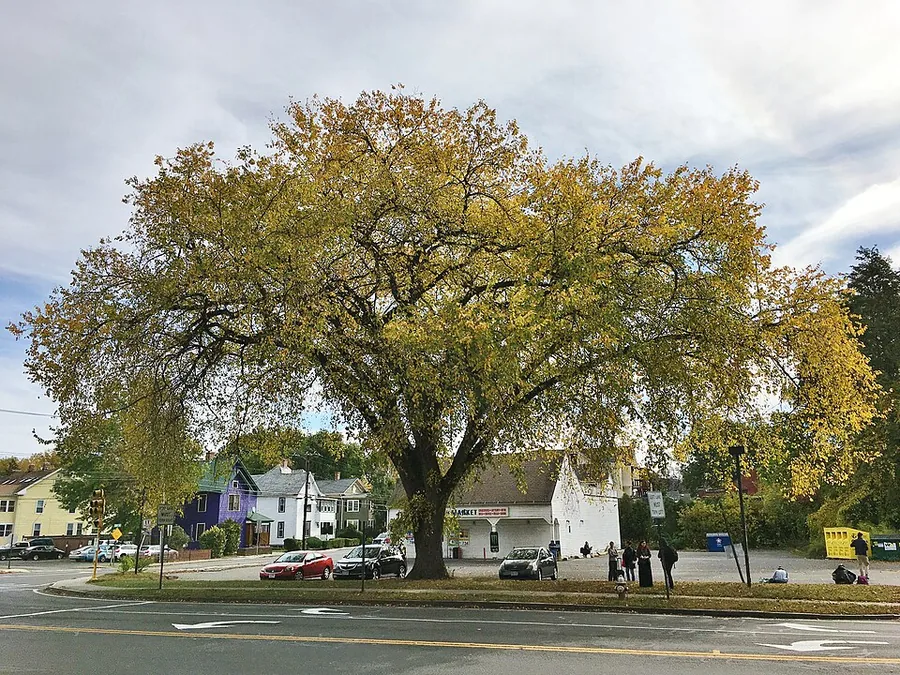
The American elm once lined main streets across half the continent, its high, arching branches meeting overhead in a vault of shade. It grows fast and tall, reaching 60 to 80 feet (18 to 24 m) with an even wider spread, and it tolerates almost any ground you give it, from soggy bottomland to dry, compacted city soil.
Then came Dutch elm disease. The fungal wilt swept through in the 20th century and killed elms by the millions, which is why so few of the old giants remain. The species itself held on, and breeders have since released cultivars with real resistance, so the tree is plantable again with eyes open.
What you get for the wait is one of the great shade trees, hardy from zone 2 to zone 9 and unfussy about soil and pH. It is a big, long-lived tree with brittle wood and shallow, pavement-lifting roots, so it earns a spot with room to spread rather than a tight corner by the house.
Care
The short version: plant in full sun to light shade in almost any well-drained soil, water young trees through dry spells until they root in, prune in late winter for strong structure, and give this big, fast tree plenty of open room.
Light
Give the American elm full sun for the best, densest crown, though it takes partial shade without much complaint. More sun simply means a fuller, stronger tree.
Water
Keep young trees evenly moist while they root in, watering roughly every 7 to 14 days through dry stretches. Once established the elm is remarkably adaptable, riding out both drought and wet ground, so a mature tree rarely needs your help.
Soil
This is about as forgiving a tree as you'll find for soil. It does best in an average, medium-moisture, well-drained loam but handles clay, sand, and wet or dry sites, and it copes with a wide pH range from 5.5 to 8.0, acid to alkaline.
Temperature
Cold is no obstacle here. The American elm is hardy across zone 2 to zone 9 and endures temperatures from roughly -51°F to 100°F (-46°C to 38°C), which is part of why it once grew over such an enormous range.
Humidity
Ordinary outdoor air suits it, so there's no humidity figure to manage. As a hardy native tree it simply takes the weather it's given.
Feeding
Feed young trees in spring with a balanced slow-release tree fertilizer to push them along. Mature trees seldom need any feeding and generally do best left alone.
Pruning
Prune in late winter while the tree is dormant, removing crossing or weak branches to build strong structure, since the wood breaks easily. The other reason to prune is urgent: cut out and destroy any wilting branch the moment you see it, before Dutch elm disease can spread.
Repotting
This isn't a container tree for the long haul, so there's no repotting cycle. Move a nursery-grown sapling into the ground before its roots circle the pot, and check for roots escaping the drainage holes as your cue to plant it out.
Size & spacing
Plan for a giant. The American elm reaches 60 to 80 feet (18 to 24 m) tall with a spread of 40 to 70 feet (12 to 21 m), so set it well away from buildings, walks, and pavement that its shallow roots will eventually lift.
When to plant
The American elm follows the seasons of a temperate tree. It plants best in spring or fall while dormant, flowers in tiny reddish-green clusters in March and April, and drops its winged samaras as they ripen in April and May.
Northern hemisphere
Southern hemisphere
Typical months for a temperate climate: start earlier in warm zones, later where spring frosts linger.
- Plant: Spring or fall
- Harvest: Tiny reddish-green flowers in late winter to early spring (March-April), followed by flat winged samaras maturing April-May
Hardiness
USDA hardiness zones: 2–9
Temperature: down to -46°C
Troubleshooting
Two problems account for most elm trouble, and the serious one shows itself early in the canopy. Watch for a single limb that wilts out of season, and learn the look of beetle-chewed leaves. Match what you see below, then act fast, because Dutch elm disease rewards a quick response.
One limb suddenly wilts and browns while the rest stays green
Flagging that starts on a single branch and spreads through the crown points to Dutch elm disease, a fatal fungal wilt carried by elm bark beetles and passed tree to tree through grafted roots. Peel the bark on a dying limb and you'll often find brown streaks in the outer sapwood, though elm yellows can mimic the same collapse, so have a lab confirm which one you have. Prune out infected limbs well below the streaking the moment flagging appears, sever root grafts between neighboring elms, and remove dead trees fast so beetles lose their breeding wood.
Fix:
- Prune out and destroy infected limbs well below visible streaking as soon as flagging appears
- Remove and destroy severely affected or dead trees promptly to eliminate beetle breeding sites
- Sever root grafts between adjacent elms to stop underground spread
- Consult an arborist about fungicide injection for high-value trees
Leaves chewed to lace with beetles on the foliage
Leaves that turn brown and skeletonize, with only the veins left behind, are the work of the elm leaf beetle, whose yellowish larvae feed on the undersides while the striped adults chew the tops. Japanese beetles can do similar damage, so check who's actually there. A healthy tree shrugs off light feeding, so tolerate it where you can, encourage natural predators, and reach for a labeled insecticide only when a heavy infestation hits a smaller tree.
Fix:
- Tolerate light feeding on otherwise healthy trees
- Apply an appropriately labeled insecticide for heavy infestations on smaller trees
- Encourage natural predators
Toxicity
Good news for households with animals: the American elm is not toxic to pets, livestock, or people. No part of the tree poisons anything that browses or chews it. The cautions here are physical, not chemical, since the brittle limbs and heaving surface roots are what actually demand respect.
Safe for
People · Cats · Dogs · Horses · Rabbits · Livestock · Birds
Cats None
A cat that nibbles a fallen leaf or samara has nothing to worry about, since the tree carries no toxin. Watch instead for the rare digestive upset any animal gets from eating plant matter it isn't built for.
Dogs None
Dogs can chew a stray twig or gnaw on bark without harm. The wood and foliage hold nothing poisonous, so a romp under the canopy is perfectly fine.
Horses Safe
Horses grazing near an elm face no risk from its leaves or bark. The tree is not toxic, and pasture animals browse it freely.
Rabbits Safe
Rabbits often strip elm bark and buds in winter and take no harm from it. The plant is safe to have around a hutch or a backyard warren.
Livestock Safe
Cattle, goats, and sheep can browse elm foliage without trouble, and the leaves have long served as fodder. Nothing in the tree poisons grazing stock.
Birds Safe
Birds feed on the spring samaras and shelter in the branches with no danger at all. The elm is a welcome, harmless part of their habitat.
People Safe
The American elm poses no poisoning risk to people. The real hazards are physical, not chemical, with brittle limbs and surface roots being the things to mind.
No special handling is required for toxicity, though the tree's large size, surface roots, and falling samaras and limbs are landscape considerations.
Varieties
Almost every American elm worth planting now is a named cultivar bred to stand up to Dutch elm disease. These are the ones to look for.
'Princeton'
An older selection introduced in 1922 that keeps the classic vase shape and has shown strong resistance to Dutch elm disease.
'Valley Forge'
A U.S. National Arboretum release prized for its very high tolerance to Dutch elm disease, though even it is not fully immune.
'New Harmony'
Another disease-resistant Arboretum selection with good vigor that holds up to about zone 4.
'Jefferson'
A resistant American elm chosen for the classic arching, vase-shaped form the species is loved for.
How to propagate
You can grow an American elm from seed easily enough, but to get a tree that resists disease you have to clone a named cultivar by graft or cutting.
SeedModerate
Sow fresh samaras in late spring soon after they mature · A few weeks to germinate; several years to establish as a tree
Sow the winged samaras fresh in late spring, right after they ripen, and they sprout within a few weeks. Seedlings grow into trees over several years, but be warned that seed-grown elms carry none of the disease resistance bred into the named cultivars.
GraftingDemanding
Dormant season · One or more seasons
Grafting during the dormant season is how nurseries copy the named, disease-resistant elms true to type. It takes a season or more to take and is skilled work, so it's the propagator's route rather than the home gardener's.
Stem cuttingsDemanding
Softwood in late spring to early summer · Weeks to root, then years to establish
Softwood cuttings taken in late spring or early summer clone a resistant cultivar exactly. They root in a matter of weeks, then need years to grow on into a tree, and getting them to strike at all takes some skill.
Myths
The American elm is extinct or no longer worth planting because of Dutch elm disease.
The disease did tear through the species in the 20th century, but the American elm never died out. Several resistant cultivars are sold today, including 'Princeton', 'Valley Forge', 'New Harmony', and 'Jefferson', so you can plant one and reasonably expect it to stand.