Ornamental · Crassulaceae
Sedum
Sedum
Give it sun and sharp drainage, then mostly leave it alone, and stonecrop just keeps going.
Full sun
50–77°F · 10–25°C
USDA 3–9
4–24 in · 10–60 cm
Overview
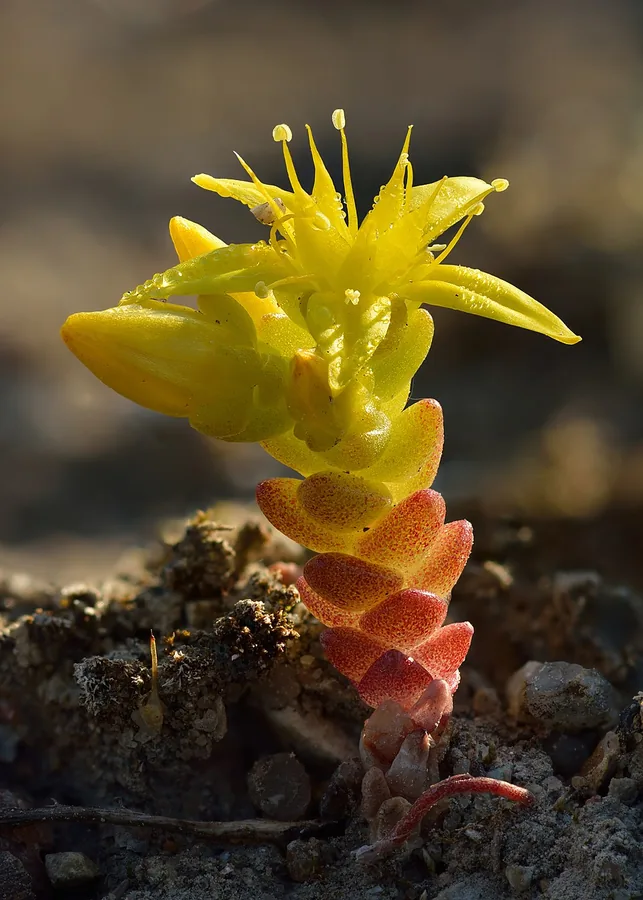
Sedum, better known as stonecrop, is a tough succulent that asks for very little. It belongs to the Crassulaceae family and stores water in fleshy leaves and stems, which is how it shrugs off dry spells that would flatten softer plants. The genus is hardy across zones 3 to 9, so the same group covers everything from a windowsill pot to a rooftop planting.
What you call a sedum depends on which one you have. Some grow upright into tidy clumps that send up flower heads in late summer. Others creep along the ground in low mats, rooting as they spread, which makes them a favorite for rock gardens and the gaps between paving. Heights run anywhere from 4 to 24 inches (10 to 60 cm).
The one thing stonecrop won't forgive is wet feet. Plant it in gritty, fast-draining soil and a sunny spot, and it practically grows itself. Crowd it into heavy, soggy ground and the stems turn to mush, which is the single most common way these plants die.
Care
The short version: full sun and gritty, sharp-draining soil, watered only once it has dried out completely. Feed lightly in the growing season, pinch back any stretchy stems, and keep it out of standing moisture.
Light
Sedum wants full sun, ideally several hours of it a day, which keeps the growth tight and the color strong. It will take partial sun or a bright indirect spot indoors, but too little light leaves the stems stretched and floppy.
Water
Water thoroughly, then wait until the soil has dried out completely before watering again. Stonecrop stores its own reserve in those fleshy leaves, so it handles a missed drink far better than a soggy one. Standing moisture is the fast track to stem and root rot.
Soil
Plant in a gritty, well-drained mix that lets water run straight through. A pH between 6.0 and 7.0 suits it, but drainage matters far more than the exact number. Heavy, water-holding soil is the main thing to avoid.
Temperature
Sedum is comfortable from about 50°F to 77°F (10°C to 25°C). The hardy types take winter cold outdoors in zones 3 through 9, while indoor plants are happy at ordinary room temperatures.
Humidity
Low humidity is no problem at all, which makes this an easy plant for dry indoor air. There's no number to chase here, and damp, stagnant conditions do more harm than good.
Feeding
Feed lightly from spring through summer while the plant is actively growing, about once a month. Use a balanced, water-soluble fertilizer cut to half strength, since too much pushes soft growth that rots and draws pests.
Pruning
After the flowers fade, cut back the spent stalks to tidy the plant. Pinch any leggy or stretched stems to keep it compact, and trim away soft, rotted growth the moment you spot it.
Repotting
Move sedum into a fresh pot every 2 to 3 years, or sooner once roots fill the container and the soil dries out unusually fast. Slowed or stunted new growth is another sign it's crowded and ready for more room.
Size & spacing
Plants range from 4 to 24 inches (10 to 60 cm) tall depending on the type, spreading to about 12 to 24 inches (30 to 60 cm) across. Give creeping kinds room to fill in and clumping kinds space for air to move.
When to plant
Sedum is a hardy perennial that comes back on its own year after year, so there's no seed-starting clock to watch. Plant or divide it in spring while it's putting on fresh growth, and the flower heads arrive from summer into fall, with the exact window shifting from one species to the next.
Northern hemisphere
Southern hemisphere
Typical months for a temperate climate: start earlier in warm zones, later where spring frosts linger.
- Harvest: Summer to fall depending on species
Hardiness
USDA hardiness zones: 3–9
Temperature: down to -40°C
Troubleshooting
Most sedum problems trace back to water or light, and they show in the stems before anywhere else. Read the early signs and you can usually fix the cause before the plant is lost. Match what you see below, then act.
Soft, mushy stems and a plant that is caving in
This is rot, and it almost always starts with too much water or soil that never drains. Cut back to firm, healthy tissue, let those pieces callus, and re-root them in dry, gritty mix while you hold off on water. A pot with drainage holes and a soil that dries fully between drinks keeps it from coming back.
Fix:
- Cut away all soft, rotted tissue back to firm healthy growth
- Allow healthy cuttings to callus and re-root in dry, gritty mix
- Withhold water until new roots form
White cottony fuzz tucked into the leaf joints
Those fluffy white clusters are mealybugs, and the sticky residue they leave behind saps the plant's vigor. Touch each one with a cotton swab dipped in 70 percent isopropyl alcohol, then check back every few days until they're gone. Keep the plant away from your other succulents so they don't spread.
Fix:
- Dab insects with a cotton swab dipped in 70 percent isopropyl alcohol
- Repeat treatment every few days until clear
- Isolate the plant from other succulents
Stretched, pale stems reaching for the window
This is etiolation, the stretch a sedum makes when it isn't getting enough light. The stems lengthen, the leaves spread apart, and the color fades. Move it somewhere with several hours of direct sun, then pinch the leggy tips back so it fills out again. Those trimmings root easily, so nothing goes to waste.
Fix:
- Move the plant to a brighter location with several hours of direct sun
- Pinch or cut back stretched stems to encourage compact regrowth
- Use the trimmed tips as cuttings
Toxicity
Good news for pet owners: sedum is safe. Stonecrops carry no toxins that harm cats, dogs, horses, or other animals, and the ASPCA lists the popular burro's tail as non-toxic. A curious nibble might cause a little stomach upset, the same as any plant not meant for eating, but there's nothing here to worry about.
Safe for
People · Cats · Dogs · Horses · Rabbits · Livestock · Birds
Cats None
Safe to have around cats. A curious nibble might bring on a little drooling or a brief upset stomach, the same as any houseplant that isn't meant to be eaten.
Dogs None
No real risk to dogs. The worst a mouthful tends to cause is a passing bit of stomach upset, and even that is uncommon.
Horses None
Horses can graze near stonecrop without concern, since the plant carries nothing that harms them.
Rabbits None
Rabbits are fine around sedum. The fleshy leaves hold no toxins, though it stays a houseplant rather than a regular part of their diet.
Livestock None
Cattle, goats, and sheep can be near plantings without trouble, as stonecrops aren't counted among the poisonous pasture plants.
Birds None
No toxic compounds put pet or backyard birds at risk from this plant.
People None
Harmless to handle, and a few stonecrops have even been eaten in small amounts. Still, grow it as an ornamental rather than something for the plate.
Varieties
Sedum covers hundreds of species, from upright clumps to ground-hugging mats. These three turn up most often and show the range.
Sedum spectabile / 'Autumn Joy'
An upright border type with fleshy stems and broad flat heads of pink flowers that deepen to rust as fall sets in.
Sedum acre
A low creeping goldmoss stonecrop with tiny bright yellow-green leaves and a froth of yellow flowers.
Sedum spurium
A mat-forming trailer with rounded, scalloped leaves that earns its place in rock gardens and on green roofs.
How to propagate
Few plants are easier to multiply than sedum. A dropped leaf will often root on its own, and a single plant can become a whole tray with almost no effort.
Stem cuttingsEasy
Spring through summer during active growth · 2 to 3 weeks to root
Take cuttings during the spring and summer growing season. Let the cut ends callus for a day or two, then push them into gritty mix and keep it barely moist. Roots form in about 2 to 3 weeks.
Leaf cuttingsEasy
Spring through summer · 3 to 6 weeks to form plantlets
Through spring and summer you can grow whole plants from single leaves. Lay or set them on dry, gritty mix, and tiny rosettes with roots appear at the base in roughly 3 to 6 weeks.
DivisionEasy
Early spring · 2 to 4 weeks to settle
Split the clumping border types in early spring. Lift the plant, pull apart rooted sections, and replant each at its original depth, where it settles in over 2 to 4 weeks.
Myths
Succulents like sedum thrive on neglect and never need water.
Sedum handles drought well, but it still wants a deep drink now and then while it's actively growing. The danger runs the other way. Overwatering, not the odd watering, is what kills these plants.