Houseplant · Crassulaceae
Panda Plant
Kalanchoe tomentosa
A fuzzy, silver-green succulent that asks for bright light, dry soil, and almost nothing else.
Bright indirect
Every 10–21 days
50–75°F · 10–24°C
USDA 9–11
Overview
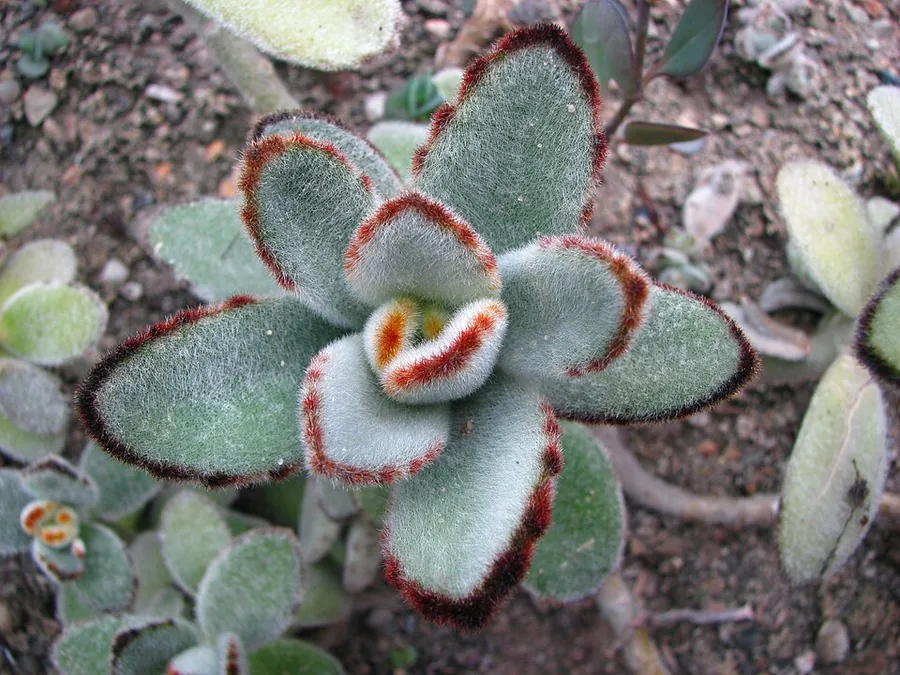
The panda plant earns its name from leaves wrapped in soft silvery fuzz, tipped with rust-brown felted edges that look like a paw print. It is a slow-growing succulent from Madagascar, built to hoard water in those plush leaves and ride out long dry spells. Grown indoors it stays small and tidy, reaching only 12 to 18 inches (30 to 45 cm) over many years.
What makes it easy is also what trips people up. It wants to be left alone far more than it wants attention, and most plants that fail were loved with too much water. Give it a sunny windowsill and a gritty pot that drains fast, and it mostly takes care of itself.
One thing to keep in mind: every part of this plant is toxic to animals. The fuzzy leaves hold bufadienolides, heart-acting compounds that make it a poor choice for homes with curious pets. Place it where cats, dogs, and other animals can't reach it.
Care
The short version: bright light, a gritty fast-draining mix, and water only once the soil has dried out completely. Keep it warm, feed it lightly in the growing season, and resist the urge to fuss.
Light
Give it bright indirect light, ideally a spot that catches some direct sun through a window. It tolerates full sun once acclimated, but too little light leaves the stems stretching and the fuzz thinning out.
Water
Let the soil dry out completely between waterings, which usually means every 10 to 21 days and even less in winter. Water at the soil line and keep it off the fuzzy leaves, where trapped moisture causes spotting. More plants die from overwatering this one than anything else.
Soil
Plant it in a gritty cactus or succulent mix that drains fast and never stays soggy. A slightly acidic pH of 6.0 to 6.5 suits it, and a pot with drainage holes is not optional here.
Temperature
Keep it in the 50°F to 75°F (10°C to 24°C) range, comfortable room temperature for most of the year. It has no frost tolerance, so move it well away from cold windows in winter.
Humidity
Low humidity is exactly what it wants, so ordinary dry indoor air is perfect. Don't mist it and don't crowd it into a steamy bathroom, since damp air on those fuzzy leaves invites rot.
Feeding
Feed lightly from spring through summer while it is actively growing, about once a month. Use a diluted balanced or low-nitrogen succulent fertilizer, and skip feeding entirely through the dormant winter months.
Pruning
Pruning is barely needed. Pinch or cut back any leggy, stretched stems to push fresh branching and a fuller shape, and remove damaged leaves with a clean blade. Let the cut ends callus before they touch soil.
Repotting
Repot only every 2 to 3 years, or sooner if roots push through the drainage holes and the plant grows top-heavy. Do it in spring and step up just one pot size into fresh gritty mix.
Size & spacing
Expect a compact plant of 12 to 18 inches (30 to 45 cm) tall and 8 to 12 inches (20 to 30 cm) wide. It grows slowly, so a single plant holds its shape and size for years on a windowsill.
Troubleshooting
Almost every panda plant problem comes down to water or light. Read the leaves and stems early and the fix is usually simple. Match what you see below, then act before rot or stretching takes hold.
Soft, blackening stems mushy at the base
This is rot, and it nearly always traces back to soil that stays wet too long or water caught in the fuzzy crown. Once the base turns soft there is no saving that tissue, so cut it all away with a clean blade and salvage healthy leaves as cuttings. Repot what is left into fresh gritty mix and let it dry hard between waterings.
Fix:
- Stop watering immediately and allow the soil to dry
- Cut away all soft, rotted tissue with a clean blade
- Take healthy leaf or stem cuttings to propagate if the base is lost
- Repot remaining healthy growth into fresh gritty, fast-draining mix
Stretched, leggy stems with gaps between the leaves
When a panda plant reaches and the leaves spread far apart, it is starving for light. This is etiolation, and the stems lean hard toward the nearest window. Move it somewhere brighter, step up the sun over a week or two so it doesn't scorch, then prune the leggy growth and root the pieces.
Fix:
- Move to a brighter spot with bright indirect or some direct sun
- Acclimate gradually to stronger light to avoid scorch
- Prune leggy stems and propagate the cuttings
Brown, scorched patches on the most exposed leaves
Dry brown patches on the sun-facing leaves are sunscald, the usual price of a sudden jump in light. A plant moved straight from a dim corner into hot sun burns before it can adjust. Shift it back to bright indirect light, then reintroduce stronger sun gradually over one to two weeks.
Fix:
- Move the plant to bright indirect light
- Introduce stronger sun gradually over one to two weeks
Toxicity
Treat this as a plant to keep out of reach. The leaves, stems, and flowers all hold bufadienolide cardiac glycosides, which cause drooling and vomiting and, in a large mouthful, can disturb the heartbeat. It is dangerous to cats, dogs, horses, and other animals alike, and no part of it is safe for people to eat.
Toxic to
Cats · Dogs · Horses · Rabbits · Livestock · Birds · People
Cats Toxic
A nibbled leaf usually brings on drooling, vomiting, and diarrhea within a few hours. Cats are the most likely to chew on it, and a larger dose of the cardiac glycosides can throw off the heartbeat, so call a vet if you see a wobbly or sluggish cat.
Dogs Toxic
Dogs that chew the fuzzy leaves tend to drool, vomit, and pass loose stool. The real danger is the bufadienolides reaching the heart in a big mouthful, which can slow or scramble the rhythm. Get veterinary help if a dog seems weak or collapses.
Horses Toxic
Every Kalanchoe is dangerous to horses. The cardiac glycosides irritate the gut and act on the heart, so expect colic, depression, and an irregular pulse. Keep the plant well out of reach of any grazing horse.
Rabbits Toxic
Don't let a rabbit near it. The same heart-acting compounds that hit cats and dogs are no safer for a small grazing animal, and a little goes a long way at that size.
Livestock Toxic
Cattle, goats, and sheep can be poisoned by Kalanchoe, with the toxin causing digestive upset and serious heart trouble. Grazing animals that get into a patch of it are at real risk.
Birds Toxic
Birds aren't spared. The bufadienolides affect their hearts the same way, so keep pet birds away from the leaves entirely.
People Caution
No part of the panda plant is meant to be eaten, so treat it as off limits and keep it away from small children. The fine leaf hairs can also itch sensitive skin, so wash your hands after handling it.
The fine leaf hairs (trichomes) may irritate sensitive skin in some people; wash hands after handling.
Helpline numbers

United States
ASPCA Animal Poison Control: (888) 426-4435 (fee applies)
Poison Control: (800) 222-1222



Canada
Poison Centres: 1-844-764-7669
Varieties
A few named cultivars turn up alongside the common species, mostly differing in leaf color and the markings along the edges.
Kalanchoe tomentosa 'Chocolate Soldier'
Its leaf edges carry darker brown to rust-colored felted teeth that give the whole plant a chocolate-trimmed look.
Kalanchoe tomentosa 'Golden Girl'
It grows larger leaves with a golden to silvery cast and softer, lighter markings along the edges.
Kalanchoe tomentosa 'Nigra'
It stands out for the dark, almost black-brown markings at the leaf tips, set hard against the silvery fuzz.
How to propagate
The panda plant is simple to multiply, and a single leaf or stem tip is enough to start a whole new plant.
Leaf cuttingsEasy
Spring to summer during active growth · 4 to 8 weeks to root and form plantlets
Leaf cuttings are the easiest way to make more, and they work best in spring or summer while the plant is growing. Twist off a whole healthy leaf, let the cut end callus for a day or two, then lay it on or barely into gritty mix and water only sparingly. Roots and tiny plantlets take 4 to 8 weeks to appear, so don't rush it.
Stem cuttingsEasy
Spring to summer · 3 to 6 weeks to root
Stem cuttings are the fix for a plant that has gone leggy, taken in spring or summer when growth is active. Cut a stem tip, let it callus, then set it in dry gritty mix and water lightly only once it starts to root, which takes about 3 to 6 weeks. The parent usually branches out below the cut.
Myths
Fuzzy succulents like the panda plant love regular misting and high humidity.
The panda plant is a dry-air succulent that stores its own water in those plush leaves. Misting just settles into the fuzzy surface, where it sits and invites spotting and rot. Skip the mister and let the soil dry out instead.