Herb · Lamiaceae
Sweet Marjoram
Origanum majorana
Give it full sun and dry feet, and sweet marjoram rewards you with one of the gentlest flavors in the herb garden.
Full sun
Every 5–10 days
50–86°F · 10–30°C
60–90 days
Overview
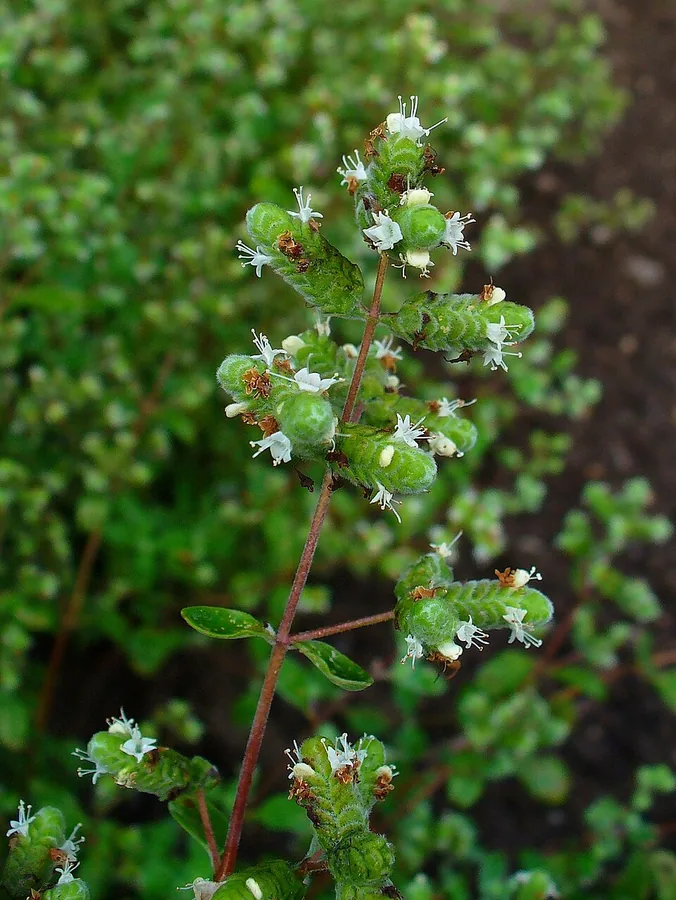
Sweet marjoram is a tender member of the mint family, a close cousin of oregano grown for its soft, sweet, faintly piney leaves. It comes from the warm Mediterranean and around the edges of the Mediterranean, which tells you most of what it wants: sun, warmth, and soil that drains fast. The rounded, knot-like flower clusters along each stem are where the names knotted marjoram and pot marjoram come from.
It earns its keep in the kitchen more than the flower bed. The flavor is milder and sweeter than oregano, and it fades fast once the plant blooms, so the trick is to keep picking. Pinch the stems often and you get bushier growth and a longer run of tender, aromatic leaves.
Marjoram is an easy, forgiving herb that asks for very little. It shrugs off drought once it's settled in, but it has no tolerance for wet feet or frost. Grow it in a sunny bed or a pot you can move, and it gives you months of flavor before the cold ends the season.
Care
The short version: full sun, light well-drained soil, and water only once the top half dries. Feed it sparingly, harvest before it flowers, and keep it out of cold, soggy ground.
Light
Marjoram wants full sun, ideally six hours or more a day, which is what keeps the leaves rich in aromatic oil. It tolerates a little partial sun, but the more light it gets the better the flavor and the tighter the growth.
Water
Let the top half of the soil dry before you water again, since this herb handles drought far better than wet feet. Once it's established it needs very little. Soggy, cold soil is the fastest way to rot the roots, so err on the dry side.
Soil
Plant in well-drained sandy loam or loam, the lighter and faster-draining the better. It takes a wide pH range from 6.5 to 8.0 and is happy on the alkaline side, which suits its Mediterranean roots.
Temperature
Marjoram grows best between 50°F and 86°F (10°C to 30°C) and loves the heat. It has no cold hardiness to speak of, so even a light frost will end it.
Humidity
It prefers low humidity, around 30% to 50%, in keeping with its dry-country origins. Damp, stagnant air invites rot and mildew, so give the plant room and let the breeze move through it.
Feeding
This is a light feeder that needs little more than one balanced feed in spring. Go easy, because too much nitrogen pushes soft leafy growth and thins out the aromatic oil that gives the leaves their flavor.
Pruning
Pinch and harvest the leaves often, before the knot-like flower clusters open, to keep the foliage sweet and the plant bushy. Cut back any leggy or woody stems to bring on fresh tender growth.
Repotting
Marjoram rarely needs repotting and is content a little snug. Move it up only when you see roots circling the pot or poking through the drainage holes, or when it dries out unusually fast after watering.
Size & spacing
The plant stays compact, reaching 8 to 18 inches (20 to 45 cm) tall with a spread of 8 to 16 inches (20 to 40 cm). Give each one a little room so air moves freely and the foliage stays dry.
When to plant
Marjoram is frost-tender and waits on warmth. Start seeds indoors in late winter, set the plants out only after the last frost and warm soil, and harvest through summer, picking the leaves before the knot-like flowers open and dull the flavor.
Northern hemisphere
Southern hemisphere
Typical months for a temperate climate: start earlier in warm zones, later where spring frosts linger.
- Sow: 6-8 weeks before the last spring frost
- Plant: After all danger of frost has passed and the soil has warmed
- Harvest: Harvest leaves before or as the knot-like flower clusters open in summer for best flavor
Hardiness
USDA hardiness zones: 9–10
Temperature: down to -7°C
Troubleshooting
Marjoram has few real troubles, and most trace back to too much water or a chill. Watch the leaves and the base of the plant for the first signs. Match what you see below and act before it spreads.
Wilting plant with blackened stems and mushy roots
This is root and stem rot, almost always caused by soil that stays wet and cold around the crown. There's no saving a plant once the roots turn soft and dark, so pull the worst ones. Stop watering, let the soil dry out, and shift container plants into a faster-draining mix.
Fix:
- Stop watering and allow soil to dry
- Improve drainage or move container plants to faster-draining mix
- Remove and discard severely affected plants
Whole plant blackens and collapses after a cold snap
Marjoram is frost-tender, and a single freeze blackens and kills the whole plant overnight. Grow it in a pot you can carry indoors before the cold arrives, or simply replant in spring. In cold regions the safest plan is to treat it as an annual.
Fix:
- Replant after danger of frost in spring
- Grow in containers that can be moved indoors before frost
Leaves turn bitter as the knot-like flowers form
Once flowering starts, the plant pours its energy into the rounded, knot-like flower clusters and seed, and the leaves lose their sweet edge. Pinch off the buds as they appear to hold that off. The simplest fix is to harvest and dry your leaves before the plant comes into full bloom.
Fix:
- Pinch off developing flower clusters
- Harvest and dry leaves before full bloom
Curled, stippled leaves with tiny insects or webbing
This is the work of aphids clustered on the soft new shoots, or spider mites that move in when the air turns hot and dry. Blast the plant with a strong jet of water, then treat the leaf undersides with insecticidal soap. Cut out any shoot that's already overrun.
Fix:
- Rinse plants with a strong jet of water
- Apply insecticidal soap, covering leaf undersides
- Remove heavily infested shoots
Toxicity
Marjoram is a kitchen herb, safe for you and your family to cook with and eat. The catch is the aromatic essential oils in the leaves, which can give a pet a mild stomach upset if it eats a real mouthful. Keep a pot out of reach of any cat or dog that likes to nibble greenery.
Toxic to
Cats · Dogs · Horses · Rabbits · Livestock · Birds
Safe for
People
Cats Mild
A curious cat that chews a mouthful of leaves may drool and bring it back up, with a loose stool to follow. The aromatic oils are the irritant, and a pinch on a dinner plate is no cause for worry.
Dogs Mild
Expect a queasy stomach, some vomiting, or loose stools if a dog tears into the plant. Small culinary amounts pass without trouble.
Horses Mild
The same essential oils can unsettle a horse's gut if it grazes a real mouthful, so look for mild diarrhea or a dull appetite. A few stray sprigs do no harm.
Rabbits Mild
A rabbit that gorges on the leaves may get soft stools or a bit of bloating from the strong oils. Offer only a small sprig now and then rather than a free run of the plant.
Livestock Mild
Goats, sheep, and cattle rarely seek it out, and a large feed of the aromatic foliage would only bring on a passing bout of digestive upset.
Birds Mild
Pet and backyard birds tend to leave the pungent leaves alone, and a heavy nibble would at most cause a brief stomach upset.
People Safe
Marjoram is a kitchen herb, safe to cook with and eat in any amount you'd reasonably use. There's nothing to keep away from the family.
Aromatic essential oils in the leaves can mildly irritate a pet's digestive tract if large amounts are chewed.
Helpline numbers

United States
ASPCA Animal Poison Control: (888) 426-4435 (fee applies)

United Kingdom
Animal PoisonLine: 01202 509000 (fee applies)

Australia
Animal Poisons Helpline: 1300 869 738
Varieties
Only a couple of marjorams turn up in most gardens, and the difference comes down to flavor and cold tolerance. These are the two worth knowing.
Sweet marjoram (Origanum majorana)
This is the standard culinary species, grown for a sweet, mild aroma with a faint pine note and the knotted flower clusters that give it the name knotted marjoram.
Hardy/Italian marjoram (Origanum × majoricum)
A cross with oregano that takes more cold and carries a sharper, more pungent flavor than true sweet marjoram.
How to propagate
Marjoram is easy to multiply, whether you start a tray from seed or root a few cuttings off a plant you already grow.
SeedEasy
Start indoors 6-8 weeks before the last frost, or sow outdoors after the soil warms · About 1-2 weeks to germinate; transplant outdoors after frost
Most gardeners start marjoram from seed, sowing indoors 6 to 8 weeks before the last frost or directly outside once the soil warms. The seed is tiny, so scatter it on the surface or barely cover it and keep it warm and lightly moist. It sprouts in about 1 to 2 weeks, and you move the seedlings outdoors once frost has passed.
Stem cuttingsModerate
Late spring through summer from non-flowering shoots · Roughly 2-4 weeks to root
You can also clone a plant you like from cuttings taken between late spring and summer. Choose non-flowering shoots, snip the tips, strip the lower leaves, and set them in a moist, well-drained mix. Roots form in roughly 2 to 4 weeks.
Myths
Marjoram and oregano are the same plant.
They are two different species in the same genus. Sweet marjoram (Origanum majorana) tastes sweeter and milder than common oregano (Origanum vulgare), and it gives up far sooner in the cold. They look alike but cook and grow differently.
Marjoram is dangerously poisonous to cats and dogs.
The ASPCA lists it as a mild stomach irritant, not a serious toxin. A pet that eats a real mouthful may vomit or get loose stools, but the pinch you cook with is no threat. The risk is mild and tied to eating it in quantity.