Herb · Lamiaceae
Lemon Balm
Melissa officinalis
Brush past it once and you'll know it: lemon balm fills the garden with a bright, lemony scent and asks for almost nothing in return.
Full sun
Every 5–7 days
50–86°F · 10–30°C
70–90 days
Overview
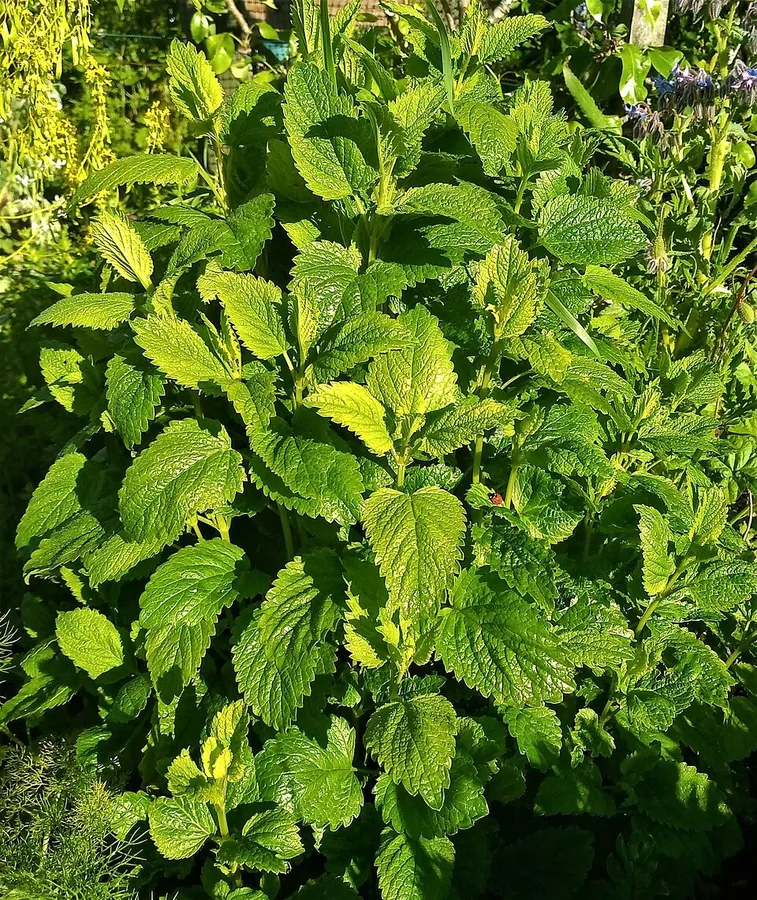
Lemon balm is a hardy perennial herb in the mint family, grown for soft, crinkled leaves that smell of fresh lemon when you crush them. It came from the eastern Mediterranean and western Asia and has been a cottage garden staple for centuries, prized as much by bees as by cooks. The small summer flowers are easy to miss, but the foliage carries the show.
Few herbs are this forgiving. It shrugs off poor, sandy, or rocky ground, takes full sun or part shade, and bounces back hard from a sharp cut. The one habit to watch is its eagerness to spread, by seed and by creeping roots, which is why many gardeners give it a pot or a confined bed of its own.
Harvest the leaves before the plant flowers and you get the cleanest, sweetest lemon flavor for tea, salads, and cooking. Let it bloom and the foliage turns coarser, so a hard shearing after bloom brings back tender new growth and keeps the clump tidy.
Care
The short version: full sun to part shade in average, well-drained soil, with steady water while young and far less once established. Feed it little, harvest before it blooms, and cut it back hard after flowering to keep it lush and in bounds.
Light
Lemon balm does best in full sun, which keeps the foliage dense and the leaves most fragrant. It also takes partial shade, a help in hot climates, though too little light leaves it thin and floppy.
Water
Keep young plants evenly moist while they settle in, then ease off, since established lemon balm is fairly drought-tolerant and waters about every 5 to 7 days in dry spells. The one thing it won't forgive is soggy ground, especially over winter, so let the soil drain freely.
Soil
It grows in almost anything, from poor sandy ground to clay or shallow rocky soil, as long as the drainage is good. Average, well-drained loam suits it best, at a pH of 6.0 to 7.5. Rich soil actually works against you, since it grows lush leaves with a weaker scent.
Temperature
Lemon balm is comfortable between 50°F and 86°F (10°C to 30°C) through the growing season. As a perennial hardy to USDA zone 3, the roots take hard winters in stride and push fresh growth each spring.
Humidity
Ordinary outdoor humidity in the 40% to 60% range is plenty. Air movement matters more than moisture here, since crowded, still conditions are what invite powdery mildew onto the leaves.
Feeding
This is a herb that wants little to no feeding. A light balanced feed in spring is all it ever needs, and too much fertilizer grows soft, leafy plants with a fainter lemon scent.
Pruning
Shear the plant back after it flowers and clear away the spent stalks to bring on fresh, fragrant growth and curb its self-seeding. Harvesting the leaves often, before bloom, doubles as pruning and gives you the best flavor.
Repotting
In a container, repot or divide every 1 to 2 years, ideally in spring. Watch for roots circling the pot or pushing out the drainage holes, along with slowed growth and quick drying, all signs the plant has outgrown its home.
Size & spacing
A mature plant reaches 18 to 35 inches (45 to 90 cm) tall and spreads about as wide. Give each one 18 to 35 inches (45 to 90 cm) of room so air moves freely and mildew stays away.
When to plant
Lemon balm is hardy and easy to time. Start seeds indoors in late winter, set plants out in spring once the frost has passed, and pick leaves through summer, finishing the heaviest harvest before the plant flowers around June to August.
Northern hemisphere
Southern hemisphere
Typical months for a temperate climate: start earlier in warm zones, later where spring frosts linger.
- Sow: 6-8 weeks before the last spring frost
- Plant: Spring, after the last frost
- Harvest: Small white to pale-yellow flowers in summer (about June-August); harvest leaves before flowering for best flavor
Hardiness
USDA hardiness zones: 3–9
Temperature: down to -40°C
Troubleshooting
Lemon balm is rarely troubled by anything serious. Most problems trace back to crowding, still air, or the plant's own urge to spread. Match what you see below and a quick fix usually sets it right.
Volunteer seedlings popping up all over the bed
Left to flower, lemon balm scatters seed everywhere and creeps outward on rhizomes, so a tidy clump turns into a colony in a season or two. Cut the plant back before the flowers set seed, and pull the stray seedlings while they're small. Growing it in a pot keeps it where you want it.
Fix:
- Deadhead and cut back before seed set
- Pull volunteer seedlings
- Grow in a container to contain spread
Dusty white film spreading across the leaves
This is powdery mildew, a fungus that settles on crowded plants where the air sits still. Strip off the worst leaves, thin the clump so air can move through it, and keep water off the foliage. A spot in full sun usually clears the problem on its own.
Fix:
- Remove and discard affected leaves
- Improve air circulation by thinning and spacing plants
- Avoid overhead watering
Floppy, open stems with bare lower growth after flowering
Once lemon balm finishes blooming it tends to sprawl open and go woody at the base, leaving thin foliage on top. Shear the whole plant back hard and it pushes out fresh, compact growth within weeks. A hard cut each year after bloom keeps the clump dense and leafy.
Fix:
- Cut plants back hard after flowering to force fresh compact growth
Toxicity
Good news on this one: lemon balm is safe across the board. The ASPCA lists it as non-toxic to cats, dogs, and horses, and as a culinary herb it's eaten by people every day. The only thing it tends to harm is the patience of a gardener fighting its spread.
Safe for
People · Cats · Dogs · Horses · Rabbits · Livestock · Birds
Cats None
Safe to be around. A cat that nibbles the leaves might get a mild, brief stomach upset from the strong oils, nothing more.
Dogs None
No toxic risk here. The lemony foliage is harmless if a dog chews on it.
Horses None
Grazing on lemon balm causes no harm to horses.
Rabbits None
Rabbits can eat the leaves with no trouble, and many enjoy the fragrant foliage as a treat.
Livestock None
Cattle, goats, and sheep can graze it freely without any ill effect.
Birds None
The leaves pose no danger to backyard birds or poultry.
People None
Lemon balm is a kitchen herb, brewed into tea and used to flavor food. The leaves are safe to eat for adults and children alike.
Non-toxic culinary herb; leaves are edible and commonly consumed.
Varieties
Most gardens grow the plain green species, but a few selections stand out for leaf color or scent. These are the ones worth seeking out by name.
Aurea
Its leaves are splashed gold and green, showing the brightest variegation in cool weather and partial shade.
All Gold
The foliage glows a solid golden yellow, holding its best color in a spot with some shade to keep it from scorching.
Lime
Bred for a sharper, lime-like scent in place of the usual lemon fragrance.
How to propagate
Lemon balm is among the easiest herbs to multiply. You can split a clump, root a cutting, or sow seed, though it tends to seed itself around the garden whether you ask it to or not.
DivisionEasy
Spring or early fall · 4-6 weeks
Dividing an established clump is the surest way to keep a named cultivar true to type. Lift a mature plant in spring or early fall, split the crown into pieces, and replant them. Each division settles in and roots within about 4 to 6 weeks.
Stem cuttingsEasy
Late spring to summer · 3-4 weeks
Soft stem cuttings root with very little fuss. Take them from late spring through summer, stand them in moist mix or a glass of water, and roots form readily in roughly 3 to 4 weeks.
SeedModerate
Spring; surface-sow as seed needs light · 2-3 weeks to germinate, several weeks more to establish
Seed is the slower route and the one that won't keep cultivars true, since the plant self-seeds freely on its own. Press the seed onto the surface in spring rather than burying it, because it needs light and warmth to sprout. Germination takes 2 to 3 weeks, with several more before the seedlings are settled.
Myths
Lemon balm is a kind of true mint.
It does sit in the mint family, Lamiaceae, alongside true mints, but it belongs to its own genus, Melissa, and is not a Mentha at all. The lemon scent and softer leaves set it apart once you know what to look for.
Lemon balm stays put and won't run like mint.
It spreads just as freely, only by a different route. Left to flower, it self-seeds heavily and creeps on rhizomes, escaping the bed if you don't deadhead it or pen it into a container.