Tree · Theaceae
Japanese Stewartia
Stewartia pseudocamellia
Slow to give and worth the wait, it pays off with summer flowers, fiery fall color, and patchwork bark.
Partial shade
Every 3–7 days
USDA 5–8
12–40 ft · 3.7–12.2 m
Overview
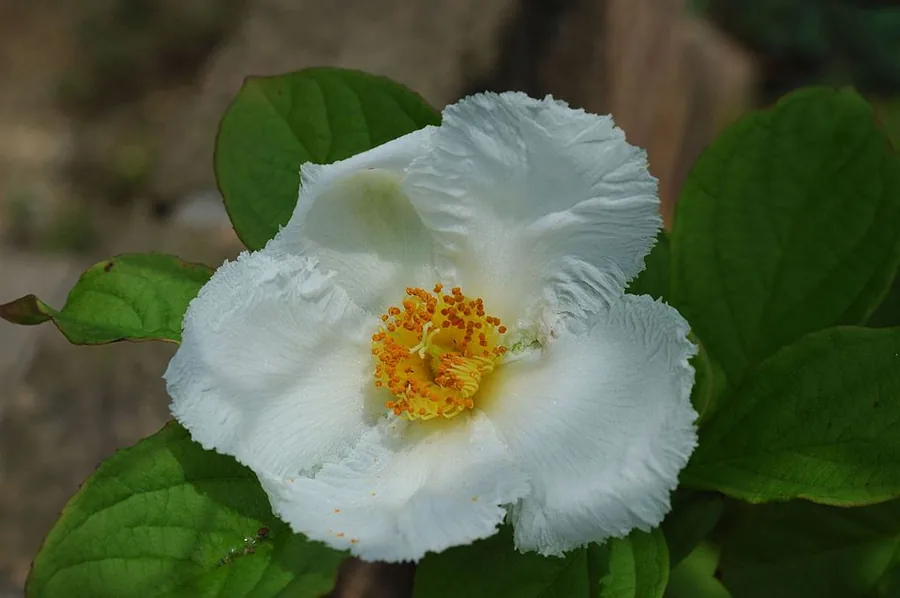
Japanese stewartia is a small deciduous tree from the tea family, the same group that gives us camellias. It earns its keep across the whole year. White cup-shaped flowers open through early and mid summer, the leaves turn deep red and orange in fall, and the trunk carries flaking bark in patches of gray, orange, and rust that stands out all winter.
This is a tree for a patient gardener, not a quick fix. It grows slowly, takes a while to settle into a new spot, and doesn't forgive drought, baking heat, or soggy roots. Get the site right and it asks for little after that, which is part of its charm as a specimen tree.
Plant it where you'll see it often, since every season brings something new to look at. Give it moist, acidic, well-drained soil and a spot with morning sun and shelter from harsh afternoon glare, and it rewards the wait with years of quiet, four-season interest.
Care
The short version: part shade with shelter from hot afternoon sun, moist and acidic well-drained soil that never dries out or stays soggy, and patience while it slowly settles in.
Light
Stewartia does best in part shade with shelter from the hot afternoon sun. It will take full sun in cooler climates, but where summers run hot the leaves scorch, so a spot with morning light and afternoon shade keeps it looking its best.
Water
Keep the soil evenly moist, watering deeply every 3 to 7 days when the weather is dry. This tree has no tolerance for drought, so don't let the root zone dry out, and lay down mulch to hold moisture and keep the roots cool.
Soil
Plant in moist, well-drained, acidic soil rich in organic matter, ideally a sandy loam. Aim for a pH between 5.0 and 6.5. It does poorly in heavy clay or dry, rocky, or waterlogged ground, so amend the site before planting.
Temperature
Hardy from about -20°F to 86°F (-29°C to 30°C), the tree handles cold winters well but struggles in extreme summer heat. In hot regions, shelter from afternoon sun and steady moisture make the difference.
Humidity
Average outdoor humidity suits it fine, so there's no number to hit. What matters far more is steady soil moisture and shelter from drying heat, since dry, baking air is what scorches the foliage.
Feeding
Feed once in early spring with a balanced or acid-forming slow-release fertilizer made for acid-loving woody plants. One seasonal feeding is plenty, and a product formulated for acid lovers helps hold the soil on the acidic side it prefers.
Pruning
This tree needs almost no pruning. Just take out dead, damaged, or crossing branches in late winter or early spring while it's dormant, and otherwise let its naturally graceful shape develop on its own.
Repotting
Stewartia is rarely repotted and resents root disturbance, so leave it be once established. Roots circling the drainage holes, water running straight through, or stalled new growth are the signs a containerized young tree needs more room.
Size & spacing
Give this tree plenty of room, since it can reach 12 to 40 feet (3.7 to 12 m) tall and spread 8 to 25 feet (2.4 to 7.5 m) across over many years. Site it well away from buildings and other trees so its open canopy and patterned bark have space to show.
When to plant
Stewartia hates being moved, so timing and gentle handling matter. Set out young container-grown trees in spring to give the roots a full season to take hold, and look for the white flowers from June into August.
Northern hemisphere
Southern hemisphere
Typical months for a temperate climate: start earlier in warm zones, later where spring frosts linger.
- Plant: Spring, using young container-grown plants for best establishment
- Harvest: White cup-shaped flowers in early-to-mid summer (June to August)
Hardiness
USDA hardiness zones: 5–8
Temperature: down to -29°C
Troubleshooting
This tree has few serious pests, and most of its trouble traces back to the site rather than to bugs or blight. Watch the roots and the leaves, since wet feet and dry summer heat cause nearly every problem. Match what you see below and fix the conditions before the tree slips into decline.
Wilting, yellowing leaves and slow dieback
This is almost always root rot, brought on by soil that stays wet. The roots suffocate and turn dark and mushy, and the canopy thins from the top down. Dig young trees out and move them to a raised, better-drained spot, ease off the watering once the ground is saturated, and work organic matter into the planting area to open up heavy soil.
Fix:
- Improve drainage or relocate young trees to a better-drained, raised site
- Reduce supplemental watering once soil is saturated
- Amend planting area with organic matter to improve structure
Browning leaf edges and tips in summer heat
Brown, crisp margins point to leaf scorch, the tree's response to drought and hot, dry exposure. It shows up first on the side that takes the harshest afternoon sun, usually when the root zone has dried out. Water deeply through dry spells, spread mulch to hold moisture and cool the roots, and give the tree some afternoon shade where the sun is fierce.
Fix:
- Water deeply during dry periods
- Apply mulch over the root zone to retain moisture and keep roots cool
- Provide afternoon shade where exposure is harsh
Toxicity
Good news for a household with pets: Japanese stewartia is not toxic. It isn't listed on the ASPCA's poison lists, and no part of it is known to harm cats, dogs, horses, or other animals. As with any plant, a big mouthful of leaves might upset a stomach, but there's nothing dangerous here.
Safe for
People · Cats · Dogs · Horses · Rabbits · Livestock · Birds
Cats Safe
Cats can brush against this tree or nose at a fallen leaf with nothing to worry about, since it carries no known toxins.
Dogs Safe
A dog that gnaws a low branch is in no danger, though a big mouthful of any foliage might bring a passing bout of mild stomach upset.
Horses Safe
Horses can graze near the tree without harm. It holds no compounds known to trouble them.
Rabbits Safe
Rabbits face no poisoning risk from the leaves or bark, so a nibble here and there does no damage.
Livestock Safe
Cattle, goats, and sheep can share a pasture with this tree safely, as no part of it is toxic to grazing animals.
Birds Safe
Birds that perch in the branches or pick at the seed capsules come to no harm from this non-toxic tree.
People Safe
The tree poses no poisoning risk to adults or children. It's grown for its flowers and bark rather than for eating, so there's no part meant for the table.
No special handling required; as with any plant, discourage pets from chewing foliage to avoid mild stomach upset.
Varieties
A few named selections and close relatives are worth knowing, chosen mostly for bigger flowers or better bark. These are the ones you're most likely to find.
'Ballet'
A selection grown for its larger flowers and a vigorous, spreading habit.
'Milk and Honey'
A cultivar prized for its showy exfoliating bark and reliable flowering.
Stewartia koreana (Korean stewartia)
A close relative treated as a synonym or variety of S. pseudocamellia, with broad camellia-like white flowers that open flatter.
Stewartia monadelpha (tall stewartia)
A related species with smooth cinnamon-brown to tan exfoliating bark that reaches about 20 to 25 feet.
How to propagate
You can raise stewartia from seed or from cuttings, but neither is fast. Cuttings give you a quicker, more dependable result, while seed is a long game that demands real patience.
SeedDemanding
Collect ripe seed in fall; seed requires warm then cold stratification and may take many months to germinate · 1 to 2 years or more to a transplantable seedling
Growing from seed tests your patience. Gather ripe seed in fall, then give it a warm spell followed by a cold one to break its double dormancy, which is why germination runs slow and uneven. Even after it sprouts, expect to wait a year or two, sometimes longer, before a seedling is big enough to move.
Stem cuttingsModerate
Take softwood cuttings in early summer · Several weeks to root, then grow on for a season or more
Cuttings are the quicker route. Take softwood cuttings in early summer, treat them with rooting hormone, and keep them under mist, and they strike roots within a few weeks. Grow them on for a season or more before planting out.
Myths
Stewartia is just another kind of camellia.
The flowers do look like a camellia's, and both belong to the tea family. But stewartia is a separate genus and a deciduous tree, not the evergreen camellia it gets mistaken for, and it drops its leaves every fall.
Japanese stewartia is an easy, fast-growing shade tree.
It grows slowly, takes its time to settle in, and resents being transplanted. It also struggles with drought, heat, and wet feet, which makes it a demanding tree rather than a beginner's shade tree.