Ornamental · Asteraceae
Globe Thistle
Echinops ritro
Give it full sun and lean, dry soil, and globe thistle hands you steel-blue globes that bees can't resist.
Full sun
Every 7–14 days
USDA 3–8
3–4 ft · 0.9–1.2 m
Overview
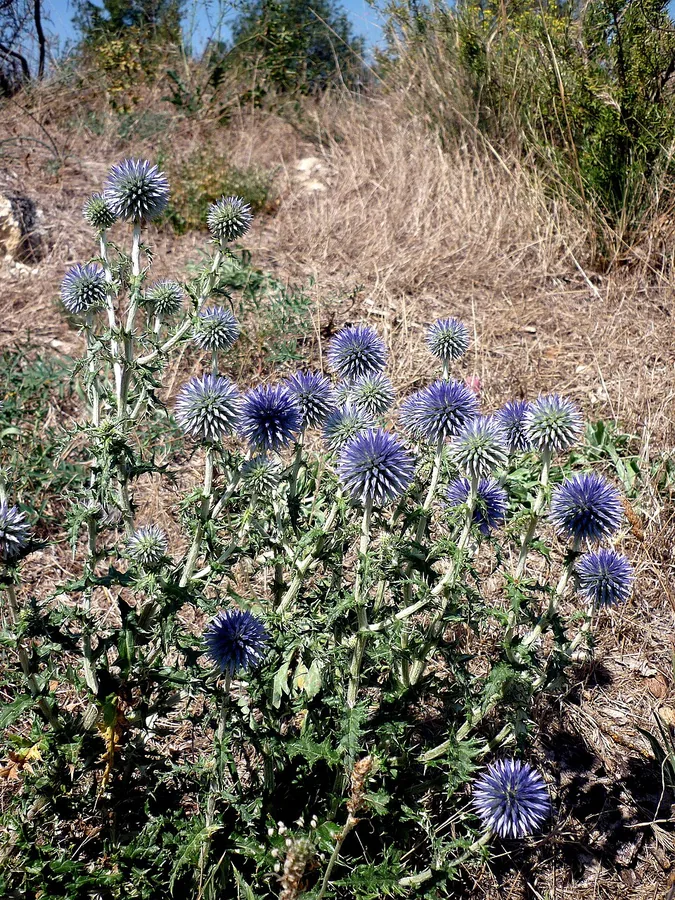
Globe thistle earns its name from the perfectly round, steel-blue flower heads it sends up in midsummer. It is a hardy perennial in the daisy family, built for full sun and poor, dry ground, and it shrugs off heat, drought, and the deer and rabbits that browse softer plants. The spiky foliage and bristly globes give it an architectural look that stands out in a border.
What sets it apart is how little it asks. Plant it in lean soil, keep the water sparing, and it settles into a deep taproot that wants to be left alone. The flowers pull in bees and butterflies for weeks, and the dried heads hold their shape long after cutting, which makes them a favorite for arrangements.
It is an easy plant with one real catch: it likes things tough. Rich soil and shade turn it lanky and floppy, and too much water rots the roots. Get the site right and globe thistle runs for years on near total neglect.
Care
The short version: full sun, lean and well-drained soil, and a light hand with the water. Feed rarely, leave the deep taproot undisturbed, and deadhead the spent globes to keep the self-seeding in check.
Light
Globe thistle wants full sun and as much of it as you can give. It will take a little light shade, but stems grown out of the sun stretch and flop, so the brightest spot in the bed is the right one.
Water
This is a drought-tough plant that prefers dry to medium soil once it settles in. Let the top half of the soil dry between waterings, roughly every 7 to 14 days, and err on the side of too little. Overwatering is the fastest way to rot the roots.
Soil
Plant it in poor to average, well-drained ground, the leaner the better. It handles clay, loam, sand, and shallow rocky soil at a pH of 6.0 to 6.5, but wet or rich organic soil leads to floppy growth and rot.
Temperature
It is remarkably cold-hardy, riding out winters down to -29°F (-34°C) and shrugging off summer heat up to 90°F (32°C). That range covers most temperate gardens without any fuss.
Humidity
Ordinary outdoor humidity suits it fine, so there is no number to chase. Good airflow matters more than moisture in the air, since still, crowded conditions invite powdery mildew on the leaves.
Feeding
Feed it almost never. Globe thistle thrives in nutrient-poor soil, and rich feeding only produces floppy, lanky growth that needs staking. A lean diet keeps the stems sturdy and upright.
Pruning
Deadhead the spent globes to tidy the plant and cut back on self-seeding. After bloom or in late fall, cut the stems back to the low basal foliage. If you want flowers for drying, cut them while they are still young.
Repotting
It rarely needs repotting and is happiest in the ground, where its deep taproot can run. In a container, watch for reduced vigor or roots circling the pot, which signal it has outgrown its home.
Size & spacing
Plants reach 3 to 4 feet (91 to 122 cm) tall with a spread of 24 to 30 inches (61 to 76 cm). Give each one that much room so air moves freely and the foliage stays dry.
When to plant
Globe thistle is a cold-hardy perennial that comes back on its own each year. Start seed indoors in late winter, set plants out after the last spring frost, and the steel-blue globes open from midsummer through September.
Northern hemisphere
Southern hemisphere
Typical months for a temperate climate: start earlier in warm zones, later where spring frosts linger.
- Sow: Late winter to early spring, 6-8 weeks before last frost
- Plant: After last spring frost
- Harvest: Mid-summer through September
Hardiness
USDA hardiness zones: 3–8
Temperature: down to -40°C
Troubleshooting
Globe thistle is one of the most trouble-free perennials you can grow, and almost every problem traces back to coddling it. Watch for soft roots, floppy stems, or a powdery film on the leaves. Match what you see below and adjust the site before it spreads.
Wilting and yellowing with soft, rotting roots
This is root rot, and on a plant this drought-hardy it almost always means too much water. Soggy ground or heavy, rich soil keeps the roots wet until they turn mushy and brown. Ease off watering and let the soil dry, fix the drainage or move the plant to a leaner, sunnier spot, and pull anything that has rotted past saving.
Fix:
- Reduce watering and allow soil to dry out
- Improve drainage or relocate to a well-drained, sunnier site
- Remove and discard severely rotted plants
Tall stems that stretch, lean, and flop over
Floppy growth comes from too little sun or too much richness in the soil. Globe thistle wants it lean and bright, and a coddled plant pays you back by sprawling. Move it into full sun, hold off on feeding, and stake the tallest stems if they still lean.
Fix:
- Move to full sun
- Avoid feeding and grow in lean soil
- Stake taller stems if needed
A white, powdery film spreading across the leaves
Powdery mildew settles in when air sits still around the foliage, usually in crowded or shaded plantings. Open the plant up by thinning and spacing, strip off the worst-coated leaves, and give it the full sun it prefers. It stays a cosmetic nuisance rather than a real threat.
Fix:
- Improve air circulation by spacing and thinning plants
- Remove affected foliage
- Site in full sun
Twisted new growth or sticky leaves with small insects
Aphids are the usual culprit, along with the odd run-in with leaf miners, thrips, or slugs and snails. None of it amounts to much, since this is a tough, pest-resistant plant. Blast aphids off with a jet of water, pick slugs by hand, and let minor nibbling go.
Fix:
- Hose off aphids with water
- Hand-pick slugs and snails
- Tolerate minor damage as the plant is generally pest-resistant
Toxicity
Good news for a home with pets and children: globe thistle is not poisonous. NC State Extension reports it as non-toxic to cats, dogs, and horses, and nothing in the plant will harm people. The only real hazard is mechanical, so wear gloves around the spiny leaves and prickly flower heads.
Safe for
People · Cats · Dogs · Horses · Rabbits · Livestock · Birds
Cats None
Nothing in the plant is poisonous to a cat. The only real risk is the spiky foliage, which can prick a curious mouth or paw.
Dogs None
A dog can chew it without any toxic effect. The stiff, bristly leaves and flower heads are the worst it will run into, and a sharp prick usually ends the interest fast.
Horses None
Safe for horses, with no toxins to worry about. Most leave the prickly plant alone on their own.
Rabbits None
No poison here, and rabbits tend to pass it by anyway thanks to the spines.
Livestock None
Grazing animals can browse near it without harm. The coarse, prickly foliage keeps most of them away regardless.
Birds None
Harmless to birds, which often work the dried seed heads for a meal. The blooms also draw the bees and butterflies the plant is loved for.
People None
Not poisonous to handle or be around. Pull on gloves before cutting or arranging it, since the spiny leaves and bristly globes scratch bare skin.
Wear gloves when handling; the spiny leaves and prickly globe-shaped flower heads can scratch or prick skin.
Varieties
Most gardeners grow the straight species, but a few named selections are worth knowing for their color and size.
Veitch's Blue
A more compact pick at 3 to 3.5 feet that carries darker steel-blue flowers and blooms longer and more freely than the species.
Platinum Blue
Stands out for its silvery-white stems set against soft lavender-blue flower heads.
subsp. ruthenicus
A subspecies usually grown as a smaller globe thistle, with finely cut, white-woolly foliage.
Companions
Globe thistle pairs best with other sun-loving, drought-tough plants that want the same lean, dry soil and bring in the same pollinators.
Plant near
Yarrow: Shares full-sun, dry, well-drained, lean-soil conditions and supports pollinators alongside globe thistle.
Russian sage: Matches drought-tolerant, full-sun growing needs and complements the steel-blue blooms.
Sedum: Thrives in the same poor, dry, well-drained soils and sunny exposure.
How to propagate
You can multiply globe thistle by seed, division, or root cuttings, though the deep taproot makes seed by far the simplest route.
SeedEasy
Sow in spring; self-seeds readily in the garden · One to two seasons to reach flowering size
Seed is the easiest route. Sow in spring and the plants take one to two seasons to reach flowering size. Left to their own devices, the flower heads self-seed freely around the garden.
DivisionDemanding
Spring or early fall · One season
Division is possible in spring or early fall but tricky, since the deep taproot resents being disturbed and takes about a season to settle again. Most gardeners simply leave the clump in place.
DivisionModerate
Spring · Several weeks to root
You can also take root cuttings in spring, slicing sections from the fleshy taproot rather than the stems. These root over several weeks into new plants.
Myths
Globe thistle is a noxious weed and poisons livestock.
It gets lumped in with the weedy field thistles, but it is a garden perennial that NC State Extension reports as non-toxic to cats, dogs, and horses. It is an ornamental, not a noxious or poisonous plant, though it will self-seed if you let the flower heads ripen.
Globe thistle clumps must be divided every few years to stay healthy.
It anchors itself with a deep taproot that makes lifting and dividing a real struggle. The plant does best left undisturbed in place and rarely needs the splitting that many perennials want.