Ornamental · Asteraceae
Blanket Flower
Gaillardia × grandiflora
Give it full sun and lean, dry soil, and the blanket flower throws color from June to frost.
Full sun
USDA 3–10
1–3 ft · 0.3–0.9 m
Overview
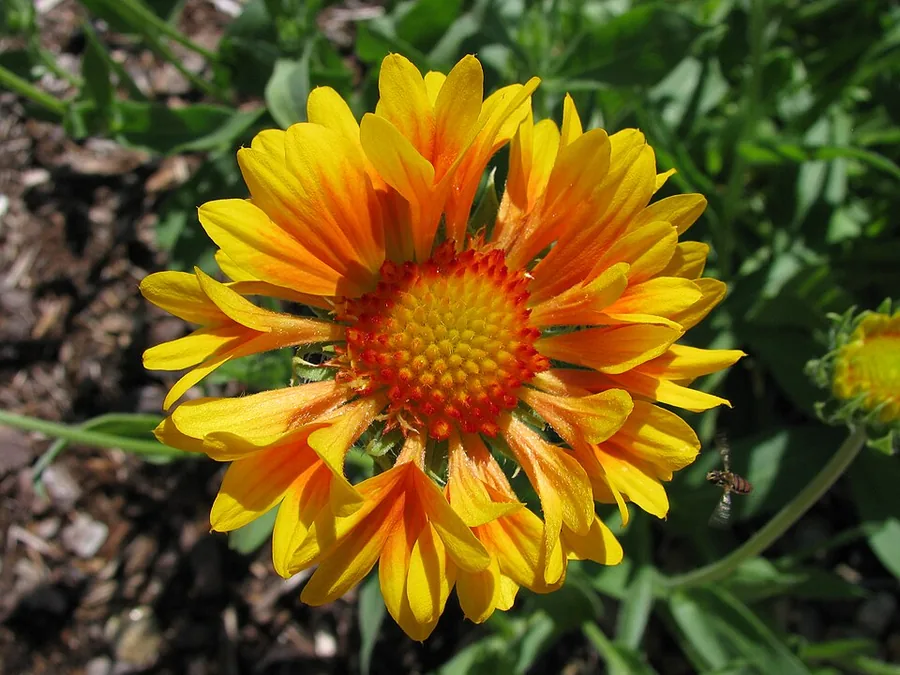
Blanket flower is a tough, sun-loving member of the daisy family, named for the warm reds, oranges, and yellows that ring its blooms like a woven blanket. It's the kind of plant you grow when you want a long show with little fuss. Set it in a hot, dry corner and it flowers from early summer well into fall.
What sets it apart is how little it asks. It handles drought, heat, and poor soil without complaint and keeps blooming where fussier perennials sulk. The catch is the flip side of that toughness: rich soil and too much water are what do it in.
It's a short-lived perennial, so a clump tends to fade after a few years. That's no reason to skip it. Divide it every couple of seasons or let it self-sow, and the color carries on with almost no work from you.
Care
The short version: full sun, lean and well-drained soil, and a light hand with the watering can. Deadhead through the season to keep the flowers coming, and skip the fertilizer.
Light
Blanket flower wants full sun, the more the better. Give it a baking, open spot and it flowers hardest. In shade it grows leggy, flops over, and blooms far less.
Water
Water steadily while a young plant is settling in, then back right off. Once established it's drought tolerant and far happier dry than wet. Overwatering, or heavy clay that won't drain, is the fastest way to rot the roots.
Soil
Plant it in well-drained loam or sandy soil with a little organic matter worked in. It takes a wide pH range from 6.0 to 8.0, so most ground suits it. The one soil it can't survive is soggy clay over winter.
Humidity
Ordinary outdoor air is fine, so there's no level to aim for. What matters more is airflow, since damp, crowded plantings invite powdery mildew onto the leaves.
Feeding
This is a plant that prefers to go hungry. Feed lightly during the growing season at most, because lean soil gives you sturdier plants and more flowers. Pile on fertilizer and it flops and blooms less.
Pruning
Deadhead spent blooms through the season to keep new ones coming and the plant looking tidy. Cut it back as needed when it gets ragged, and it pushes out a fresh flush of flowers.
Size & spacing
Plants reach 1 to 3 feet (30 to 91 cm) tall with a spread of 12 to 24 inches (30 to 61 cm). Set them 12 to 18 inches apart so air moves freely and mildew stays away.
When to plant
Blanket flower runs on warmth and hates wet cold. Start seeds indoors in late winter or sow straight outside once frost has passed, and the plants bloom from early summer through fall, longer still if you keep deadheading.
Northern hemisphere
Southern hemisphere
Typical months for a temperate climate: start earlier in warm zones, later where spring frosts linger.
- Sow: Start seeds indoors about 4 to 6 weeks before the last frost.
- Plant: Transplant or direct sow after the last spring frost; space plants 12 to 18 inches apart.
- Harvest: Blooms from early summer (June) through fall (September); deadheading extends the season.
Hardiness
USDA hardiness zones: 3–10
Temperature: down to -40°C
Troubleshooting
Almost every problem a blanket flower runs into traces back to soil that's too wet or air that's too still. Get the drainage and spacing right and most of this list never comes up. Match what you see below, then act before it spreads.
Wilting plant with blackened stems and a rotting crown
This is root and crown rot, the one trouble most likely to kill a blanket flower, and it comes from soil that stays too wet. Dig in and you'll find brown, mushy roots instead of firm white ones. Improve the drainage with sand or organic matter, move it to a raised spot if you can, and cut back hard on the water.
Fix:
- Improve drainage by amending soil with organic matter or planting in a raised or sandier site
- Reduce watering and remove severely affected plants
Yellowed, distorted growth with deformed flowers
This is aster yellows, a phytoplasma that leafhoppers carry from plant to plant, and there's no cure once a plant has it. Watch for greened or warped flowers and stunted, broom-like shoots that never bounce back. Pull and destroy any infected plant right away, then knock back the leafhoppers and weedy hosts that keep it spreading.
Fix:
- Remove and destroy infected plants promptly
- Control leafhoppers that spread the disease
White powdery coating on the leaves and stems
That dusty white film is powdery mildew, which settles in when plants sit crowded in humid, still air. It rubs off the leaves but keeps coming back if nothing changes. Open the planting up with more space or by dividing crowded clumps, strip off the worst foliage, and keep water off the leaves.
Fix:
- Improve air circulation by spacing and dividing plants
- Remove affected foliage
Dark or brown spots scattered on the leaves
These are fungal leaf spots, and they look worse than they are. The plant rarely suffers any real harm. Pick off the marked leaves, water at the base rather than overhead, and give the plant room for air to move through it.
Fix:
- Remove affected leaves
- Avoid overhead watering and improve air flow
Toxicity
Good news for pet owners: blanket flower is non-toxic and isn't on the ASPCA's toxic plant list. Cats, dogs, and grazing animals are all safe around it. The one thing to watch is your own skin, since the fuzzy leaves and flowers can leave sensitive hands a little itchy.
Safe for
People · Cats · Dogs · Horses · Rabbits · Livestock · Birds
Cats None
Safe around cats. The ASPCA doesn't list it as toxic, so a nibbling cat has nothing to fear from it.
Dogs None
No concern for dogs. It's off the ASPCA toxic list, and a curious dog can sniff or chew without harm.
Horses Safe
Horses can graze near it without trouble, since none of its parts are poisonous.
Rabbits Safe
Fine for rabbits. The leaves and flowers carry no toxin, though it's still best fed as just an occasional bite.
Livestock Safe
Cattle, goats, and sheep can be around it safely, as it holds nothing that would upset them.
Birds Safe
Birds are in no danger from it, whether they peck at the seed heads or the foliage.
People Safe
Safe for people, with one small catch: the fuzzy leaves and flowers can leave sensitive skin a little itchy, so pull on gloves before a long session of deadheading.
Generally regarded as non-toxic and not listed on the ASPCA toxic plant list. Contact with the fuzzy foliage and flowers can cause mild skin irritation (contact dermatitis) in sensitive people; wearing protective gloves when handling is recommended.
Varieties
Blanket flower comes in a range of named cultivars, mostly sorted by height and how the colors fall. These are a few worth knowing.
Goblin
A compact dwarf that stays low and tidy, carrying red flowers neatly rimmed in yellow.
Burgundy
A taller grower prized for its solid wine-red blooms with none of the usual two-tone edging.
Oranges and Lemons
A softer pick whose peachy-orange rays fade to pale yellow at the tips.
How to propagate
Blanket flower is easy to multiply, which is handy since each plant is short-lived. You can split an established clump or grow it fresh from seed.
DivisionEasy
Spring; divide clumps every 2 to 3 years to maintain vigor. · One growing season
Blanket flower is short-lived, so dividing the clumps in spring every 2 to 3 years keeps it going and hands you free new plants in the bargain. Lift a clump, split it, and replant. The divisions settle in over a single growing season.
SeedEasy
Start indoors 4 to 6 weeks before last frost or direct sow after frost. · Blooms in the first or second season
Seed is just as easy. Start it indoors 4 to 6 weeks before your last frost, or sow it straight into the ground once frost has passed, and expect flowers in the first or second season. The plant self-sows freely, but because these are hybrids, the volunteers often look nothing like the parent.
Myths
Blanket flower needs rich soil and frequent watering to thrive.
It's the other way around. Blanket flower wants lean, well-drained ground and shrugs off drought once it has settled in. Plant it in heavy, fertile, soggy soil and you'll cut its life short and get fewer blooms, so treat it mean and it rewards you.
Blanket flower is poisonous to pets.
It isn't. The plant is regarded as non-toxic and stays off the ASPCA's toxic list for cats and dogs. The only real catch is for people, since the hairy foliage can leave sensitive skin a touch irritated.