Ornamental · Asteraceae
Chocolate Cosmos
Cosmos atrosanguineus
Deep maroon flowers that really do smell of dark chocolate, on a tender tuber you grow much like a dahlia.
Full sun
USDA 7–9
2–3 ft · 0.6–0.9 m
Overview
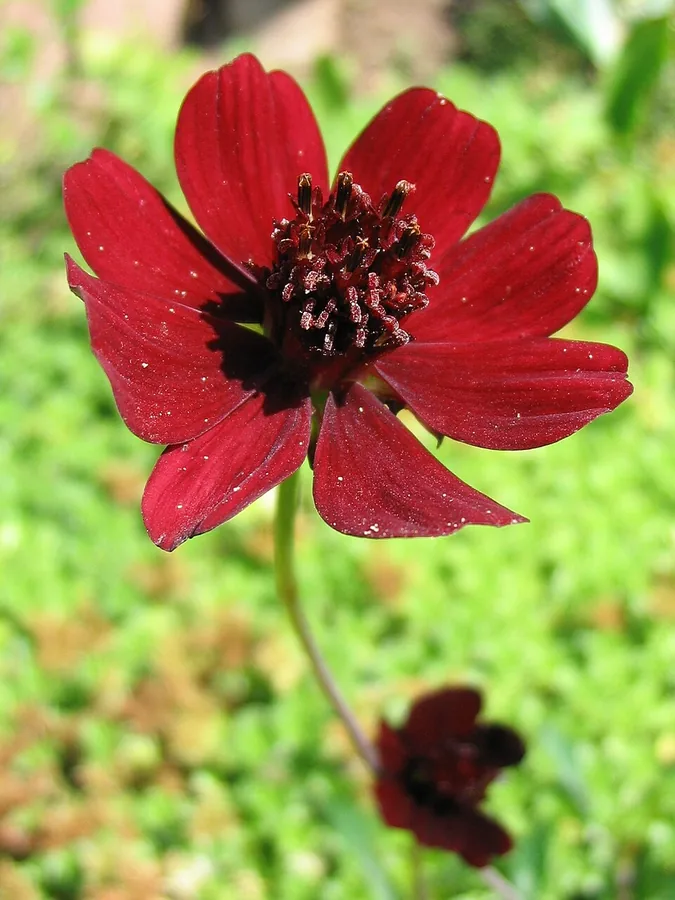
Chocolate cosmos earns its name twice over, with flowers the color of dark chocolate and a scent to match on a warm afternoon. It comes from Mexico and belongs to the daisy family, growing from a small tuber rather than a fibrous root. The plant you buy almost always traces back to a single sterile clone that has been passed along by division for generations.
It stays modest in size, reaching 2 to 3 feet (61 to 91 cm) tall, and carries its blooms on slim stems above ferny foliage. The flowers open from early summer well into fall, which makes it a long-running source of color in a border or a pot. Cut a few stems for a vase and the chocolate scent carries indoors.
Treat it as a tender perennial. It comes back year after year only in mild zones, so where winters turn cold most gardeners lift the tubers and store them dry, just as they would a dahlia, then replant in spring.
Care
The short version: full sun, average soil that drains freely, and only light watering. Let the top half of the soil dry between drinks, feed sparingly, and never let the tubers sit in wet ground.
Light
Give chocolate cosmos full sun, a spot that gets direct light for most of the day. Strong sun is what brings out the deepest flower color and keeps the slim stems from stretching and flopping.
Water
Water lightly and let the top half of the soil dry before the next drink. The plant takes dry to average soil in stride, but soggy ground rots the tubers fast, so err on the dry side and never let it sit wet.
Soil
Plant in average, well-drained soil of moderate fertility. Sharp drainage matters more than richness here, since the tubers will not survive in heavy, waterlogged ground. Work in grit or plant in a raised bed if your soil holds water.
Humidity
Ordinary outdoor humidity suits it fine, so there's no level to chase. Air movement counts for more, because crowded, still conditions are what invite powdery mildew onto the leaves.
Feeding
A light feed through the growing season is all it asks. Pile on more and you'll get leafy growth at the expense of flowers, so go easy and let the plant put its energy into blooms.
Pruning
Deadhead the spent flowers as they fade and the plant keeps pushing new buds for longer. Cut away any damaged or diseased growth whenever you spot it to keep the plant clean.
Size & spacing
Expect a plant 2 to 3 feet (61 to 91 cm) tall with a spread of 12 to 24 inches (30 to 61 cm). Give each one enough room that air can move freely between them, which keeps mildew at bay.
When to plant
Chocolate cosmos waits on warmth and won't tolerate frost. Where it isn't hardy, start fertile strains indoors in early spring, set plants out once the cold has passed in late spring, and enjoy the flowers from early summer until fall.
Northern hemisphere
Southern hemisphere
Typical months for a temperate climate: start earlier in warm zones, later where spring frosts linger.
- Sow: early spring (seed-grown strains only)
- Plant: late spring after last frost
- Harvest: early summer to fall
Hardiness
USDA hardiness zones: 7–9
Temperature: down to -18°C
Troubleshooting
Most trouble with chocolate cosmos starts underground or in still, crowded air. Catch the early signs and the fixes are simple. Match what you see below, then act before it spreads.
Soft, rotting tubers and a plant that wilts or collapses
This is tuber and root rot, and it traces back to soil that stays wet too long rather than to any disease you can spray away. Lift a struggling plant and the tubers come up soft, brown, and foul. Cut back on water, work grit into the bed or move to a raised bed, and discard the rotted tubers before replanting the firm ones.
Fix:
- Stop overwatering and improve drainage
- Remove and discard severely rotted tubers
- Replant healthy tubers in gritty, well-drained soil or a raised bed
Sticky shoot tips crowded with small soft-bodied insects
Those clusters on the new growth and buds are aphids, often with ants in attendance for the sticky honeydew they leave behind. A hard jet of water knocks most of them off, and insecticidal soap clears the stubborn ones. Easing off the nitrogen helps too, since soft, lush growth is exactly what draws them in.
Fix:
- Dislodge aphids with a strong jet of water
- Treat persistent infestations with insecticidal soap
White powdery film dusting the leaves and stems
This is powdery mildew, a fungus that settles in when plants sit crowded in damp, still air. The white patches rub off the leaf surface, which sets it apart from harmless residue. Open the planting up for better airflow, pull the worst-hit foliage, and water at the base so the leaves stay dry.
Fix:
- Improve spacing and airflow
- Remove badly affected foliage
Toxicity
Good news for pet owners: chocolate cosmos is safe. The ASPCA lists cosmos as non-toxic to cats, dogs, and horses, and the chocolate scent carries none of the theobromine that makes real chocolate dangerous. A nibble might cause a mild, passing stomach upset at most, the same as with any non-food plant.
Safe for
People · Cats · Dogs · Horses · Rabbits · Livestock · Birds
Cats None
Safe around cats. The ASPCA lists cosmos as non-toxic, so a curious nibble is no cause for alarm.
Dogs None
No risk to dogs. A dog that chews a leaf or flower may get a mild, passing stomach upset, the same as with most non-toxic plants.
Horses None
Safe for horses, which the ASPCA confirms for the whole cosmos genus. Grazing on a plant or two does no harm.
Rabbits Safe
Not toxic to rabbits. As with any new green, introduce it in small amounts so the gut adjusts.
Livestock Safe
Cattle, goats, and sheep can browse it without poisoning. There's no toxin in the plant to worry about.
Birds Safe
Safe for backyard birds and poultry, which often peck at the seed heads of cosmos with no trouble.
People Safe
Harmless to people. This is a garden ornamental rather than a food crop, so grow it for the dark blooms and the scent rather than the plate.
Varieties
Only a few named forms of chocolate cosmos circulate, and they differ mainly in flower color and how freely they bloom. These are the ones you're likely to find.
classic sterile clone
The original long-grown form carries deep maroon-brown, chocolate-scented flowers and is sterile, so it spreads only by division or cuttings rather than seed.
'Choca Mocha'
A compact, free-flowering selection that throws more dark reddish-brown, chocolate-scented blooms than the old clone.
'Black Magic'
A selection prized for its very dark, almost black maroon flowers.
How to propagate
Because the classic plant is sterile, most chocolate cosmos is multiplied by dividing tubers or rooting cuttings rather than from seed.
DivisionModerate
Spring · One growing season
Split the dormant tubers in spring, much as you would a dahlia, and each piece settles in over a single growing season. Since the classic clone is sterile, division is what keeps it true to the parent.
Stem cuttingsModerate
Late spring to summer · Several weeks to root
Take basal or stem cuttings from late spring into summer, and they root over several weeks into copies of the parent plant. This is the usual way to bulk up the old clone, which sets no seed of its own.
SeedModerate
Early spring indoors · One season to flowering
Seed works only with the newer fertile strains, not the old sterile clone. Start it indoors in early spring and the plants reach flowering within their first season.
Myths
The dark color and chocolate scent of chocolate cosmos mean it is poisonous to cats and dogs.
The scent is just an aroma and carries none of the theobromine that makes real chocolate dangerous to pets. The ASPCA lists cosmos as non-toxic to dogs, cats, and horses, and chocolate cosmos sits in that same genus. The dark flowers and the smell are no cause for worry.